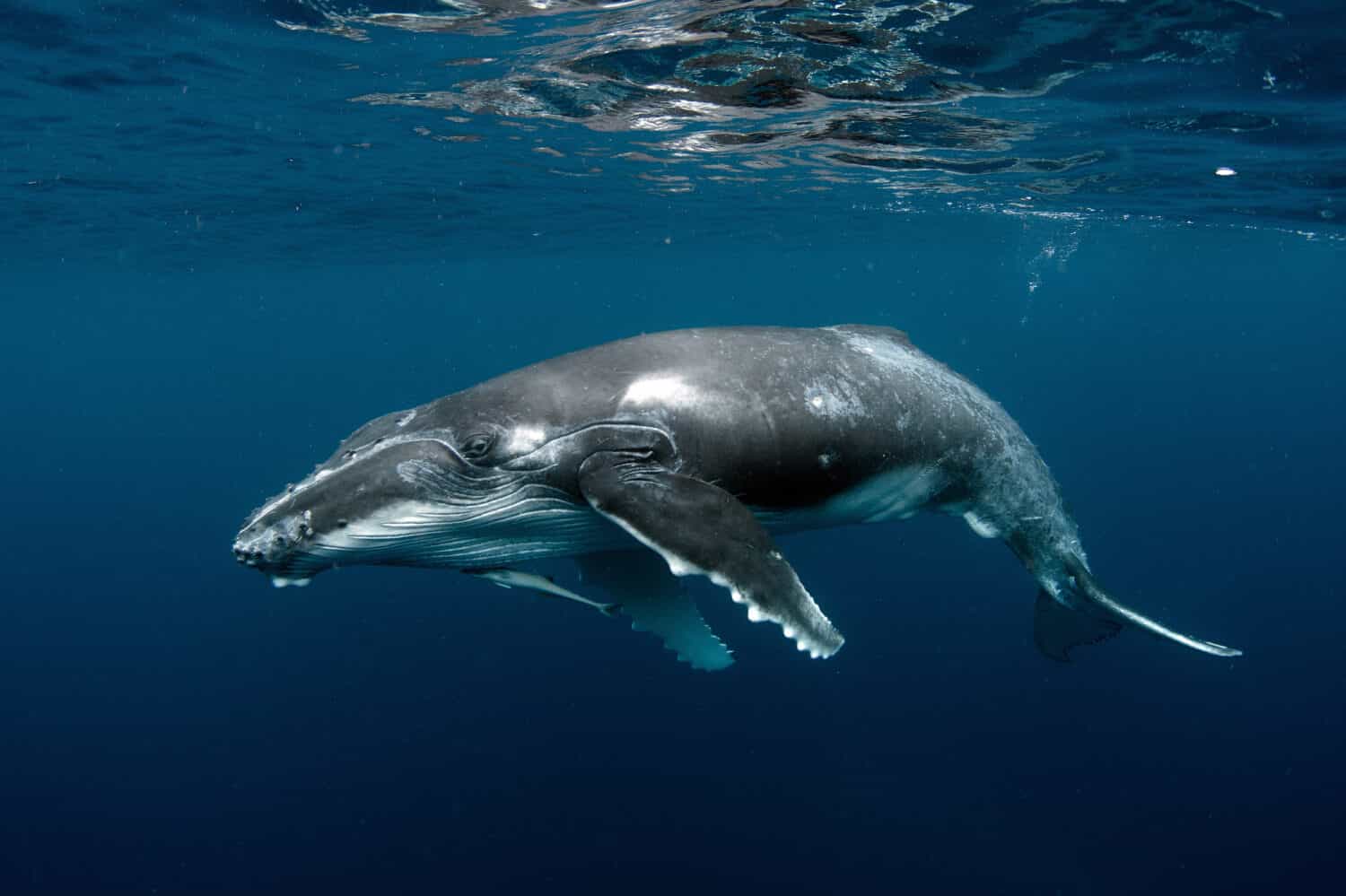

Baby mammals rely on their mother’s milk to grow, including ocean mammals. So how do underwater mammals like whales, for example, drink their mother’s milk? The process is very different compared to land mammals. This Instagram post by @nbalance.us shows a whale calf nursing from its mother. Read here to keep learning more.
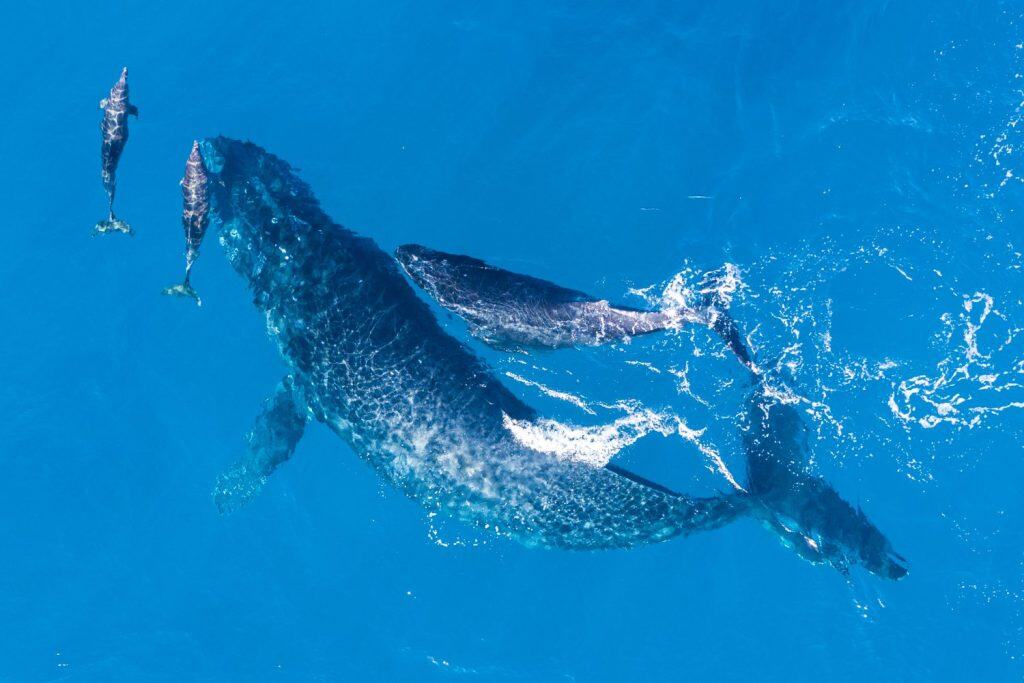
Different species of whale calves wean at different ages.
©Justin Berken/Shutterstock.com
How Do Whale Calves Drink Milk?
As seen in the video above, it appears that the mother’s milk is released directly into the water, where the calf drinks it. For whale calves, how long they drink this milk differs by species. Humpback and blue whale calves typically nurse for about 6 to 7 months before weaning, while beluga whale calves may nurse for up to two years. During this time, this is how calves will get their nutrients. Whale mothers’ milk is high in fat, which helps to support a calf’s growth, especially in blubber. When the baby begins to wean, it turns to small fish, slowly matching the diet of adults. Given the importance of nursing, how do calves nurse in the first place?
As seen in the video above, it seems like the mother sprays milk into her calf’s mouth to drink. This is because of the mother whale’s anatomy. The mother whale has two mammary glands on the underside of her body. These glands are concealed by slits that protect her nipples from the cold ocean water, which are exposed during feeding. Because latching onto the nipple would cause the calf to consume seawater, the mother whale ejects milk into the calf’s mouth. Because the milk is so high in fat, it remains thick and cohesive, preventing it from dissolving quickly in the water. A calf will feed multiple times throughout the day, helping it to grow exponentially. Some whale calves, such as blue whales, can gain up to 200 pounds per day during their first few months of life.