
Watching this horrifying video clip of a botfly emerging from a dead rodent’s body may put you off them for life! But if you can see past the horror of the footage, there is plenty about this insect that is fascinating, and it raises a lot of questions. What are botflies? What stage of the life cycle is this? Did it kill the squirrel? Read on for a comprehensive botfly lesson.
Botfly Basics
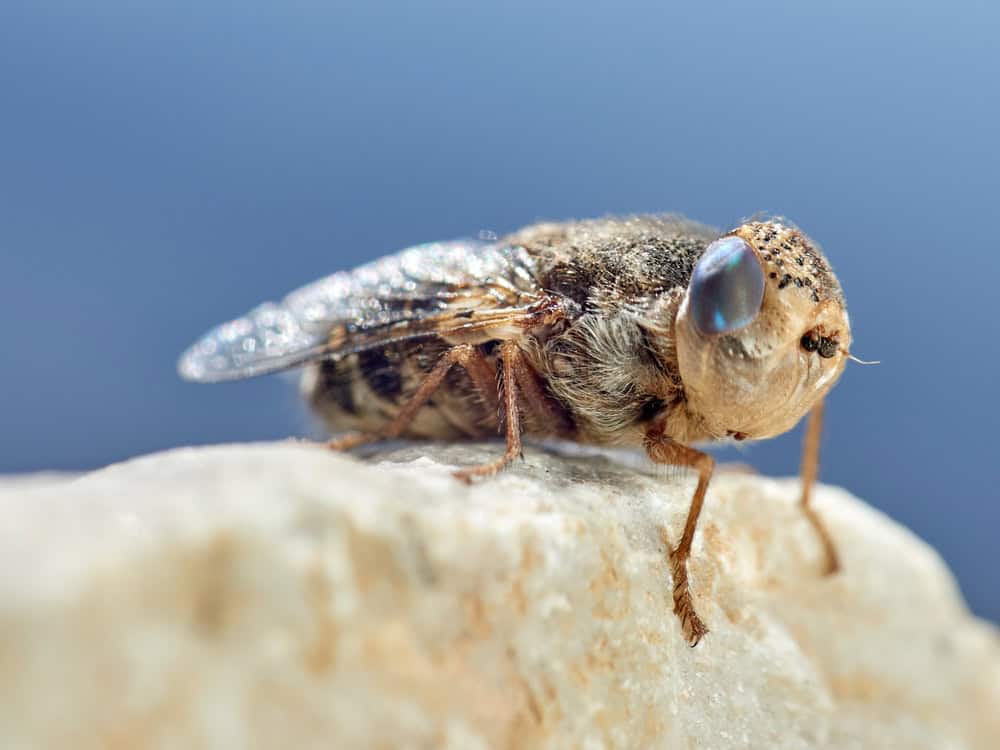
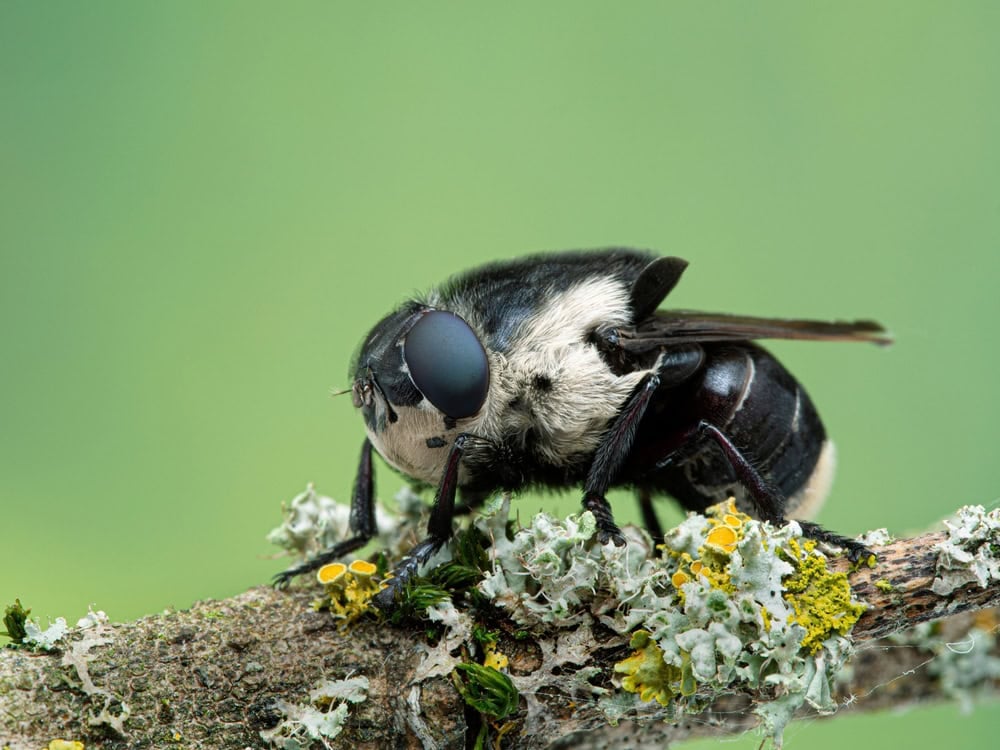
Botflies live close to their host species.
©Macronatura.es/Shutterstock.com
There are around 150 different species of botflies, which are also called warble flies, heel flies, and gadflies. Approximately 40 species are found in North America, and they belong to the Oestridae family. The adults are bee-like creatures with a single pair of wings and large eyes, but you hardly ever see them. You are more likely to come across the larvae, which is what you can see in this clip. They are short, segmented, and live in the tissues of other animals (hosts).
They are found living close to their host species. So, for example, the deer bot fly will be found in the same habitat as deer. Feeding takes place primarily during the larval stage, when they are inside the host’s body. The adult forms have either absent or reduced mouthparts and generally do not eat at all. They don’t live very long!
Lifecycle and Hosts
All botflies use a host (another animal) to complete their lifecycle, but there are many different ways in which they do this according to their particular species. These flies are highly host-specific. So, the horse botfly must find a horse, and the rodent botfly must find a rodent, etc.
The female botfly deposits her eggs on the skin of the host, although she may use an intermediary such as another fly. Induced by the host’s body heat, the eggs hatch, and the larvae develop within the host. Again, their location within the body is species-specific. Some live in nasal cavities (deer botfly), others live in the digestive tract (cattle botfly). In the clip above, the larvae is just under the skin. Mature larvae complete their pupal stage in the soil, where they turn into adults, and the cycle begins again.
Rodent Botfly
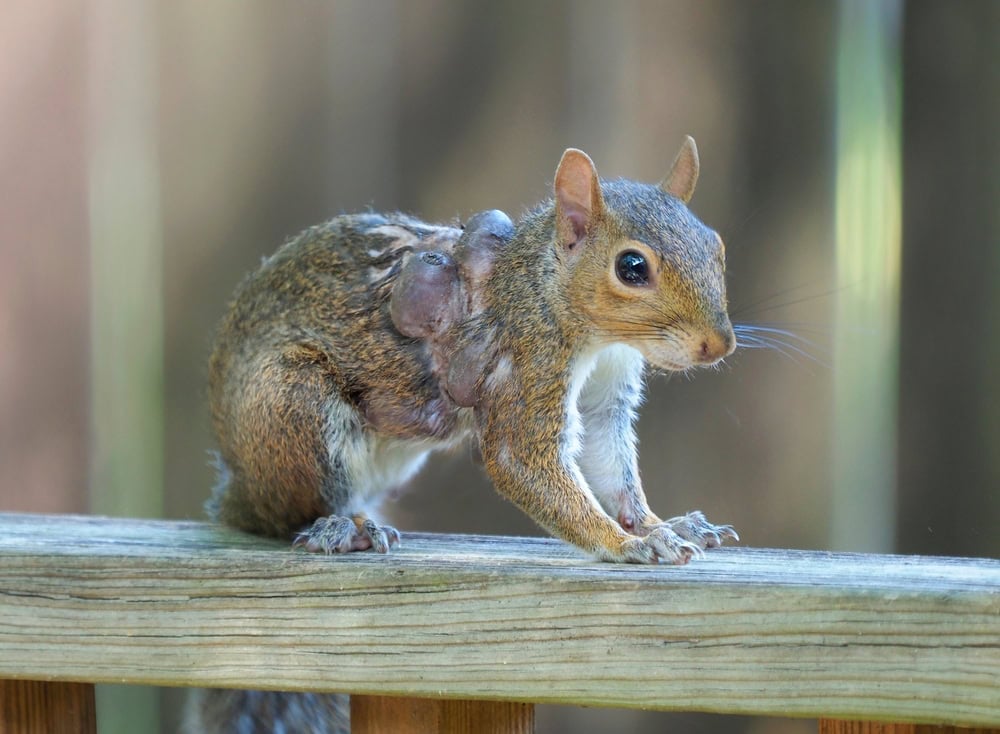
Warbles are tumor-like swellings.
©Steve Bower/Shutterstock.com
The larva in the Instagram post belongs to the rodent botfly (Cuterebra spp.); there are around 25 species of these in North America. We will look at their particular lifecycle in more detail so that we can understand what led up to the startling scene in the clip.
The adults are oval and around the size of a bumblebee. After mating, the female lays between 1200 and 4000 eggs. She uses chemical cues to find egg-laying sites that are frequented by her target hosts – rodents. This can be anything from mice to rabbits, chipmunks, and squirrels.
Typically, the eggs are laid in rodent burrows and runways. Within five to seven days, some of them hatch. When the warm body of a potential host is detected (they may also detect changes in CO2 concentration), they grab hold of the fur and burrow head-first into the skin or a flesh wound, eating the flesh as they go.
Soon, the rodent will have a tumor-like swelling on its skin, often called a warble. If you were able to look closely enough, you would see there is a small hole in the skin. Tiny anal spiracles protrude from the hole through which the larvae breathe.
In this position, the larva undergoes two lifecycle changes, feeding on serum and white blood cells. By the time it reaches its third instar (life stage), it is robust, cylindrical, and dark in color. It emerges from the skin, falls onto the ground, and pupates within two days, although this can take longer depending on the temperature. Finally, it emerges as an adult botfly.
Does the Host Die?
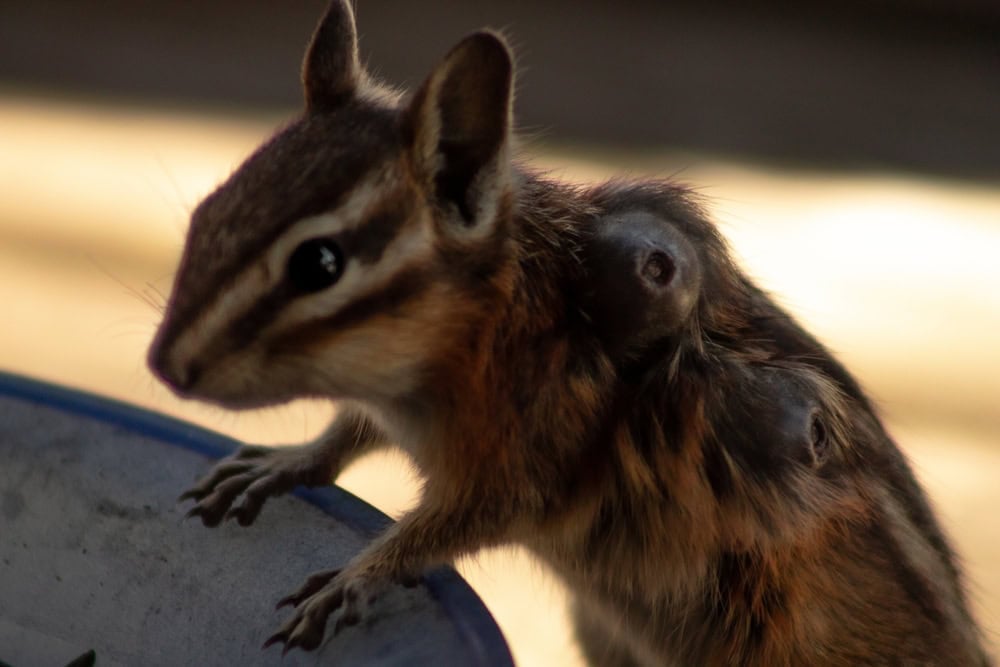
Warbles rarely kill their host.
©Prism Acres Rebecca Young/Shutterstock.com
The squirrel host in this clip is dead, or at least nearly dead. However, it has clearly suffered from some sort of head trauma, and it will be this, rather than the botfly, that caused its death. Having warbles on their body is not great for the rodent host, but it rarely kills them. This larva may have detected the change in body temperature as the host died, which triggered it to make its escape. The botfly needs a live host, not a dead one!
Could This Happen to a Human?
Watching this clip, you can’t help but imagine what this would be like if it happened to you. We have good news and bad news. Thankfully, this is a rodent botfly, and humans are primates, not rodents, so these flies would be highly unlikely to infect us. Though extremely rare, accidental cases have been reported. The bad news is that there is a human botfly called Dermatobia hominis. It is found from southern Mexico south into most of South America. The female fly uses ticks and mosquitoes to insert her eggs into our skin, and the larvae enter through hair follicles. After five to ten weeks, it ejects itself. However, doctors can surgically remove them if you would rather not wait!