
Quick Take
- Caddisfly larvae produce a glue that cures underwater, defying everything we know about how adhesives are supposed to work. See how the silk works →
- When a trout tries to pull a larva from its case, a hidden biological trick makes extraction almost physically impossible. Discover the locking mechanism →
- A French artist handed these insects gold flakes and gemstones in the 1980s, and what the larvae built next launched an entire jewelry market. Explore the gemstone cases →
- Scientists use caddisfly larvae to measure something expensive lab equipment still struggles to detect accurately. See them as pollution indicators →
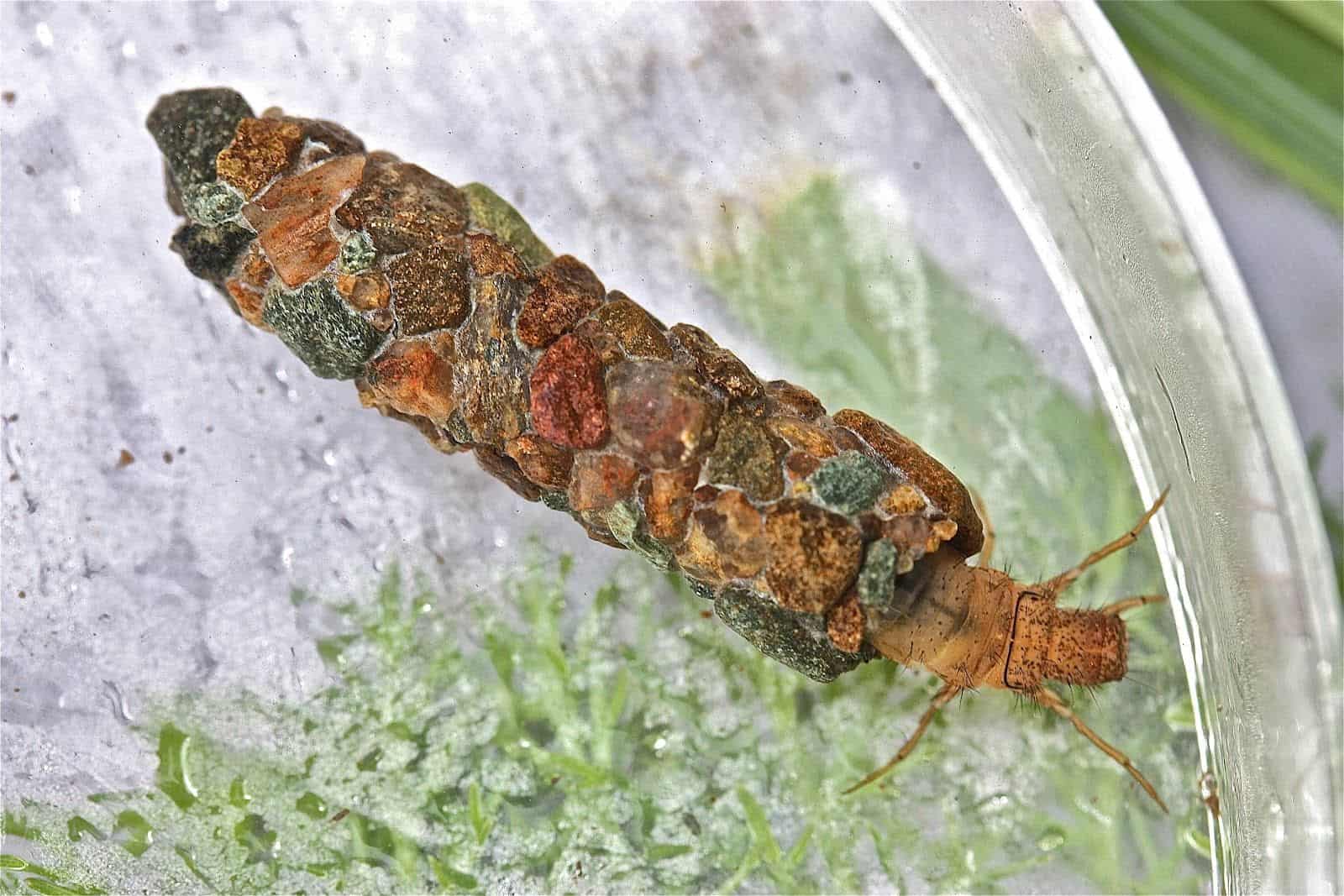
While many insects rely on speed or stealth to survive, caddisfly larvae take a more defensive approach: they construct their own suits of armor. Living at the bottom of streams and rivers, these tiny aquatic architects scavenge stones, sand, twigs, and shell fragments, binding them together using a specialized silk that hardens underwater. The resulting casings shield them from strong currents and hungry trout.
This underwater craftsmanship is so precise that artists have even supplied caddisflies with gold flakes and precious gemstones, collaborating with these tiny insects to produce stunning pieces of natural jewelry.
Nature’s Tiny Underwater Masons
At first glance, a caddisfly larva seems rather ordinary — just a small, soft-bodied insect crawling along a stream bed. But these freshwater insects are some of nature’s most inventive builders. Instead of relying on speed or stingers for protection, they build custom armor. They collect sand, twigs, pebbles, and shell fragments, gluing these materials together with silk they produce.
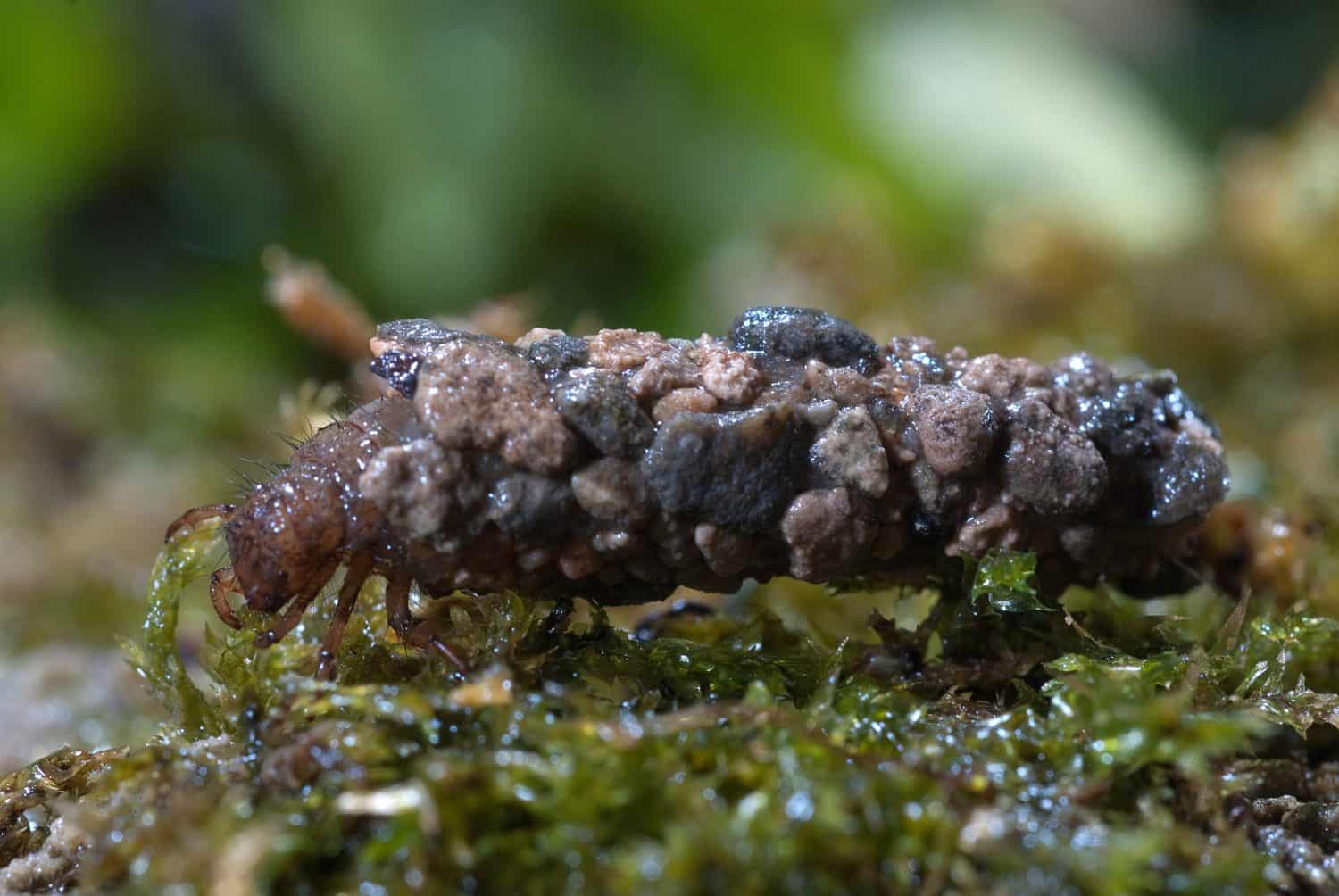
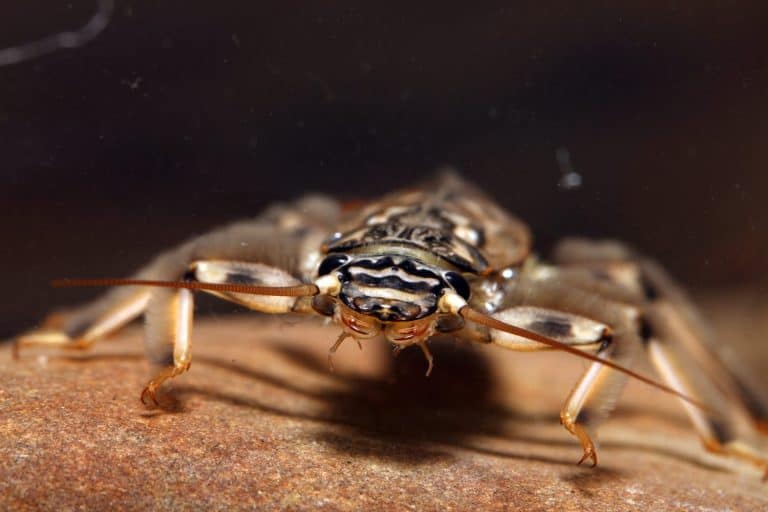
Caddisflies are also called rail-flies, sedge-flies, and caddisworms.
©FJAH/Shutterstock.com
Unlike typical silk, this specialized bio-adhesive hardens underwater without dissolving. The larvae use this waterproof glue to cement surrounding stream materials — sand, bark, pine needles, and shell fragments — into a snug, protective tube. As the insect grows, it continuously extends the front of its case and trims the back, maintaining a tailored fit.
Caddisflies spend up to a year underwater as larvae before becoming winged adults. These portable cases are essential for keeping them alive during this time. Serving as both a shelter and a shield, these cases keep the larvae anchored against turbulent currents and protected from predators.
More Than Just a House
A caddisfly’s case provides more than basic shelter. The weight of the debris acts as an anchor to keep the larva grounded in swift currents. When danger approaches, the larva pulls its entire body inside and grips the silk lining with hooked abdominal appendages. This anchor makes it nearly impossible for trout to drag the larvae out. Studies show that simply having a case — regardless of what it’s made of — dramatically boosts survival by making the larva difficult to grab, dislodge, or swallow.
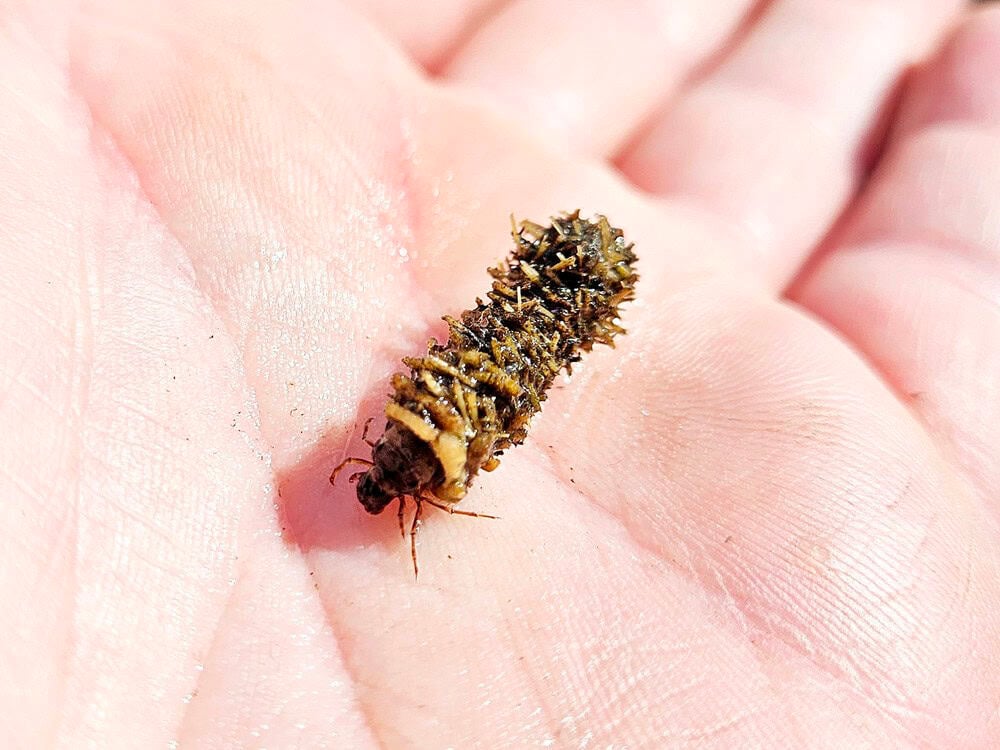
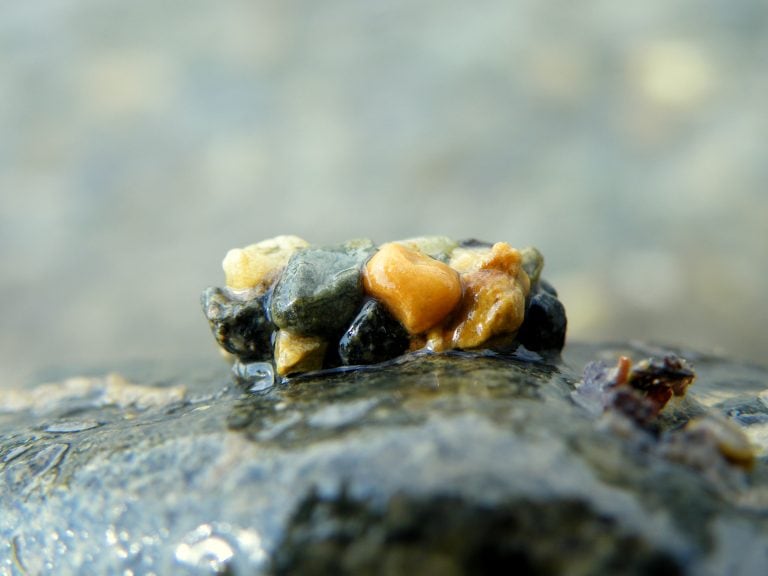
Caddisfly larvae will use any type of debris they can find to build their protective casing.
©This image is created by user B. Schoenmakers at Waarneming.nl, a source of nature observations in the Netherlands. / CC BY 3.0 / Wikimedia Commons – Original / License
When Science Becomes Art
In the 1980s, French artist Hubert Duprat placed larvae in tanks filled with gold flakes, pearls, and precious gems instead of natural debris. Guided by instinct, the insects used their underwater silk to craft dazzling, jewel-encrusted cases just as they would with sand and stone.
This experiment sparked a unique niche in wearable art. Today, Wildscape raises caddisfly larvae in specialized aquariums stocked with polished gemstones. After the mature insects leave their shelters, artisans collect and reinforce the empty cases, crafting them into unique necklaces and earrings — a process that does not harm the insects.
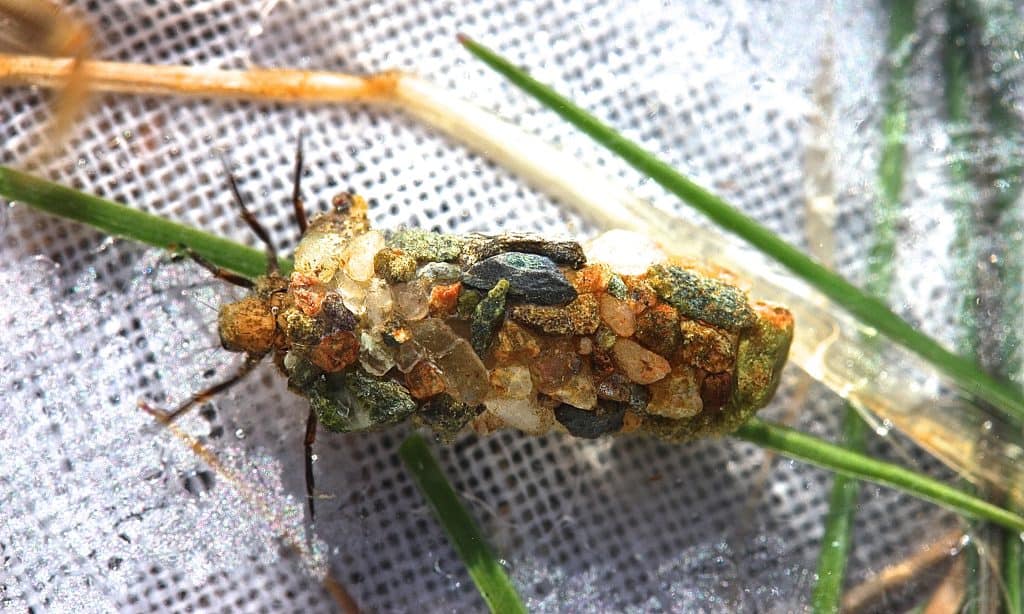
Creating caddisfly jewelry is completely harmless, as the cases are harvested only after the insects vacate them.
©Bob Henricks from Charlottesville, United States / CC BY-SA 2.0 / https://creativecommons.org/licenses/by-sa/2.0 / Wikimedia Commons – Original / License
Tiny Engineers with a Big Impact
Beyond their impressive building skills, caddisfly larvae play a vital role in freshwater ecosystems. Because they are highly sensitive to pollution and low oxygen levels, they serve as natural indicators of stream health. Their silken cases also help stabilize riverbeds, while the larvae themselves form a critical food source for trout, amphibians, and birds.
Whether assembling stone armor in riverbeds or creating gem-encrusted masterpieces in aquariums, these clever larvae are remarkable engineers. Their waterproof glue, portable shelters, and innate craftsmanship have kept them thriving for millions of years — continuing to inspire scientists, artists, and engineers today.