
Quick Take
- Antarctic icefish are transparent, white-blooded fish that lack red blood cells and hemoglobin.
- Antifreeze proteins in their blood prevent ice crystals from forming in frigid seas.
- Enlarged gills, oxygen-absorbing skin, and specialized jaws help them thrive in extreme cold.
- Climate change threatens icefish, as even small ocean warming could push them toward extinction.
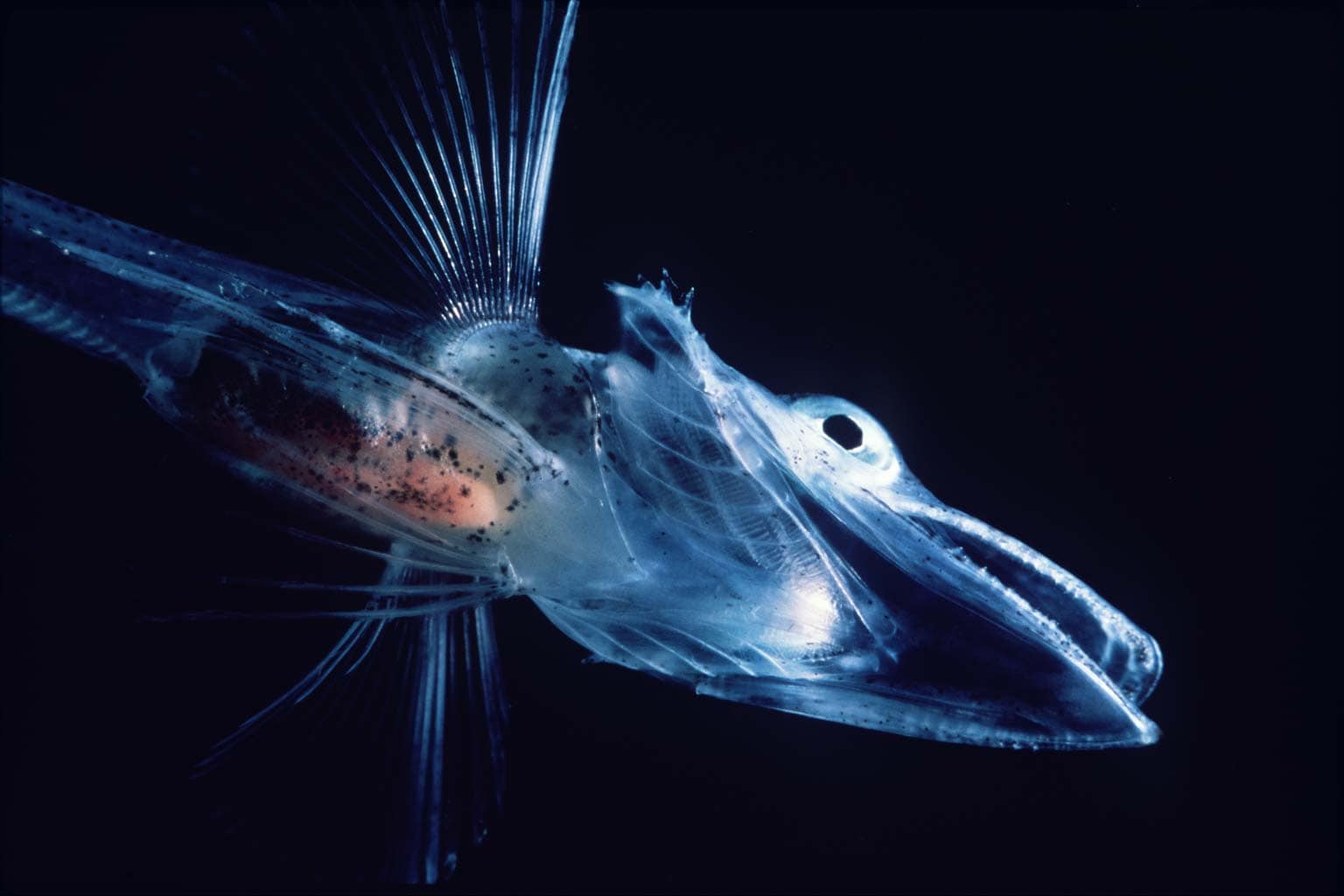
The first icefish was discovered in 1927, swimming in the frigid waters of the southernmost extreme of the Earth, the Southern Ocean surrounding Antarctica. This unique fish had a see-through body and transparent blood. Unlike most vertebrates, icefish have evolved without red blood cells and hemoglobin. Today, we know there are 16 species of icefish, and all of them have developed amazing adaptations that allow them to survive in icy waters where most vertebrates’ blood would freeze solid.
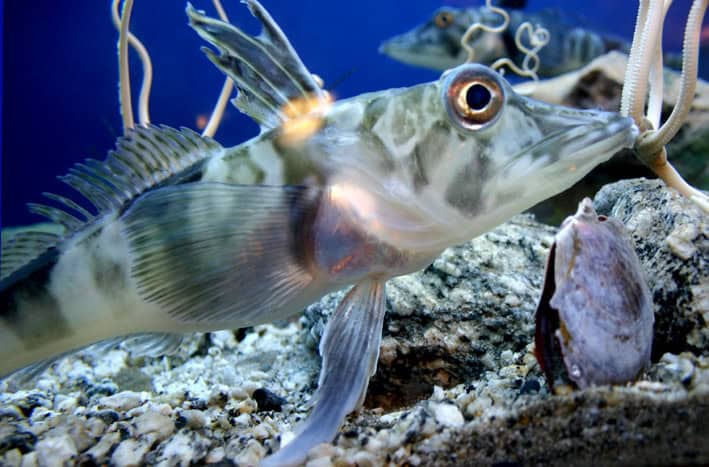
Icefish have adapted to the frigid Southern Ocean with unique adaptations.
©Copyrighted Free Use – Original
About Antarctic Icefish
Antarctic icefish, also known as crocodile icefish or white-blooded fish, are in a family (Channichthyidae) of Notothenioid fish. Notothenioid fish make up about 90% of the fish living in the Antarctic shelf region. They are mainly bottom-dwelling fish, and many have special adaptations to survive in icy waters. Icefish feed on krill, smaller fish, and small crustaceans.
Scientists recognize 16 species of Antarctic icefish. These unusual fish are around one to two feet in length, have no scales, are transparent, and lack red blood cells and hemoglobin pigments. They evolved from a single ancestor that lived 22.4 million years ago. Some notable species of the icefish include the blackfin icefish (Chaenocephalus aceratus), the mackerel icefish (Champsocephalus gunnari), Jonah’s Icefish (Neopagetopsis ionah), and Ocellated Icefish (Chionodraco rastrospinosus).
How Can Antarctic Icefish Survive the Cold?
It’s hard to imagine how cold Antarctic waters can get. The temperatures may drop lower than the freezing temperature of fresh water because the salt in the water lowers the freezing point. Antarctic sea waters may reach as low as 28 degrees Fahrenheit before freezing. A typical fish without cold-water adaptations will begin to freeze around 30.6 degrees Fahrenheit. Ice crystals grow inside the fish, damaging tissue, severing nerves, and killing the fish.
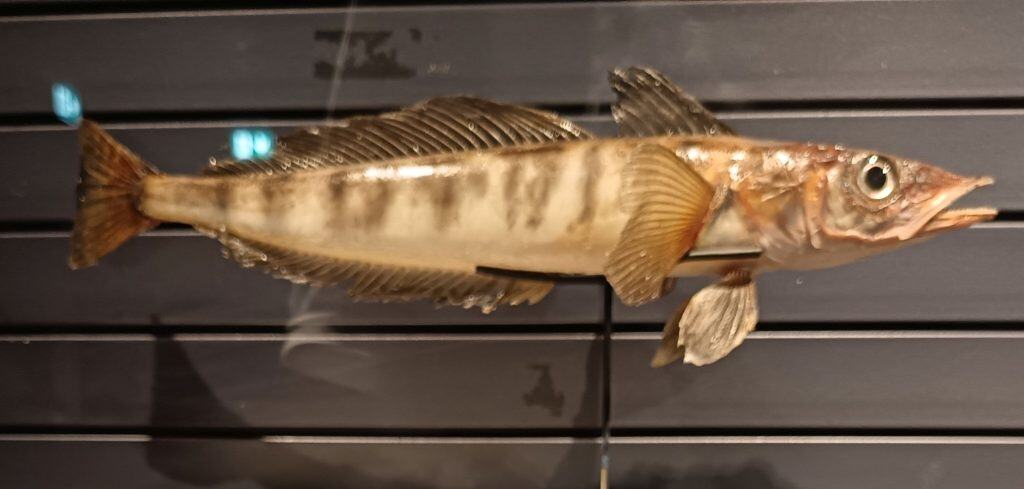
The mackerel icefish (Champsocephalus gunnari) lives in the frigid waters of the Southern Ocean
©DMontagne en résidence, CC BY 4.0, via Wikimedia Commons – Original / License
But icefish have evolved some unique adaptations to survive frigid temperatures. An icefish’s blood contains proteins that act as antifreeze. Known as antifreeze glycoproteins (AFGPs), these proteins bind to microscopic ice crystals in the fish’s blood, blocking the ice crystals from growing. Antarctic fish are not the only animals on Earth with AFGPs in their blood. Scientists have also found them in insects, amphibians, and plants.
A recent study found that icefish with AFGPs began to evolve around the same time as a cooling event occurred in Antarctica. The scientists concluded that icefish diversified because their blood’s antifreeze properties allowed them to move into the cold Arctic seas at a time when the waters were cooling. This allowed the icefish to create new habitats and exploit opportunities in environments where other fish could not survive.
Other Adaptations That Helped Icefish Survive
Antifreeze in their blood isn’t the only thing that makes icefish unique. Icefish blood does not contain red blood cells or hemoglobin pigments. The blood of most vertebrates contains red blood cells and hemoglobin pigment. These transport oxygen throughout the body.
Icefish absorb oxygen primarily through their enlarged gills and also by diffusing oxygen directly through their thin, scaleless skin. Additionally, icefish have larger hearts and blood vessels, which help them circulate blood more efficiently than typical fish. These adaptations are effective because cold water holds more oxygen than warm water, and icefish have low metabolic rates. Rather than actively hunting, icefish are ambush predators that sit on the ocean floor and wait for prey to swim by.
Another rare adaptation of icefish is the distinct way their jaws evolved. The upper and lower jaws of icefish evolved independently, resulting in some species with jaws adapted for crushing prey and others with jaws suited for suction-feeding on fast-moving fish. This flexibility allowed the icefish not only to survive but also to thrive in an incredibly harsh environment.
How Climate Change Threatens Icefish
All of the adaptations that helped icefish flourish in frigid waters mean they cannot survive in warmer seas. As climate change causes the Antarctic to warm, scientists are studying what implications this could have for Antarctic icefish.
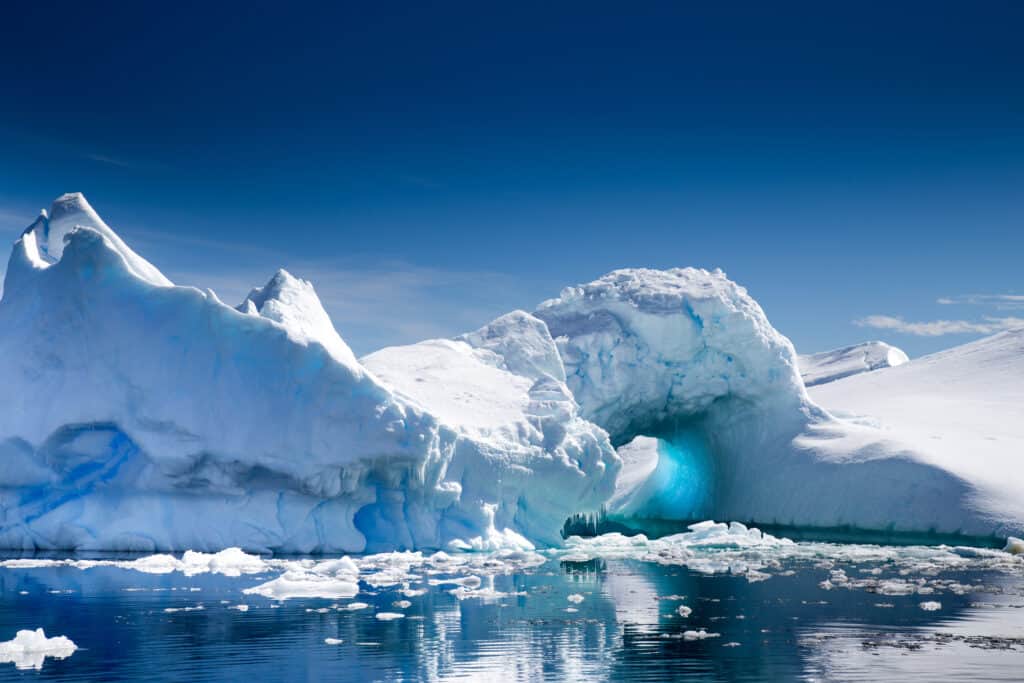
Climate change is causing rapid changes in Antarctica.
©robert mcgillivray/Shutterstock.com
Current research has shown that icefish may be able to survive briefly in warmer waters, but they are not adapted to live in warm conditions for extended periods. Scientists warn that even modest increases in ocean temperature could severely threaten the survival of icefish.
Stuart Eggington, a scientist who has done extensive research on icefish and global warming in the Antarctic, explains that the changes happening there have much wider implications for the rest of the planet. Eggington said in a statement, “To find answers, increasingly we have to look in strange places because ecologically, if things are going wrong in Antarctica, the rest of the world will follow suit.”