
Quick Take
- The structures we're building along coastlines may be accidentally engineering the perfect jellyfish nursery, and the mechanism behind this turns out to be more direct than anyone expected. See how structures fuel blooms →
- Jellyfish blooms have already shut down nuclear power plants, sunk fishing vessels, and wiped out entire fish farms, and what triggers them may be hiding in plain sight. Explore real-world impacts →
- Marine scientists warn that unchecked blooms could push ocean ecosystems toward a state last seen hundreds of millions of years ago, and they add that human infrastructure may be accelerating the timeline. Understand the ecological stakes →
- Some researchers aren't trying to stop jellyfish blooms at all. They want to harvest them, and the reasons are harder to dismiss than you'd think. Discover jellyfish as a resource →
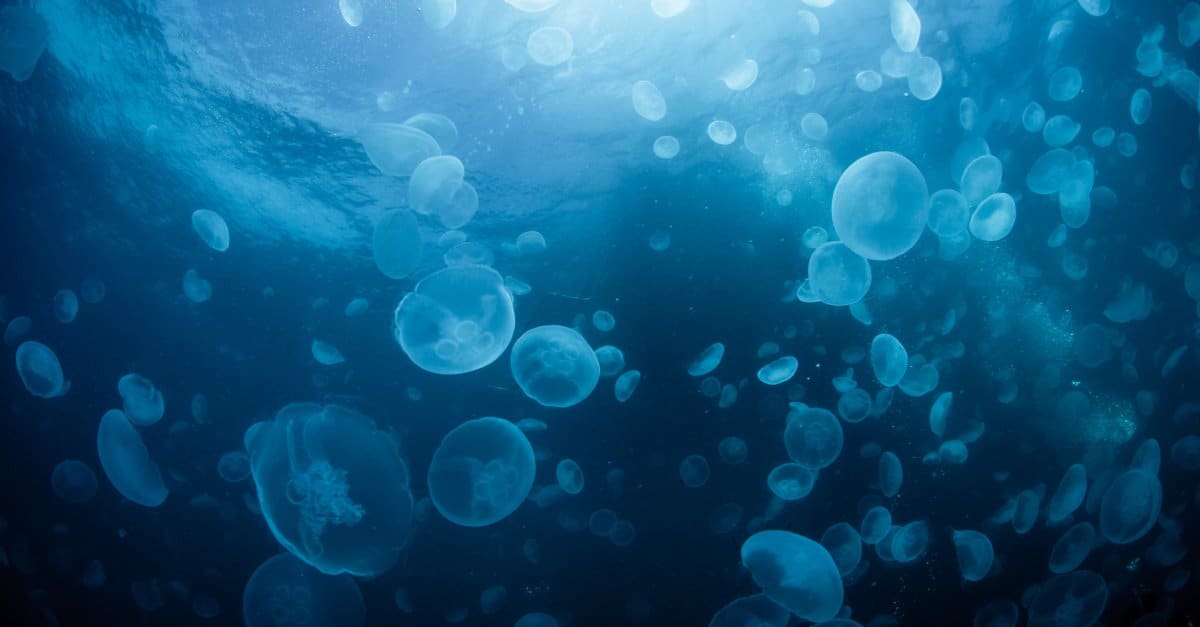
Imagine billions of small jellyfish covering a patch of water 10 miles wide. They are so dense that even boats cannot cut their way through the gooey mush. That is what a jellyfish bloom looks like, and it seems they are on the rise. We investigate the link between these startling phenomena and the structures we are creating on our coasts. Is there a link between jellyfish blooms and ocean sprawl?
What Are Jellyfish Blooms?
A jellyfish bloom is when there is a substantial increase in a jellyfish population within a short period of time. Bloom-forming jellyfish species are primarily found within the cnidarian taxon Scyphozoa. These jellyfish often have complex life histories, which can include both a sexually reproducing (pelagic) and an asexually reproducing (benthic) life cycle. They show remarkable flexibility, switching between the two types of reproduction in response to different environmental conditions.
After fertilization, the female produces large numbers of larvae, which spend some time in the water column before settling onto a hard substrate to metamorphose into polyps. At the same time, the benthic polyp stage can exist in very high concentrations. If conditions are right, this can result in a staggering number of jellyfish—a bloom.
Jellyfish blooms are a natural occurrence and have some benefits. They serve as a food source for some creatures and may even help mix and fertilize the world’s oceans. There is some debate about whether jellyfish blooms are actually increasing, but anecdotal reports and media coverage suggest that they are.
The Rise of Jellyfish Blooms
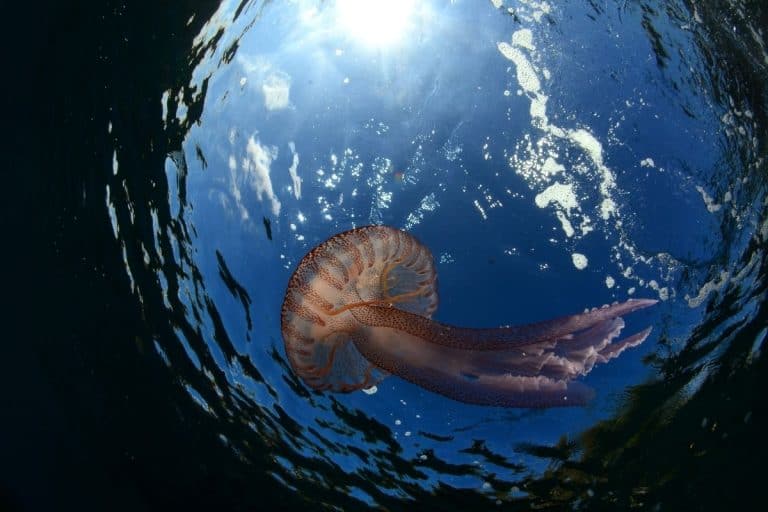
Huge annual jellyfish blooms have been recorded across the Mediterranean, the Black Sea, the Gulf of Mexico, and the Yellow and Japan Seas. And they are causing very real problems. Jellyfish blooms have shut down nuclear power plants in Scotland, Israel, and Florida by clogging up water inlets. In 2007, a ‘plague’ of mauve stingers wiped out Northern Ireland’s only salmon farm, killing over 100,000 fish. They did a similar thing to sea bream and sea bass fish farms in Turkey. In Japanese water, refrigerator-sized gelatinous monsters called Nomura’s clog fish nets and have even overturned trawlers!
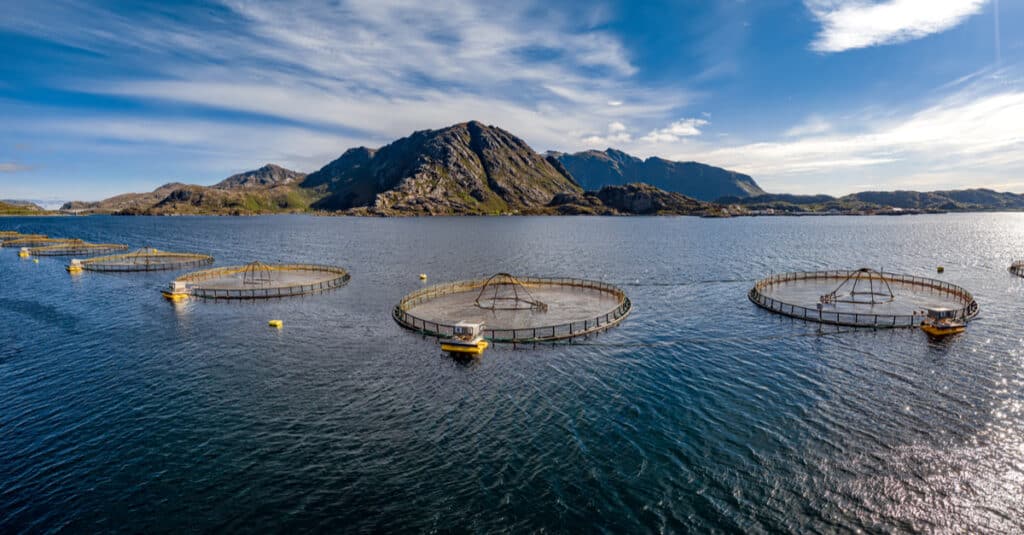
Salmon farms can be decimated by jellyfish blooms.
©Andrey Armyagov/Shutterstock.com
Human factors are likely contributing to this trend, although there is still much to learn about the exact causes. Potential causes include overfishing, warmer temperatures, salinity changes, ocean acidification, and pollution. However, the proliferation of coastal infrastructure is also likely playing a significant part. Ocean sprawl is probably partly to blame.
What Is the Ocean Sprawl?
When scientists refer to ocean sprawl, they mean the rapid proliferation of hard, artificial structures in the marine environment. These can be both coastal and offshore and fall into a few categories.
Marine renewable energy installations such as wind turbines, together with oil and gas platforms, make a sizeable proportion of artificial marine structures. Then, there is semi-permanent fishing equipment such as crab tiles. As urbanization increases, more ports, harbors, and marinas are constructed. These need straight-sided docks, piers, and mooring seawalls. Added to this are artificial coastal defense structures. As an extreme example, coastal armoring now covers more than 89 percent of the natural coastline of Monaco and 85 percent of Belgium!
Coastal Sprawl Implications
When natural, sedimentary substrata are replaced with hard substrata, it alters the distribution of species in particular locations. These structures are not simply substitutes for natural habitats; they are distinctly different in both community structure and ecological function.
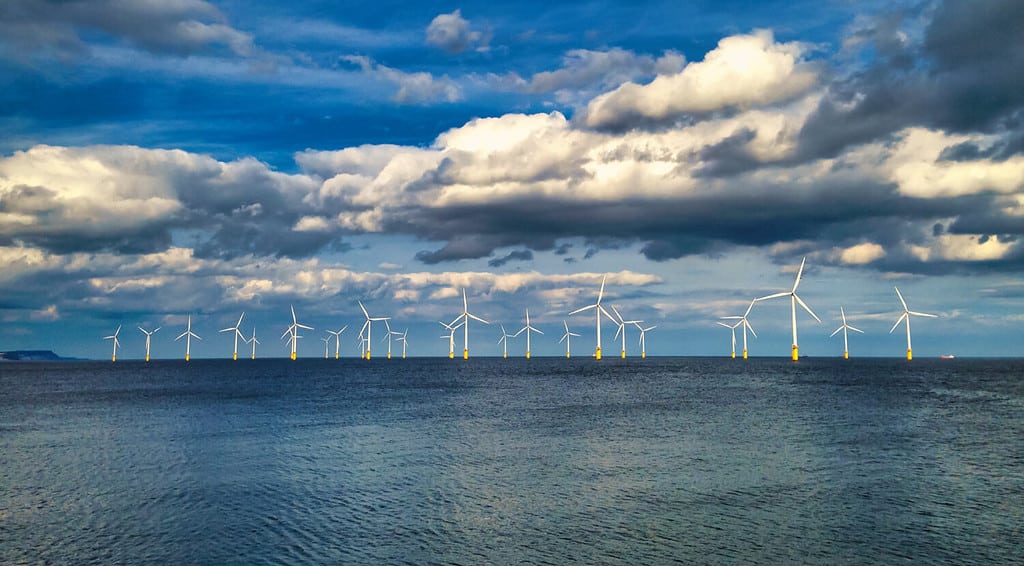
Wind turbines create artificial habitats.
©Nuttawut Uttamaharad/Shutterstock.com
In some cases, these structures have increased species diversity and abundance, and have even supported larger adult individuals. On the other hand, they are more often associated with decreased diversity and a more homogeneous landscape. The animals that live on them have lower genetic diversity.
Artificial structures have been linked to increases in some harmful species, such as jellyfish. Jellyfish larvae settle in large numbers on artificial structures in coastal waters. They develop into dense concentrations of jellyfish-producing polyps.
Why Does This Matter?
Hundreds of millions of years ago, in pre-Cambrian times, jellyfish dominated our seas. Some marine scientists warn that if we do not act to curb the current blooms, we could have runaway populations. The biodiversity of our oceanic ecosystems could plummet and revert to one dominated by jellyfish.
Jellyfish can use their complex reproductive strategies to survive population crashes that would wipe out other species. Even if the so-called ‘jellygeddon’ never materializes, jellyfish blooms are already having a significant impact in some areas.
Other experts have suggested that we exploit jellyfish blooms and use them as a resource. Jellyfish can provide collagen, which is used in preparations to treat conditions such as rheumatoid arthritis. They are also a source of food. In parts of Asia, they are dried and chopped into noodle-like strips to be added to soups.