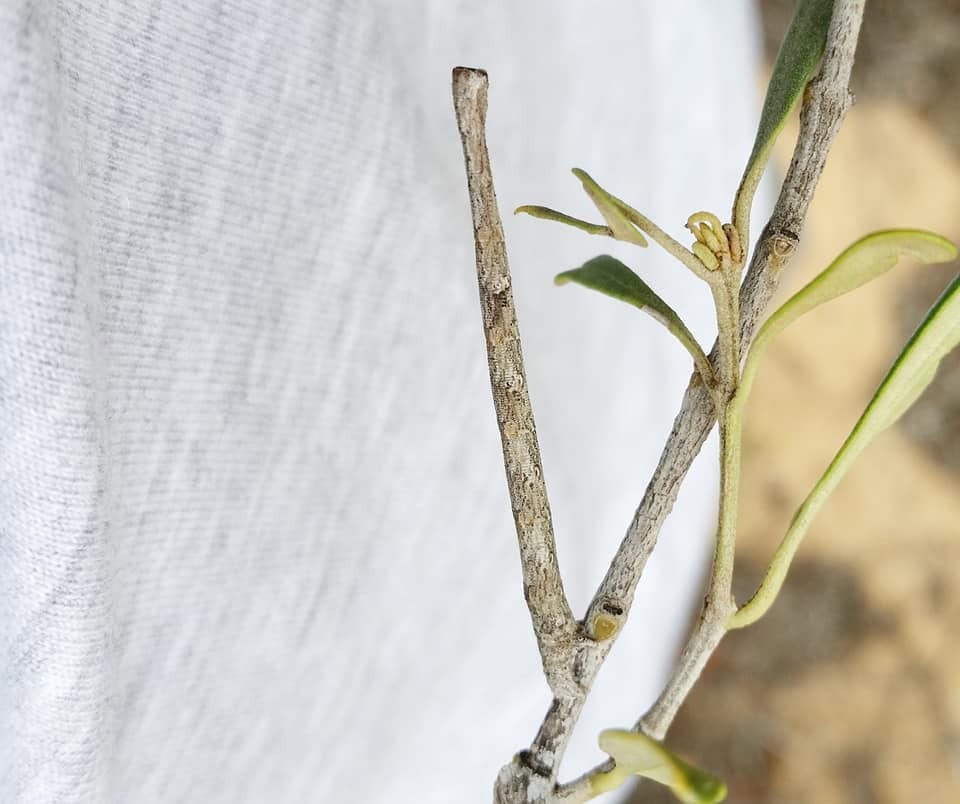

If you’ve ever seen what you thought was a small twig suddenly twitch or squirm, you may be looking at an inchworm. This Instagram post from explaininginsects shows a video of a small, gray inchworm that could easily be mistaken for a twig. That is, until the inchworm is disturbed; then it quickly moves to another stick and straightens itself out once again.
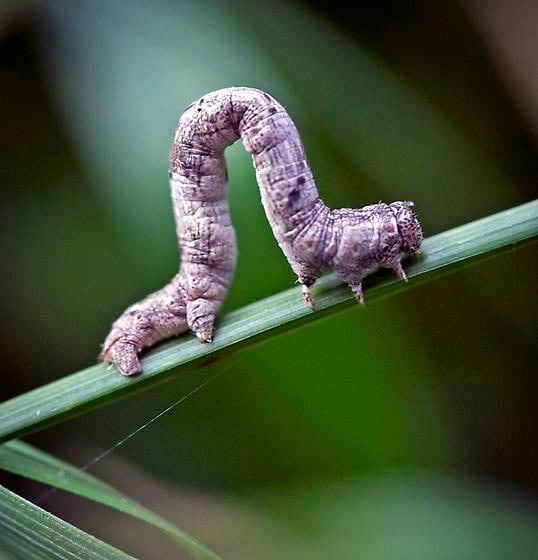
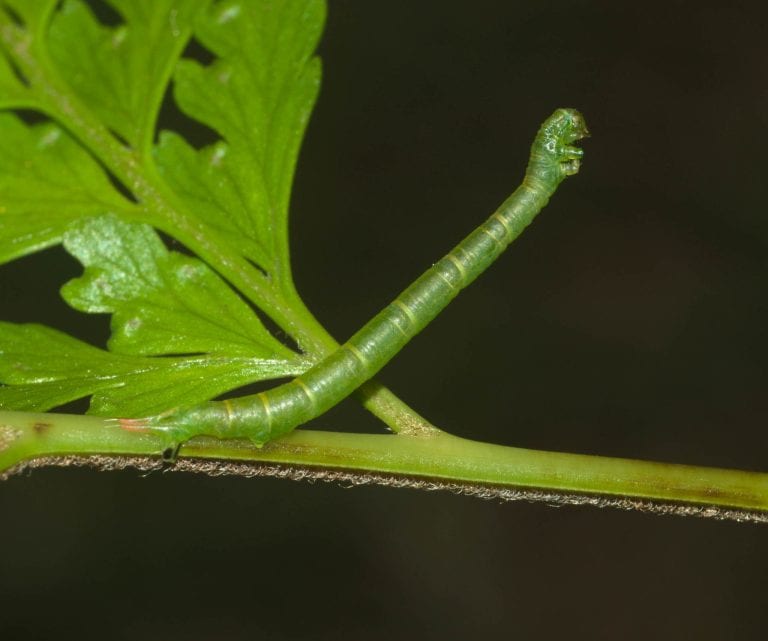
Inchworms are not worms at all, but actually the caterpillar stage of the geometer moth.
©WanderingMogwai, CC BY-SA 4.0, via Wikimedia Commons – Original / License
What Are Inchworms?
The inchworm in the video is a member of the family Geometridae. It is not actually a worm, but rather the caterpillar of the geometer moth. Like all moths, they are in the insect Order Lepidoptera. There are around 160,000 species of moths in the world. According to the Smithsonian, there are over 15,000 individual species of geometer moth caterpillars. Over 1,400 species live in North America.
Inchworms are also known as loopers because of their distinct movement, where they hump their bodies in the form of a loop and inch forward. Geometer moth caterpillars are missing legs in their mid-section, which explains their recognizable walk. Inchworms aren’t named for their size, but rather for the way they move. Depending on the species, the caterpillars may range in size from 1/2 inch to 4 inches long.
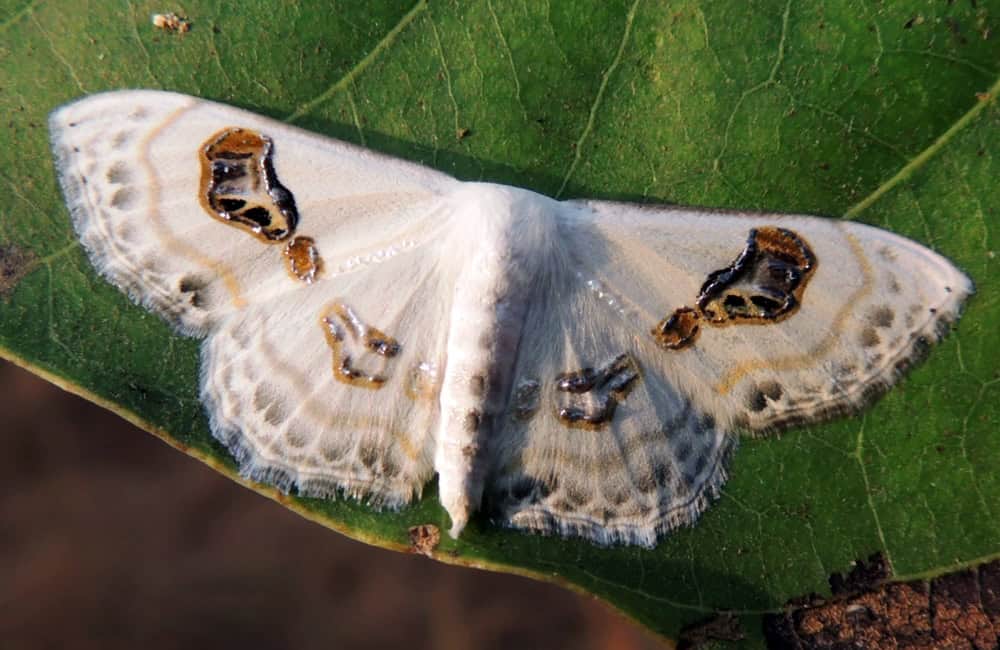
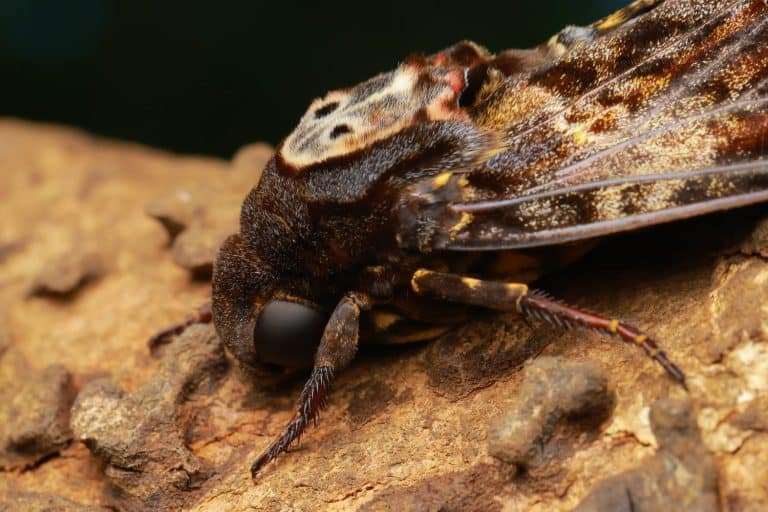
Geometer moths often resemble dead leaves to camouflage themselves from predators.
©Shantanu Kuveskar, CC BY-SA 3.0, via Wikimedia Commons – Original / License
Inchworms are the larval stage of the geometer moth. Geometer moths undergo four life stages: egg, larva, pupa, and adult. As caterpillars, they generally eat plants, including tree leaves and shrubs. As adults, many moth species do not have mouthparts and never eat during their short adult stage, while others may drink nectar from flowers.
Inchworms Are Masters of Camouflage
If you watched the video, you may have been surprised to see something that looked like a twig suddenly start twitching and then move to another branch. Once safely attached, the inchworm goes stiff once again, looking very much like it’s part of the stick.
Many geometer moth caterpillars are green, brown, or gray to blend in with plants. They also may have markings or patterns that help them camouflage further. When threatened, they will stiffen up. Their stiff posture makes it hard for birds and other predators to realize they aren’t a part of the plant. They may also stiffen up while at rest, gripping the twig with their hind legs while the rest of their body extends outward at an angle.
Geometer moths are prey for many animals during their caterpillar stage and as adults. Some common predators include birds, bats, and spiders. Like the caterpillars, the adults are camouflaged to blend into their environment and avoid predators. For example, the juniper-twig geometer moth (Patalene olyzonaria), which is common in the eastern U.S., looks very much like a dried-up leaf. Similarly, the scallop moth (Cepphis armataria) has the appearance of a brownish, curled, dead leaf. The caterpillar of the scallop moth can be brown or green with raised ridges that make it look just like a twig.
Where Are Geometer Moths Found?
Geometer moths live on every continent, except Antarctica. At around 15,000 species, they are the second largest family of moths in the world, behind Noctuidae. Geometer moths live in many different types of habitats, including North American forests, coastal areas, tropical regions, and even polar zones. For example, the smoky wave moth (Scopula ternata) can be found in polar regions. The caterpillar is long and slender, and looks very much like a small stick when it makes itself stiff.
How Long Do Geometer Moths Live?
A geometer moth’s overall lifespan is typically about a year. However, as adults, most geometer moths usually live a very short time, not much longer than a week. They may overwinter as eggs, larvae, or pupae, and complete their metamorphosis into moths during the spring.
In Hawaii, One Inchworm Goes Stiff to Catch Its Prey
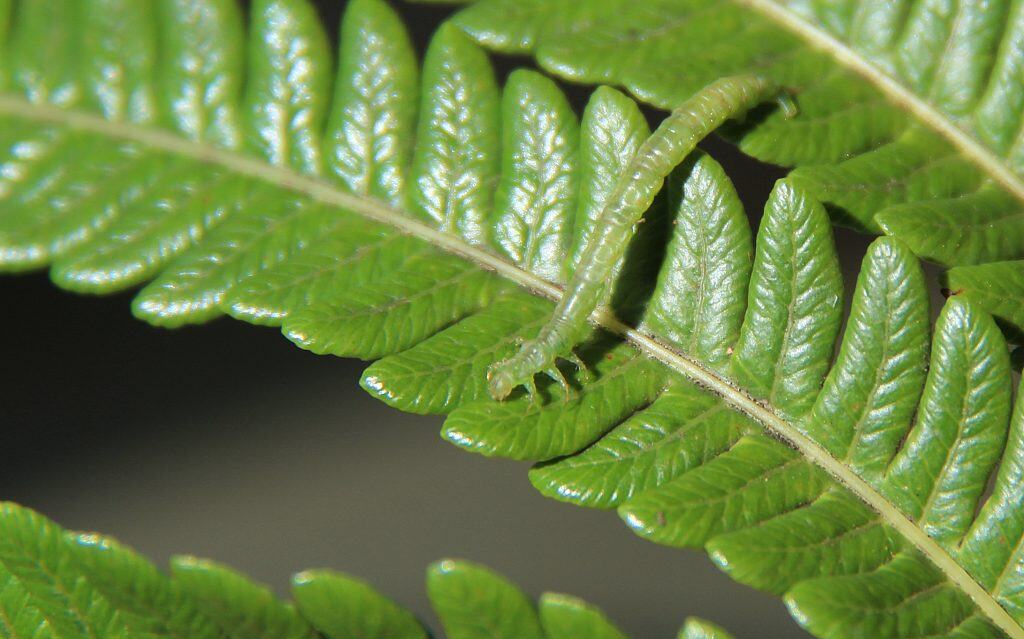
The carnivorous Hawaiian caterpillar of the genus Eupithecia lies in wait to ambush its prey.
©Hawai‘i Volcanoes NPS, Public domain, via Wikimedia Commons
There are species of geometer moth caterpillars in Hawaii in the genus Eupithecia that don’t eat plants, but consume other insects. These carnivorous caterpillars camouflage themselves on plants, looking as if they are part of the plant. But when an insect flies or crawls by, the caterpillar strikes, catching its prey with its legs. They strike quickly with sharp body bristles and claws to pierce even the toughest insect’s exoskeleton.
Some of the species are brown and resemble twigs, while others are green and look more like the stem of a green plant. One species even resembles a leaf of a fern. Hawaii is home to around 18 individual species of Eupithecia moths.