
Twospotted spider mites are a tiny pest that can cause big damage to strawberry plants. Farmers may combat them by using pesticides, but twospotted spider mites often develop resistance to poison. That’s where another tiny mite comes to the rescue. Farmers use a predatory mite called persimilis to help them win the battle against the twospotted mites and save their strawberry fields. A video from the Deep Look YouTube channel shows how farmers deploy predatory mites in their fight against the damaging strawberry pests.
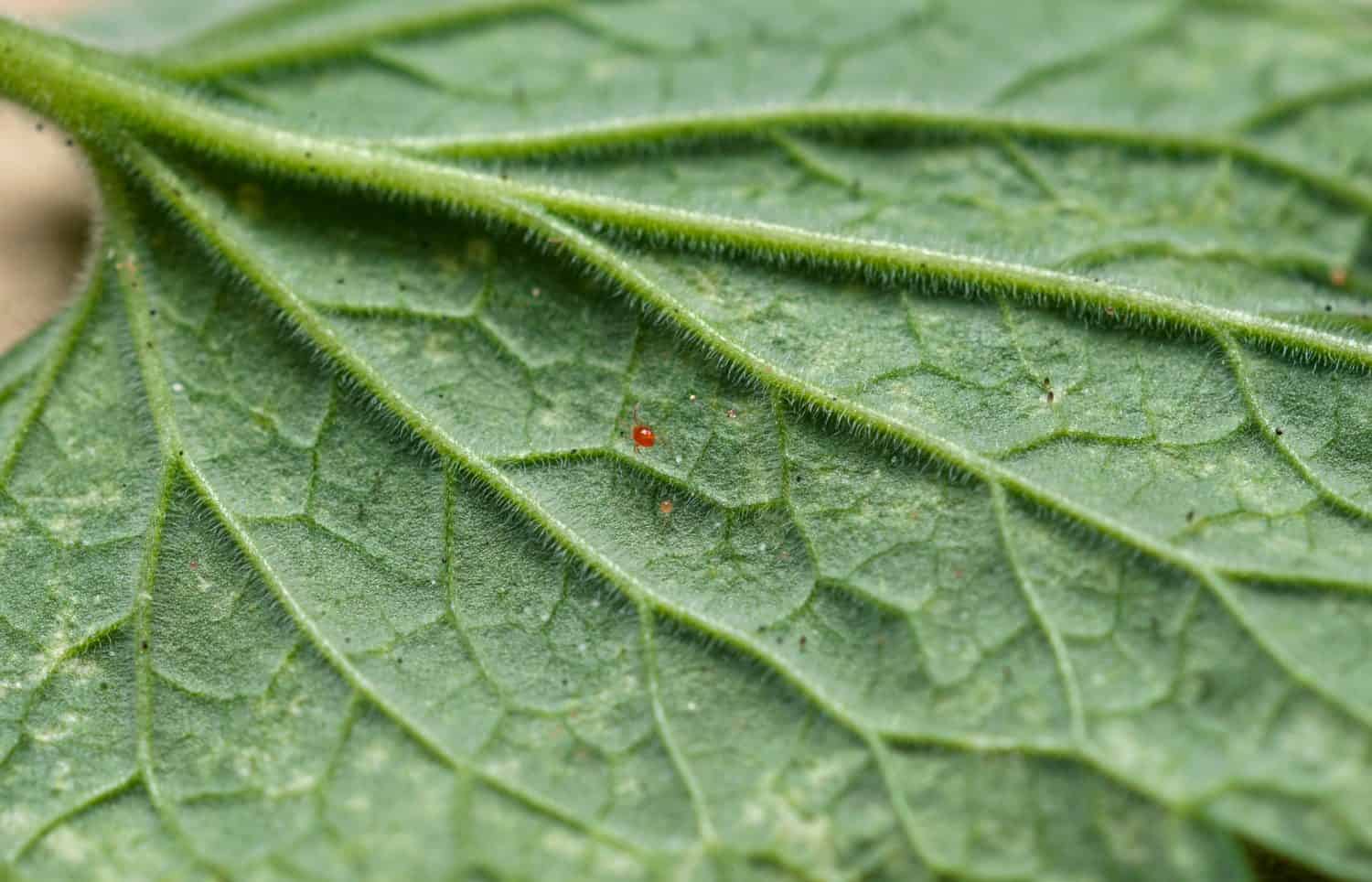
Phytoseiulus Persimilis may be small, but they have a big appetite.
©Catherine Eckert/Shutterstock.com
How Twospotted Spider Mites Can Devastate Fields
They are only the size of a grain of sand, but these little mites can destroy entire fields of crops. Twospotted spider mites (Tetranychus urticae) have spider in their names, but they aren’t actually spiders. Like spiders, they are arachnids. Twospotted spider mites are plant eaters. They feed on the juice of strawberry plant leaves, sucking it out with specialized, needle-like mouthparts called stylets.
An infestation of mites causes the leaves to turn brown and fall off. The plants are stunted, the fruit is damaged, and the plants may even die. The mites lay tiny eggs, which are only about 0.006 inches in diameter, on the underside of leaves. Though it may be hard to spot the eggs, the mites can also be identified by their webbing.
Phytoseiulus Persimilis to the Rescue
The plant-eating spider mites have become resistant to many pesticides, leaving farmers with a need to get creative. According to the video from Deep Look, strawberry farmers in California are introducing a different mite to their fields, the predatory Phytoseiulus persimilis.
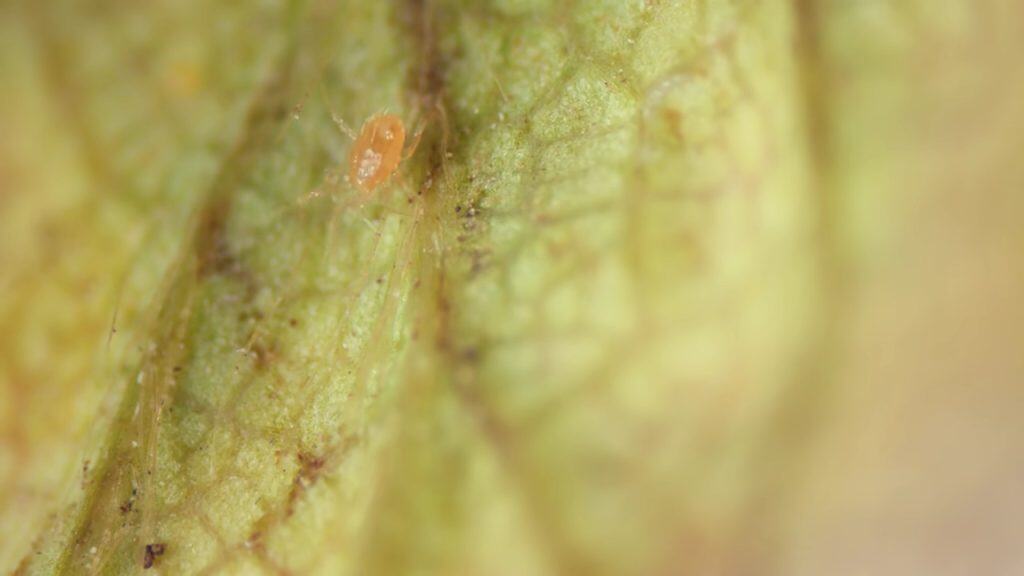
Phytoseiulus persimilis are predatory mites that prey on other mites.
©Deep Look / YouTube – Original
Persimilis mites are packed in tubes with vermiculite and can be hand-tossed onto strawberry plants, although this process is time-intensive. As we learned from the Deep Look video, farmers are using drones to get the job done more efficiently.
This Battle Is Impossible for the Twospotted Spider Mite to Win
Once the persimilis land on the strawberry plants, they get straight to work. Persimilis mites are carnivorous and feed on other mites. Because they are blind, these predators hunt using vibrations and odors. When the twospotted mites feed on the strawberry plants, the distressed plants release pheromones. The pheromones are sensed by the persimilis mites, leading them directly to the pests.
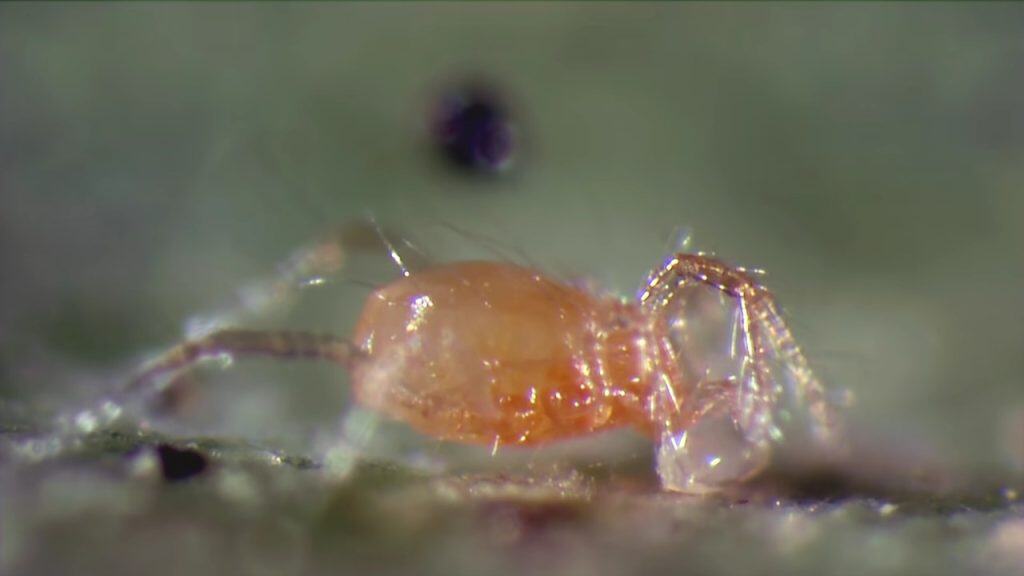
Phytoseiulus persimilis are carnivorous mites that eat twospotted spider mites and their eggs.
©Phytoseiulus Persimilis / YouTube – Original
Persimilis are ferocious and hungry. They eat the plant-eating mites and their eggs using pincers called chelicaerae. Chelicerae are a pair of appendages in the front of the mouth that are like biting jaws that pierce the mites and suck their insides out to eat.
Eventually, after the persimilis have consumed all the twospotted spider mites and their eggs, only persimilis remain in the field. However, without a food source, the persimilis cannot survive and also die out. The strawberry plants (and the farmers) are the ultimate winners in this fight.
Farmers Around the World Use Predatory Mites
It’s not just strawberry fields in California that are benefiting from the hungry appetites of persimilis mites. Although California produces the majority of US-grown strawberries, Florida also has a large strawberry industry. As in California, the twospotted spider mite is also widely found in Florida. Florida farmers have also reported success with applying persimilis to strawberry fields.
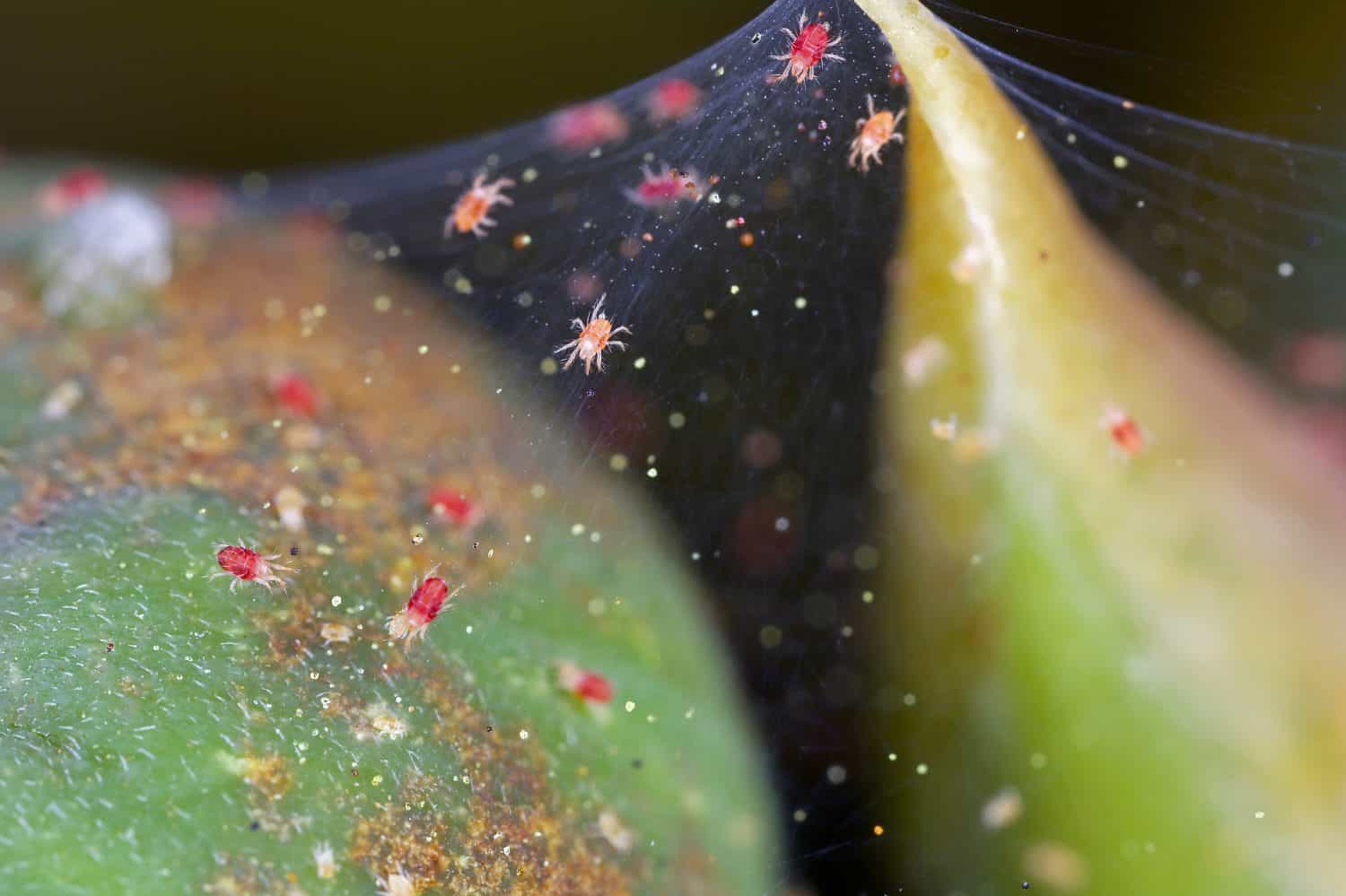
Home gardeners can buy persimilis online to control twospotted mite infestations in their garden.
©Tomasz Klejdysz/Shutterstock.com
Twospotted spider mites are also a problem for Australian strawberry farmers, who are increasingly turning away from pesticides and chemicals in favor of more natural pest management programs. According to a news report out of Australia, a significant number of strawberry farmers are using persimilis to attack twospotted mites, with adoption rates continuing to rise. In Europe, persimilis is used to control spider mites in around 75% of greenhouses.
UC Davis Researchers Took Using Drones in the Field a Step Further
A research team from UC Davis in California is using drones not only to deploy the predatory mites, but also to determine if and where they are needed. Rather than adding persimilis to entire fields, these scientists are looking at ways that drones can use light-sensitive cameras to find pest-damaged plants. Once the drone locates the damaged plants, other drones fly in to drop off the predatory mites.
The benefits of spot-treating fields include a reduction in cost. Treating entire fields with predatory mites is not cheap. In fact, spraying pesticides over a field costs less than treating the entire field with persimilis. However, if farmers could spot-treat only the areas that needed help, the cost would be reduced, making farmers much more likely to use natural methods than spraying chemicals. The drones also give farmers an early look at areas where their crops may need special treatment.