
Quick Take
- Orb weaver spiders, Cyclosa inca and Cyclosa longicauda, create spider-like decoys on their webs to deter predators.
- Decoys observed in the Philippines and Peru are built from leaves, plant fibers, silk, or dead insects and may include legs.
- Predators may retreat, giving the spider a reprieve, or attack the decoy and allow the spider to escape.
There are more than 50,000 species of spiders in the world, of all different sizes. They live in a wide range of habitats and exhibit many different fascinating behaviors, from spiders that carry their young on their backs to those that mimic ants. But what about spiders that build decoys to protect themselves from predators? Read on to learn exactly what these decoys are and how spiders construct them.
Do All Spiders Create Decoys?
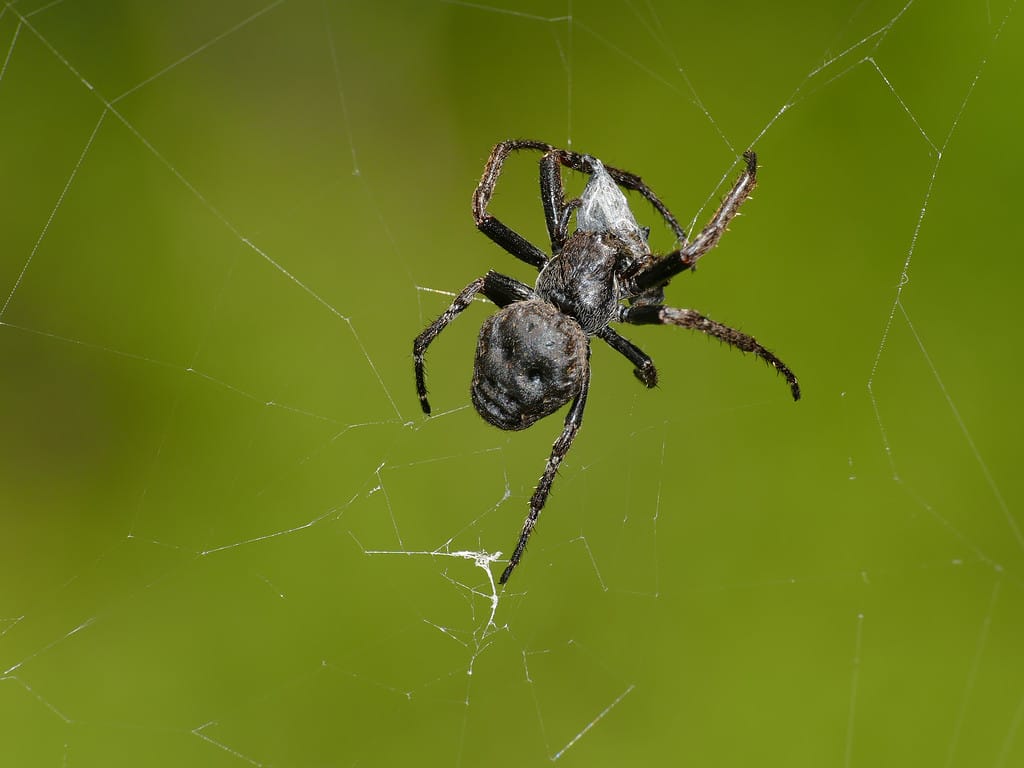
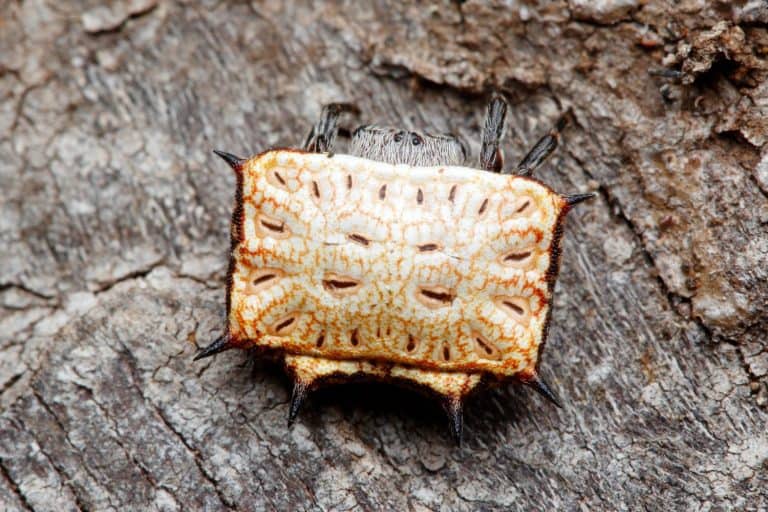
So far, there are only two species of orb weaver spiders that are known to create spider-like decoys.
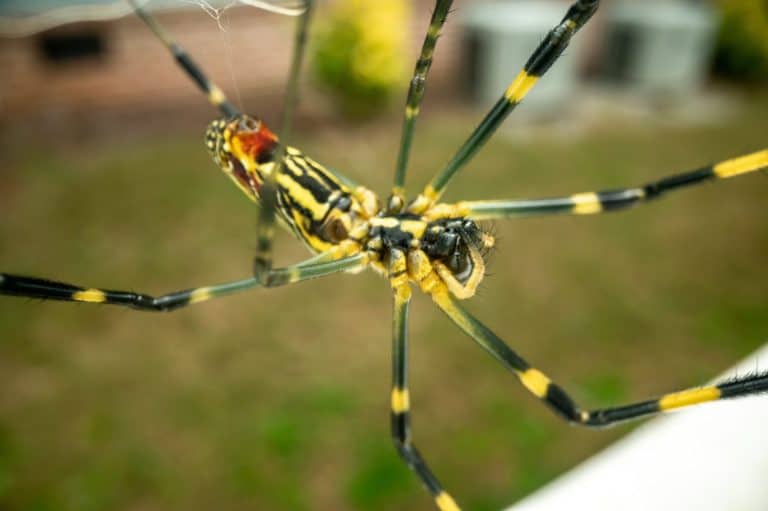
©Eifel-Details/Shutterstock.com
Not all spiders create decoys. So far, only two species of orb weaver spiders have been found to create large, spider-like decoys. However, other species create smaller web decorations. Orb weavers are members of the Araneidae family. This is one of the largest spider families in the world and contains more than 3,000 species. They vary in size from a few millimeters to a few inches and are found in a range of habitats, including forests, fields, and gardens. Orb weaver spiders are most famous for creating orb or wheel-shaped webs.
The two species of orb weavers that create spider-shaped decoys are Cyclosa inca and Cyclosa longicauda. These species have been observed creating decoys in the Philippines and in the Amazon rainforest within Peru. Cyclosa inca and Cyclosa longicauda are both tiny spiders, with a body length of approximately three to six millimeters. However, they have the ability to create elaborate decoys that are several times their own body size.
What Is Decoy Behavior?
When it comes to spiders, decoy behavior is a unique phenomenon that involves creating structures on their web for the purpose of protecting themselves from predators. For Cyclosa inca and Cyclosa longicauda, creating an imitation spider can mislead would-be predators into thinking that the web belongs to a much larger spider than it really does.
The decoy is made from any available natural materials, such as leaves, plant fibers, silk, and even dead insects. The spider gathers and arranges these materials into a large structure, usually positioned at the center of the web to mimic its own body. Sometimes, the structure appears as a simple mass, but often the spider arranges the debris to form ‘legs,’ giving the decoy a convincing spider-like appearance and enhancing the illusion that a large spider is waiting on the web.
Is This New Behavior?
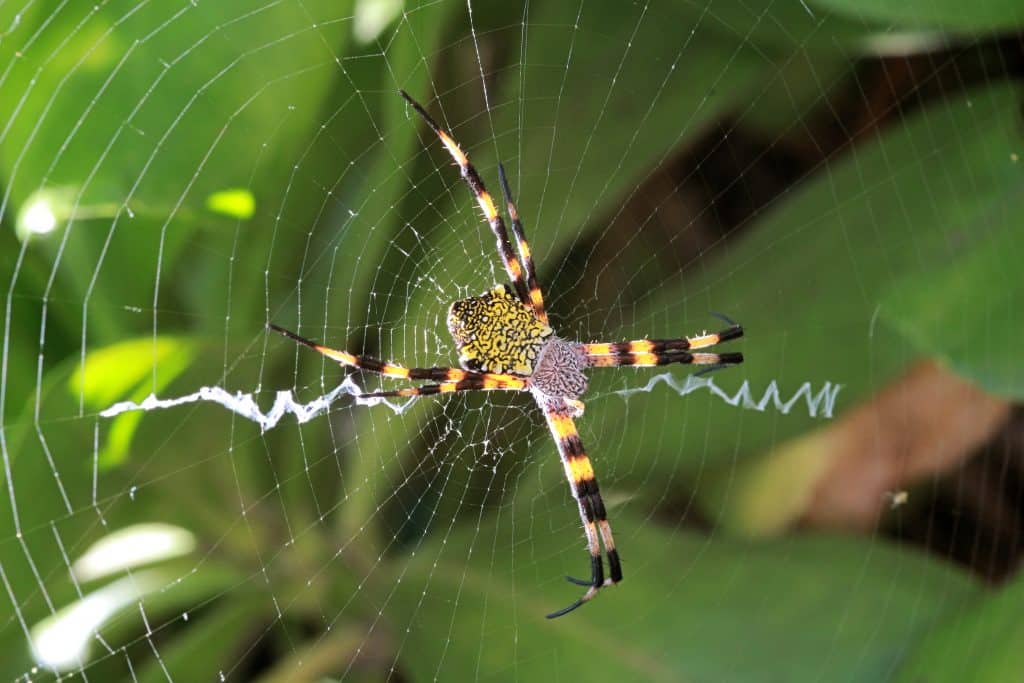
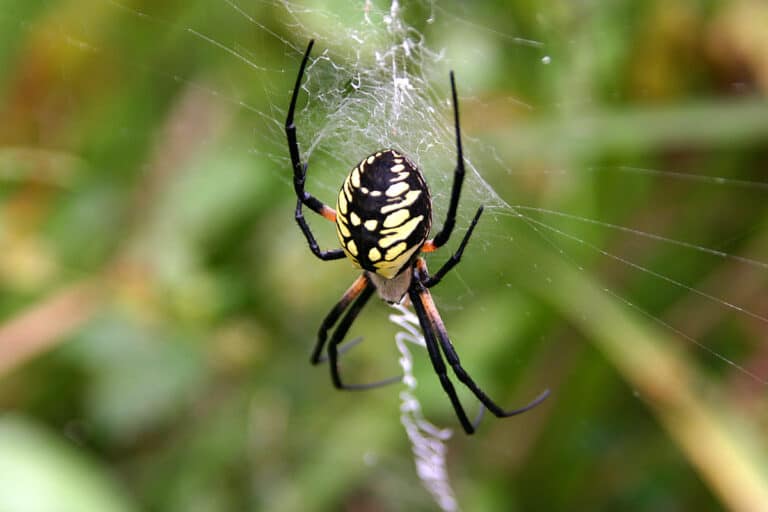
Several species are already known to create zig-zag or circular silk structures on their webs.
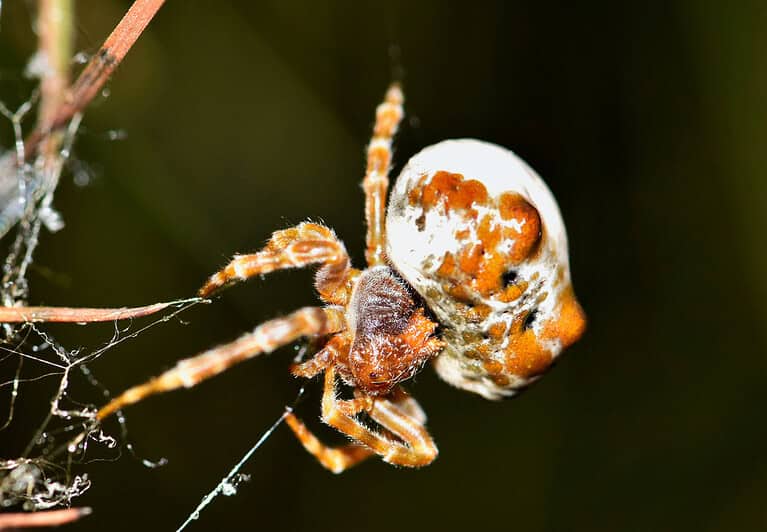
©Paul Harrison, CC BY-SA 4.0 , via Wikimedia Commons – Original / License
Orb weaver spiders are known to create “stabilimenta” on their webs. Stabilimenta are silk structures located at various places on the web, also known as web decorations. They are sometimes presented in a zig-zag pattern, while on other occasions they take on a circular structure. The actual reason they create these is debated. Some scientists suggest that it’s a rudimentary decoy or even camouflage. Alternatively, instead of creating stabilimenta, some orb weavers create a silk pocket that they use as a safe space to retreat into when there is a predator nearby.
Reports have previously suggested that some species turn their stabilimenta into spider-like structures. However, it is only recently that it has actually been formally observed and recorded. So far, it has only been observed in Cyclosa inca and Cyclosa longicauda and in a limited area of Peru and the Philippines.
How Effective Are Decoys?
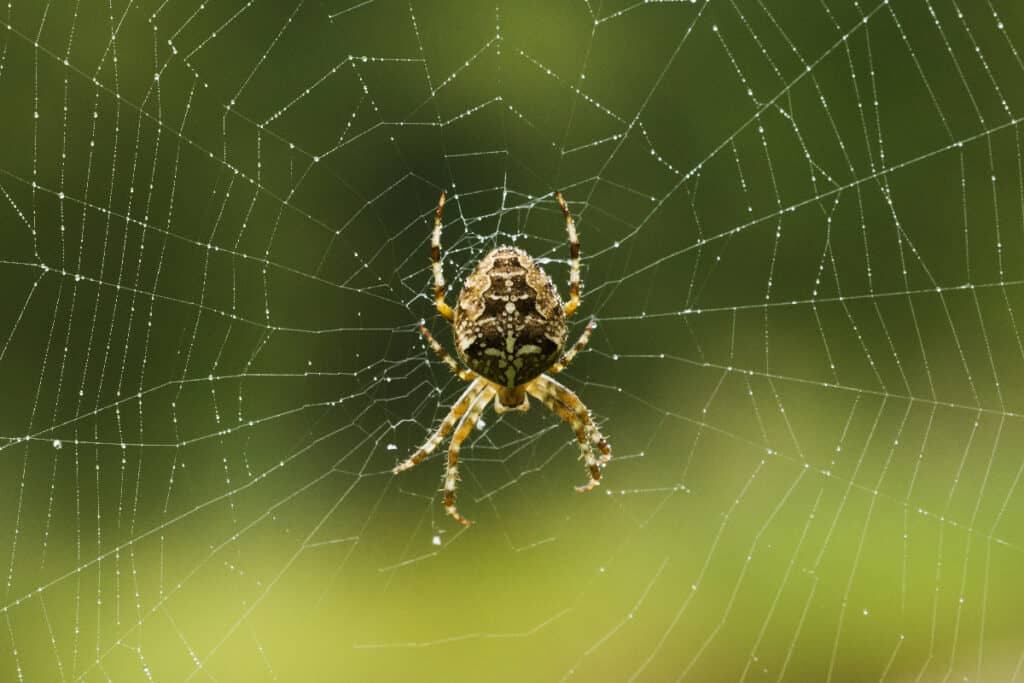
Decoy behavior is an effective method of protection from predators.
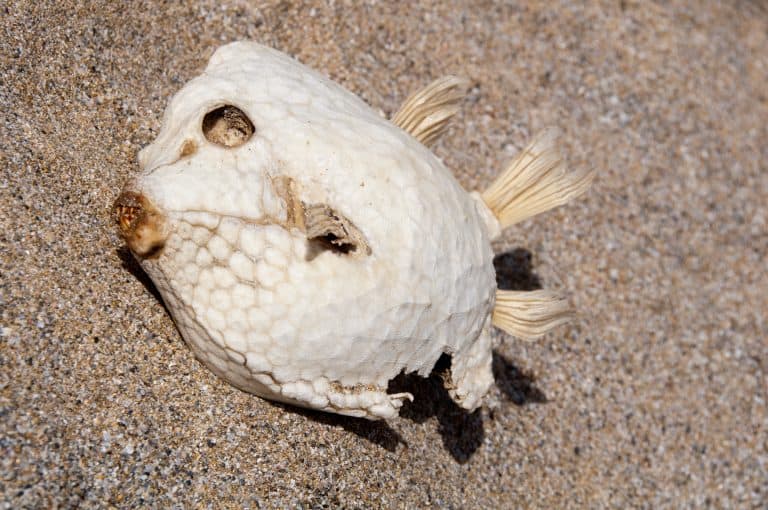
©iStock.com/mirceax
Although this fascinating decoy behavior has only just begun to be formally researched, scientists believe that it is effective. The main purpose of the decoy is to convince potential predators, such as birds and lizards, that the spider on the web is too large or dangerous to attack. As a result, the predator often moves on in search of easier or smaller prey, giving the orb weaver a chance to avoid danger. In the Philippines, the spider sometimes hides within the decoy while the predator is nearby.
However, these decoys are also effective in another way: sometimes predators attack the decoy instead of the real spider. This distraction allows the much smaller spider to escape to safety. Interestingly, in Peru, the spiders tend to position themselves just above the much larger decoy. They then leave the web entirely when the predator attacks it.
The creation of these decoys is actually thought to potentially be more beneficial for the spider than the typical silk hideouts or stabilimenta that orb weavers typically make. Rather than just providing a safe retreat or a small deterrent, the decoys offer a greater degree of protection by redirecting the attention of the predator away from the actual spider.