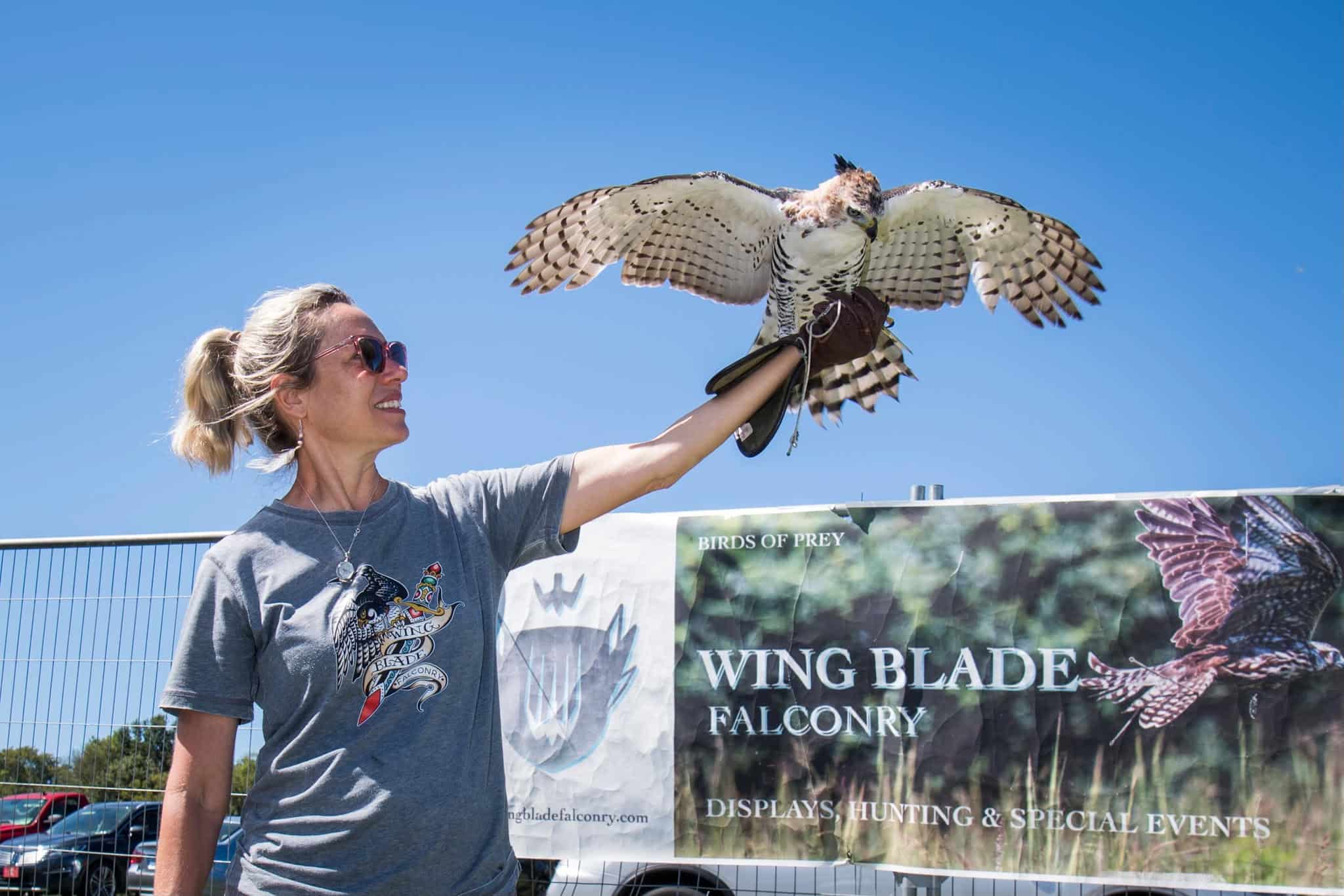

By the time Holly Lamar discovered falconry, she had already lived several lives: investment banker, Grammy-nominated songwriter, property developer. But it was a midlife detour to England and a chance encounter with a tiny bantam chicken that shifted her focus skyward.
Drawn first to raptor webcams and then to hands-on training, Holly soon found herself flying hawks, hunting rabbits, and forging a profound connection with the natural world. Today, she owns Wing Blade Falconry in Tennessee, blending the ancient art of falconry with public education, giving people up-close encounters with birds of prey — and sharing the spiritual lessons they can teach us.
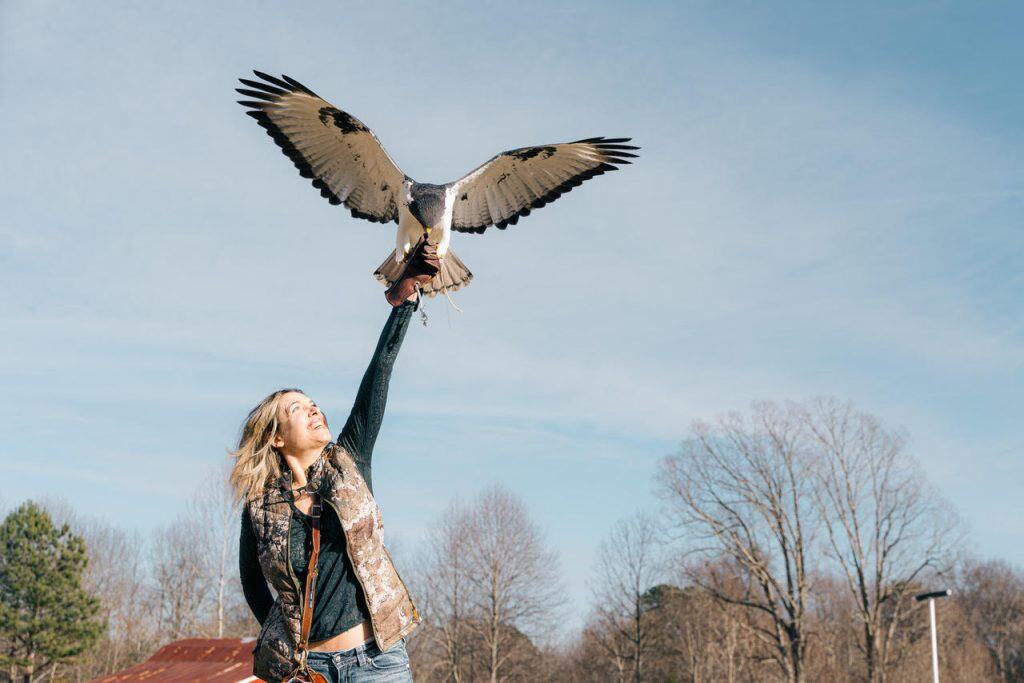
“If you don’t have experience with something, how can you care about it?” asks Holly. “If we had never domesticated dogs, we might not care for them as much as we do. It’s all about giving people the opportunity to understand and interact with these species, so they’ll conserve them — notice them, understand what they do, and protect them. Because they’re a huge part of our environment.”
©Courtesy of Holly Lamar
What first drew you to falconry, and how did you go from curious to becoming a master at it?
I didn’t really know anything about falconry until I was about 43 years old. I had always loved eagles and raptors, and I’d read quite a bit of Native American literature growing up. But I didn’t know it was still a thing. I didn’t really know about the history of falconry either. Falconry was originally part of the culture here, like it is in the Eastern Hemisphere.
I guess I sort of had a midlife spiritual crisis. I’d been successful in banking and then in the music business, but I realized that money and external things didn’t solve the inner problems. I did a lot of spiritual seeking and moved to England. One day, I ended up at the Vauxhall City Farm in London, and I came home with a little Barbu d’Uccle Bantam chicken that was about three or four weeks old. I fell in love.
I ended up following some chicken webcams, and next thing you know, I was on a bald eagle webcam. I started watching peregrines and red tails during breeding season and got addicted. I was living in the present moment and forgetting about my problems.
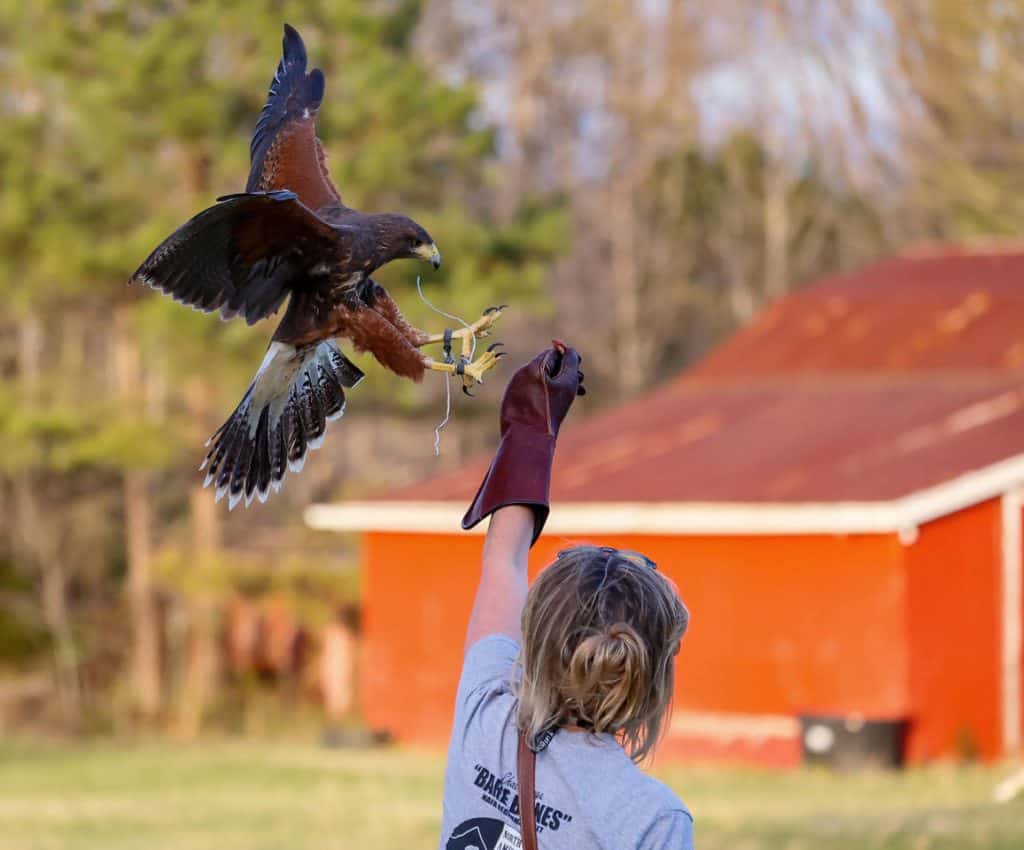
One of the eagles — sadly, the female eagle at the Norfolk Botanical Garden — was killed by an airplane, so the Wildlife Center of Virginia had to get the babies from the nest and rear them in seclusion, then release them back to the wild. The male would not have been able to take care of them himself. I became fascinated and decided I wanted to do raptor rehabilitation. I also decided I needed to take a falconry course to know how to handle them. I took a week-long falconry course at the International Center for Birds of Prey from a famous falconer named Jemima Perry Jones. At the end of that week, instead of going into rehabilitation, I went out and purchased a North American red-tailed buzzard. We call them hawks, but they’re really buzzards. You can do that in England; you don’t need a falconry license, because they’ve been doing it for thousands of years. I proceeded to train him and got him flying to the fist and “following on,” as they say in falconry.
©Courtesy of Holly Lamar
Were there any challenges as you began learning about falconry?
I was a vegetarian by that time, but I realized it was my responsibility to teach this bird to hunt. I took him out and flushed squirrel and rabbit for him. We caught a rabbit, and then I became the person I never thought I would be, taking a photo of me and my bird with the rabbit carcass.
I hunted with him for a year and flew two other birds. At the end of that year, I realized I had spent more time in the present moment in that one year than I had in all 43 years of my life put together. I was more grounded and peaceful, and I had less anxiety, depression, fear of death, and fear of flying. I learned what it is to experience the extent of my own soul as being bigger than my physical body. And that my soul is connected to every other soul and energy out there. I learned all that just from being out there with my bird, surviving and paying attention to the wind and the quarry. It became a meditation for me.
It’s all about giving people the opportunity to understand and interact with these species, so they’ll conserve them — notice them, understand what they do, and protect them.
Holly Lamar, master falconer
How would you describe the spirit of falconry to someone who’s unfamiliar with it? What does it entail?
It’s basically unifying yourself with your environment in order to survive. Dogs and birds of prey are the two original means of survival for mankind. It’s a very efficient way of surviving, and it’s also a very rewarding bond. You borrow and utilize their exceptional supernatural abilities, which include their eyesight, speed, and strength. And they utilize your ability to flush prey and take them to places where they can hunt better, as well as providing other hunting partners, such as dogs.
It’s a very organic way of surviving, and it works just like getting on a horse or training a dog.
As one of the oldest forms of hunting in human history, how much of that tradition remains intact, and how has it evolved to benefit modern times?
Well, for one thing, falconers are pretty much responsible for re-introducing most of the species that had become critically endangered. It’s falconers who started the Peregrine Fund and other agencies. When we were destroying birds of prey with DDT and fertilizer and dehabitation, it was falconers who understood their contribution and the necessity of them. They help us control many different species — pigeons, squirrels, and rabbits.
They are also a very organic method of protecting crops from crows and pigeons, so they’re very important when it comes to pest species.
Most people who practice falconry eat what they hunt and share it with the birds. Many times, if you’re taking your bird from the wild for falconry, you end up trapping one that might be a little bit weaker and might not survive. Then, you’re bringing it back to health and teaching it to hunt. So, you’re strengthening the resources out there.
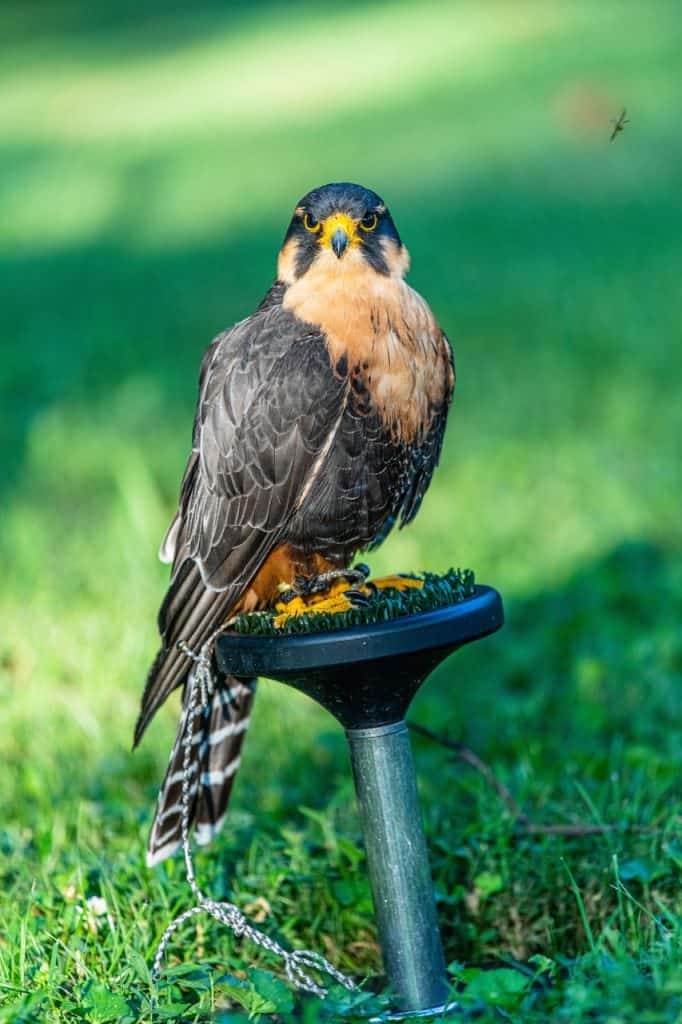
Meet Maggie the aplomado falcon. “God didn’t create these birds with supernatural abilities like eyesight and speed to be destroyed,” says Holly. “The peregrine falcon is the fastest creature alive. The saker and the gyrfalcon are the fastest on a horizontal. These creatures are given that kind of speed so they can manage other sky species. They serve a very important purpose.”
©Holly Lamar
What is the daily routine like for you and your raptors?
My birds each have their own aviary, or mew. Generally, I go out first thing to make sure everybody’s okay. I only fly a certain number of birds each season. Because I operate year-round, I have different birds that I use during the summer and winter. So, all of my birds get a period of several months off where they can just eat all they want, get fat, and molt or breed. Then I do my food prep for the day. Depending on which birds I’m flying, I get them out, weigh them, and perch them out.
I do experiences for people at least four days a week, as well as a lot of events off-site, like weddings where the birds fly the rings to people. I go to nursing homes, schools, and corporate events. But most of my work is here on-site, where I do three-hour experiences for people.
They get an in-depth, immersive dive into birds of prey, falconry, and what it’s like to train the birds and fly them. During hunting season, I take people hunting — mainly with our Harris hawks — so they get that experience of what it’s like.
I feel blessed. I’ve been a lot of things in my life, but I think this gives me the chance to mix my love of talking to people and performing. It’s almost like I’m leading group therapy. Everybody gets a spiritual experience they just can’t get any other way. It ends up being a bucket list moment.
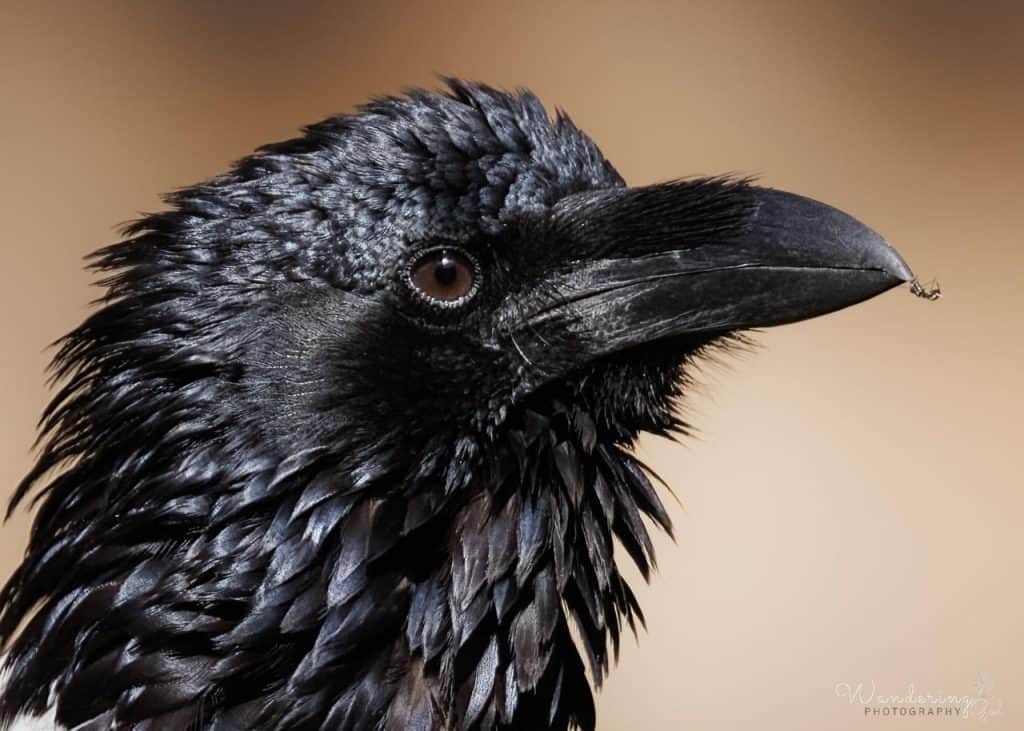
“It’s not a bird of prey, but everybody loves my crow!” Holly says of Sacred, the pied crow.
©Holly Lamar
What kind of bond develops between a falconer and their birds? How is that different from what people might expect with a pet such as a cat or dog?
It can actually be stronger than with a dog or a cat, because this bird puts you in their trust circle in a way they don’t do with anyone else. It takes months sometimes to develop this bond, and they will overcome their own sensitivities — for example, they might not react instinctively. It’s very different from a dog that might be friendly to everybody. You’re their person.
Some raptors, like eagles, are very much like rabbits or elephants. They will form bonds so strong that they’ll actually mourn if they change hands or their person dies. They won’t eat. They’re very sensitive to their environment.
If they recognize you as their person, they’re always going to be that way. They remember for years — they know people’s voices and footsteps. Sometimes I walk out the door, and they’ll start calling to me. They even know my energy.
What do you think people would be most surprised to find out about what you do?
Just how incredibly detailed it is! That’s why it keeps you in the present moment. Every aspect of it — from the equipment to diet, surroundings, materials you use, how you feed them, where you feed them, where you fly them, how you fly them — everything is so important. It’s not like you can leave them at daycare with somebody else. When you have a bird, you are tied to that. I can hardly travel. I have birds that nobody else can walk up to their aviary. It’s very demanding, but rewarding. It’s a huge commitment.
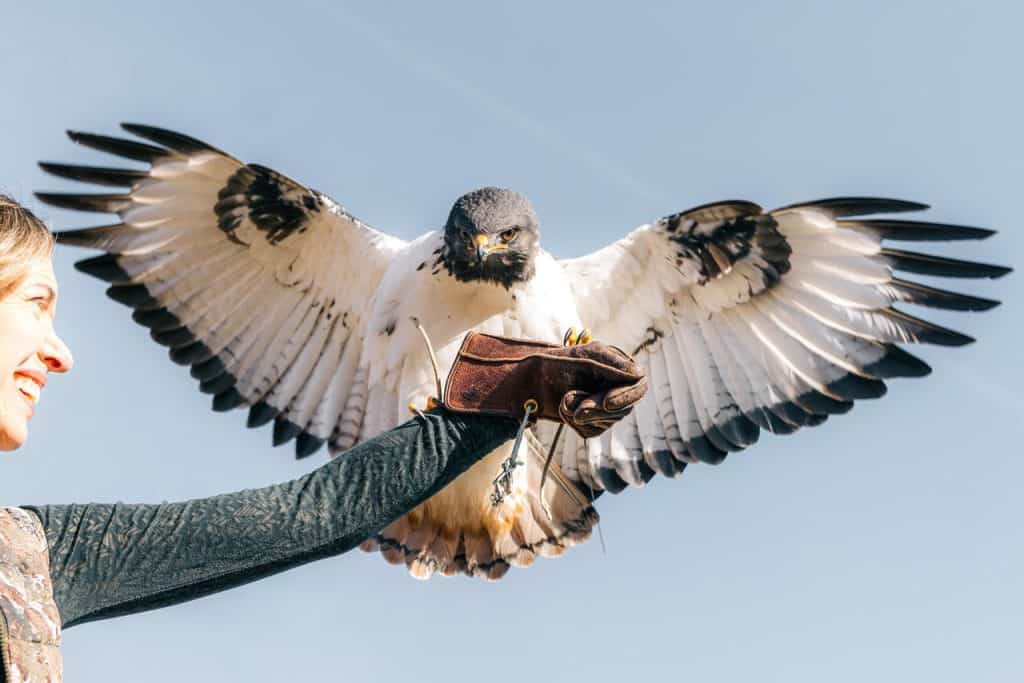
“Everybody gets a spiritual experience they just can’t get any other way,” says Holly of her Wing Blade experiences. “It ends up being a bucket list moment.”
©Courtesy of Holly Lamar
Is there a specific bird you’ve worked with that has a memorable story?
Well, I do have a falcon that was rescued by Garth Brooks. Early on, when I got Sophia, I was coming back to Nashville. I had just moved back after being away for 12 years, and I picked her up at the airport. She was untouched and untrained, and I was staying not far from where Garth and Trisha (Yearwood) live. And [Sophia] managed, within the first week, to get out. It was an equipment failure. It really panicked me, because she wasn’t trained yet.
Of course, I called the different rehab centers, saying, “Hey, my falcon is out.” It had rained, and Sophia wasn’t very fit, so she had just gone a couple of miles and landed on the patio furniture of Garth and Tricia’s neighbor. They knew Trisha was active in wildlife rehabilitation, so they called her. Trisha is afraid of birds, so Garth went and got a towel. I guess Sophia was wet enough that she wasn’t flying off, and he wrapped the towel around her. They called Walden’s Puddle (wildlife rehabilitation center), and Walden’s Puddle called me, and I went and picked her up.
I had been a songwriter, so they knew who I was, and I obviously knew who they were, but we’d never met. I joked, “What a way to pitch a song!”
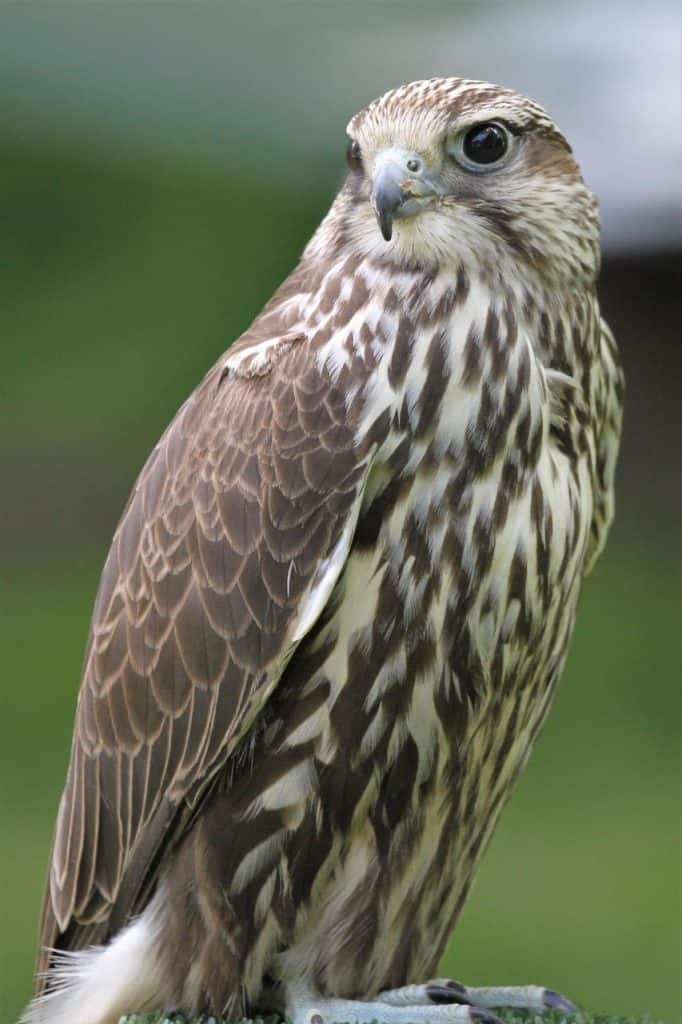
“Sophia is a very big part of my demos and experiences,” says Holly of Sophia, the saker falcon. “She’s five years old now and definitely one of my closest birds.”
©Holly Lamar
Falconry involves immense skill, patience, and regulation. What advice would you give to someone who might be interested in it?
I was illegally raided, and they seized all my birds back in 2022. The Tennessee Wildlife Resources Agency had a new falconry coordinator who didn’t understand the laws, and that became a big thing. Everything was dropped against me, and I later sued for illegal search and seizure. So, it’s very important to understand the laws. And it’s important that law enforcement themselves understand the laws! Many people misunderstand falconry and wrongly think it’s cruel or unfair, not realizing that a lot of times, we’re rehabilitating a bird that might not survive in the wild. We’re also helping when birds get injured.
I have my basic rehabilitation certification as well. But people just don’t understand that it’s not a cruel thing; it’s how man has been surviving for 7,000 years. It’s important that people find out the local state regulations, find a good sponsor, be very careful about who they choose, and be responsible. The most important thing is the birds — their health and their well-being.
We also need to help newcomers. That’s another important thing. If somebody is interested, it’s important that they get proper and enthusiastic help.
How do you approach public education and outreach? What do you hope people walk away understanding about raptors and birds of prey?
They are super important to the environment. They are a huge part of the ecosystem and manage a lot of pest species. People misunderstand them and think, They’re killing my songbirds or pigeons. And yes, sometimes they will kill people’s chickens. But if you protect them properly, then generally, you won’t have that issue.
They’re beautiful and capable of a very strong bond with human beings. They need to be protected and appreciated.