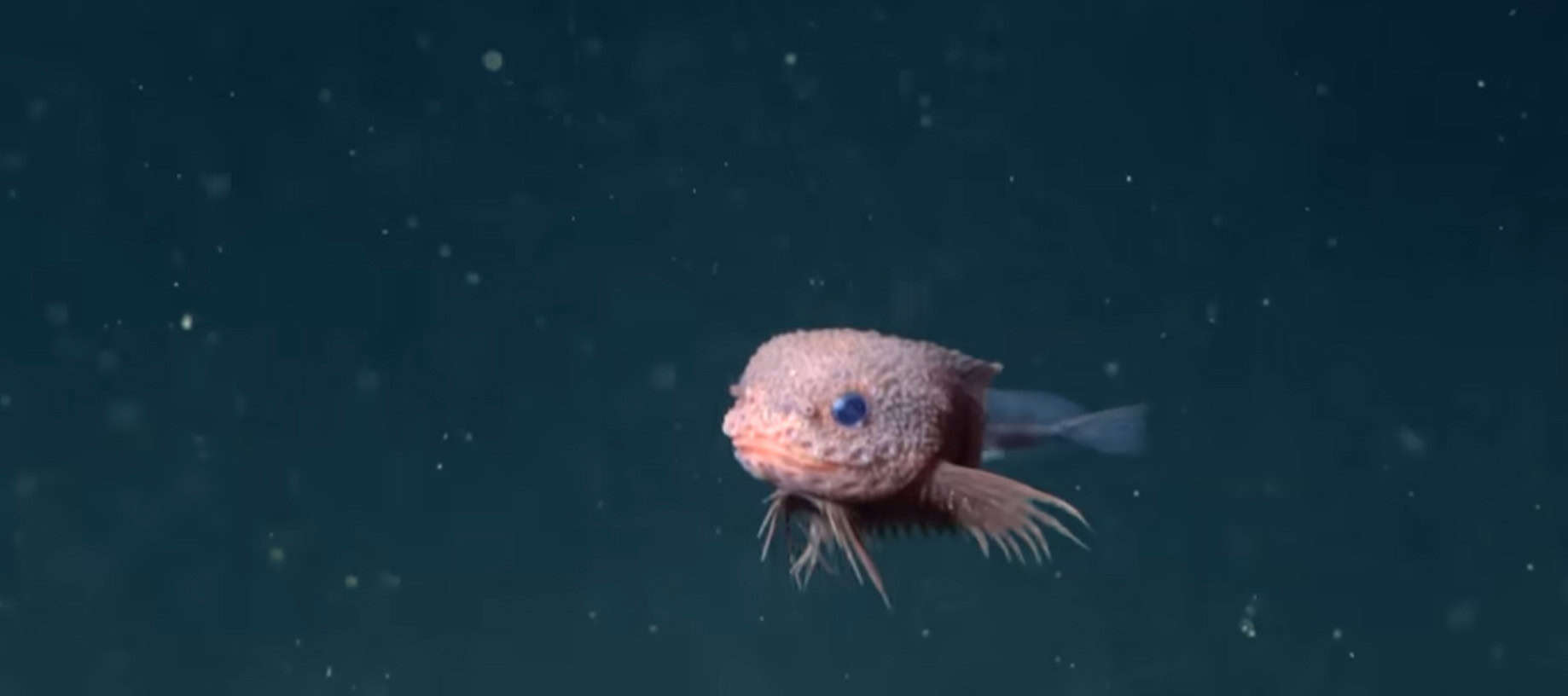

Miles beneath the surface off the coast of California, the inky blackness hides countless undiscovered — and often nightmarish — creatures. Recently, however, scientists encountered a peculiar animal that defies the deep sea’s grim reputation. As shown in this YouTube video, this new species looks more like a quirky cartoon character than a deep-sea monster. With its bubblegum pink skin, enormous eyes, remarkably round head, and distinctively bumpy skin, the bumpy snailfish (Careproctus colliculi) is a surprisingly adorable discovery.
Meet the Pink Bumpy Snailfish
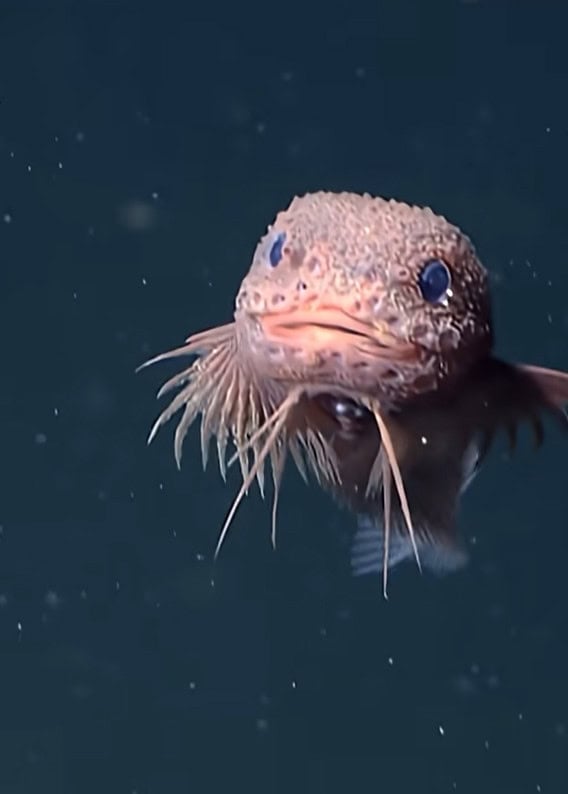
The bumpy snailfish was discovered approximately 62 miles off the coast of Central California.
©YouTube/MBARIvideo – Original
In 2019, scientists from the Monterey Bay Aquarium Research Institute (MBARI) embarked on a deep-sea journey aboard the Western Flyer. Headed to an area off the coast of California, the team hoped to explore the dark, crushing depths of the Monterey Canyon.
Using the remotely operated vehicle Doc Ricketts, MBARI descended more than 10,700 feet below the ocean’s surface. While exploring this dark abyss, the team came upon the small, peculiar-looking fish featured in this YouTube video. Round and covered in a bumpy texture, the bubblegum-pink fish has a wide face that appears to be smiling. After a great deal of collaborative analysis, it was announced in 2025 that the fish was a newly discovered species. Its textured, knobby skin was so distinct that researchers named the creature the bumpy snailfish (Careproctus colliculi).
What Is a Snailfish?
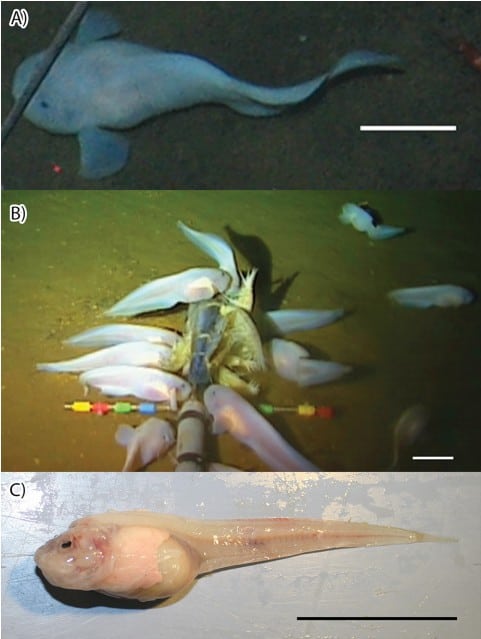
The deepest fish known so far is actually a species of snailfish.
©Gerringer M. E., Linley T. D., Jamieson A. J., Goetze E., Drazen J. C. / CC BY 3.0 / Wikimedia Commons – Original / License
The recently discovered bumpy snailfish belongs to the Liparidae family, which includes over 400 known species found everywhere around the world, from shallow beaches to the deep ocean floor. Snailfish are not related to snails, but they do share some similar physical characteristics. They have soft, scaleless bodies and a large head that tapers quickly into a thin tail, reminiscent of a snail without a shell. Some snailfish even have suction cup-like pelvic fins on their undersides, which they use to cling to and climb over rocks, much like a snail uses its muscular foot.
While the bumpy snailfish shares all of these family characteristics, it immediately stands out due to its distinctive pink coloring, large eyes, and, of course, its bumpy skin. Adding to its unique appearance, this fish also has long rays extending from its dorsal fin and wide pectoral fins along its sides.
The body of the bumpy snailfish has a jelly-like consistency, which is essential for surviving in the deep sea. This gel-like structure helps the snailfish manage its buoyancy and protects it from being crushed by the intense pressure of the deep ocean.
Life in the Abyss
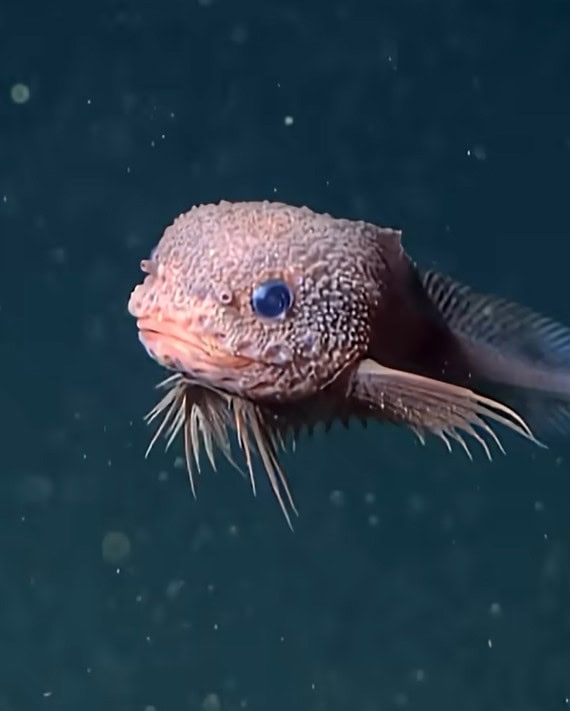
There are at least 400 species of snailfish.
©YouTube/MBARIvideo – Original
This recent discovery is the only bumpy snailfish encountered so far, so its true geographic range remains a mystery. We do know, however, that this deep-sea resident was found approximately 62 miles off the coast of Central California, 10,777 feet below the surface.
Measuring 3.6 inches long, the female bumpy snailfish collected by MBARI’s team shares a basic body plan with other snailfish. However, researchers could immediately tell that their discovery was both distinctive and unique. To learn more, they consulted experts from the University of Hawaiʻi at Mānoa, the University of Montana, and the State University of New York at Geneseo (SUNY Geneseo).
Through detailed analysis — including micro-CT scanning, precise measurements, and DNA sequencing — the team meticulously compared their find with the more than 400 known species of snailfish. The results were surprisingly conclusive: this was a brand-new species, previously unknown to science. In 2025, the creature was officially confirmed as the newly discovered bumpy snailfish.
Intriguingly, analysis suggests that a separate research team may have accidentally encountered a bumpy snailfish off the coast of Oregon in 2009, but mistook the creature for a similar species, the bigtail snailfish (Osteodiscus cascadiae).
Surviving in the Deep Sea
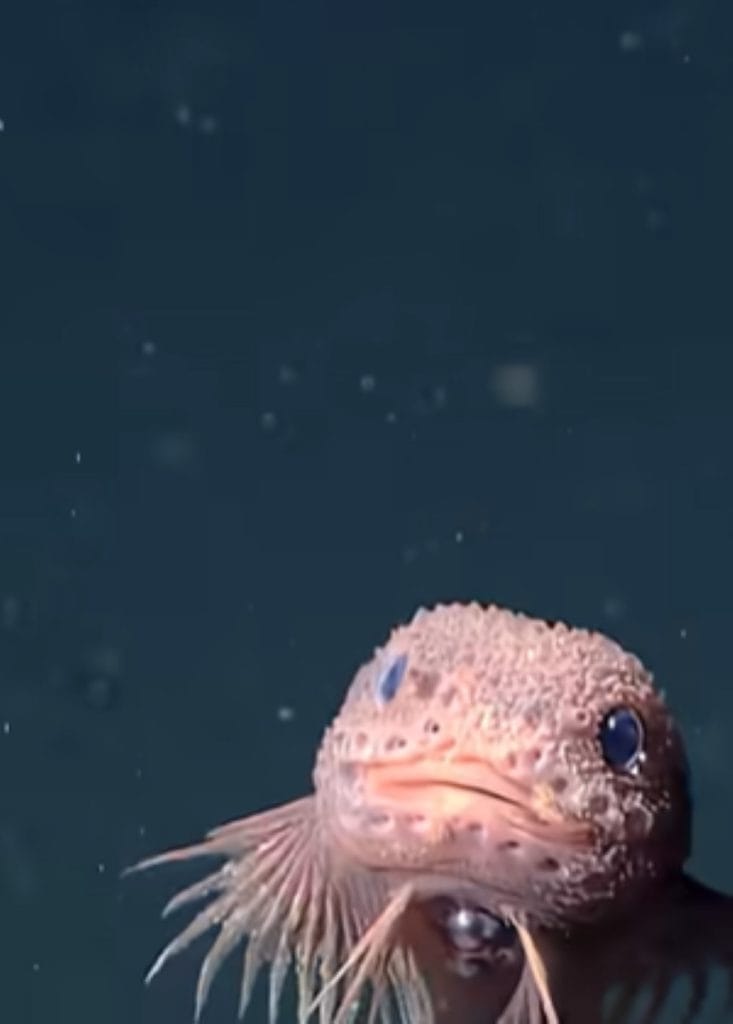
Bumpy snailfish’s unique adaptations allow them to live in the extreme cold and high pressure of the deep sea.
©YouTube/MBARIvideo – Original
Experts have yet to reveal the bumpy snailfish’s diet or predators. However, scientists can make an educated guess based on the creature’s relatives. The bumpy snailfish likely eats small invertebrates — such as tiny worms, copepods, crustaceans, and amphipods. It may also scavenge on “marine snow” — the organic matter and detritus that drifts down from the upper layers of the ocean.
Its small size and the crushing depth of its habitat suggest the bumpy snailfish has few natural predators. The extreme pressure of the abyssal zone makes it difficult for larger creatures to live there, though a handful of deep-sea fish do hunt at such extreme depths.
Two Other New Finds
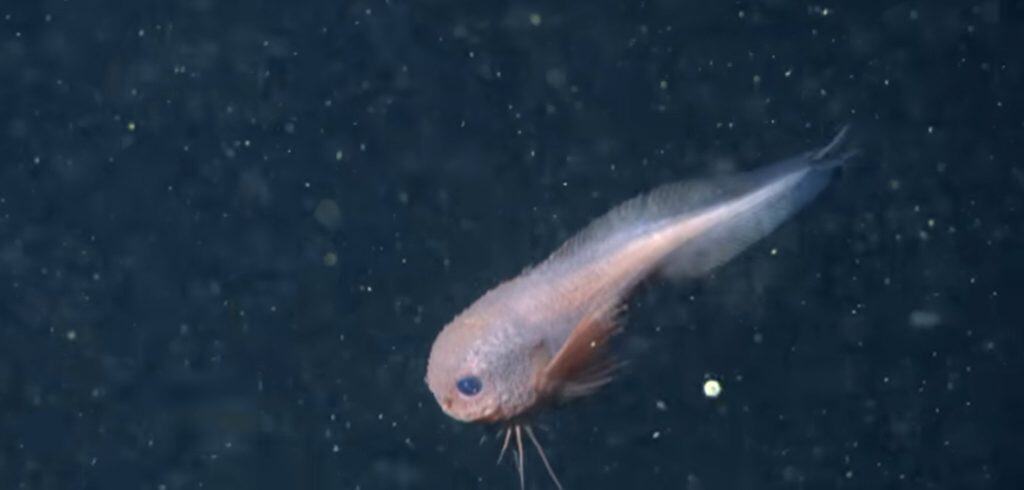
Snailfish bodies often resemble those of tadpoles.
©YouTube/MBARIvideo – Original
Although certainly one-of-a-kind, the pink bumpy snailfish wasn’t the expedition’s only discovery. The team also discovered two other new species. The dark snailfish (Careproctus yanceyi) is black, as its name suggests, and has a rounded head and a horizontal mouth. The sleek snailfish (Paraliparis em) is also black, but it has a long body and an angled jaw.