
Quick Take
- Red pandas live in the cold, high-altitude forests of the Eastern Himalayas and survive by conserving heat with dense fur, furred feet, and a thick tail.
- A pseudo thumb, formed from a modified wrist bone, helps them grip and handle bamboo while feeding.
- Flexible ankles and sharp claws allow red pandas to climb and move through trees with stability.
Red pandas are known for their striking and adorable appearance, but this small mammal is more than just aesthetically pleasing. Red pandas live in some of the harshest environments in the world, characterized by freezing temperatures and steep terrain. To survive in such challenging conditions, they have evolved several unique adaptations to help them eat, stay warm, and conserve energy. Keep reading to discover the unique adaptations that make red pandas so special.
How Do Red Pandas Stay Warm?
Red pandas (Ailurus fulgens) live in the Eastern Himalayas, across parts of Bhutan, China, India, Myanmar, and Nepal. They live in high-altitude forests, mainly at elevations of between 7,000 and 15,700 feet. Due to the high elevation and mountainous habitat, conditions are particularly challenging, with temperatures often being below freezing. They are small mammals, with an average weight of just six to 14 pounds.
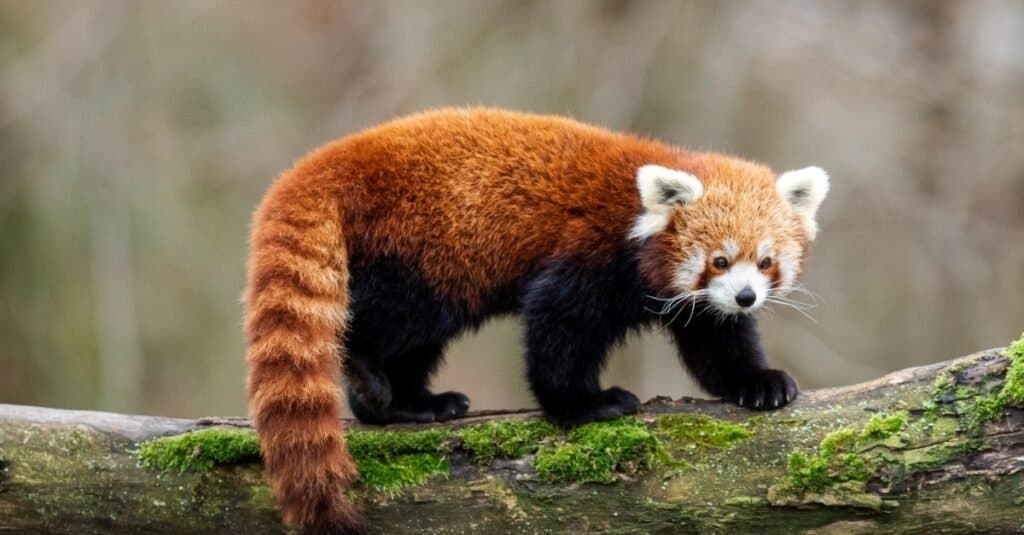
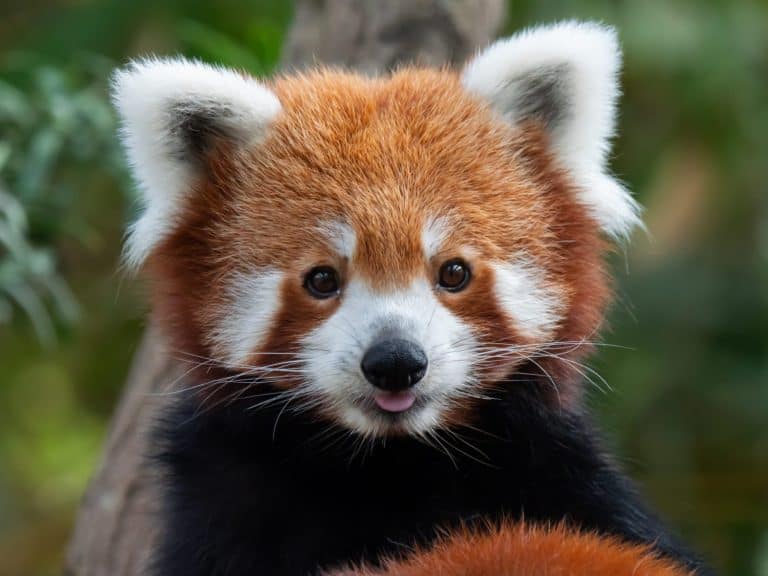
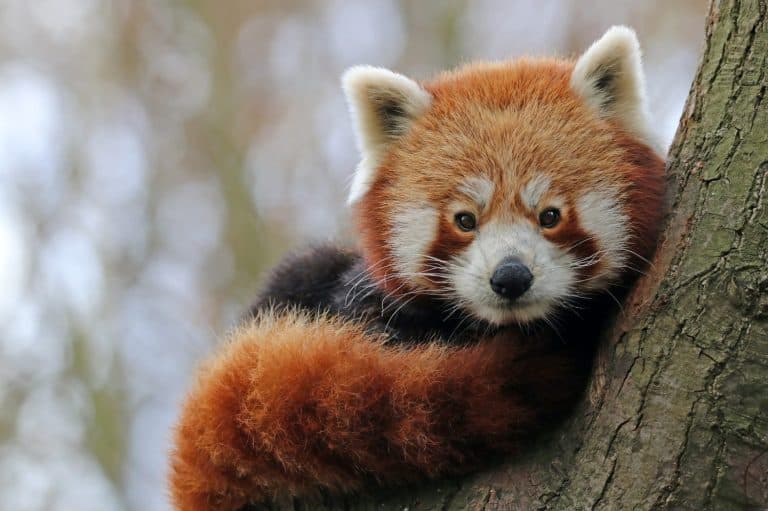
Red pandas have thick fur and a long, bushy tail, which they use to conserve body heat.
©iStock.com/AB Photography
Due to their small size, red pandas tend to lose body heat quickly, meaning that staying warm is a challenge, particularly in cold, snowy conditions. To combat this, they have evolved several adaptations for retaining as much body heat as possible. For one, they have a thick, double-layered coat. This means that they have a soft undercoat and a thicker, coarser outer layer. The outer layer is known as guard hair, which traps the heat close to the skin. They also have furry paw pads, which help to reduce heat loss while walking on snow.
Red pandas also have a long, bushy tail, which also plays an important role in conserving heat. When they are sleeping or resting, red pandas curl their tail around their body. This helps to minimize the areas that are exposed to the cold. By using their tail to cover vulnerable areas, such as the face and the belly, they can significantly reduce the amount of body heat that is lost.
Diet and Feeding Adaptations
Conserving body heat isn’t the only challenge that red pandas face, as they often lack the energy that they need to support themselves. This comes down to their diet: bamboo. Although they can eat other things, red pandas feed primarily on bamboo, which is nutritionally poor, containing few calories. As a result, animals that feed on bamboo must consume large amounts to meet their daily energy needs.
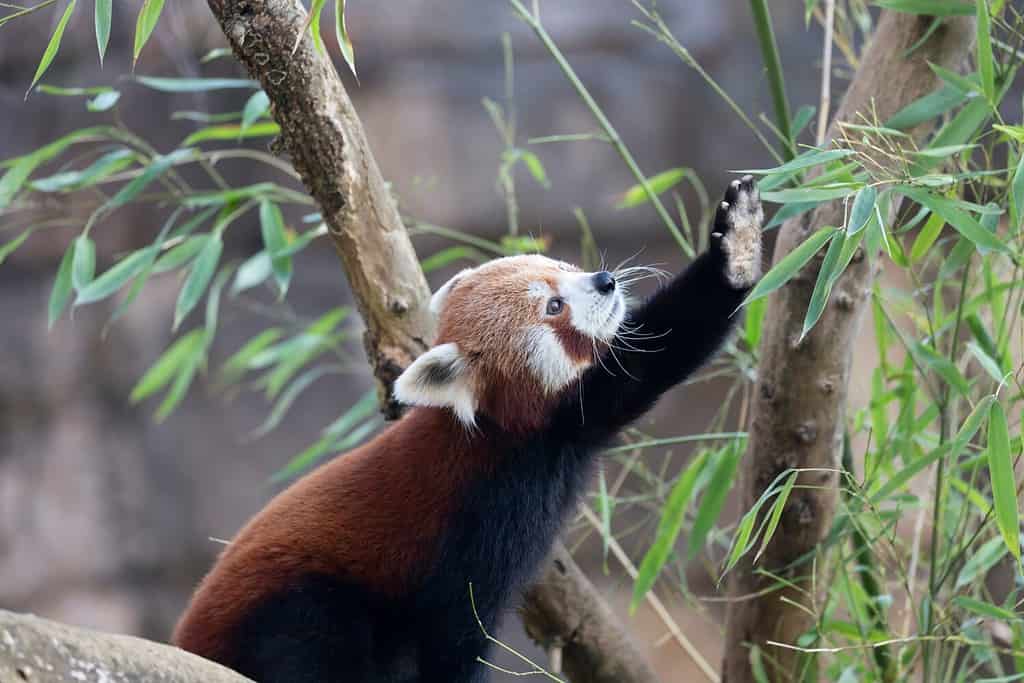
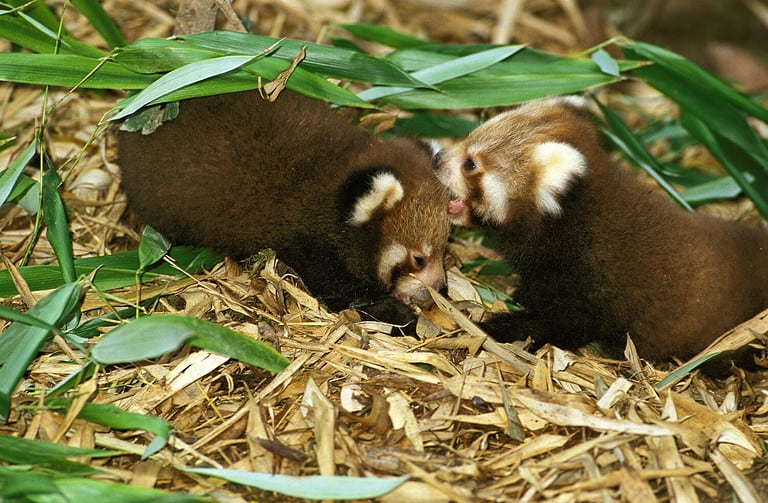
Red pandas have a pseudo thumb, which they use to grip bamboo.
©DKeith/Shutterstock.com
Despite relying heavily on bamboo, red pandas are technically classed as carnivores, as they are members of the Carnivora order. This is because they still have a carnivorous digestive tract, meaning that it is difficult for them to break down tough plant material. Bamboo is tough and fibrous, so red pandas typically try to consume the most tender and nutritious parts, such as the leaves and young shoots.
As red pandas spend so much time eating bamboo, they need to be able to grip it effectively. This is where one of their most unique adaptations comes in: their pseudo thumb. This is a modified wrist bone, formed from an enlarged radial sesamoid bone, that functions as an opposable thumb. This bone is found in many carnivores but has been repurposed in red pandas to assist with gripping and manipulating bamboo.
However, rather than acting as an extra finger, it works with the rest of the front paw to improve control and allows them to hold stems and strip leaves more efficiently. Some studies suggest that this pseudo thumb first evolved to aid climbing before it was adapted for handling bamboo.
How Are They Adapted for Climbing?
Due to their forest habitats, it’s unsurprising to find that red pandas spend a lot of time in the trees. However, they also have some unique adaptations that help them get off the ground. They have particularly flexible ankle joints, which allow them to rotate their feet by approximately 180 degrees.
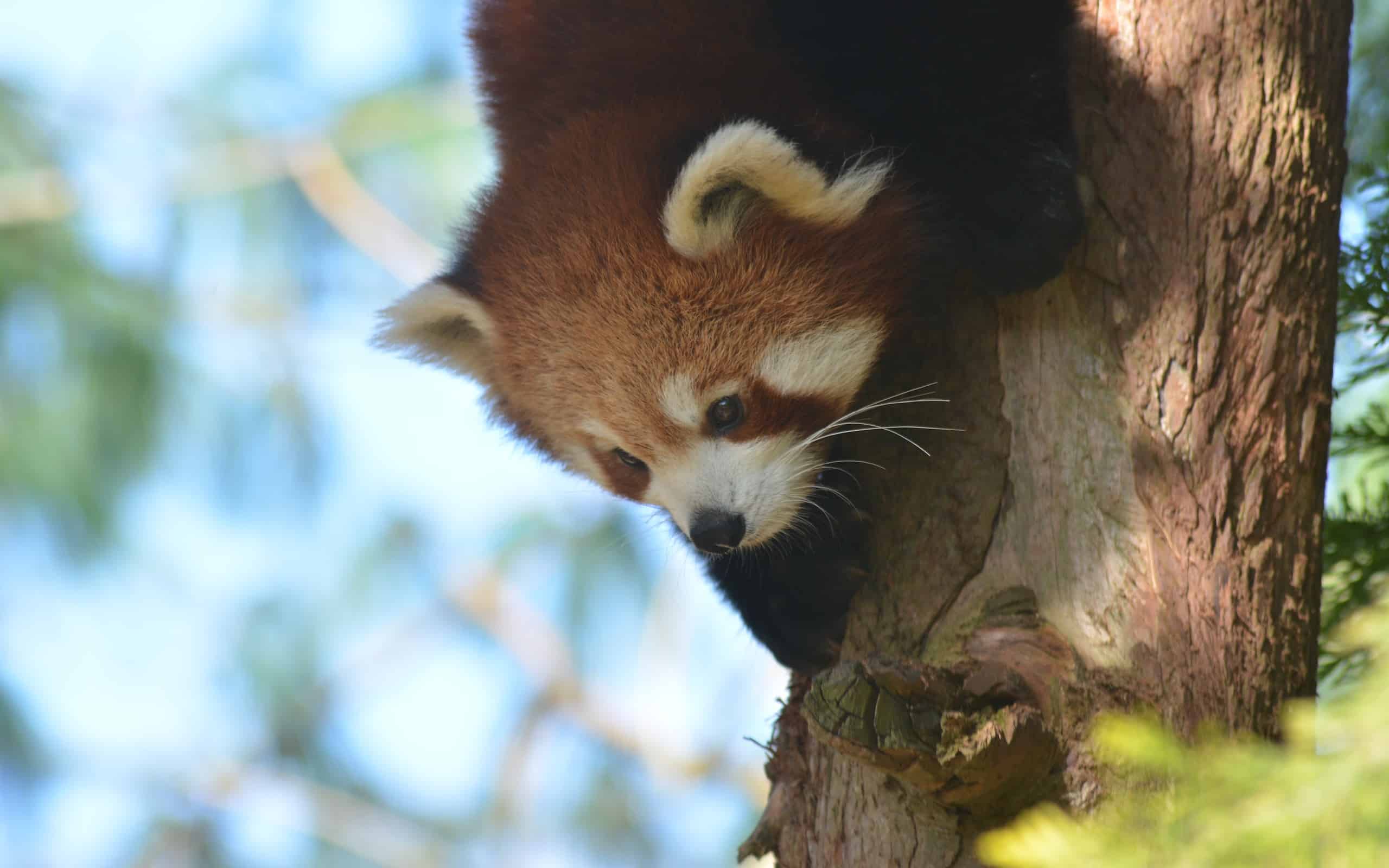
This unique feature allows them to grip the trees firmly and descend headfirst in a controlled manner, rather than having to climb down backwards. As well as being easier, descending headfirst is faster, which can help them to escape from predators. Red pandas are one of the few animals that have the ability to descend trees headfirst. Other animals with this ability include squirrels and clouded leopards.
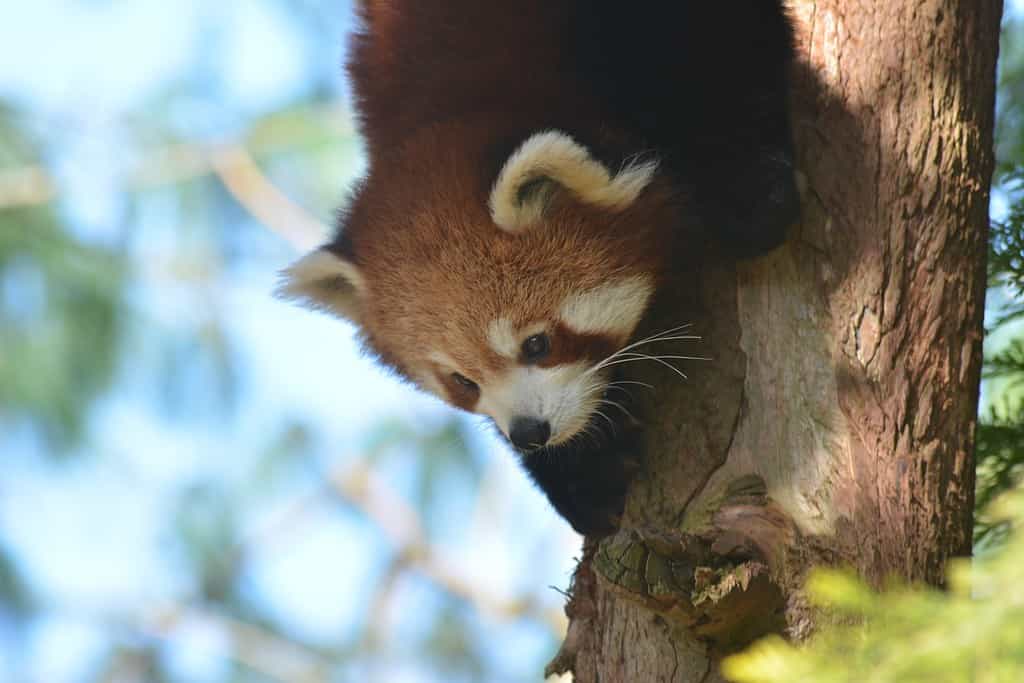
Red pandas are one of the few animals able to descend trees headfirst.
©No Ordinary Explorer/Shutterstock.com
Red pandas also have sharp, curved claws. These claws provide a secure grip on tree branches, even when they are wet or covered in snow. Being able to grip branches and maintain balance is essential for any arboreal animal. For red pandas, achieving this through minimal energy expenditure is especially important, as conserving energy is vital to their survival. Finally, even though their pseudo thumb is primarily used for feeding, it can also contribute to grip while climbing, assisting their arboreal lifestyle.