
Quick Take
- Vine snakes are slender arboreal snakes with elongated heads and the widest binocular vision of any snake.
- Before stalking prey, they sway their heads to judge distance using three-dimensional vision.
- Some vine snakes have venom that can cause severe systemic effects and may be fatal, so seek medical attention after a bite.
Ever felt like you were being judged? You will if you spend any time with a vine snake. They have a unique way of peering at you through their very special eyes and making you feel distinctly uncomfortable. Just take a look at this Instagram post to see for yourself. Let’s meet this extraordinary reptile and find out more about it.
About Vine Snakes
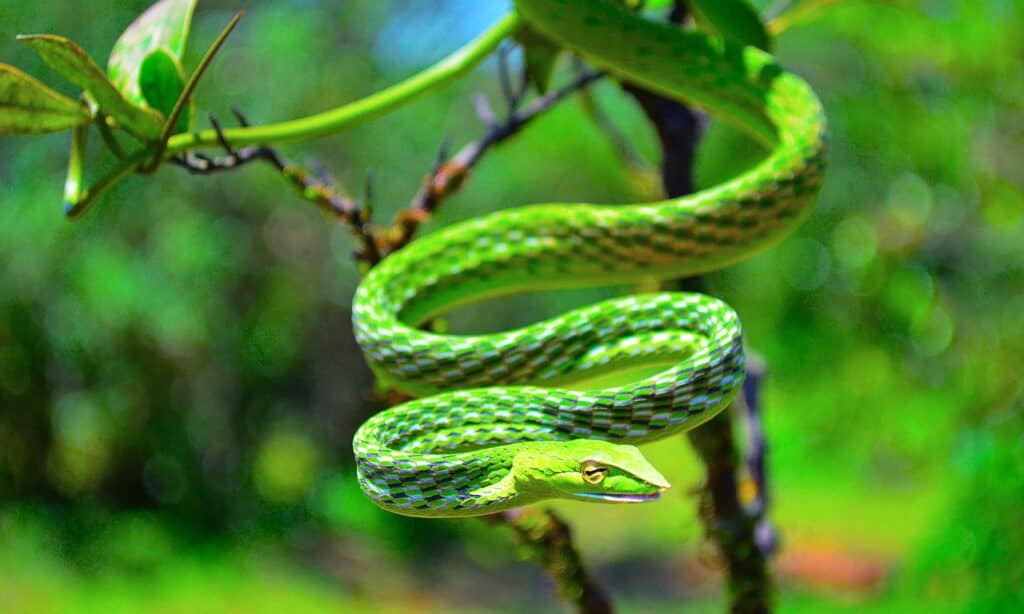
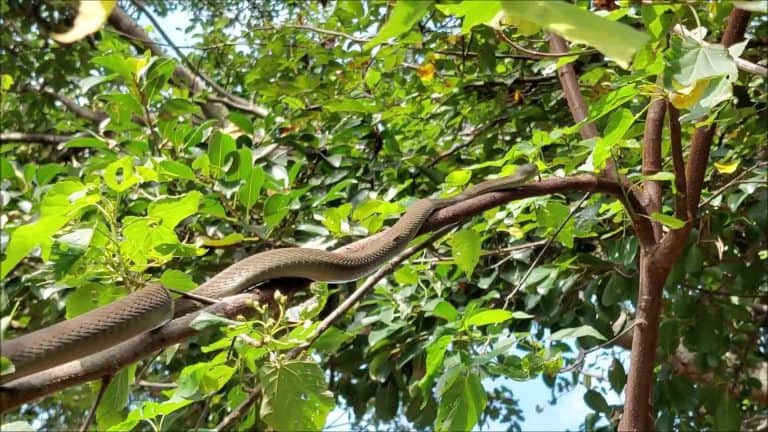
Vine snakes live in trees.
©iStock.com/ePhotocorp
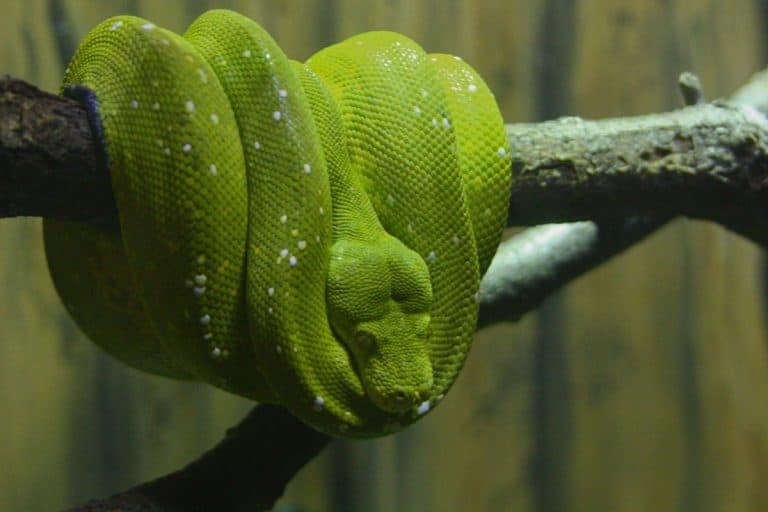
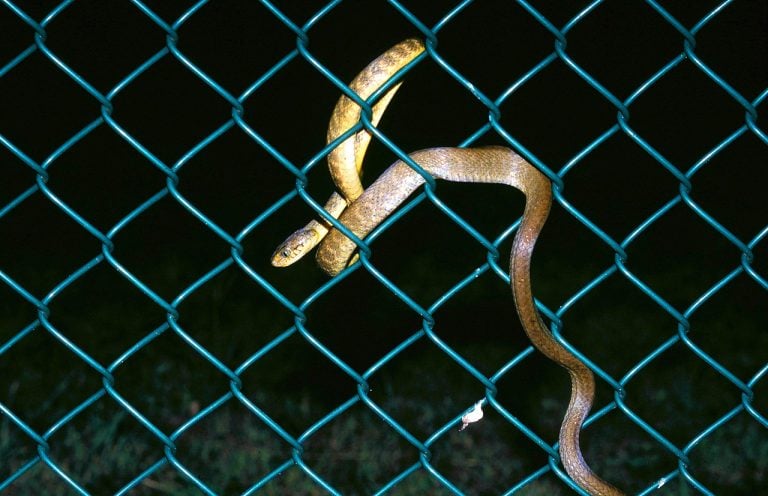
There are several species of vine snakes, but they are all slender snakes with elongated heads and are found in tropical forests. They are arboreal, which means that they live in trees. There are three related genera, each with a different range. The Oxybelis genus ranges from southern Arizona and western Mexico into South America (Bolivia, south-east Brazil, Paraguay, and northern Argentina). Ahaetulla are found in India, Sri Lanka, South East Asia, the Malayan peninsula, and the Indo-Australian archipelago. Thelotomis live in Central and South Africa, and Uromacer are found in Haiti, the Dominican Republic, and the surrounding islands.
While the venom of some vine snakes can cause pain, swelling, and blisters in humans, certain species—such as the African vine (twig) snake—have venom that can cause severe systemic effects, including internal bleeding, and can be potentially fatal. Medical attention should always be sought after being bitten.
Why Do Vine Snakes Look So Judgy?
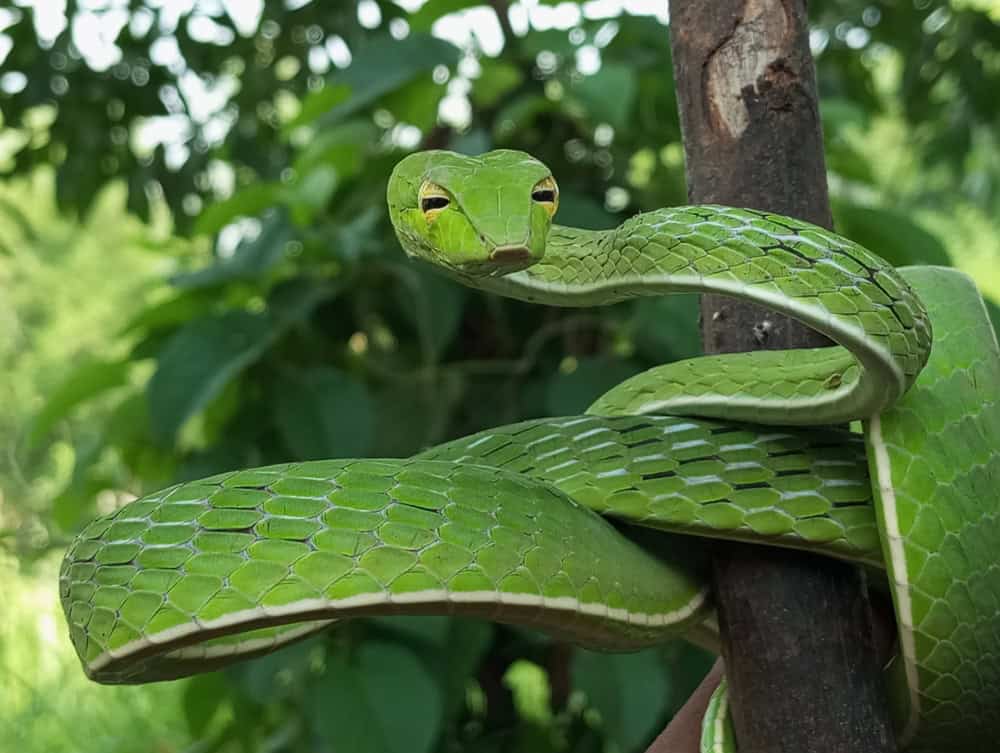
To be fair to these snakes, they do not mean to judge you. We associate narrowing our eyes with a judgmental facial expression, and the vine snake just happens to have narrowed eyes. They have a hawkish facial expression that can make it seem as if they find you inferior. In fact, they are not narrowing their eyes at you at all. Ahaetulla and Thelotomis species have horizontal pupils that give them exceptionally good eyesight.
Vine snakes are among the few arboreal snakes that rely heavily on their vision to detect and capture fast-moving prey. These snakes are active during the day and have the widest binocular vision of any snake.
Judging and Stalking
Before stalking their prey, these snakes can be seen swaying their heads back and forth. Experts think that this helps them judge the distance between them and the prey using their three-dimensional vision. The potential prey (usually lizards) does not have to move much for them to be detected – just breathing is enough. In reality, these snakes need to judge distances accurately in order to catch their prey, so we should cut them some slack.