The oceans of the world are made up of countless fascinating creatures, many of which have yet to be discovered. It’s argued that among the most beautiful and majestic of the ocean creatures are the many variations of jellyfish. In addition to being visually stunning, many jellyfish are also quite large. In this guide, we’ll tell you about the largest jellyfish giants in the oceans.
When it comes to determining the size of a jellyfish, you have several options. There are two main parts of a jellyfish: the bell and the tentacles. Many people determine the size of these jellyfish giants by their tentacles, but note that not all jellyfish are created equal, and some have longer tentacles than others. For this list, we’ll be ranking by the diameter of the bell in feet. The bell or umbrella is the domed part that may be shaped like a saucer or torpedo. Technically, the bell is made up of jelly-like matter called mesoglea, which is the hydrostatic skeleton of a jellyfish.
We’ll be ranking this list by the average bell size diameter of these jellyfish giants. We hope you enjoy the list and that you can impress your friends with your knowledge next time you’re on the open sea.
10. Upside-Down Jellyfish
The first of our jellyfish giants is the upside-down jellyfish (Cassiopea), with an average bell diameter of 12 inches. As the name suggests, jellyfish of this species live much of their life upside down as they sit on the ocean floor, photosynthesizing like plants. The bell of this jellyfish is flat and shaped like a saucer, and they’re typically blue-gray to greenish in color.
The upside-down jellyfish is most often found in the oceans around Florida, Hawaii, and the Caribbean. Their diet consists of zooplankton, which is a variety of floating animals that are easy to catch and digest. Predators of the upside-down jellyfish include sea turtles, tuna, and other animals that eat primarily jelly-type prey. However, over time, the predator populations are declining, so the upside-down jellyfish population has increased.
9. Box Jellyfish
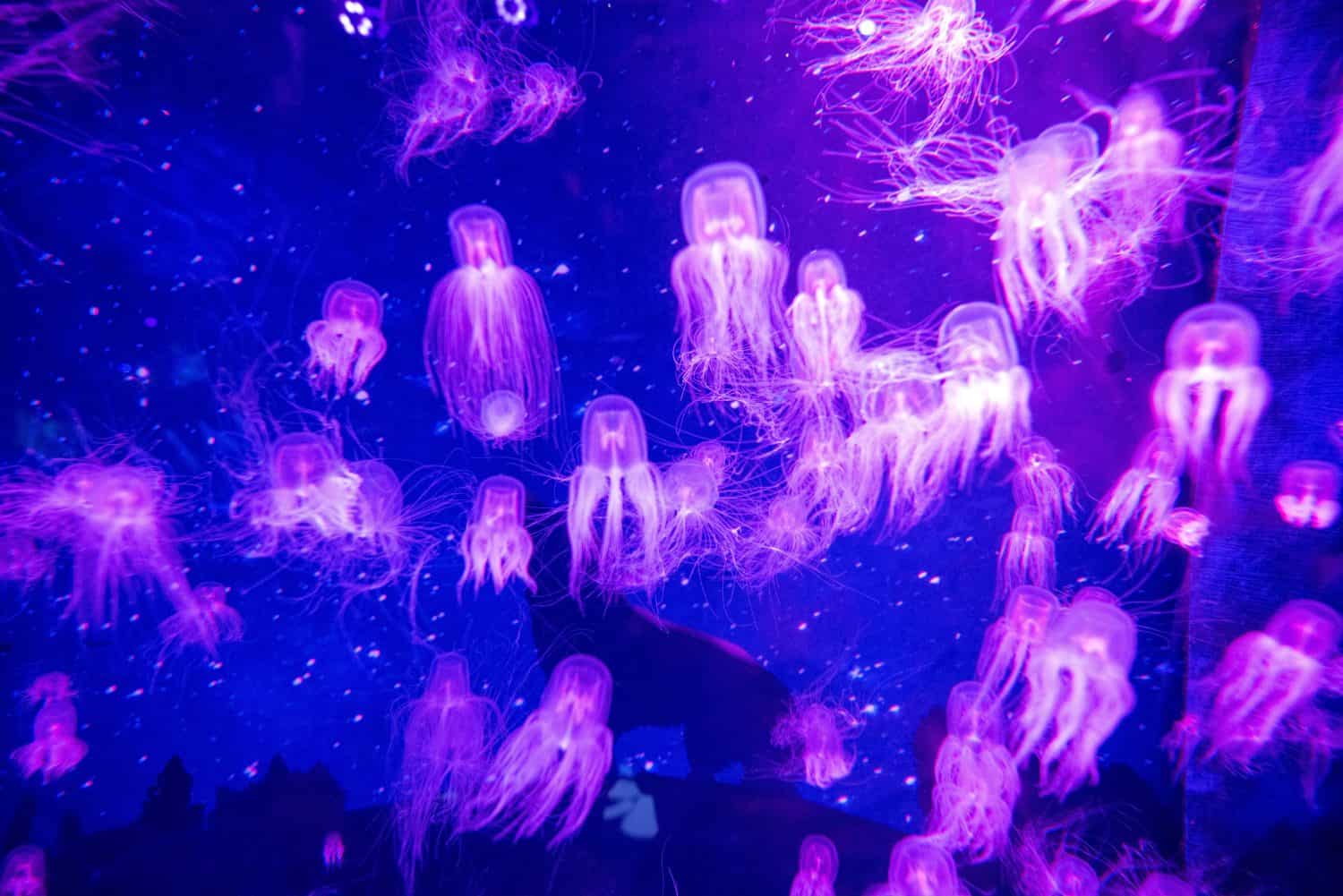
Box jellyfish are large and quite toxic, so watch where you swim.
©Nuttawut Uttamaharad/Shutterstock.com
The next largest species is the box jellyfish (Chironex fleckeri). This is the first of the jellyfish giants that also has tentacles that add to its size. The diameter of the bell on this jellyfish can measure up to 12 inches. The tentacles that hang from the bell can be up to 10 feet long, making this sea creature quite impressive.
In addition to being a large jellyfish, it’s also quite dangerous. It’s among the most toxic animals on the planet. The long tentacles are covered with tiny darts of poison. The results of contact could include cardiac arrest, paralysis, and potentially death. You’ll find this jellyfish primarily in Australian waters, so be careful where you swim. There are various versions of the box jellyfish, including the sea wasp and Irukandji jellyfish, which are among the most dangerous creatures on land or sea. Finally, instead of floating with the currents like most other jellyfish, the box jellyfish can see and travel at a speed of over four miles per hour, so beware.
8. Moon Jellyfish
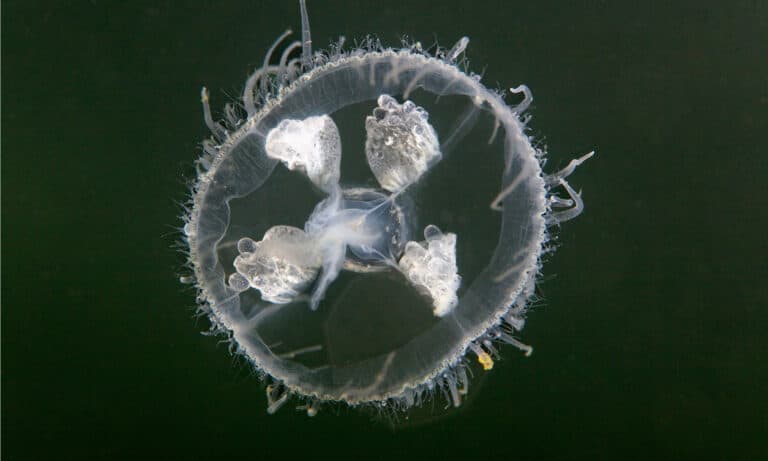
The moon Jellyfish (Aurelia aurita) is next with a bell diameter of about 16 inches on average. When most people think of jellyfish, they’re most likely thinking of the moon jellyfish. This species has a large, saucer-shaped translucent bell and very short tentacles that are primarily used to sweep food from the water to the mucous layer on the bell. Their diet is mostly made up of zooplankton.
You can spot the moon jellyfish in almost any ocean on Earth. Sadly, this species has a relatively short lifespan, lasting from early spring to early fall at the latest. This is the jellyfish variety that you’ll often see washed up on shore at the beach. Luckily, it does not sting humans, so you’re not in danger.
7. Blue Blubber Jellyfish
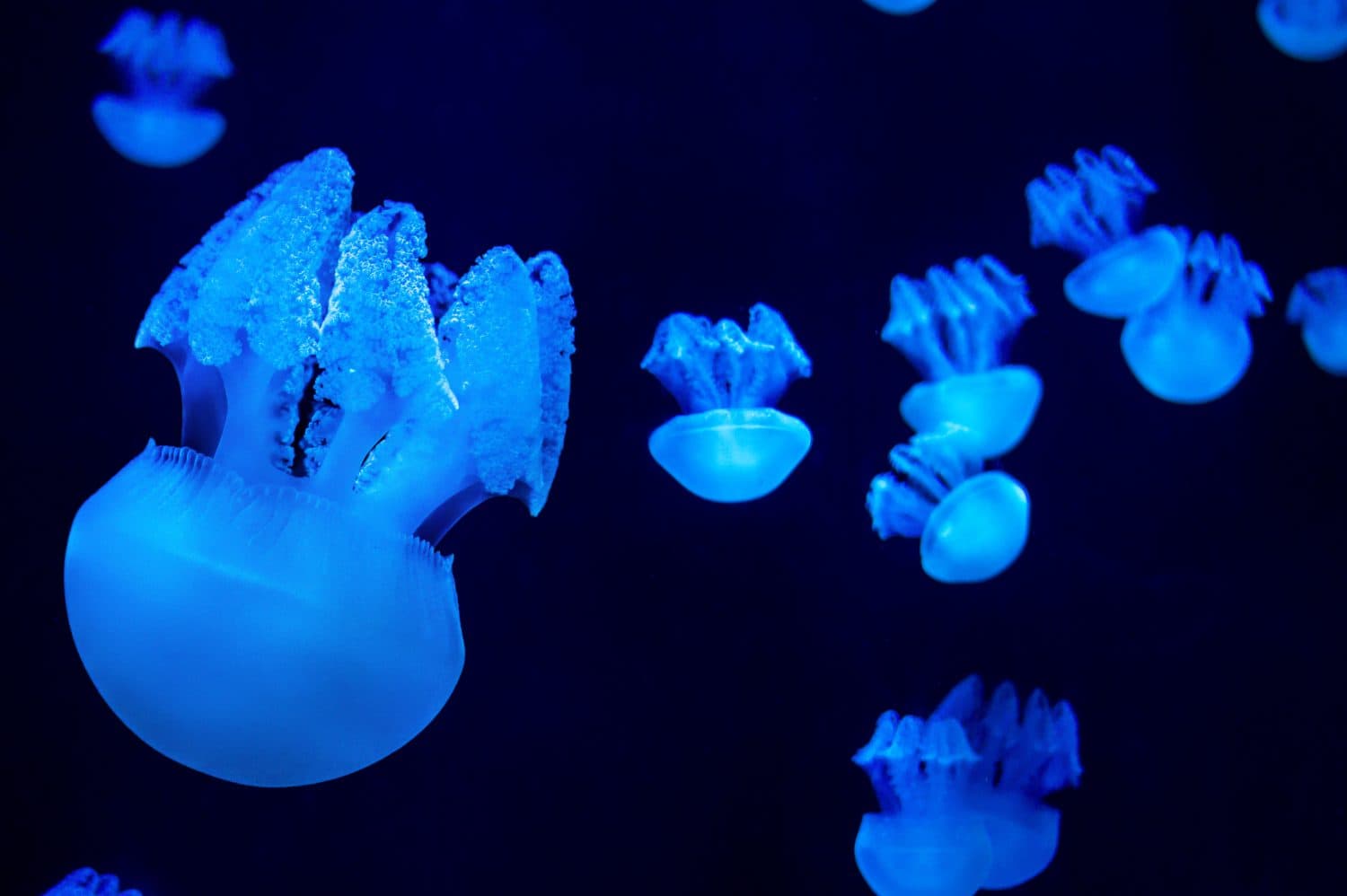
The blue blubber jellyfish is large, gorgeous, and a tasty delicacy in many cultures.
©berni0004/Shutterstock.com
With a bell size as large as 16-24 inches in diameter, the blue bubbler (Catostylus mosaicus) is another one of the jellyfish giants of the ocean. This species is also very colorful. Ranging from white to blue to purple, these are the jellyfish that you most commonly see at zoos and aquariums. In addition to being visually appealing, this jellyfish also makes an interesting sound. Its bell can pulsate, which produces a staccato-like rhythm.
In the wild, you’re most likely to see the blue blubber jellyfish in the coastal waters of northern and eastern Australia. Its diet mostly consists of zooplankton. Predators of this jellyfish include jelly-eating fish and sea turtles. Due to the reduced number of these predators over the years, the blue blubber jellyfish population has been increasing. Though it is venomous, many cultures eat this jelly after it’s been properly stored and dried. The Chinese believe eating them reduces blood pressure.
6. Fried Egg Jellyfish
With the fried egg jellyfish (Phacellophora camtschatica), we really begin to enter the world of jellyfish giants. The bell on this species can reach up to 24 inches. Plus, its tentacles can extend as long as 20 feet each, making it quite the sight to see. You can find this jellyfish in many different oceans, from the depths of the Mediterranean Sea and Atlantic Ocean to many areas of the Pacific Ocean. They often live as far down as 165 feet below the surface.
The species gets its name due to its bright yellow and brown colors, which give it a distinctly egg-like appearance. However, it’s made up of 95% water and 5% nerve cells and muscle. It does not have a brain, but don’t underestimate it. The primary prey of this jellyfish is other jellyfish. It doesn’t move purposefully, but instead drifts with the currents and acts like an underwater spider, stinging other jellyfish that become entangled in its many tentacles.
5. Pacific Sea Nettle
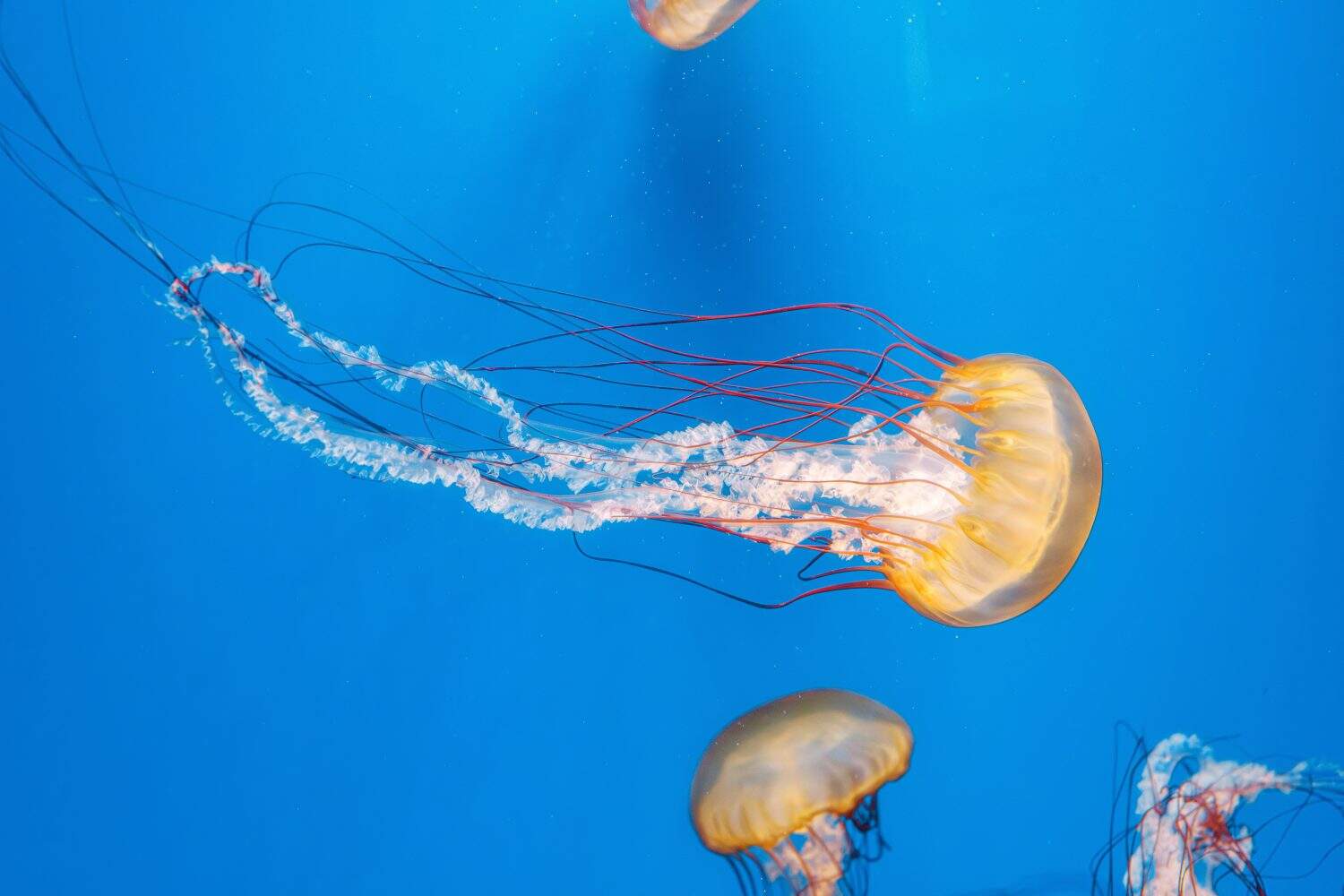
The Pacific sea nettle can reach 15 feet in length, and it is toxic.
©Minakryn Ruslan/Shutterstock.com
The size of the jellyfish on this list escalates a bit further with the Pacific Sea Nettle (Chrysaora fuscescens). This species is typically found in the waters of the Pacific coast along the United States, which is why it’s often a fixture in most aquariums. The bell can reach an incredible three feet in diameter, and the tentacles can extend up to 15 feet. They can also weigh between 20 and 100 pounds. This species comes in many gorgeous colors, from yellow to reddish-brown, and they’re all quite stunning.
This species is often found near the surface of the water in the fall and spring, and they form large swarms in deeper water during the summer and spring months. The Pacific Sea Nettle is a carnivore that mostly feasts on zooplankton and other jellies. Their long tentacles are covered with stinging cells that paralyze the prey as they bring the food up to its mouth. The sting can also hurt humans, and hospitalization may be required. Natural predators of the sea nettle include sea turtles and sea birds, but this jelly can do plenty to protect itself if threatened.
4. Barrel Jellyfish
The barrel jellyfish (Rhizostoma pulmo) is also very large, with an average weight of 55 pounds and a bell diameter of around 35 inches. The eight frilly tentacles also identify it. You can spot this species off the Western and Southern coasts of Britain, and it’s the largest species of jellyfish in the United Kingdom. In fact, there have been many instances of swarms of over 100 barrel jellyfish in the water at once. This species is so large that many young fish and smaller crabs will find shelter within the tentacles.
Unlike other jellyfish, the barrel variety does not pose a big threat to humans. They do have a sting, but it’s mild, and hospitalization is rarely required. The primary prey of this species is mostly composed of plankton. One of their main predators is the leatherback turtle. However, due to dwindling turtle populations, barrel jellyfish are becoming increasingly common.
3. Stygiomedusa
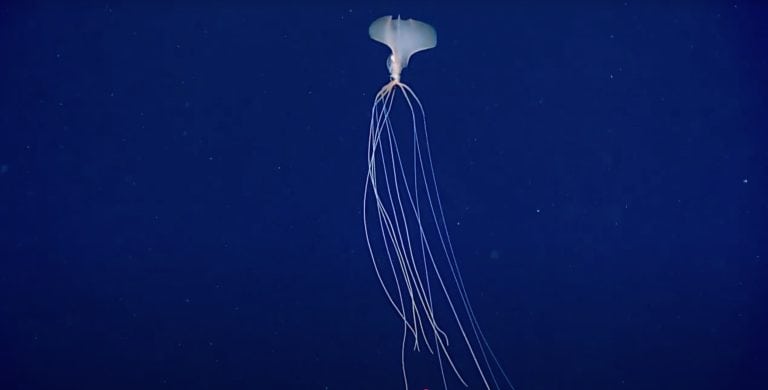
One of the largest and most mysterious of the jellyfish giants is Stygiomedusa Gigantea. The bell diameter of the Stygiomedusa often reaches and extends three feet. Instead of traditional tentacles, this jellyfish has four long and wide paddle-like arms that can measure as long as 30 feet.
The Stygiomedusa is rarer than most of the species on this list, and there have only been about 100 live sightings and pictures of the Stygiomedusa in the deep parts of the ocean. Due to this fact, there’s a lot about this jellyfish that we don’t know. However, it’s believed that it uses those side arms to control its prey and bring the prey up to its mouth. Although it’s hard to see deep in the ocean, most pictures show the Stygiomedusa to be a dark red color.
2. Nomura’s Jellyfish
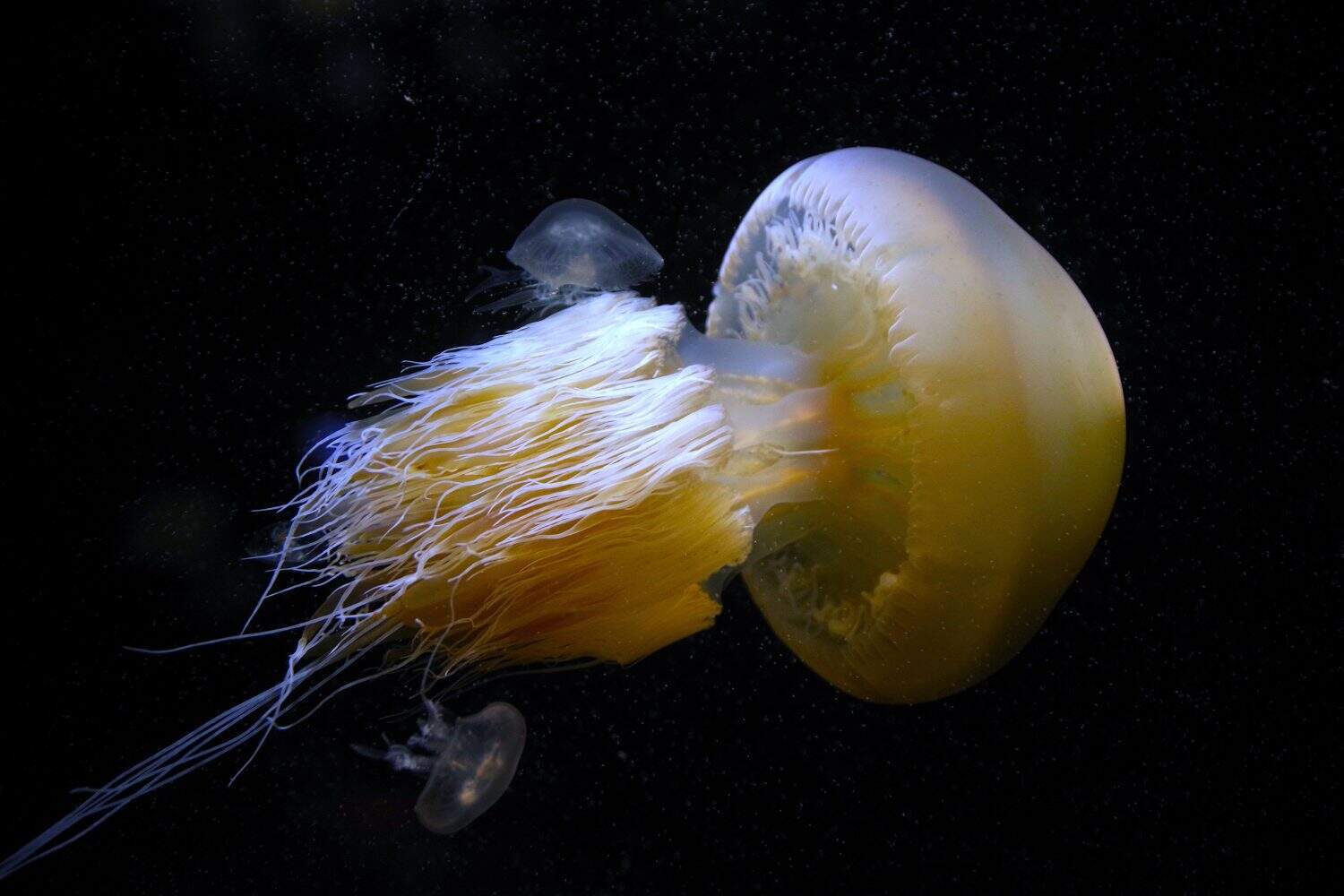
The Nomura jellyfish is beautiful, but it’s also quite menacing at over 400 pounds.
©pluuuuuuuuus/Shutterstock.com
The second largest of all the jellyfish in the world is Nomura’s jellyfish (Nemopilema nomurai). Typically found in the waters of Japan and China, the bell of this species can measure up to six feet wide. It’s also quite heavy, at over 400 pounds; this floating species is heavier than most vending machines. The species also grows quite fast. Typically growing from the size and weight of a grain of rice to over 400 pounds in less than a year.
While their vast size is impressive, Nomura’s jellyfish can cause major problems for the environment and the people of the area. This species has a lot of offspring, and they all grow quickly. Over time, the species blooms, and millions of them can often make their way into Japanese fishing grounds. As a result, the jellyfish can interfere with operations, get caught in nets, and even collapse fishing trawlers. Nomura’s jellyfish is also a delicacy in many parts of the world as chefs incorporate them into ice cream, medications, and more.
1. Lion’s Mane Jellyfish
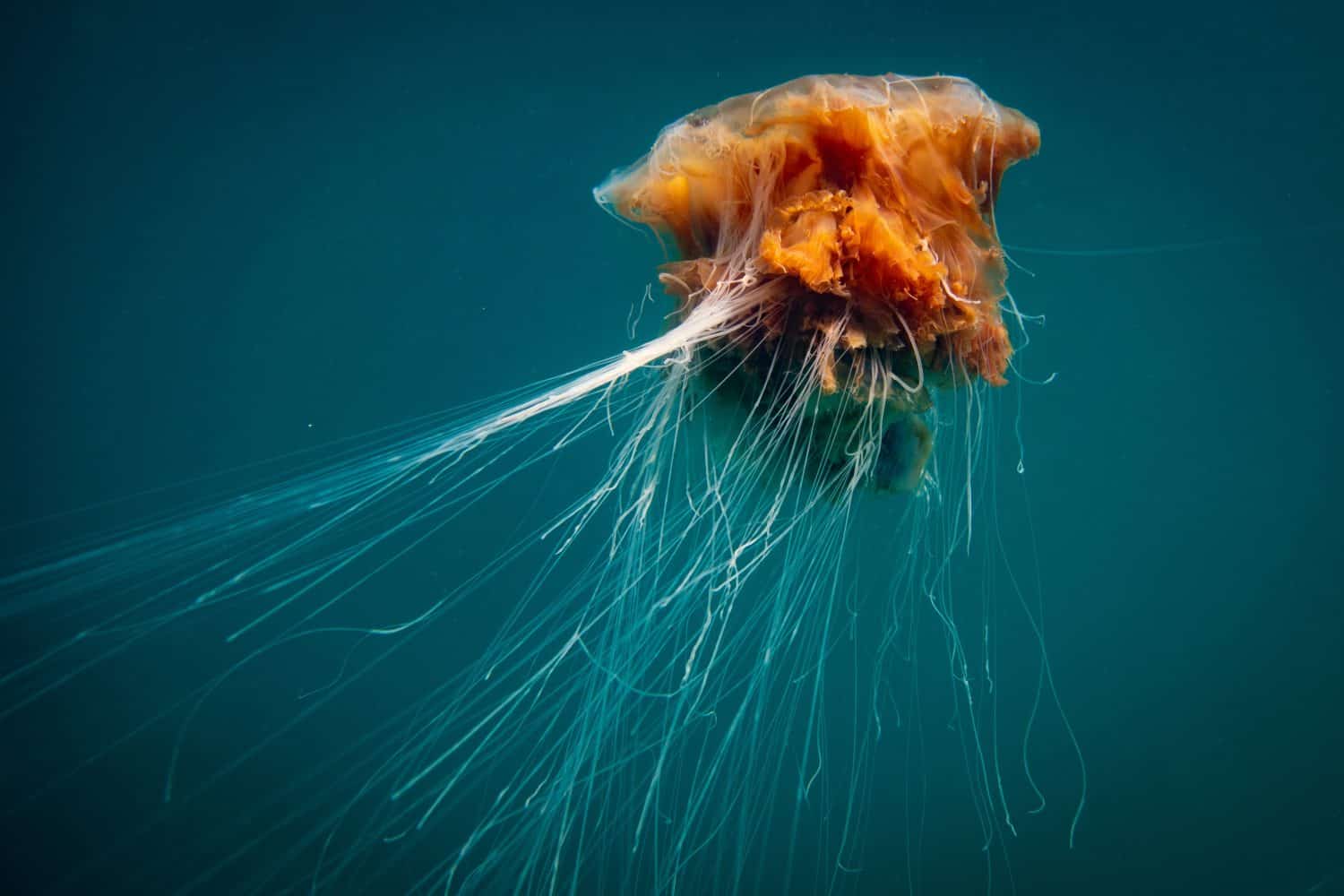
With a potential overall length of 120 feet, the lion’s mane jellyfish could be considered the longest animal on Earth.
©Mikael Litendahl/Shutterstock.com
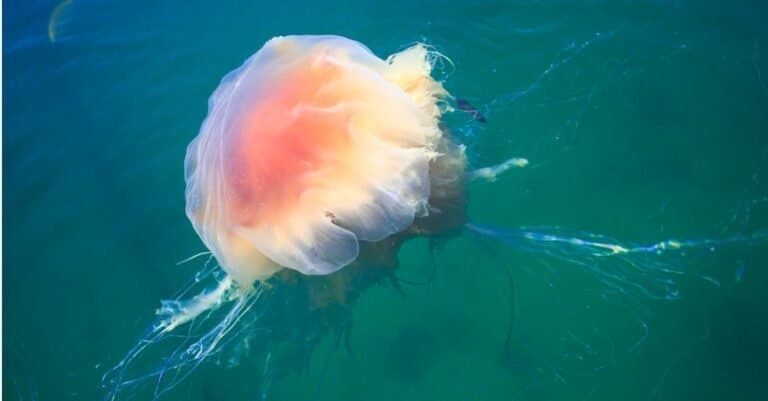
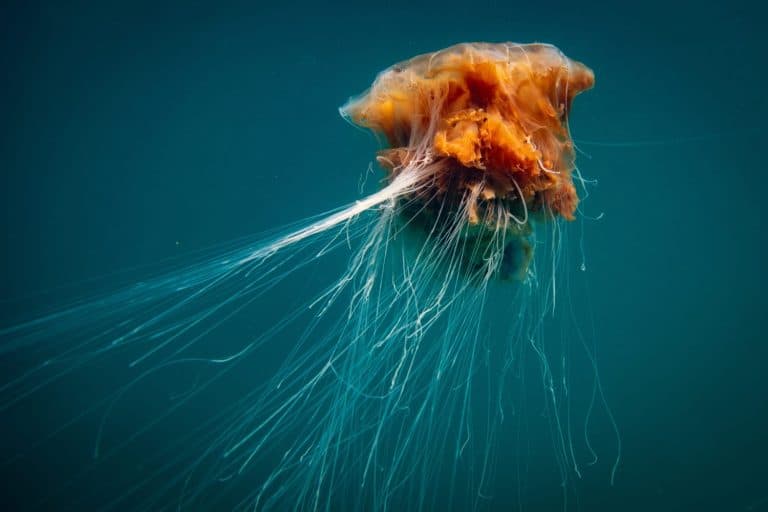
Finally, we have the undisputed winner for the largest of the jellyfish giants, and it’s the lion’s mane jellyfish (Cyanea capillata). The bell diameter of this creature is up to 8 feet, which in itself is huge. However, when you add to the fact that its tentacles can reach up to 120 feet in length, then you’re officially looking at one of the longest animals on the planet. The tentacles themselves are longer than a blue whale.
The creature’s name comes from the fact that it has its orange color and due to its mane of long hair-like tentacles. One of these jellyfish can have up to 1,200 of those thin tentacles hanging from its bell that are typically divided into clusters. The creature uses those tentacles to trap prey by extending them outward and bringing fish, crustaceans, zooplankton, and other tasty treats to its mouth.
Like many other jellyfish, the lion’s mane is dangerous to humans. The tentacles are covered with thousands of stinging cells that won’t cause death but can cause respiratory issues, severe pain, and muscle cramps. Oddly, the stinging nematocysts can fire and cause pain even after the jellyfish is dead. The lion’s mane jellyfish only live for about 12 months, but it’s estimated that there are millions in the world. Therefore, be cautious if you’re swimming in the colder waters of the Northern Hemisphere, including the Atlantic, Arctic, and Pacific oceans.