Quick Take
- The so-called seven-arm octopus actually has eight arms, and the reason for the illusion is stranger than you'd expect. Discover the hidden eighth arm →
- Females and males of this species are so different in size that they barely seem like the same animal. See the dramatic size differences →
- Unlike most active predators of the deep, this octopus turns its prey into something other than a meal. Explore their unusual feeding habits →
- Surviving with zero solid ground to land on requires a body built in a way most octopuses aren't. Learn about open-ocean adaptations →
Can you imagine spending your entire life without ever touching the floor? Well, that’s the reality for this octopus. Pelagic octopuses go their entire lives without ever touching the shore or the ocean floor. This YouTube video from Schmidt Ocean Institute features an octopus, and like other deep-sea ocean animals, it is truly alien-like. Read on to learn more about pelagic octopuses and why they never touch the shore or ocean floor.
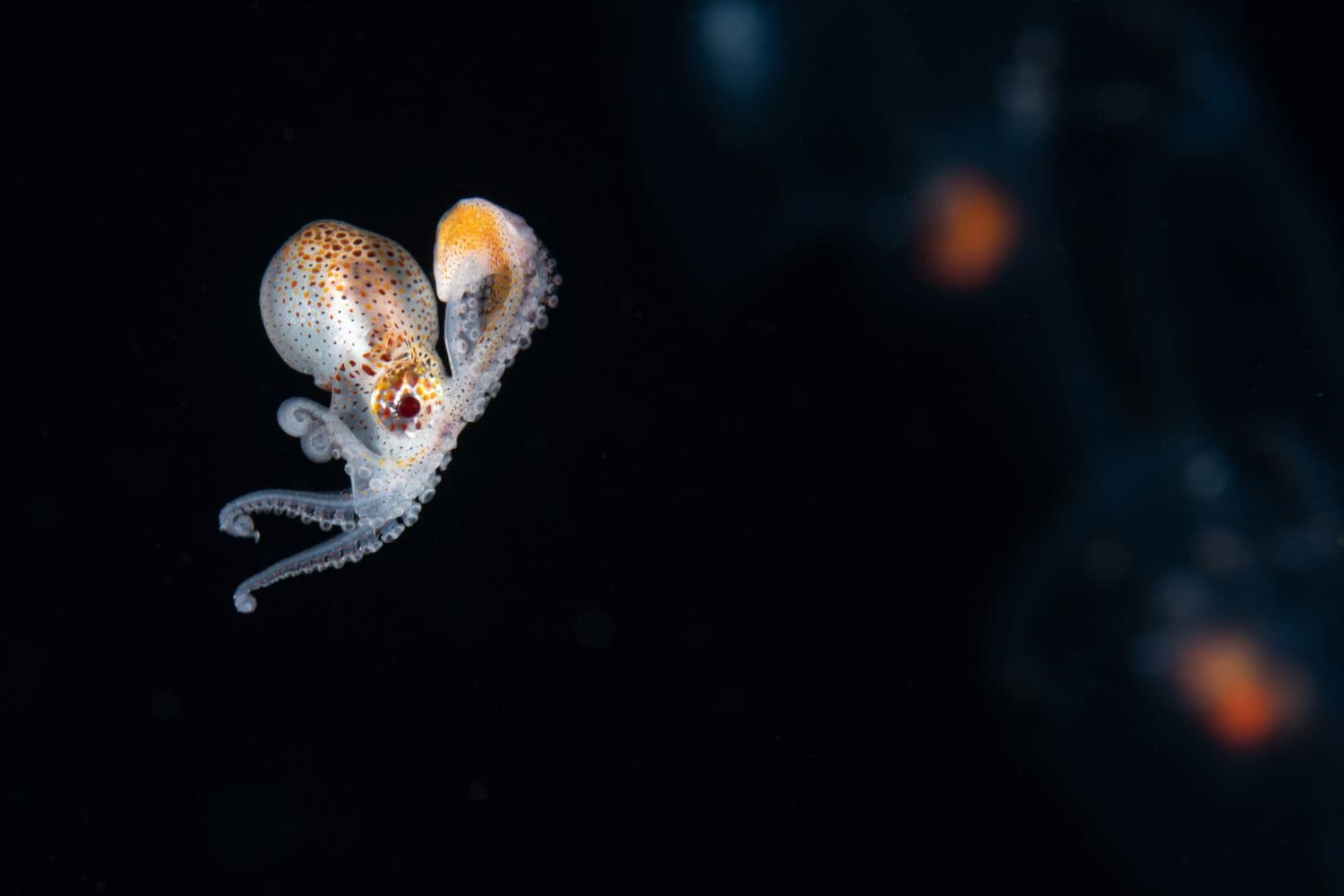
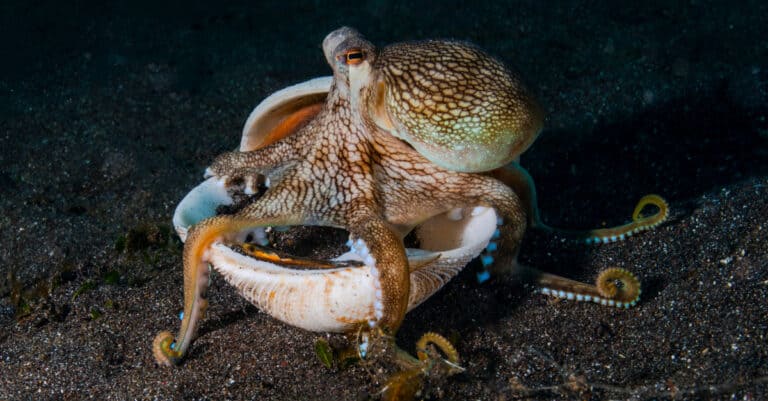
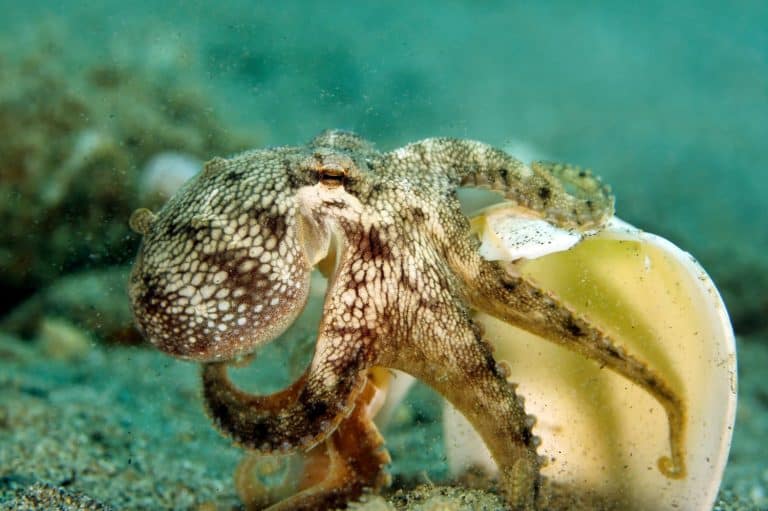
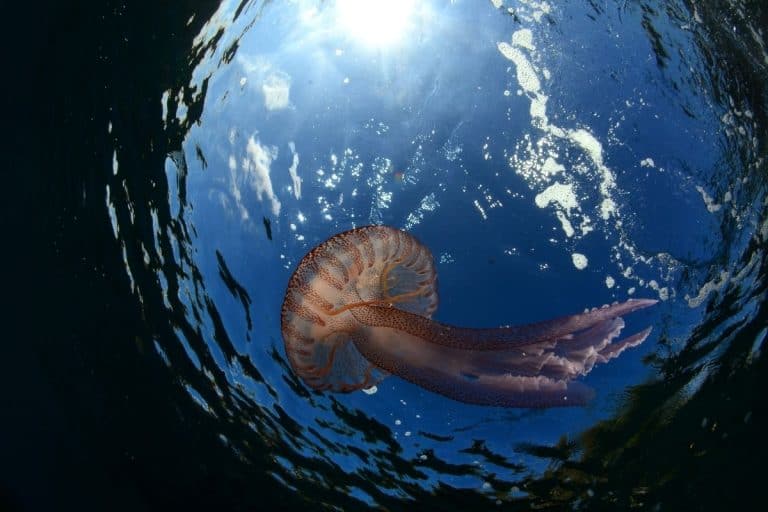
There are an estimated 10 to 15 species of pelagic octopuses, including the paper nautilus octopus pictured above.
©Andre-Johnson/Shutterstock.com
About Pelagic Octopuses
The video above is a great look at the species Haliphron atlanticus, or the seven-arm octopus. These octopuses are some of the largest species in the world. They have white bodies and striking red tentacles. Seven-arm octopuses are an example of pelagic octopuses—octopuses that spend their entire lives free-floating in the ocean. Unlike most octopus species, which use rocks or coral reefs to hide and seek shelter, pelagic species live suspended in the water. They specifically inhabit the pelagic zone, or open ocean, where there are no structures. They spend their lives swimming through mostly tropical or subtropical waters, remaining at such depths that they are rarely seen by humans.
Seven-arm octopuses have soft and gelatinous bodies with a balloon-like mantle. Their naturally jelly-like bodies are perfect for their pelagic lifestyle, as movement requires low energy use, and the neutral buoyancy helps them stay afloat. Although called seven-arm octopuses, they actually have eight arms. However, in males, their reproductive arm is hidden in a pouch near the eye, creating the seven-arm illusion. The seven-arm octopus also shows sexual dimorphism. Females grow larger than males, often 10 to 13 feet long. Males, on the other hand, may grow to only about 2 feet long, or even smaller. These gelatinous octopuses also have a diet consisting mainly of gelatinous prey. They feed on jellyfish and zooplankton, and not only do they eat them, but they also hold onto them as a shield of sorts. Since most octopuses are active predators, it is interesting to observe the slower, more passive approach of this species.