
Quick Take
- Killer whales don't just spot their prey. They run a calculated reconnaissance before a single wave is made. See the recon process →
- Wave-washing looks instinctive, but scientists classify it as something else entirely. That distinction changes everything. Discover the classification →
- Seals have a real shot at escaping, but one thing killer whales do underwater makes that nearly impossible. See underwater tactics →
- Killer whales don't all hunt the same way, and the reason why is more human than you'd expect. Explore cultural hunting traditions →
Killer whales are incredible social creatures that work together when hunting. They use multiple hunting techniques, many of which are difficult to observe and record. However, scientists recently managed to record a hunting method that was previously thought to be a myth. This YouTube video by BBC Earth shows killer whales using artificial waves to push seals onto floating ice. Read here to learn more.
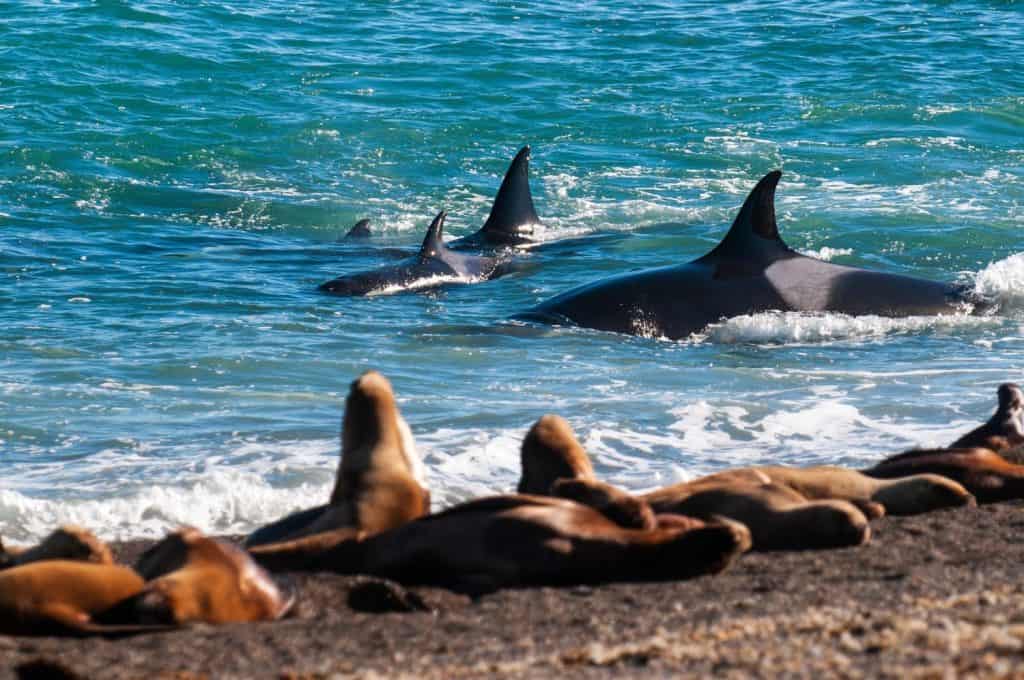
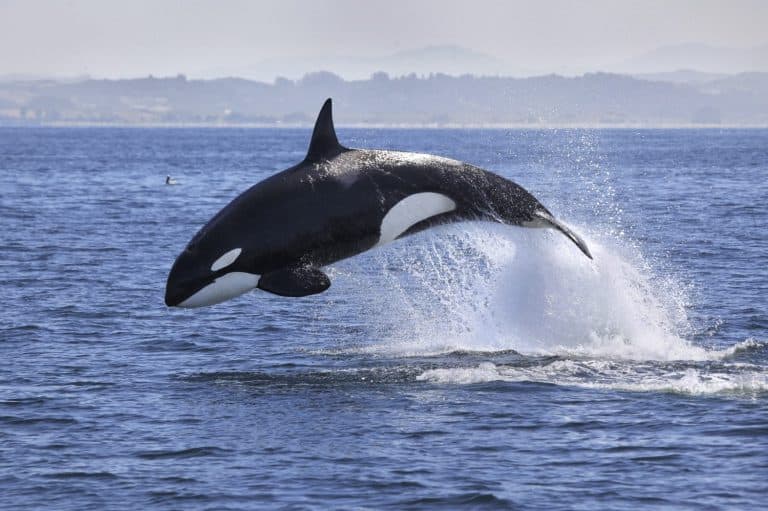
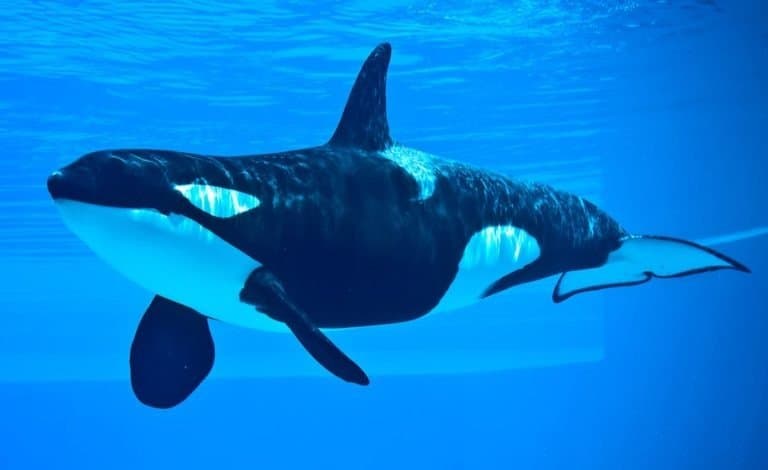
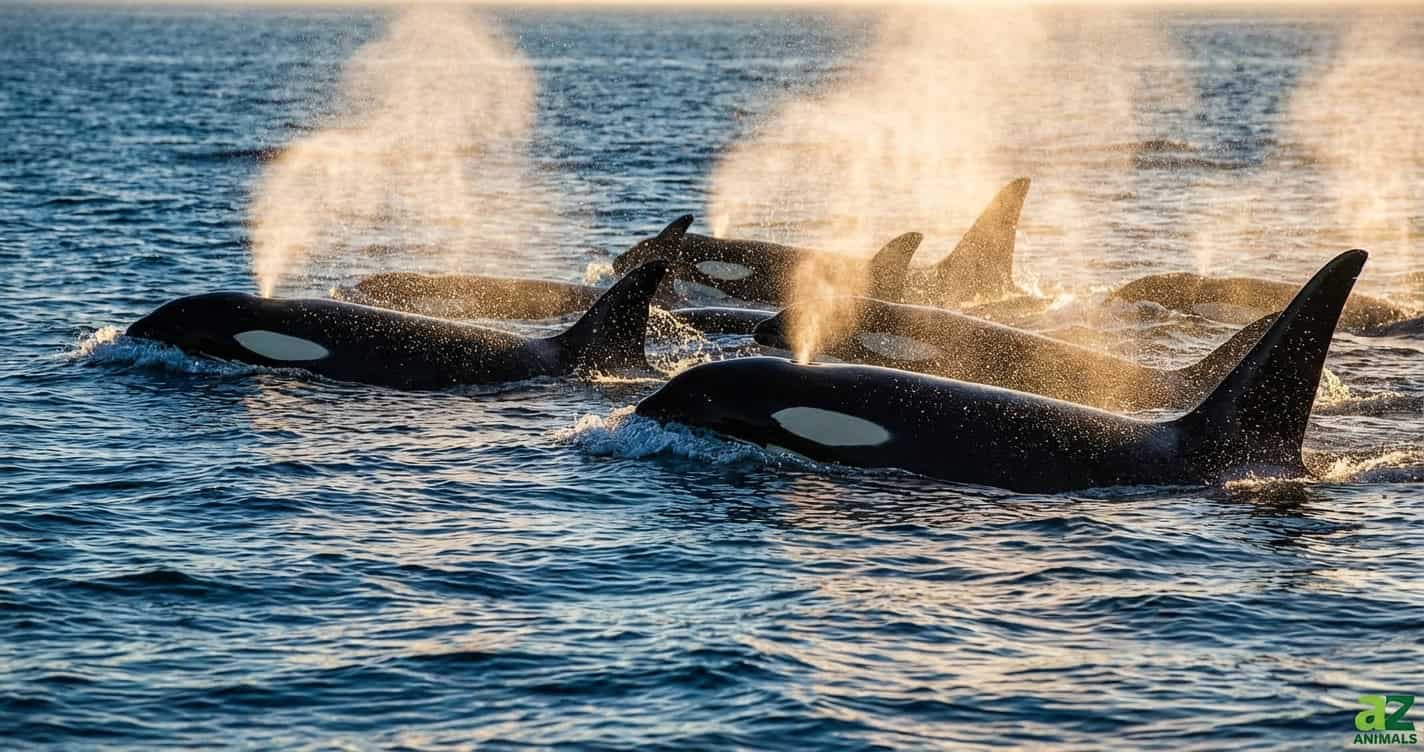
Killer whale groups, or pods, can range from a small group of about two to six whales to super pods with more than 50 individuals.
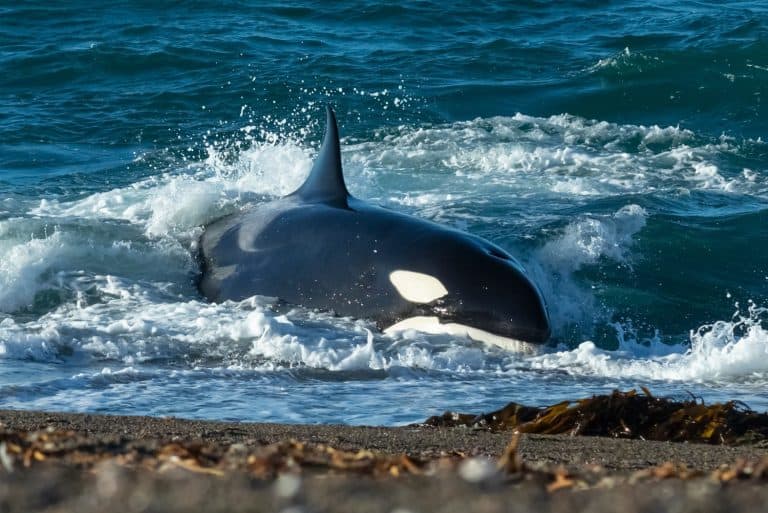
©Foto 4440/Shutterstock.com
How Killer Whales Hunt Together
Killer whales work together in creative ways while they hunt, and this helps them secure their next meal. One way is by forcefully pushing seals onto ice using waves, making their prey much more vulnerable. The video above is a rare recording of this behavior, demonstrating just how meticulous killer whales can be. To start, they locate their prey. They do this by lifting their heads above water to quickly survey their surroundings.
Not only do they spot their prey, but they also analyze the distance, the thickness of the ice, and the seal’s position. Taking all of this into account, they then line up to attack. Several orcas will position themselves side by side and surge forward. This creates a strong wave that sweeps the seal into the ocean. The seal will most likely be disoriented and struggle, and the killer whales may even force it back onto the ice to repeat the attack.
This strategy is extremely impressive and highlights the strong social bonds among killer whales, who work together very effectively. However, this does not always mean they are successful. Seals can still escape if they jump into the water quickly enough to avoid being caught. However, the remarkable communication between killer whales makes it difficult for prey to escape. Using underwater vocalization and body positioning, they can signal to each other swimming speed and direction of travel. They learn these hunting techniques from a young age, with many methods passed down through generations. Unique hunting methods like this are often considered cultural behaviors. Much like humans, killer whales have their own hunting styles and traditions that reflect the needs of their group.