Quick Take
- Some birds don't just survive wildfires. They deliberately make them worse, and scientists are only now catching up to what Indigenous Australians have known for generations. See how birds spread fire →
- Firefighters have watched helplessly as hawks undo their work in real time, and it turns out the birds' motive is more calculated than you'd expect. Discover the hunting strategy →
- Black kites do this in Africa and Eurasia too. Or so it seems. Only one population does, and the reason reveals something unsettling about animal intelligence.
- The same fire-spreading behavior that terrifies modern firefighters turns out to mirror a land-management tradition that shaped an entire continent. Explore the Indigenous connection →
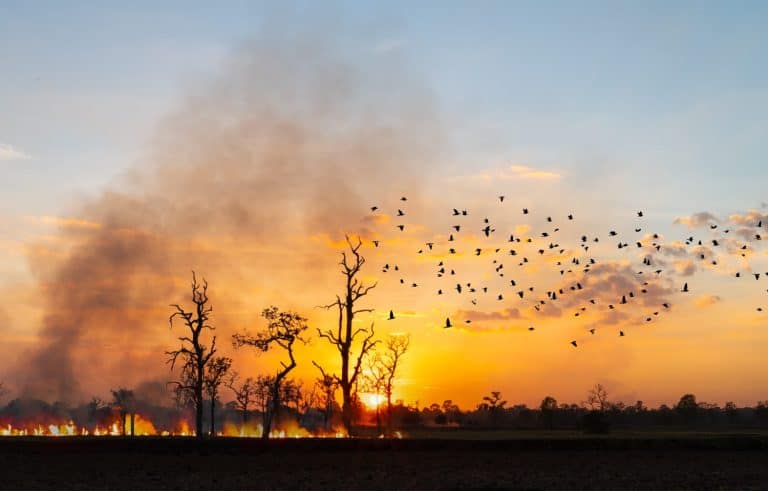
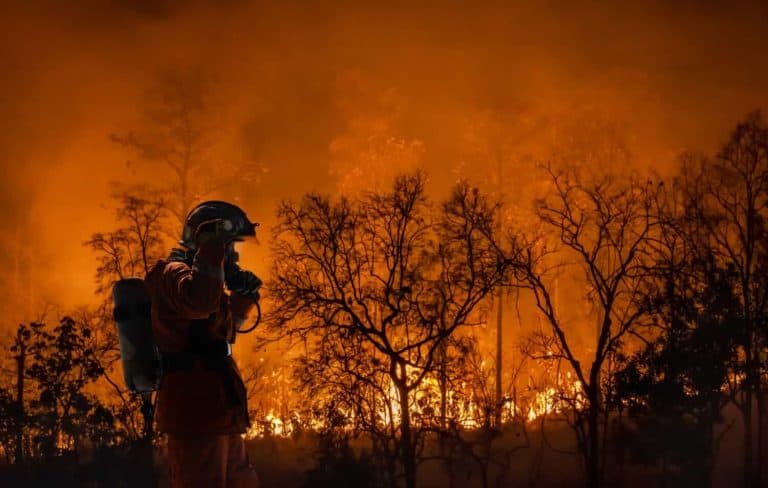
As summer turns to fall in Australia’s tropical savannas, the rains come to an end, and a landscape covered in green grass begins to dry. In some areas, rain won’t fall for another 9 months. Winter winds drive atmospheric friction, and dry lightning sparks powerful blazes. For countless generations, Aboriginal people have shared stories of birds of prey snatching smoldering sticks from such blazes and starting new fires. More recently, firefighters have reported time and time again–with amazement and frustration– seeing hawks restart the fires they are fighting. Now, researchers are scrambling to scientifically document this behavior for the first time.
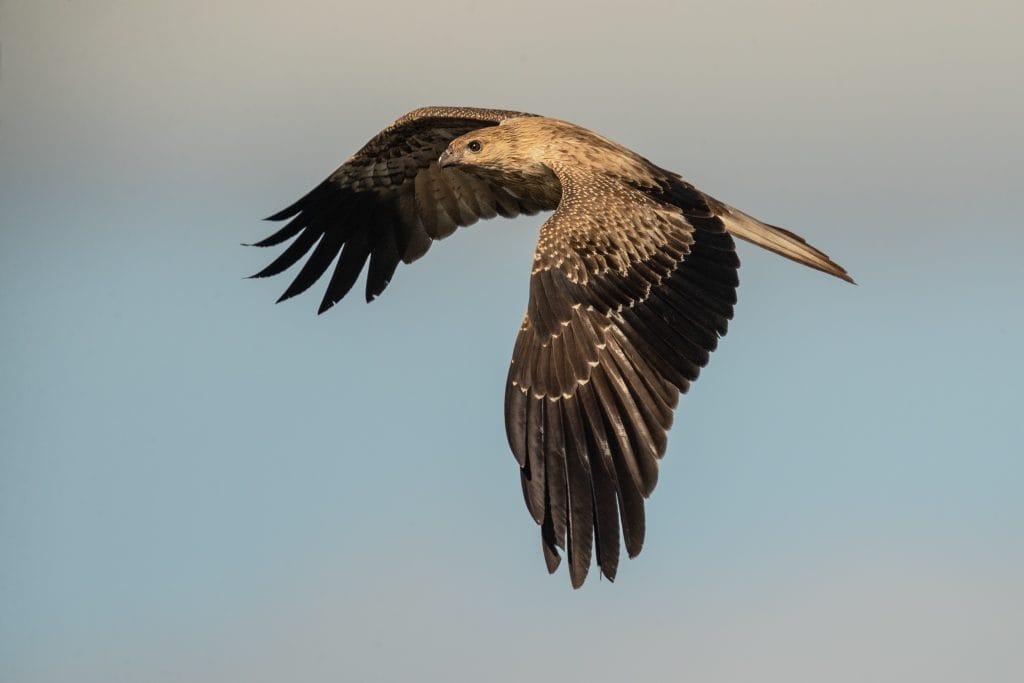
Whistling kites (Haliastur sphenurus) are one of 3 Australian raptor species known to actively assist in the spread of wildfires.
Why Do These Birds of Prey Resort to Arson?
In Australia, black kites (Milvus migrans), whistling kites (Haliastur sphenurus), and brown falcons (Falco berigora) are all referred to as “firehawks,” as they’ve each been observed relocating flaming or smoldering vegetation. And this behavior is not accidental. These raptors benefit from the flames by stalking prey that is fleeing the fire front, and are often observed gliding above fire’s growing edge, scanning for mice, rabbits, lizards and snakes. Firefighters and indigenous people have observed dozens of these kites and falcons congregating near savanna blazes, scoping out hunting opportunities and swooping low to pick off prey.
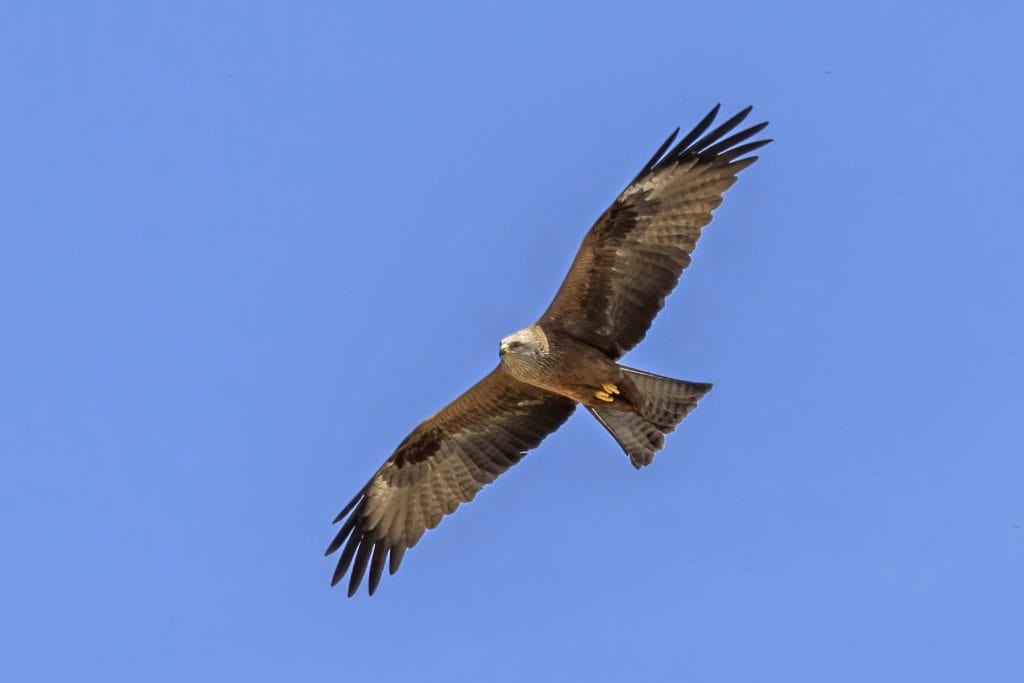
Black kites can be found across Eurasia, Africa, and Australia, where they are seen hunting near fires; however, only in Australia have they been seen spreading fires.
©By Charles J. Sharp – Own work, from Sharp Photography, sharpphotography.co.uk, CC BY-SA 4.0, https://commons.wikimedia.org/w/index.php?curid=118002774 – Original / License
Not all populations of these birds of prey are observed spreading wildfires, however. This leads ornithologists to suspect that this is a behavior that the predators learn from observing one another.
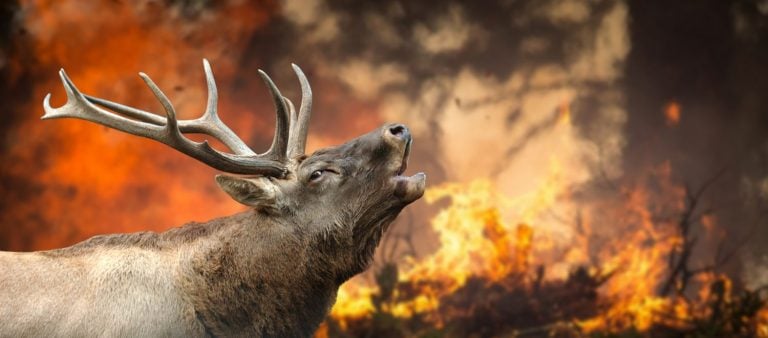
But these birds of prey are far from the only animals to benefit from the threats and disruptions wildfires cause. Highly active and aware predators, especially birds and mammals, can benefit significantly from wildfires. After determining the direction the fire is traveling, these predators often position themselves in the path of fleeing animals. Bobcats, bears, coyotes, and raccoons have all been observed taking advantage of wildfire by following its growth, and even if their hunts are unsuccessful, they often scavenge on animals that succumbed to the flames.
Other animals have unique adaptations to wildfire; in the American West, wood-boring beetle larva rapidly colonize burnt forest, and woodpeckers follow. Endangered spotted owls normally prefer old-growth forests, but they can also nest in moderately burned woodland. Yet outside of Australia, no animals have been seen actively spreading fire, and scientists are eager to document this behavior systematically- and on camera.
Indigenous Knowledge Informing Contemporary Fire Management
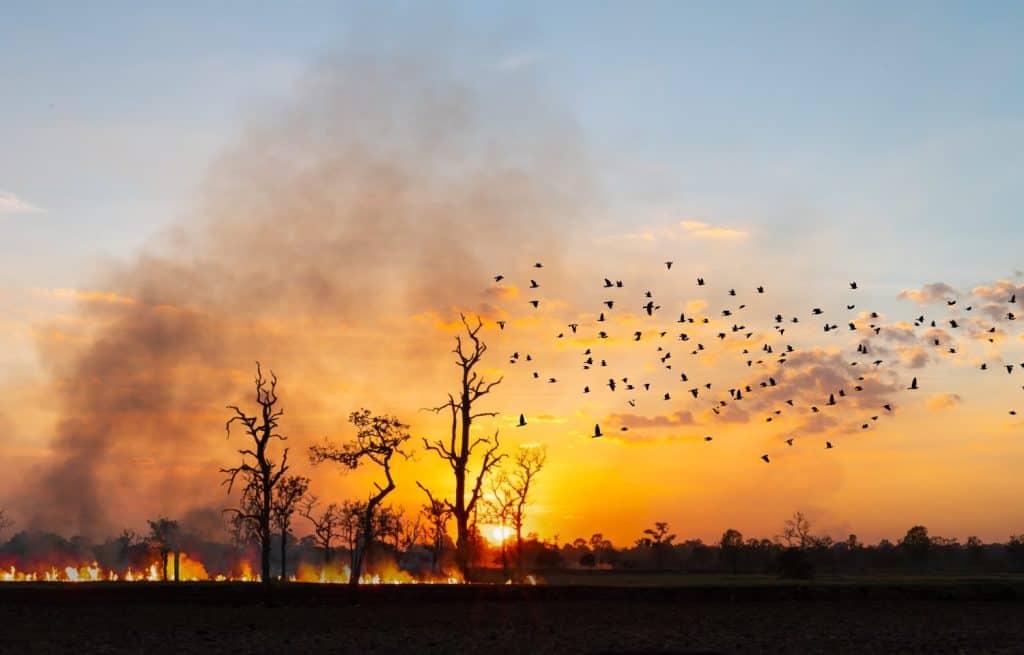
Many species evolved in grassland ecosystems, a landscape characterized by wildfire. Removing fire from the ecosystem can lead to long-term changes and loss of biodiversity.
©frank60/Shutterstock.com
Aboriginal people have also used fire to manage Australia’s grasslands and flush out prey for thousands of years, and researchers started their investigation into firehawks by recording their stories. Researchers heard of birds swooping into cooking fires to snatch flaming sticks or carrying burning vegetation over rivers. According to some Aboriginal stories, firehawks brought embers in their beaks to the world’s earliest humans, introducing us to fire.
Bush firefighters, too, were essential sources for researchers investigating firehawks. One firefighter, Dick Eussen, had just extinguished a blaze alongside a road, when he noticed a fire had sprung up on the opposite side. While driving to the burn, he saw a Whistling kite carrying a smoking stick in its talons, dropping it onto the dry grass. By the end of the day, Eussen had put out 7 fires, all of which had begun from the first fire, and counted 25 raptors foraging around the edge of the burn.
During Australia’s early colonial era, controlled burning practices became rare, but as lands and management practices have been returned to Aboriginal control, these traditional managed burns are becoming more common. Knowledge of firehawk behavior is essential for safety in a landscape with both controlled burns and natural wildfire, and scientists are applying new methods to study the phenomena.

The Brown Falcon (Falco berigora) eats small mammals, including house mice and young rabbits in the summer. It also eats small reptiles, birds, and a variety of invertebrates.
©Imogen Warren/Shutterstock.com
Firehawk behavior is well documented by diverse observers, but we have yet to capture raptors carrying sticks on camera thus far. To change this, researchers have trained fire rangers and ornithological volunteers to make observations and equipped them with cameras. Hopefully, we will soon be able to see this captivating hunting strategy for ourselves.
Though wildfire strikes fear in animals and man alike, in the Australian savanna, it’s a part of nature’s cycling; many species depend on the clearing and regenerative effects that follow a wildfire. Without wildfire, grasslands transition into different ecosystems, changing the habitat and excluding certain species. Though these birds are spreading fire to help their hunting chances, they are also acting as protectors of the ecosystem. In this way, they mirror the Indigenous peoples of the region, who have used controlled burns for thousands of years to improve hunting conditions and encourage the growth of beneficial plants. These practices help preserve both culture and landscape.