
Quick Take
- The fish's instinctive defense against predators is exactly what makes them easy prey for these orcas. See why it backfires →
- Not every orca in the pod does the hard work, yet they all eat. Scientists have a name for that arrangement. Explore by-product mutualism →
- This hunting skill doesn't come naturally to orcas, and the reason why has unsettling implications for the species. How this skill is learned →
- Scientists can count how many fish an orca eats without ever seeing it eat one. Discover the research methods →
For one group of orcas in the North Atlantic, hunting is a group activity. The entire pod works together to herd schooling fish into a tiny ball, then methodically target the fish with their powerful tails.
It’s a process researchers call “carousel feeding,” and it’s a highly effective way for killer whales to grab their next meal. But it’s not something seen in orca pods elsewhere. This hunting method seems exclusively reserved for the orcas off the coast of northern Norway and nearby waters.
Continue reading
What Is Carousel Feeding?
When orcas engage in this behavior, there are two distinct stages – herding and striking. To herd, the whales swim around and under the schooling fish, typically herring. The whales frequently slap their tails at the surface and sometimes leap out of the water. Researchers specifically refer to the tail-slapping behavior as ‘lobtailing.’
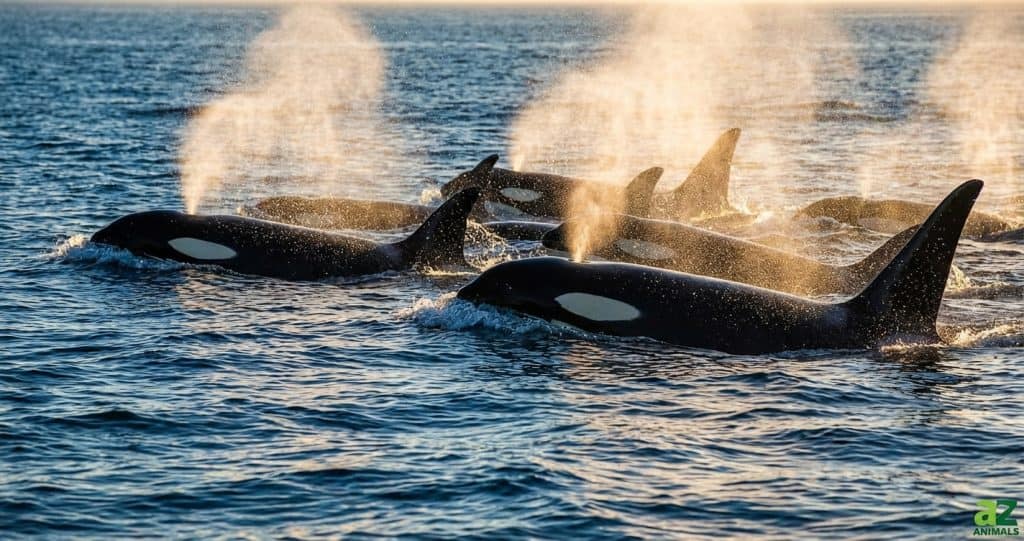
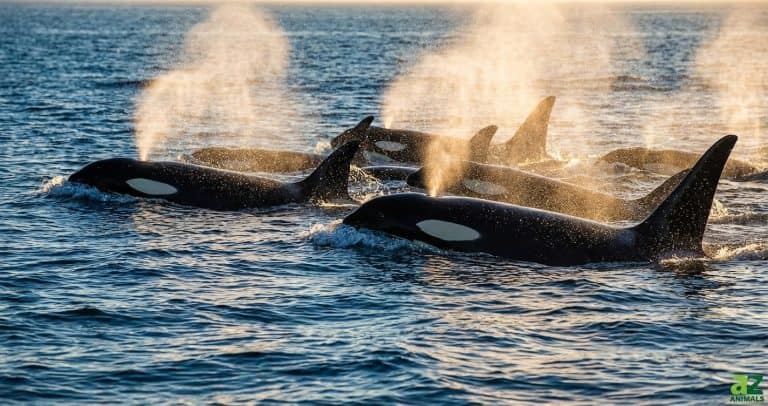
Some orca pods engage in “carousel hunting” which requires teamwork.
©A-Z Animals
The whales also use their size and color markings to their advantage. As they circle the ball of smaller fish, the whales turn their white bellies towards the fish while simultaneously blowing bursts of bubbles. Both behaviors frighten the smaller fish, causing them to cluster even more tightly together for protection.
For the smaller fish, forming a tighter ball is an instinctive defense against predators. This behavior acts as a shield, offering safety in numbers. However, for the orcas, it’s an invitation to proceed with the second part of their attack – the strike.
How Orcas Strike
Once the orcas have corralled the herring into a small, tight ball, they slap their large tails directly into it. One well-placed slap can stun or kill up to 10 to 15 herring at a time, sometimes more. Once the herring are immobilized, the whales stop herding and swim around, eating the stunned fish one at a time.
When the whales slap their tails, it produces a quick, loud thumping sound. Scientists conducting research on the sound believe it is a combination of the impact of the tails on the target and the noise that the bubbles make, a process called “cavitation.”
This distinctive noise enables researchers to study carousel feeding using acoustic methods.
How Do Scientists Study Carousel Feeding?
To better understand this feeding style, researchers place underwater cameras near feeding pods of orcas. They film the entire sequence. They also attach suction-cup tags to the whales to capture movement, sound, and 4K video from the whales’ point of view. The tags are temporary and self-release from the animals.
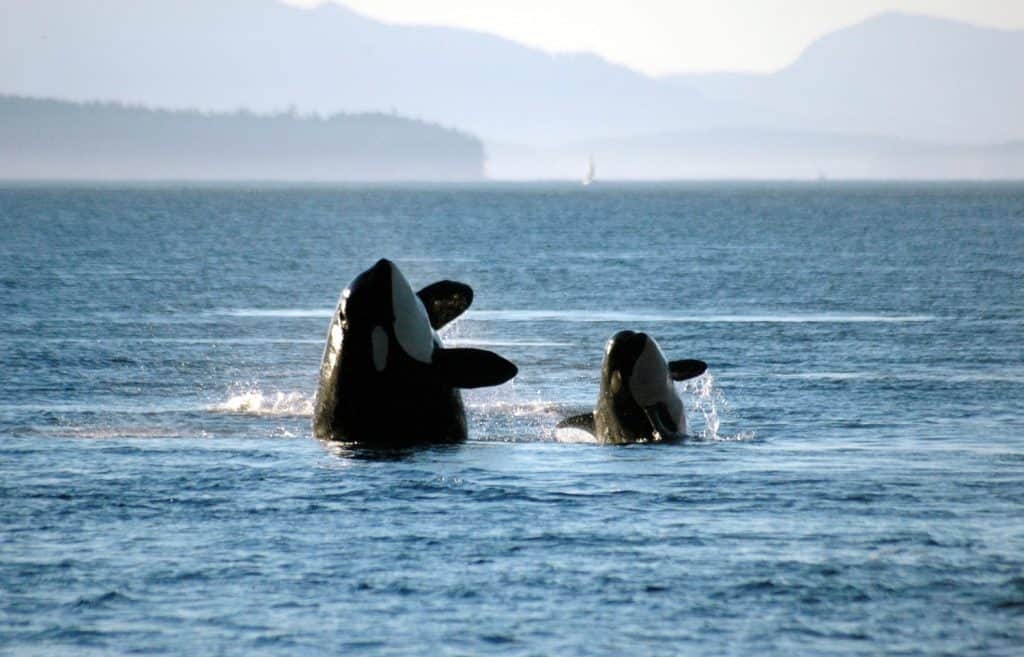
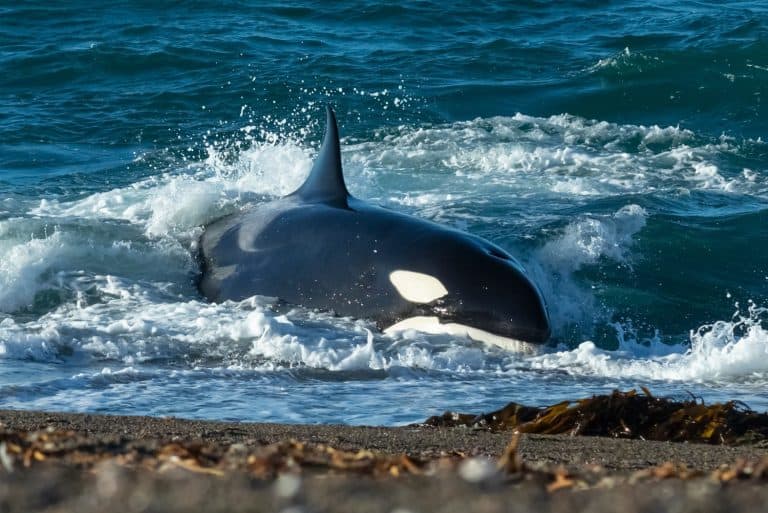
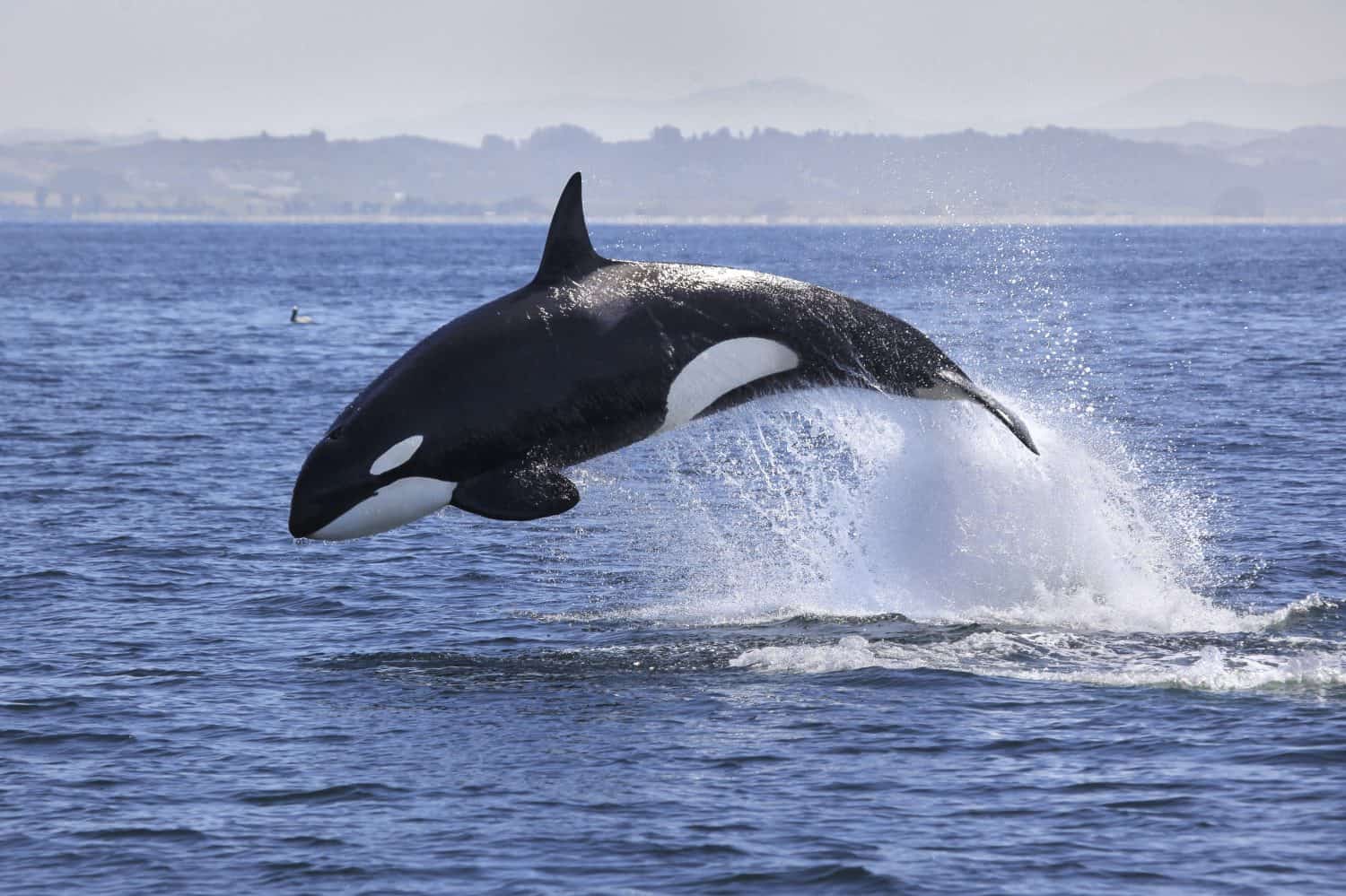
Orcas breach the water’s surface during carousel hunting.
©Monika Wieland Shields/Shutterstock.com
Researchers also use sonar to track herring schools and whale pods during the hunt. They also submerge microphones to record the sounds of the tail slaps. They have even recorded the slurping sounds whales make as they eat herring. This allows researchers to count feeding events even when camera footage is unclear or unavailable.
Why Carousel Feeding Is So Effective
Orcas use this hunting method because it is more effective than other strategies, such as scavenging for fish discarded by fishing boats. Data shows that whales catch prey more quickly—about one fish per minute—when using carousel feeding compared to other methods.
Since an adult orca requires a few hundred herring each day to survive, using a more efficient hunting method provides a significant advantage. Carousel hunting provides that advantage.
Some may wonder why the whales do not simply swim through the school of fish and eat them without first stunning them. The truth is that no studies have compared these two approaches, and such a comparison may be practically impossible. Orcas are almost never seen feeding without the tail slap first.
The Power of Teamwork
Studies have also revealed that the pod works collaboratively to optimize its hunting success. Certain whales in each group tend to be the primary tail-thumpers. Researchers view this as a form of division of labor among the team.
However, even whales that do not participate in tail slapping share in the bounty of the hunt. All the whales in the pod feed on the stunned fish. It is a group benefit scientists call “by-product mutualism.”
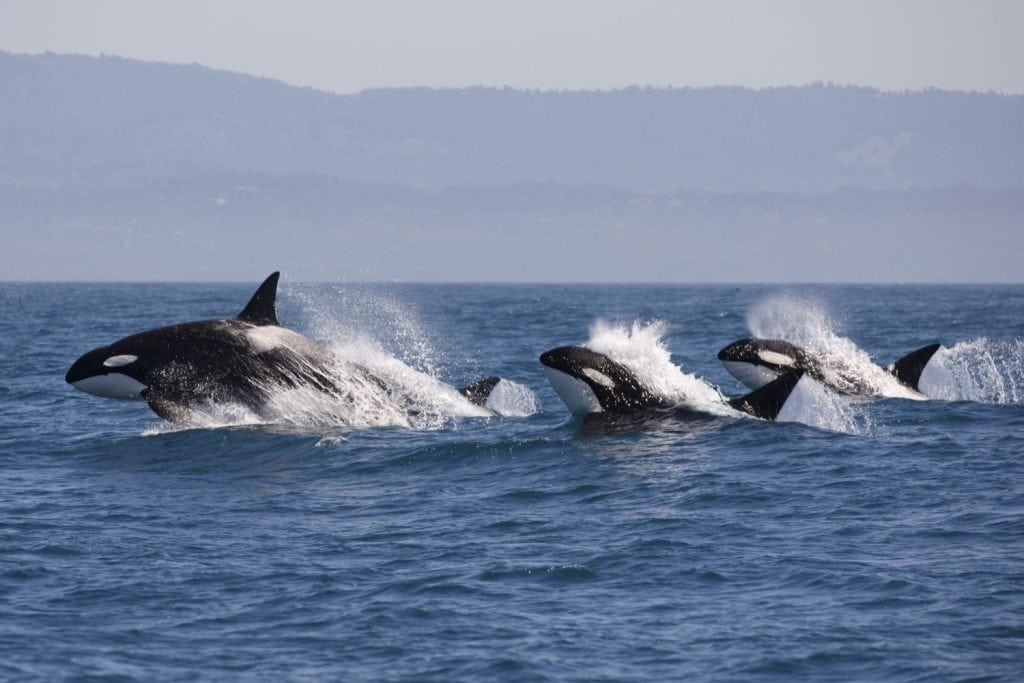
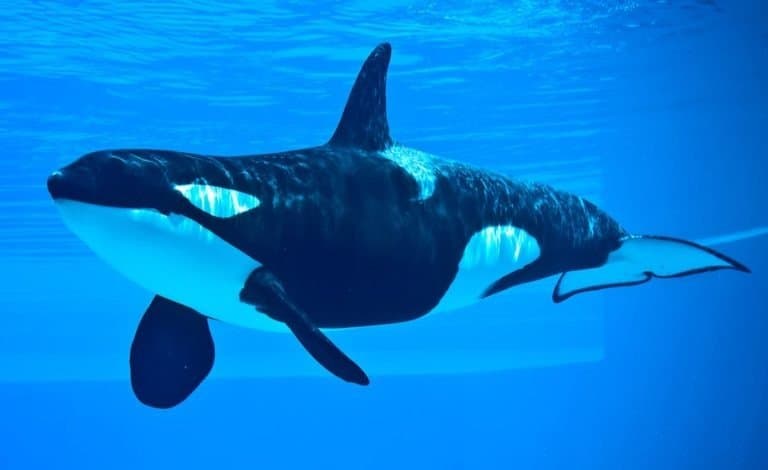
Some orcas in the group are the tail slappers, but all the orcas enjoy the fish produced from the hunt.
©Tory Kallman/Shutterstock.com
Despite the effectiveness of this hunting strategy, not all orca pods do it. For the most part, only pods in the northern Atlantic—specifically those whose primary diet consists of Norwegian and Icelandic herring—display carousel hunting behavior.
Scientists aren’t sure why. They believe it is a learned skill, passed down through generations within a group, rather than an instinct that orca calves are born with. This idea aligns with broader orca research suggesting that hunting styles are passed down from mother to calf, but it has not yet been definitively proven.