
Quick Take
- More than half of Earth’s animal species live underground.
- Rattlesnakes make dens in vacant burrows and brumate in groups of over 1,000 snakes.
- Alligators and crocodiles dig dens to serve as protection from extreme temperatures.
- Although most birds live in trees, some build their nests underground
Over half of the world’s animal species live below the Earth’s surface. While many of these are tiny invertebrates like insects, worms, and mites that thrive in soil and leaf litter, others build complex burrows and tunnels for protection, to store food, and to raise their young safely. Although burrowing is a characteristic mostly ascribed to small mammals, some larger animals also build dens. Continue reading to learn about six animals that build underground dens.
1. Bears
Bears (Ursidae) are the largest animals that build dens. They build dens to provide shelter in the winter when they hibernate. Pregnant polar bears (Ursus maritimus) build maternity dens by digging a hole just big enough for themselves in snow drifts. By winter, when they give birth, the falling snow covers the den, camouflaging it from above ground. They once built dens primarily on sea ice. However, because of global warming and the loss of stable sea ice, they now more often dig their maternity dens inland under earth and snow.
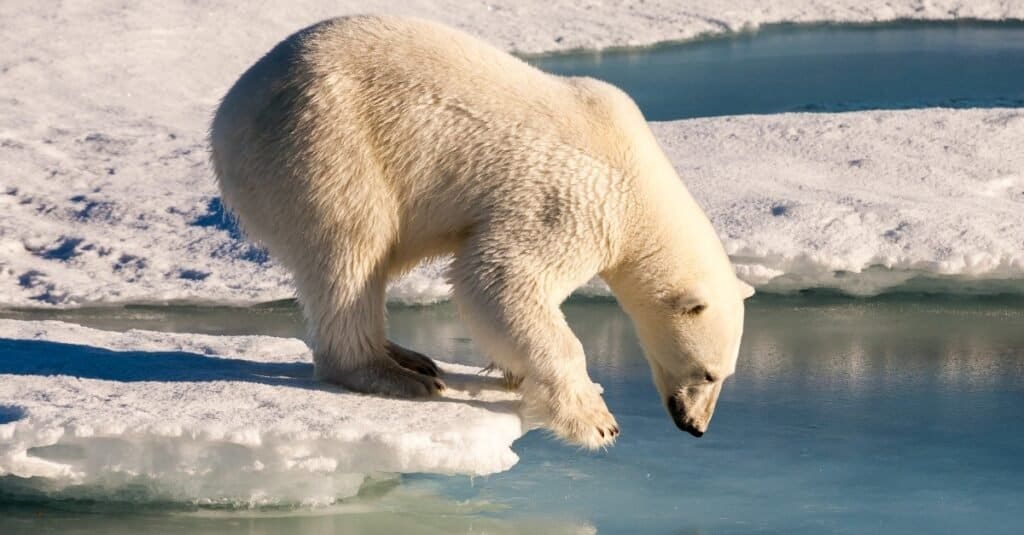
Polar bears once built maternity dens on sea ice in the Arctic Ocean, but are now unable to do so because of climate change.
©Mario_Hoppmann/Shutterstock.com
2. Snakes
Snakes are known to build dens for brumation, and in the case of king cobras (Ophiophagus hannah), to protect their eggs. Both the male and female work together to build a nest at the base of a tree. They construct the nest out of leaf litter, with the eggs buried inside. The female sits atop the nest to guard the eggs, while the male patrols the area.
Eastern copperheads (Agkistrodon contortrix) make dens in limestone crevices. These social snakes brumate in groups with other copperheads and, sometimes, other snake species, such as black rat snakes (Pantherophis). Rattlesnakes (Crotalus and Sistrurus) are known to make dens in vacant burrows and brumate in groups that can have over 1,000 snakes. Rattlesnakes have been observed to return to the same den year after year.
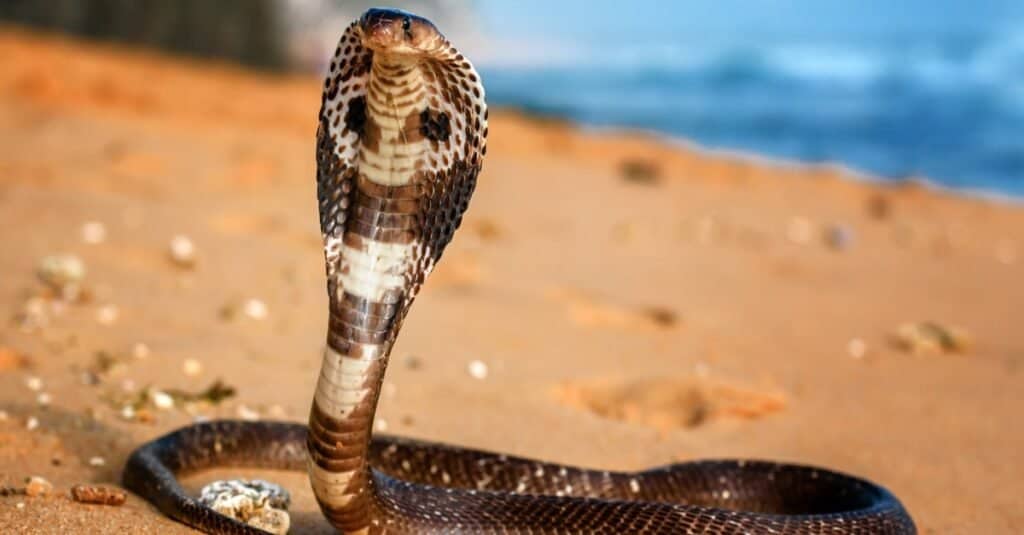
Snake species such as king cobras, copperheads, garter snakes, and rattlesnakes use underground dens for various reasons.
©Vova Shevchuk/Shutterstock.com
3. Crocodiles
According to American Scientist, 14 of the 23 crocodilian species dig burrows. They do this with their snouts and forearms in locations near large bodies of water. These burrows serve as resting or hiding places to help regulate body temperature when water levels are too low. Nile crocodiles (Crocodylus niloticus) dig dens near the banks of water sources such as rivers or lakes. These dens can be several yards deep, providing significant protection. They may use these dens to aestivate during periods of extreme heat or drought, with timing varying by region and environmental conditions. Nile crocodiles also dig shallow nests up to 20 inches deep to lay their eggs.
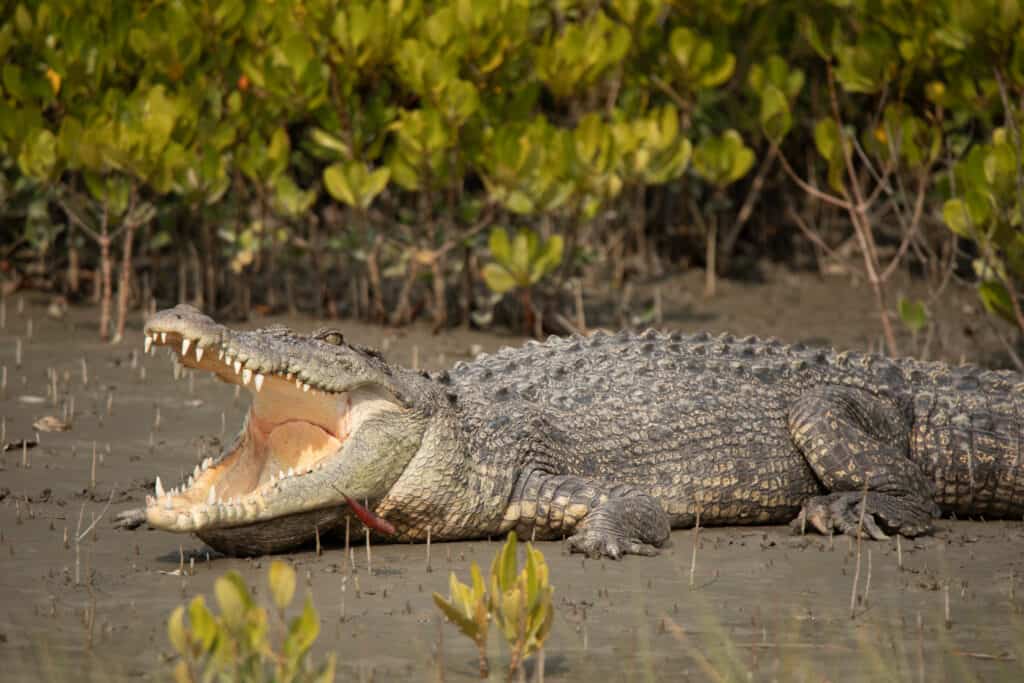
14 of the 23 crocodilian species dig and live in burrows.
©sushil kumudini chikane/Shutterstock.com
4. Alligators
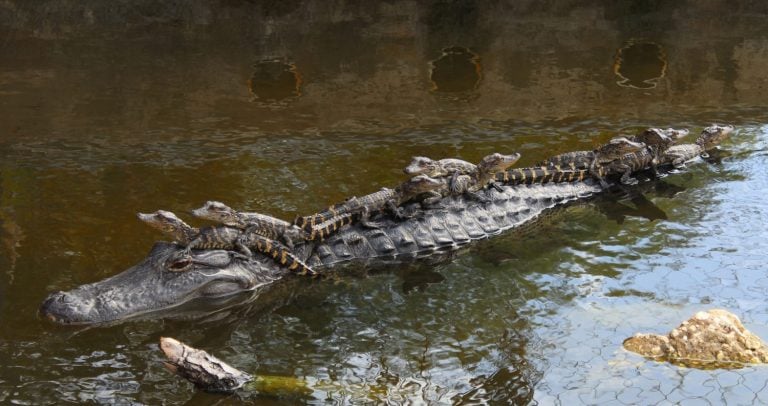
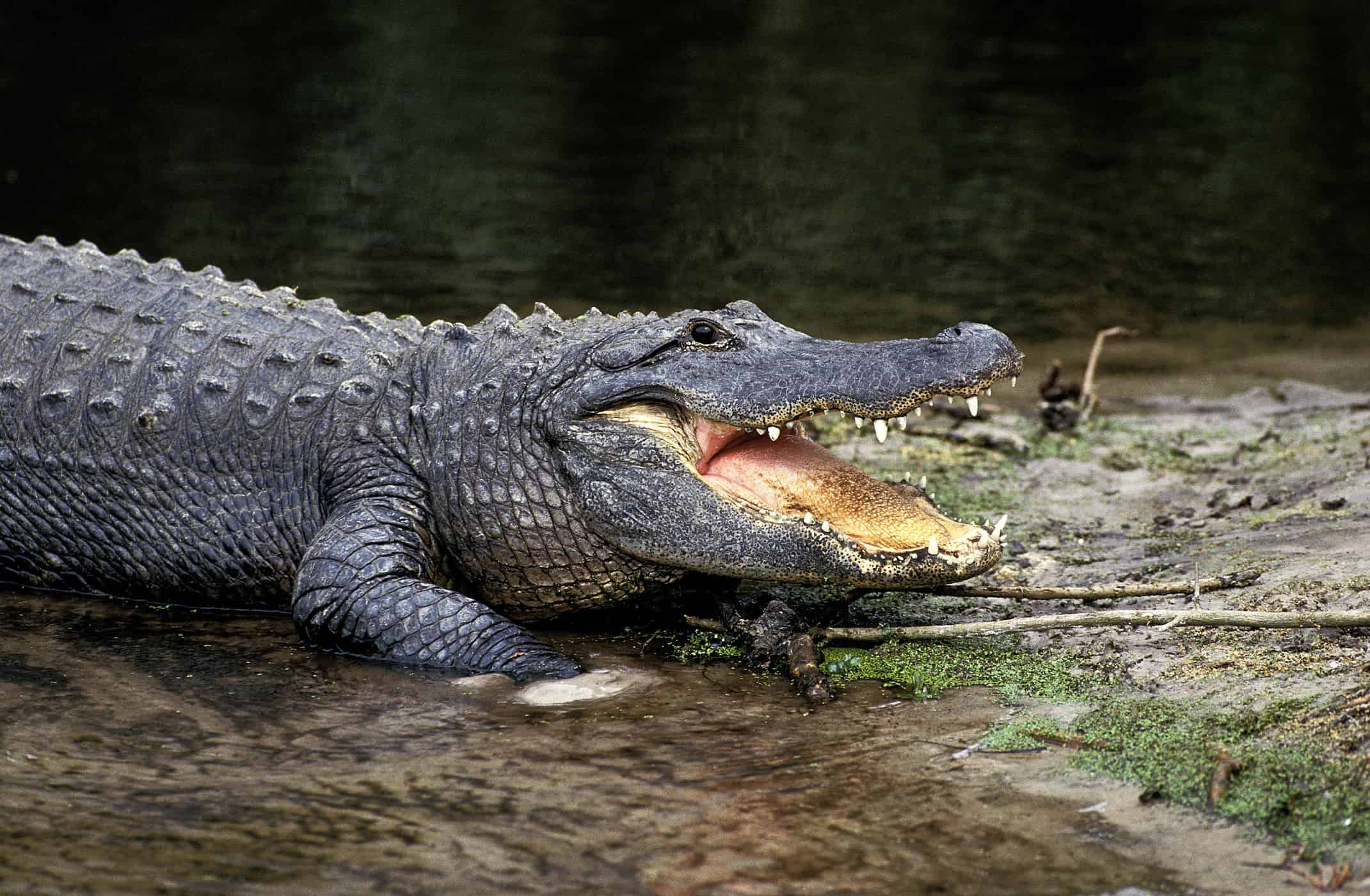
The alligator (Alligatoridae) is another reptile known to burrow. Their burrows, known as alligator holes, serve as protection from extremely hot or cold weather. Alligators build these burrows on riverbanks that provide enough mud to form the walls of their dens. In wetland habitats, these burrows facilitate the biodiversity of plants and can serve as shelter for other animals during droughts. One alligator species particularly noted for its burrows is the Chinese alligator (Alligator sinensis). They use their snouts and forelegs to dig burrows next to small bodies of water that can contain multiple rooms, water pools, and entrances. Chinese alligators brumate in their burrows from late October until late March.
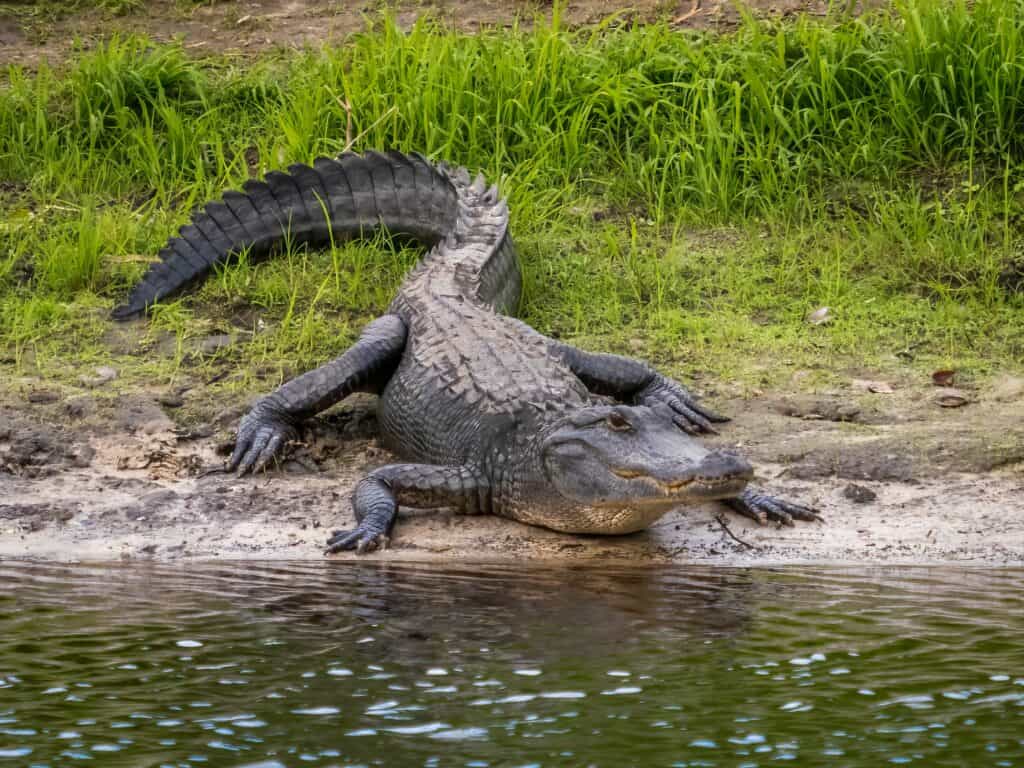
Alligators, such as the Chinese alligator, dig burrows for protection from extreme hot or cold weather.
©Jim Schwabel/Shutterstock.com
5. Armadillo
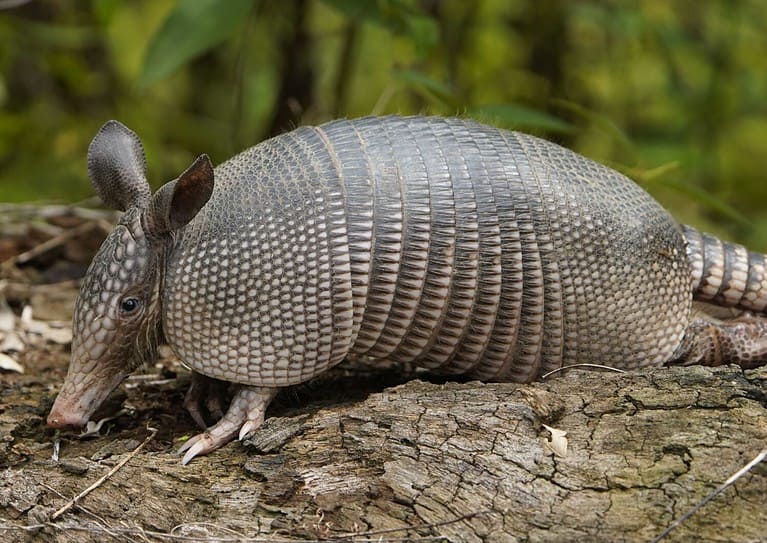
Armadillos (Dasypodidae and Chlamyphoridae) spend about 65% of their time underground in winter, but only around 29% in summer. These animals are adept burrowers that also dig for food and have a great sense of smell. Their burrows are usually 10 to 15 feet long, with individual tunnels approximately 8 inches wide. Armadillos use their dens as shelter from predators and harsh weather. They often make a second burrow in case the first burrow is attacked. Armadillos are typically found in rainforests, deserts, and temperate grasslands.
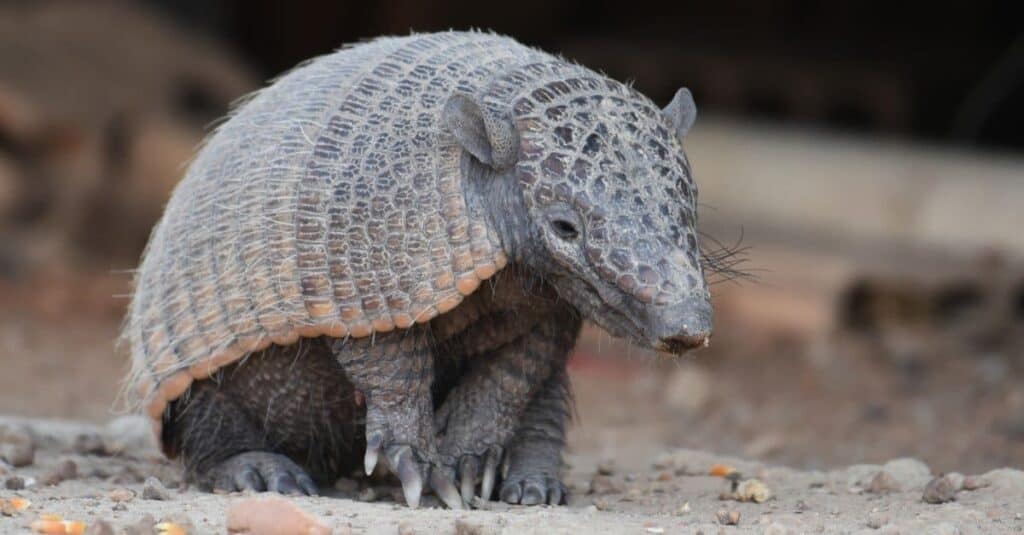
A nine-banded armadillo (Dasypus novemcinctus).
©iStock.com/Rini Kools
6. Birds
While most avian species build nests in trees, some build their nests deep in the ground. Burrowing owls (Athene cunicularia) may dig their own dens or take over previously dug burrows. They are found in grasslands, deserts, agricultural areas, or other dry areas with low vegetation. They are also known to line their dens with manure, grass, or feathers.
Kingfishers (Alcedinidae) are cavity nesters that dig their nests along the banks of rivers and lakes with their clawed feet. They will also nest in holes in trees or take over termite nests. Their dens are typically 3 to 6 feet deep, but can be as deep as 15 feet. Atlantic puffins (Fratercula arctica) and tufted puffins (Fratercula cirrhata) excavate nesting burrows in the grassy soil of coastal cliffs. Puffins are typically monogamous and return to the same burrow with their mate each year.
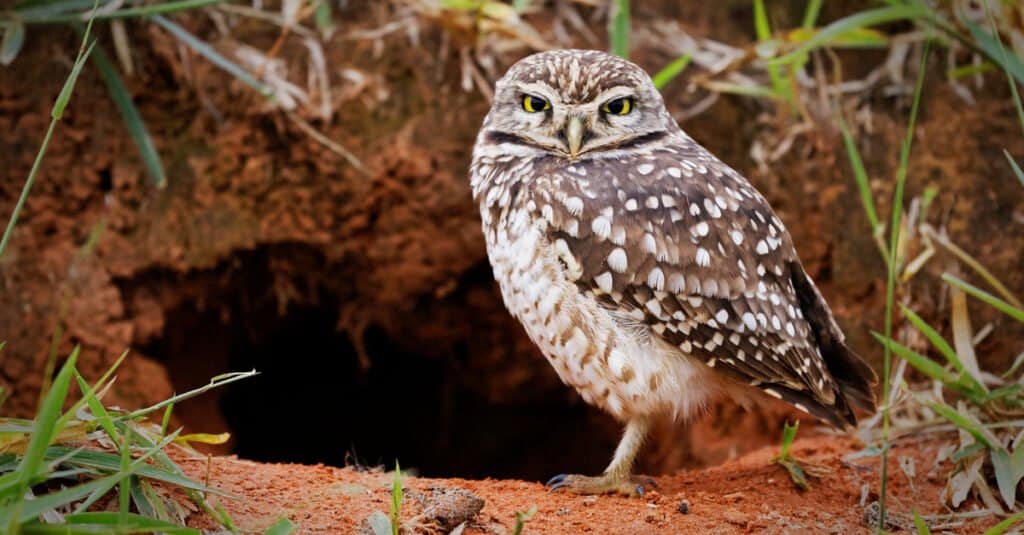
Burrowing owls were named for the underground burrows in which they nest.
©Mauricio S Ferreira/Shutterstock.com