
Quick Take
- One of these insects has no mouth as an adult, and the one it turns out to be is not what you would expect. See the mouth difference →
- These two insects look nearly identical at a glance, but one physical detail tells them apart instantly. Compare their physical features →
- One of them is the deadliest animal on the planet; the other is being studied as a potential weapon against cancer. Explore their human impact →
- Their lifespans look similar on the surface, but the gap between them is far wider than most people realize. Compare their adult lifespans →
Both mosquitoes and mayflies are small, winged insects that are known to swarm. There are more than 3,500 known species of mosquitoes and over 3,000 known species of mayflies worldwide. Mosquitoes are considered highly destructive cosmopolitan pests, while mayflies are cosmopolitan in distribution but are generally not classified as true pests. Continue reading to discover what sets these two insects apart, including their appearance, distribution, habitat, life cycle, and human interactions.
Mayfly vs. Mosquito: Appearance
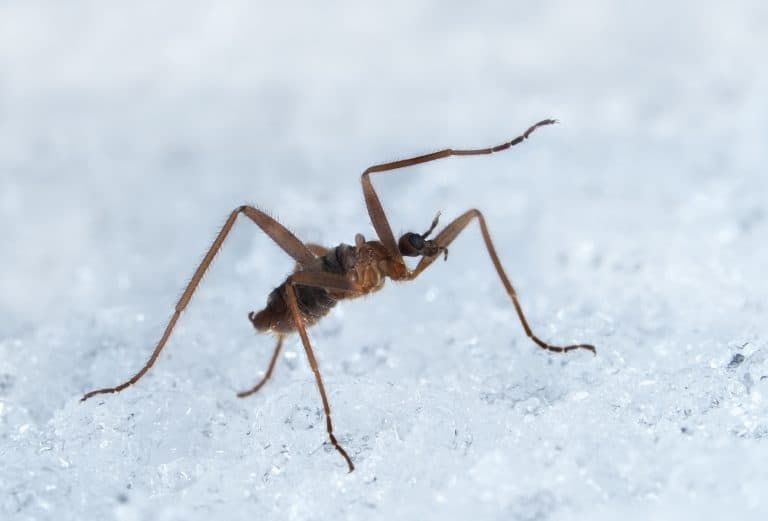
Mayflies are famous for having big, buggy eyes. Their slender bodies attach to the thorax, which gives mayflies the exaggerated appearance of their eyes.
Mayflies also have transparent triangular wings with vertical and horizontal veins throughout them. Their wings are much larger at the front of their body, with their hind wings almost impossible to see.
Mayfly wings are more pronounced and longer than mosquito wings; they also slant upward. Mosquito wings extend from the middle of their thorax.
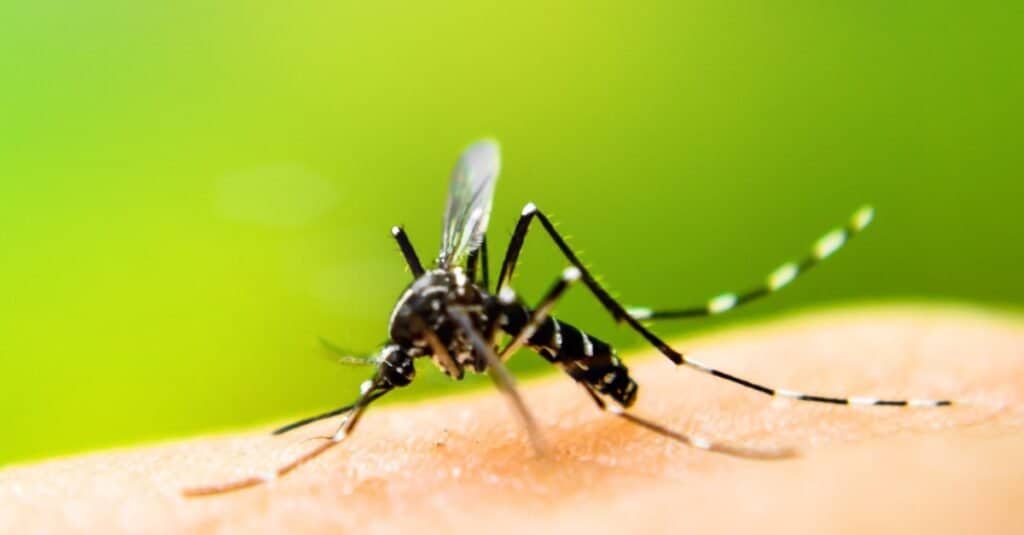
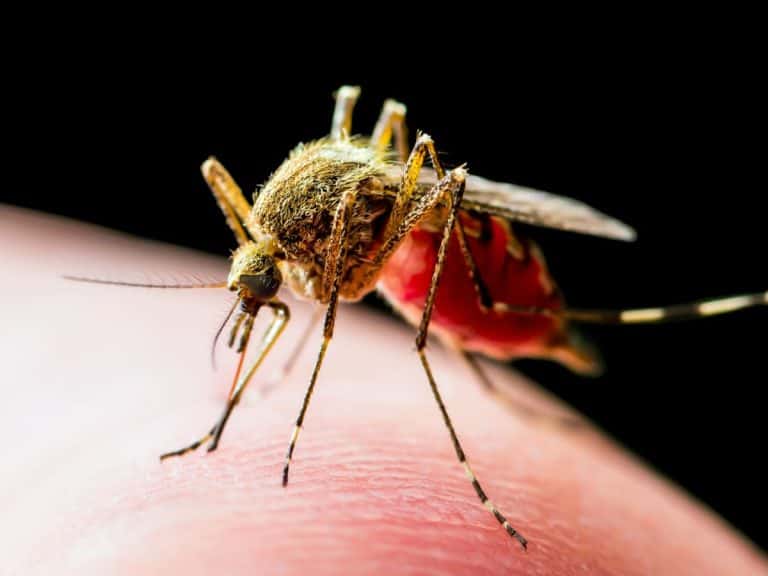
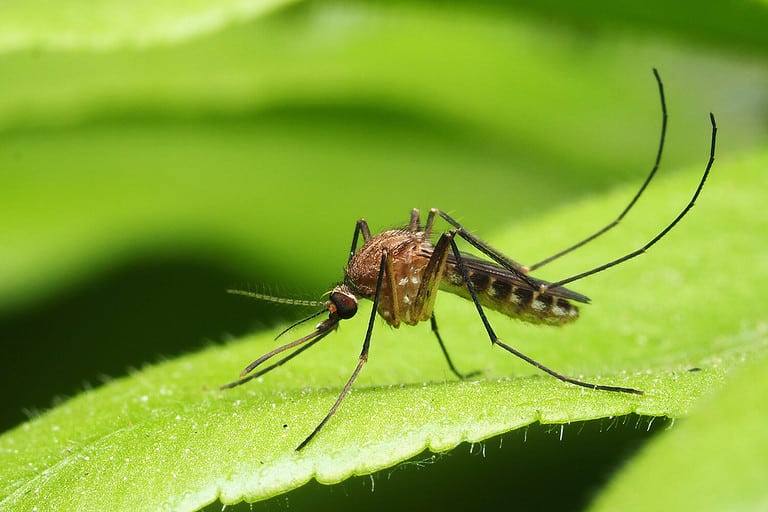
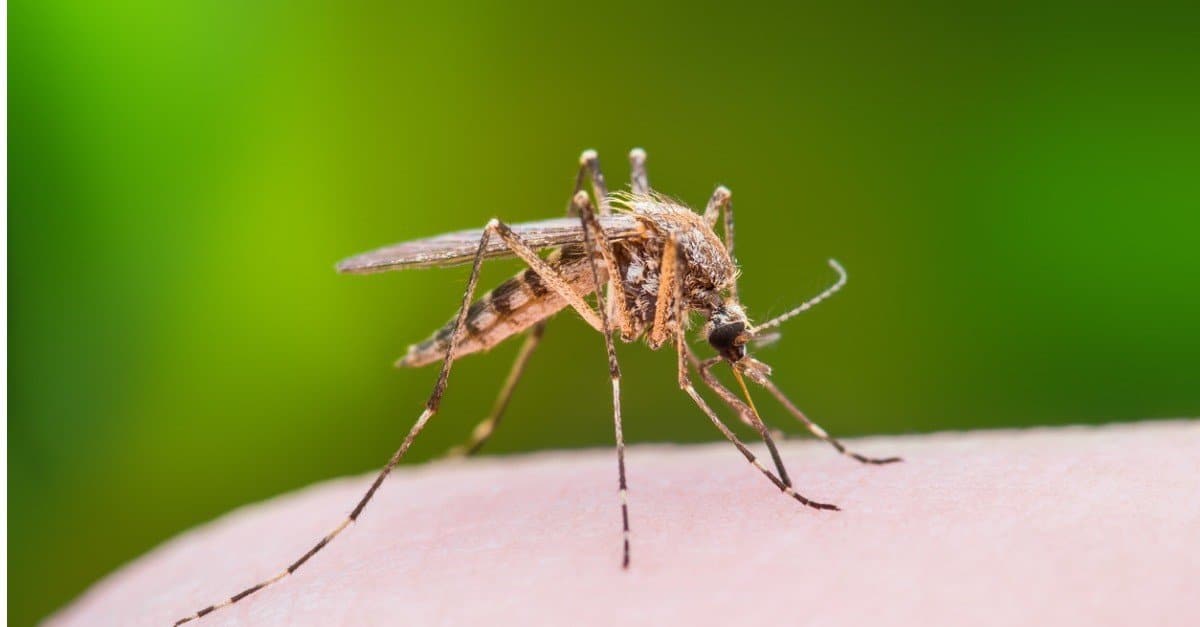
Mosquitoes have a mouth, whereas adult mayflies do not.
©iStock.com/auimeesri
Adult mosquitoes also have slender bodies, and their legs typically appear longer than those of mayflies. The majority of mosquitoes are less than an inch long. Mosquitoes are infamous for buzzing around their victims before taking a bite.
One thing a mosquito has that a mayfly doesn’t have is a mouth. Mayflies don’t need a mouth because adult mayflies typically live only 12 to 48 hours. Mosquitoes use their mouths to create some of the itchiest bites possible.
Only female mosquitoes can bite. Male mosquitoes have weak mouthparts and lack the sharp, needle-like proboscis that females use to pierce skin and drink blood, which is necessary for egg development.
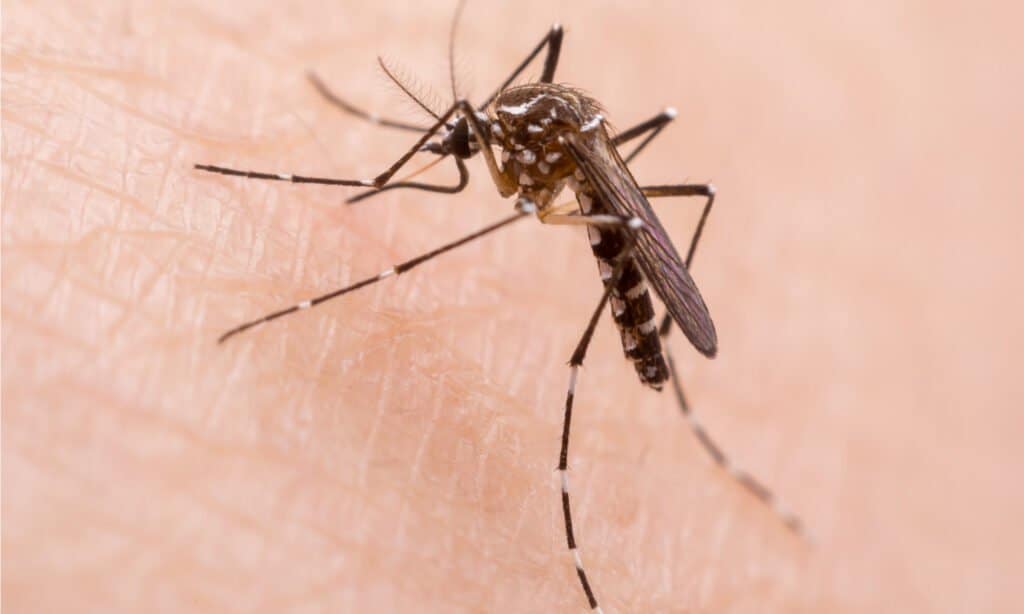
There are more than 3,000 species of mosquitoes.
©Surachai Pung/Shutterstock.com
Mayfly vs. Mosquito: Distribution and Habitat
While both mayflies and mosquitoes maintain cosmopolitan distributions across nearly every major landmass except Antarctica, their global populations differ drastically based on local water quality and microhabitats.
Mayflies depend strictly on clean, highly oxygenated freshwater environments such as unpolluted rivers, streams, and pristine lakes to support their fragile nymph stage, so their distribution is highly localized to freshwater systems that can sustain them.
Mosquitoes are highly adaptable and thrive in stagnant, polluted, or artificial water sources such as puddles, gutters, and wetlands. They can survive freezing temperatures by sheltering in hollow trees or buildings.
Despite these differences, mayflies and mosquitoes often coexist in regions where pristine wilderness meets human development.
In these overlapping zones, mayflies occupy the faster-flowing, clean corridors of a watershed while mosquitoes dominate adjacent marshlands, slow-moving floodplains, and standing water on residential properties.
Mayfly vs. Mosquito: Life Cycle
While both mayflies and mosquitoes hatch from eggs and develop in aquatic environments, only the mayfly undergoes an incomplete metamorphosis that includes a true nymph stage.
Mayfly nymphs resemble wingless adults and spend months to years underwater before transforming directly into their short-lived winged form.
Mayfly nymphs are long-term residents of freshwater ecosystems, typically spending anywhere from a few months up to two full years living underwater.
During this extended period, they act as vital clean-up organisms, feeding primarily as herbivores or detritivores. They use specialized mouthparts to graze on algae growing on rocks, scrape decaying plant matter, or filter organic debris from the water, steadily gathering the energy reserves needed for their brief adult lives.
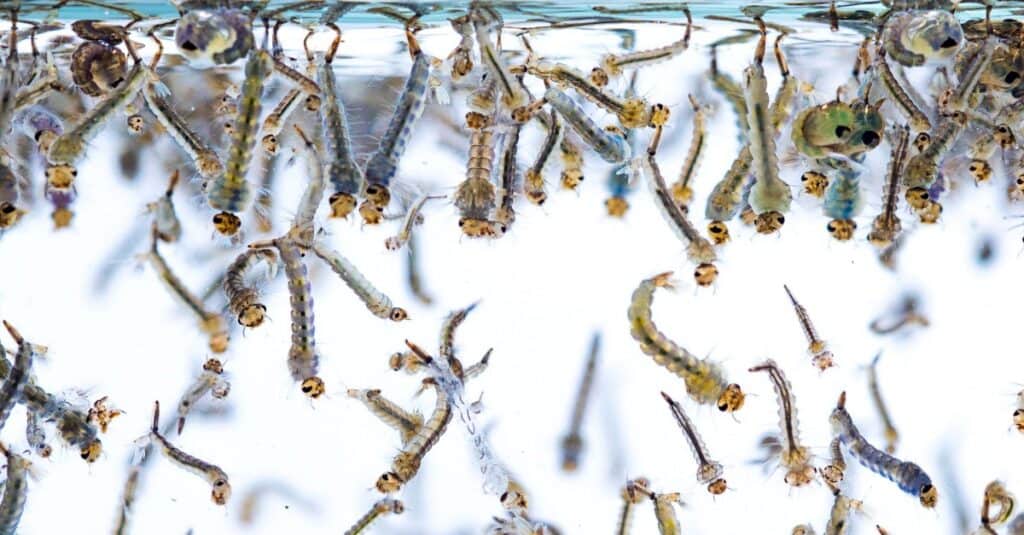
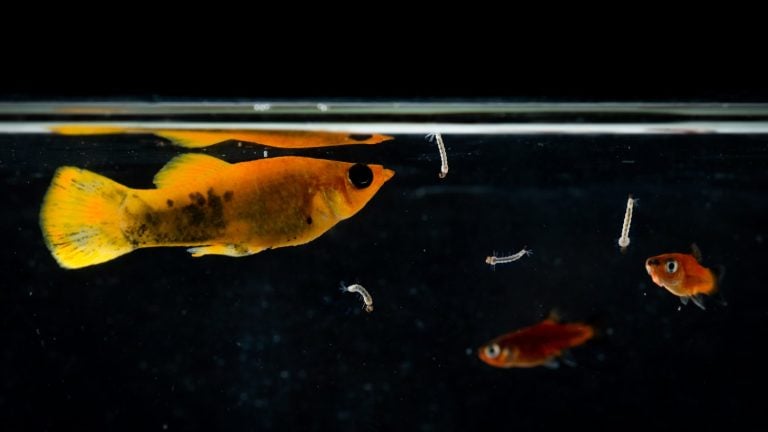
While mayfly nymphs spend their long aquatic lives slowly processing plant material in clean streams, mosquito larvae (pictured) rapidly consume microorganisms in stagnant pools to fuel their quick transition into adults.
©iStock.com/kitthanes
Mosquito eggs hatch into worm-like larvae, which then transform into pupae before emerging as adults. Mosquito larvae develop on an accelerated timeline, completing their entire underwater existence in one to two weeks depending on the water temperature.
During this short window, they are highly active feeders inhabiting the upper surface of stagnant water. They use brush-like mouthparts to filter microscopic food such as bacteria, protozoans, algae, and floating organic matter directly out of the water.
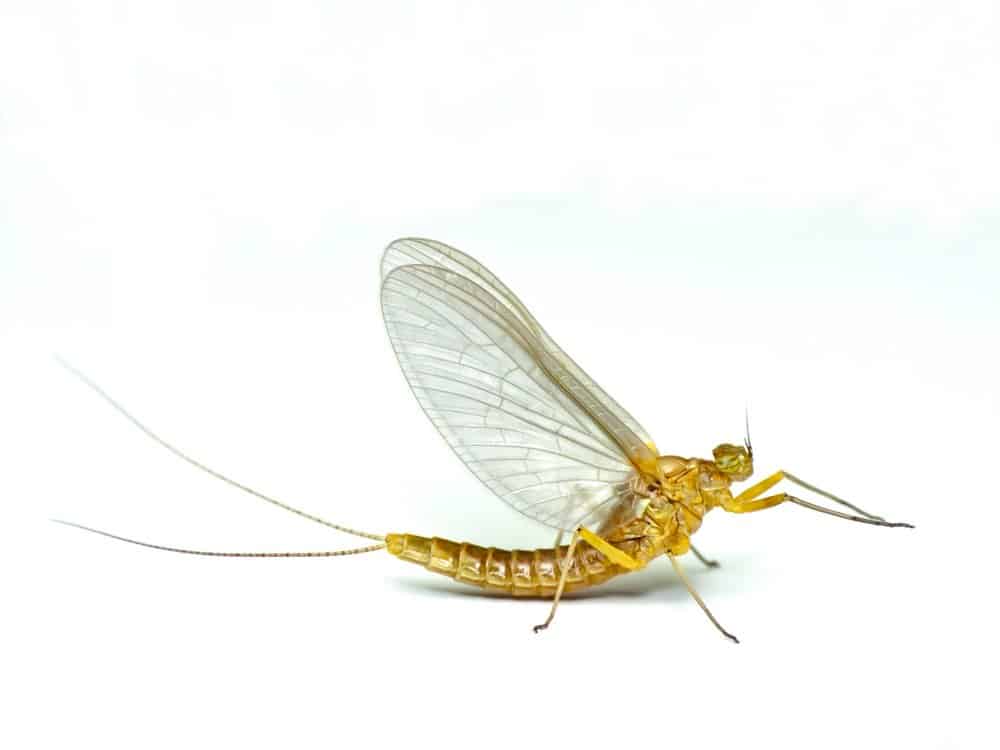
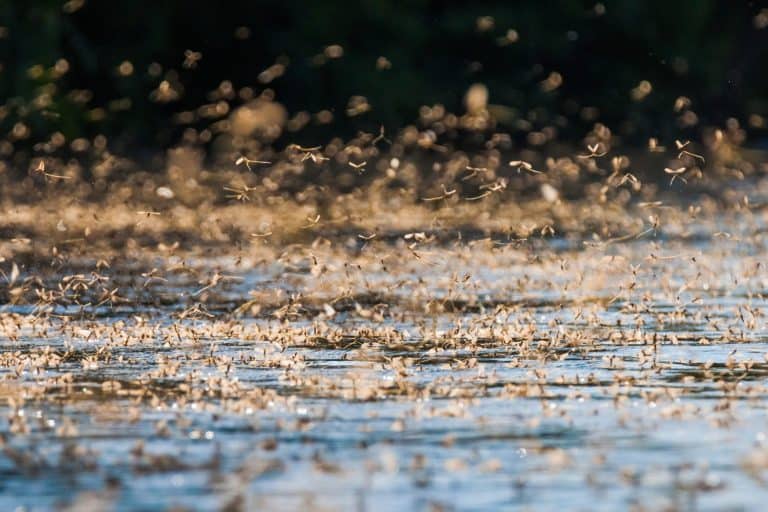
Mayflies only live for a few hours as adults.
©Dimijana/Shutterstock.com
Mayfly vs. Mosquito: Life Expectancy
Mayflies typically live between 24 and 48 hours in their adult flying stage. Because they lack functional mouthparts and digestive systems, adult mayflies cannot eat or drink. They emerge from the water with a finite amount of stored energy, which they use to find a mate and lay eggs before dying.
Male mosquitoes can live for up to one week. Male mosquitoes sustain themselves purely on flower nectar and plant juices for energy to mate, after which they die.
Female mosquitoes require blood to develop their eggs. Because they can feed multiple times and lay multiple batches of eggs, female mosquitoes tend to survive longer.
Most female mosquitoes live for about six weeks, but some can survive up to five months under ideal conditions, particularly when overwintering.
Mayfly vs. Mosquito: Human Interactions
Mayflies are considered beneficial insects across the globe. Mayflies provide invaluable services to their surrounding ecosystems.
Worldwide, human cultures use mayflies as a source of food, in scientific experiments, and to study anti-tumor molecules. Mayfly nymphs help prevent excess buildup of aquatic algae.
Mayflies, in all of their stages, are an abundant food source for a variety of animals, from trout and salmon to blackbirds, bats, and other insects.
Mosquitoes pose a major threat to humans. Beyond being a nuisance, mosquitoes are vectors of diseases such as malaria, dengue fever, Zika, West Nile, chikungunya, and Japanese encephalitis.alitis.
The pathogens develop inside the mosquito’s gut and salivary glands and are then transmitted to humans through its bite.
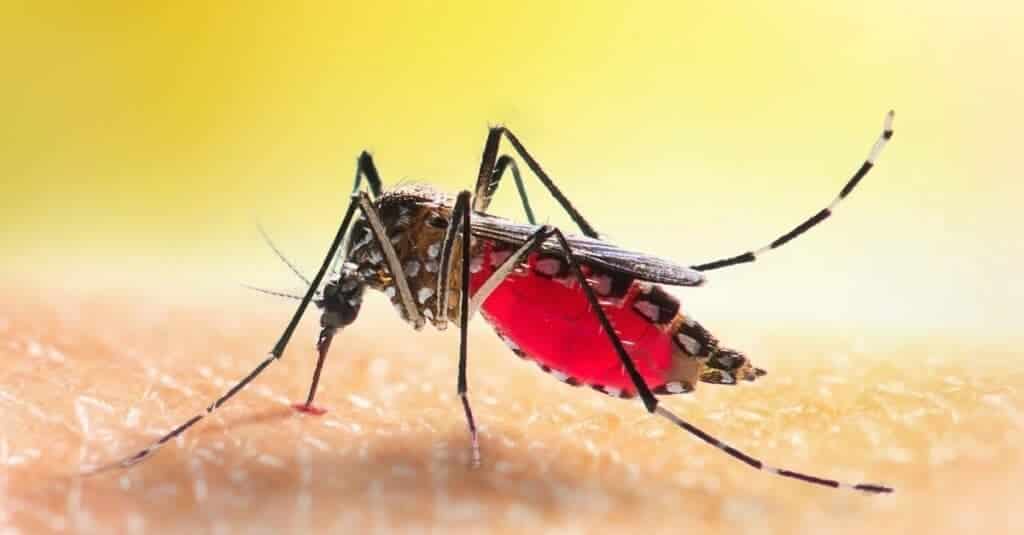
Mosquitoes are considered the world’s deadliest animal, responsible for up to one million human deaths annually.
©iStock.com/panom