
Quick Take
- Clownfish aren't born immune to anemone venom, and what young clownfish must endure to earn their home is stranger than you'd expect. See how juveniles adapt →
- Scientists only recently cracked why anemones don't sting clownfish, with the answer coming down to a single molecule hiding in their slime. Discover the key molecule →
- The anemone isn't being friendly. It simply can't tell the clownfish is there. See why anemones don't sting →
- The clownfish gets a safe home, bodyguard, and free meals, and yet what the anemone extracts in return is more involved than most people realize. Explore the full exchange →
It is difficult to envision clownfish without sea anemones or vice versa. The two have a relationship that benefits both, which is why a clownfish never strays far from its anemone.
Clownfish can move easily in and out of sea anemones that would injure or kill other fish. However, this ability develops over time, as clownfish must gradually coat themselves in a protective mucus to safely live among the anemone’s stinging tentacles.
Clownfish and Sea Anemones Have a Symbiotic Relationship
Clownfish and sea anemones work together to thrive. The two are highly dependent on one another for survival. This is why, in the wild, one will not be found without the other for long.
The reason that clownfish and sea anemones work so well together is that both benefit from the other’s presence. For clownfish, the biggest benefit is having a home that protects them from predators. Those that dare to follow clownfish into the anemone will be stung and either severely injured or killed.
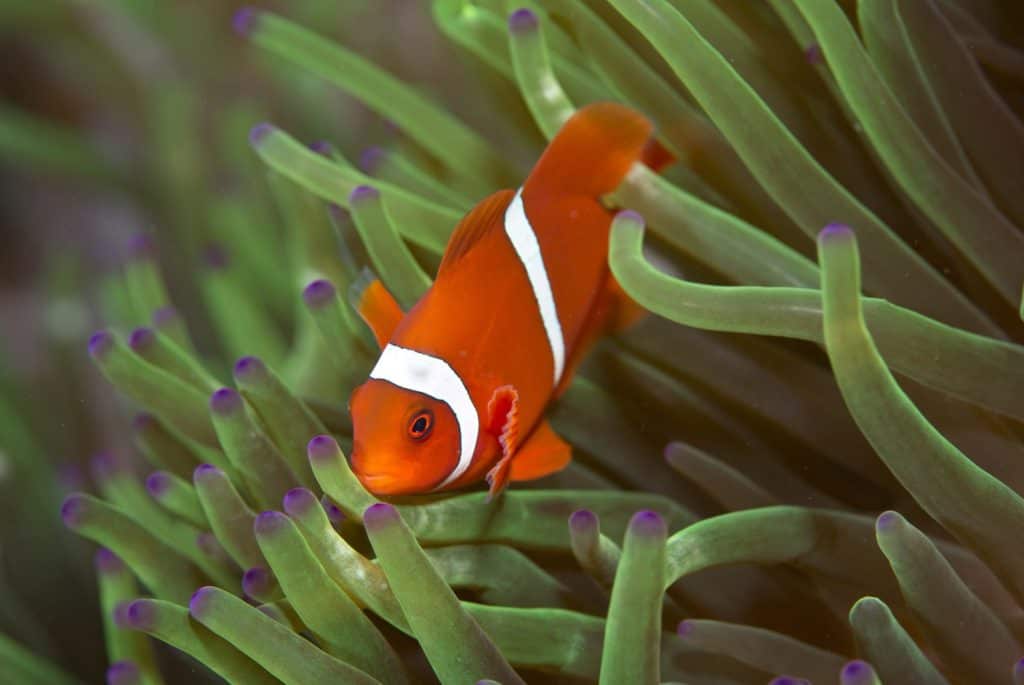
Clownfish and sea anemones benefit from and thrive due to one another’s presence.
©SeraphP/Shutterstock.com
Additionally, clownfish can lay their eggs in a safe spot within the anemone. They also feed on leftover bits of prey that the anemone has eaten, as well as on parasites that grow on the anemone’s body.
Anemones benefit from clownfish because the fish chase away other animals that might prey on the anemone. Clownfish also help keep anemones free of parasites by constantly cleaning them, circulate water around the anemones, and provide nutrients to the anemones through their waste.
With a relationship like this, it is no wonder clownfish and anemones have such a successful mutualistic relationship.
Are Clownfish Born Immune to Sea Anemone Venom?
While adult clownfish are immune to sea anemone stings and venom, juvenile clownfish are not. To build up their tolerance, juvenile clownfish must be stung multiple times.
Juvenile clownfish have to take their time introducing themselves to an anemone. Over the course of hours to days, young clownfish will touch the anemone they want to live in very gently. As they do so, the clownfish receive shocks from the anemone’s stinging cells.
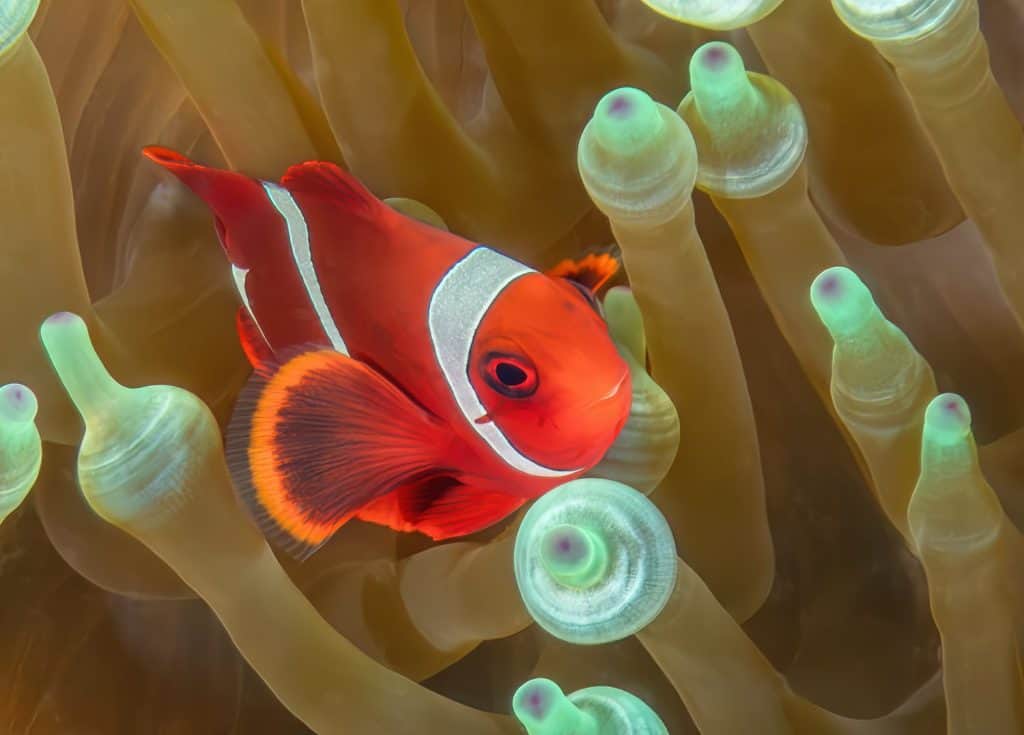
It takes hours to days for juvenile clownfish to build up enough mucus to avoid being stung by anemones.
©Guy Bryant/Shutterstock.com
As juvenile clownfish continue to interact with the anemone, they gradually build up a protective layer of mucus. Once this mucus layer is fully developed, the stinging from the anemone subsides, allowing the clownfish to live safely among its tentacles.
Clownfish Mucus Mimics That of Sea Anemones
The symbiotic relationship between clownfish and sea anemones has been recognized for a century. However, it was only recently that scientists discovered why clownfish are not harmed by the anemone’s stinging cells. The answer lies in the unique chemistry of clownfish mucus.
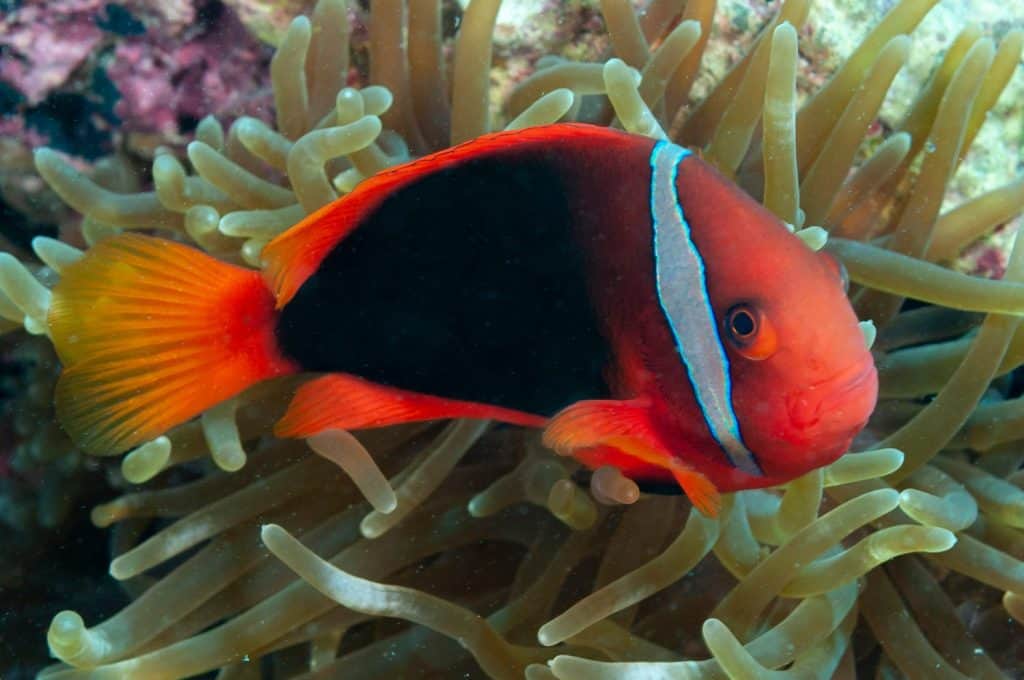
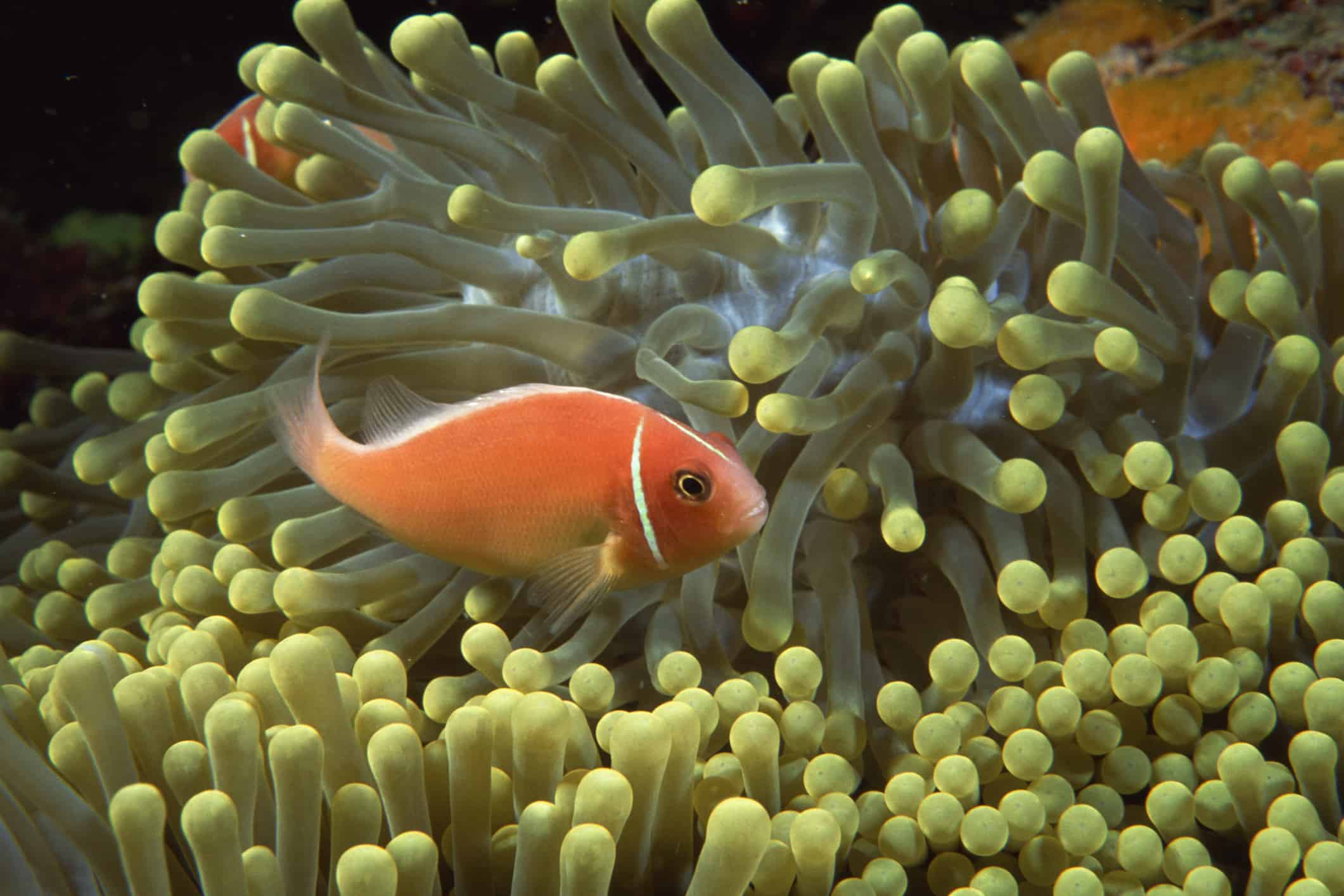
Adult clownfish and anemones have the same levels of sialic acid, tricking the anemones into believing the clownfish are not a threat.
©Jesus Cobaleda/Shutterstock.com
Adult clownfish mucus contains low levels of the sugar called sialic acid, which is also found in anemones. In contrast, younger clownfish have higher levels of sialic acid in their mucus. Researchers have found that nematocysts (stinging cells) are triggered by sialic acid, which explains why juvenile clownfish are still stung as they build up their protective mucus.
As adults, clownfish have sialic acid levels similar to those of anemones. As a result, it is believed that the anemone does not recognize the clownfish as foreign, so the nematocysts are not triggered.