
Known for their large number of legs, millipedes and centipedes are some of the most fascinating arthropods around. Although at first glance, these two animals can look quite similar, there are actually quite a lot of differences between them when you take a closer look. Let’s take a look at the differences between millipedes and centipedes.
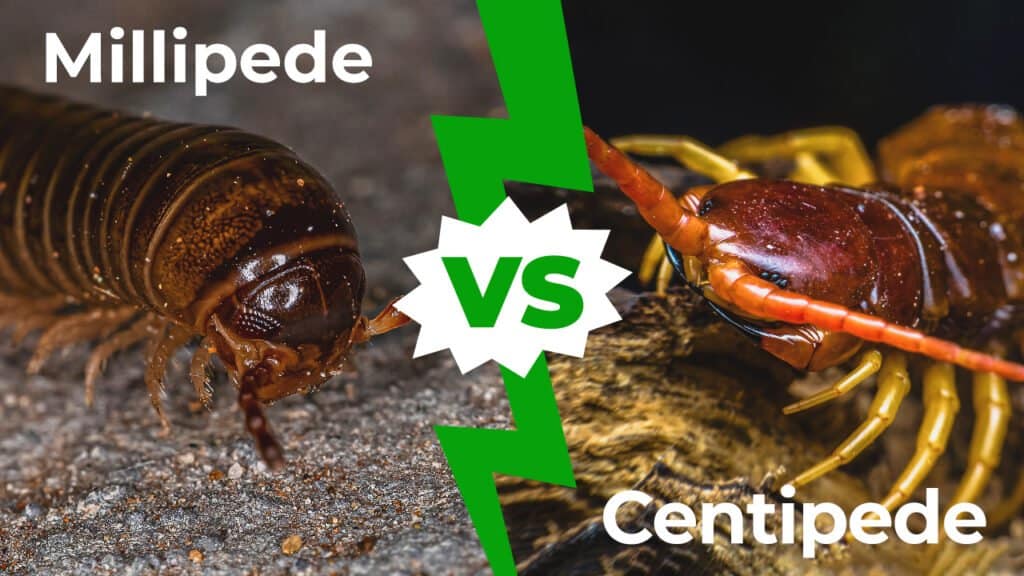
Comparing Millipedes and Centipedes
Millipedes and centipedes have both existed for more than 400 million years. There are around 12,000 species of millipedes and around 8,000 species of centipedes, and their appearances can vary quite a lot. Let’s take a closer look below.
| Millipedes | Centipedes | |
|---|---|---|
| Size | 0.12 to 15 inches | 0.4 to 12 inches |
| Location | Every continent except Antarctica. | Every continent except Antarctica. |
| Habitat | Moist soil with dead and decaying matter. Lives in moist dark habitats. | Herbivores, or detritivores, feed on decaying plant life and organic material. |
| Body Type | A long, rounded, segmented body with four legs on each segment. | A long, flat body made up of segments, with two legs on each segment. |
| Color | Gray and black are the most common colors, but millipedes can also be red, yellow, orange, and other bright colors. | Yellow, tan, black, and orange are the most common colors. Some are multicolored and have different color body parts. |
| Venomous | No | Yes |
| Diet | Herbivores, or detritivores. Feed on decaying plant life and organic material. | Carnivore. Hunts mainly arthropods, but large species will consume a variety of prey like birds, mice, insects, and reptiles. |
| Lifespan | 1 to 10 years | 3 to 6 years |
| Reproduction | Oviparous | Oviparous |
The Key Differences Between Centipedes and Millipedes
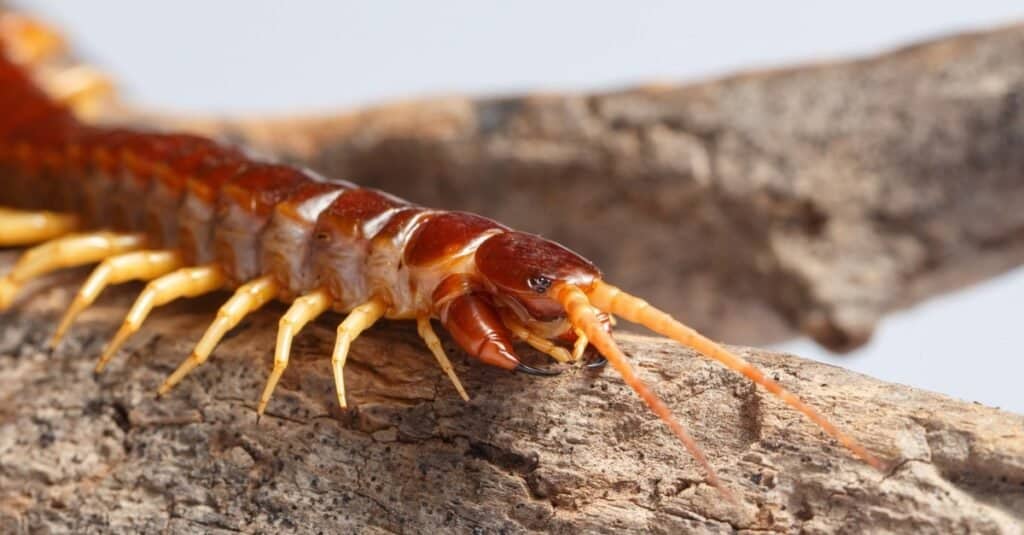
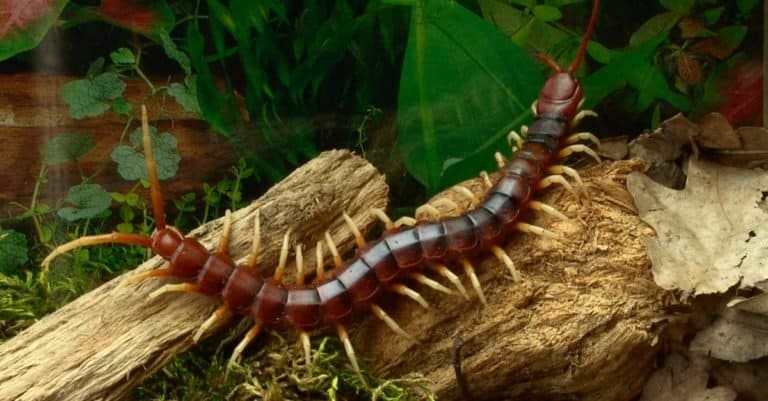
Centipedes are generally venomous and hunt insects, birds, and reptiles.
©iStock.com/Nattawat-Nat
There are key differences that separate millipedes and centipedes. Millipedes are herbivores that eat decaying plants, while centipedes are carnivores that hunt other animals. Centipedes have two legs per body segment, while millipedes have four legs per segment. In addition, centipedes have longer legs. As herbivores, millipedes are not venomous, while most centipedes utilize venom to help them hunt. However, millipedes will secrete a toxin from their bodies as a defensive measure.
Let’s dive into more details on the differences that separate millipedes and centipedes.
Millipede vs. Centipede: Body Type
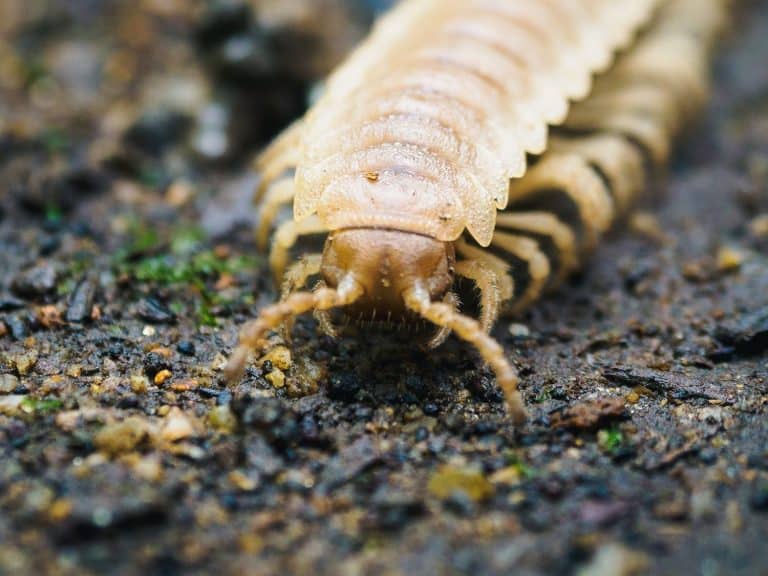
Millipedes and centipedes both have segmented body types. Millipedes have four legs per segment, and centipedes only have two, and their legs are shorter and are located under their body. They have a round head with short antennae. Centipedes have longer legs that stick out to the side of their body. Their heads are large with long antennae.
Millipedes have better eyesight, but some species are blind. Near the antenna of the centipede are pincers that help them bite predators. The largest millipede can grow up to 15 inches, but the largest centipede is around 12 inches.
Millipede vs. Centipede: Colors
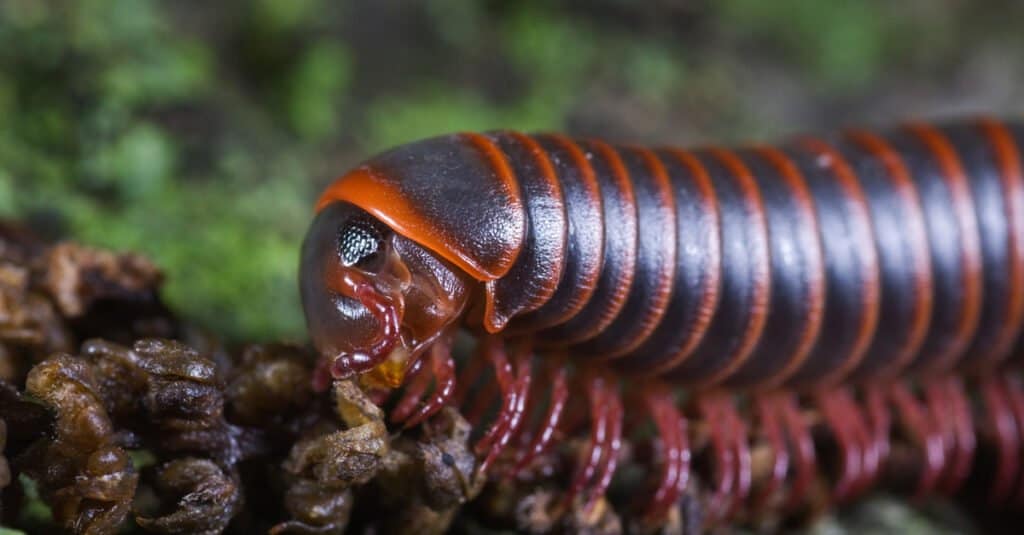
Millipedes are herbivores that eat decaying plant matter.
©Gerry Bishop/Shutterstock.com
The colors of the centipede and millipede will vary depending on the species. Millipedes are generally dark colors like gray or black. They are usually one solid color. Some millipede species, like the Apheloria polychroma, are multicolored. Larger species with brighter colors are more dangerous to handle and are often more venomous.
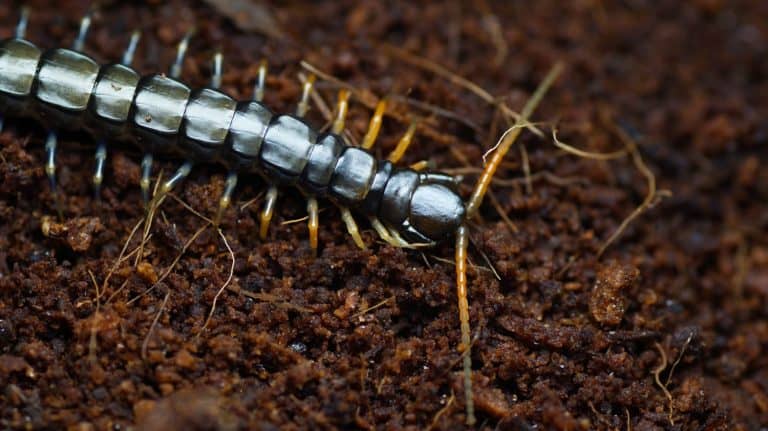
There are plenty of centipedes that have different colored body parts, but orange is a color found in most species. Soil centipedes are one color, all orange. Other species like the red-headed centipede have black bodies, red heads, and yellow legs. Centipedes have more color patterns than millipedes, like the Indian giant tiger centipede, which has alternating black and yellow body segments.
Millipede vs. Centipede: Habitat and Location
Millipedes and centipedes are found all over the world. Both species live outdoors in damp habitats. They will live under logs, leaves, and other dark, moist areas. Millipedes spend the majority of their life in the soil. Millipedes and centipedes can be found in habitats like deserts, forest floors, and even gardens. Both of these animals can find their way into your home and live in places like bathrooms or laundry rooms. Millipedes will die quickly in homes, but some centipedes can survive in our houses.
Millipede vs. Centipede: Feeding Habits
Centipedes feed on small insects and are predatory. Larger species can hunt mammals, reptiles, and birds. Millipedes do not hunt but are herbivores and detritivores, feeding on dead and decaying plant life. If there is no food, then millipedes will feed on live plants.
Millipede vs. Centipede: Venom
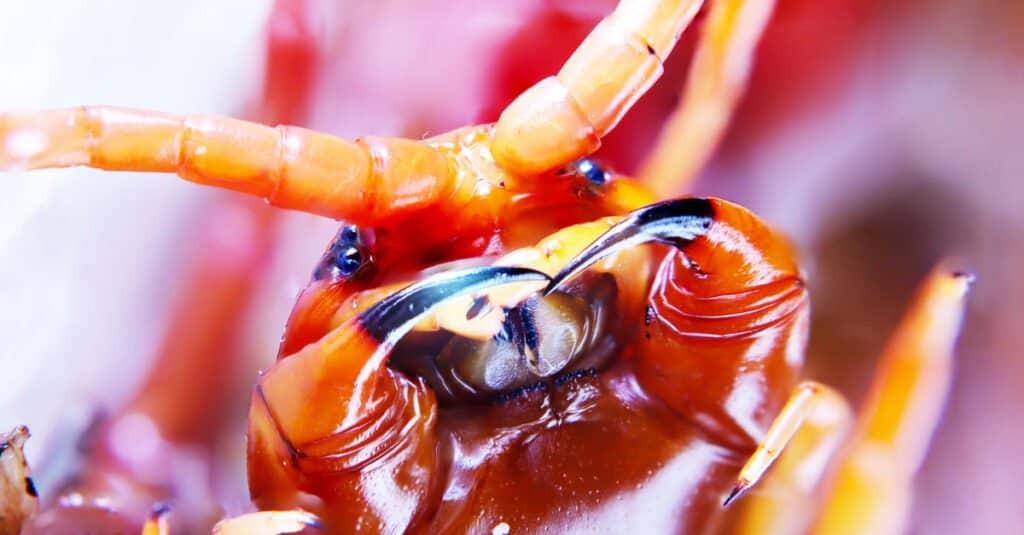
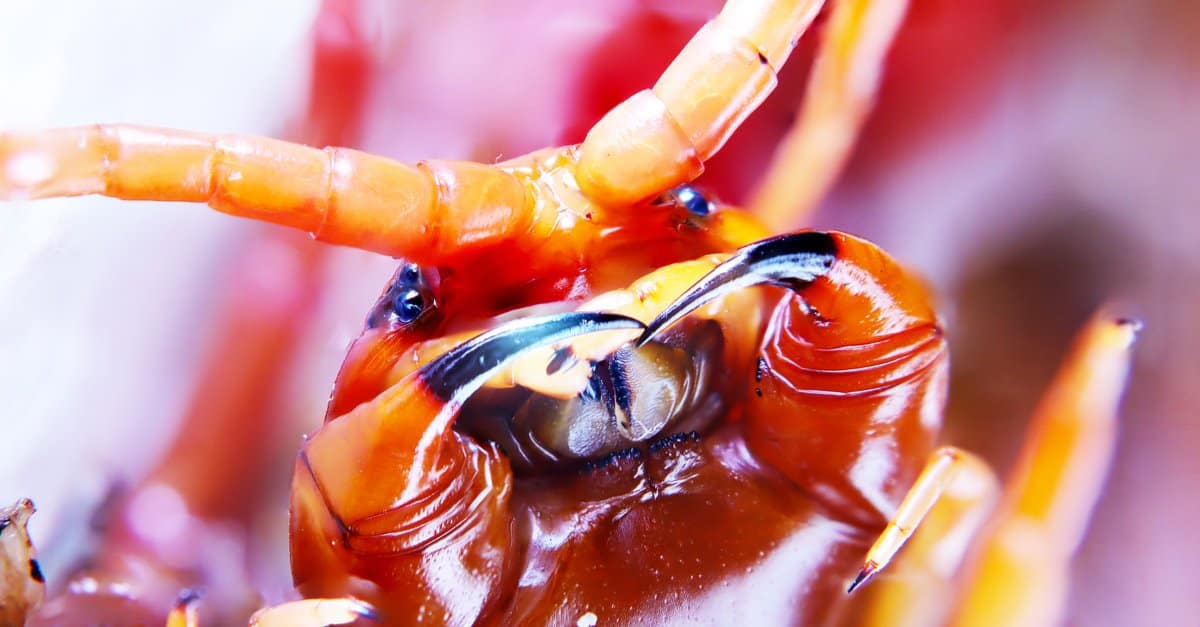
Centipedes have mouths that are adapted for subduing prey, while millipedes have smaller mouths.
©SAYAN CHAONAMON/Shutterstock.com
Centipedes are venomous, but millipedes are not. The strength of a centipede’s venom will vary depending on its size, and larger species will usually have a stronger bite. Most species of centipedes have a bite that will feel similar to a bee’s sting. The Amazonian giant centipede and other giant centipede species have the most potent bite in the centipede family. They use their venom to defend themselves and neutralize smaller prey.
Millipedes do not bite and are not venomous. They have other defense traits that they rely on, that centipedes do not have. Millipedes’ heads are too small, and their mouths are designed only to eat decaying plant life.
Millipede vs. Centipede: Defensive Traits
Centipedes will bite only if they have to, and will usually flee if they feel threatened. Their venomous bite can cause swelling, nausea, redness, and fever. It is usually harmless and more effective on smaller animals. Centipedes are also able to shed their legs if they are in the grip of a predator.
Millipedes will not run when threatened, but stay still. They secrete a toxin from their body that is poisonous for predators to eat. Millipedes curl into a ball to protect their soft underside. If picked up by a human, millipedes may secrete their toxin, which can irritate the skin.
Millipede vs. Centipede: Reproduction
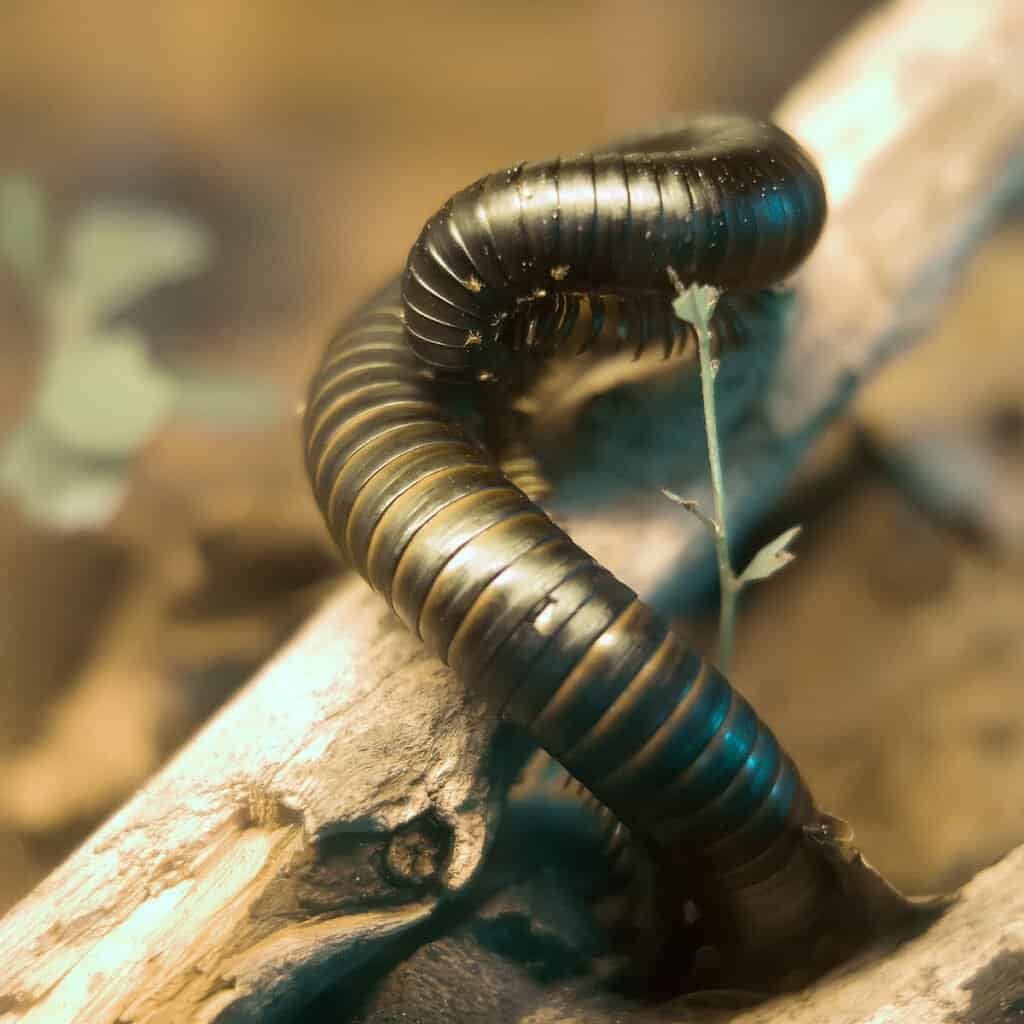
Millipedes lay substantially more eggs than centipedes.
©iztverichka/Shutterstock.com
Millipedes and centipedes both lay eggs to reproduce. Most species of millipedes mate by using modified legs that transfer sperm into the female. Centipedes will mate by weaving a web and having males deposit sperm into it. The females will then find it and have the male impregnate them with their antennae. Some millipede species will mate in the same way as centipedes. Centipedes lay anywhere from 15 to 150 eggs. Millipedes can lay as many as 300 eggs.