
Quick Take
- Guatemala’s big cats use vertical hunting to coexist on shared hunting grounds.
- Margays focus on arboreal prey and vertical hunting, while pumas, jaguars, and ocelots mainly hunt on the ground.
- Vertical hunting helps big cats survive shared habitats as climate change reshapes biomes.
Big cats aren’t typically the first animals that come to mind when you picture a species living in harmony. For the most part, they prefer solitude, claim territory, and hunt alone. A new study in Guatemala finds that this is true, but with a twist. Not only are big cats defining their territories, but they are also creating vertical boundaries. Recent evidence shows that big cats, such as the puma, share overlapping territories with other big cats. By doing this, competition on popular hunting grounds is reduced. How they avoid being at one another’s throats, though, is nothing short of fascinating.
What Is Vertical Hunting?
Vertical hunting can refer to two concepts. In general hunting terms, it means pursuing prey that lives above ground, such as tree-dwelling animals or birds. In Guatemala, however, vertical hunting specifically describes the hunting strategies of native big cats, some of which hunt in trees while others remain on the ground. Some of these cats are ground-dwellers, primarily hunting small prey below the tree line. Other cats are adept climbers and can hunt both on the ground and in the trees. It might seem like this would cause competition, but recent studies find that it actually encourages coexistence between big cat breeds.
How Does Vertical Hunting Promote Harmony?
Pumas, ocelots, jaguars, and margays are all big cats, but with unique sets of skills. They share some traits with big cats but hunt prey differently. This encourages cohabitation between them and prevents any animal from competing for food. Vertical territory benefits this further, adding even more hunting ground for species that can climb. Guatemala’s dense forests are rich in foliage, and many animals live in their canopies. These tree-dwelling species, known as arboreal animals, are hunted by predators that are equally skilled at climbing trees.
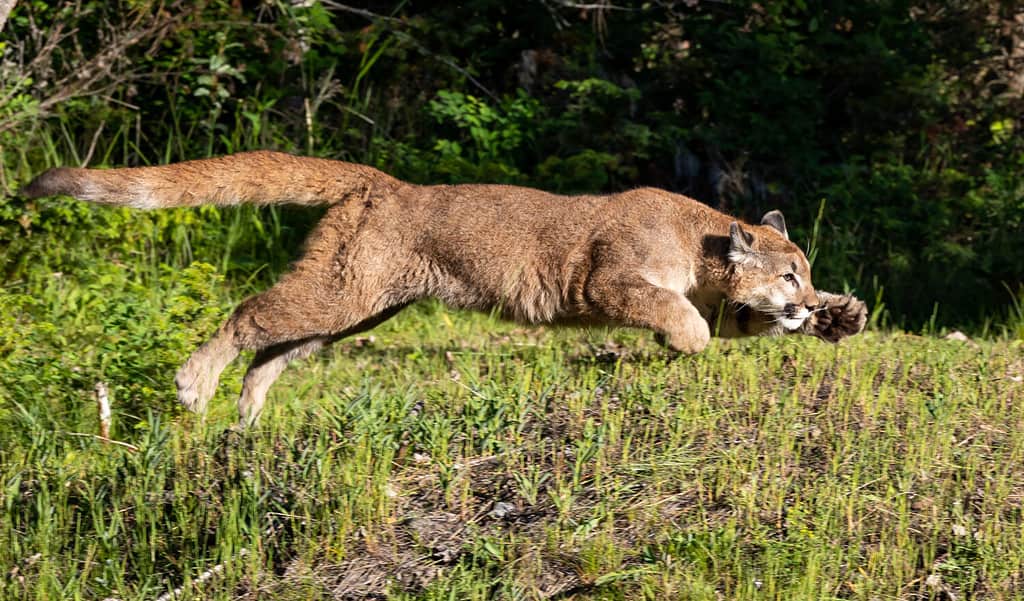
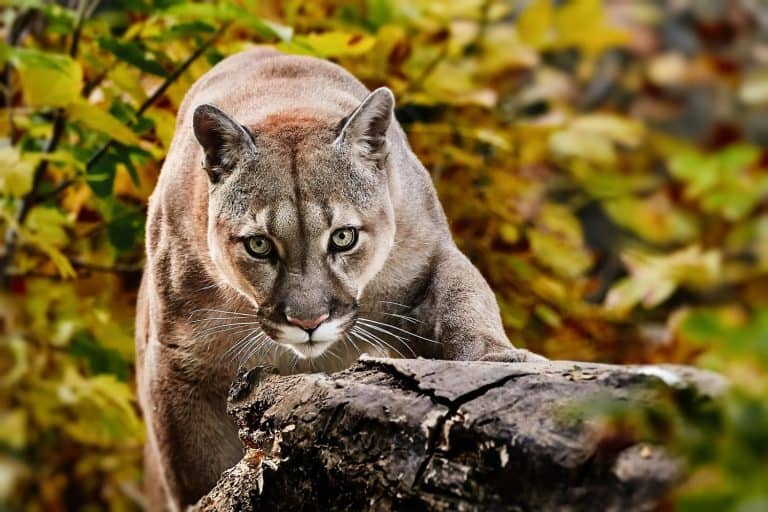
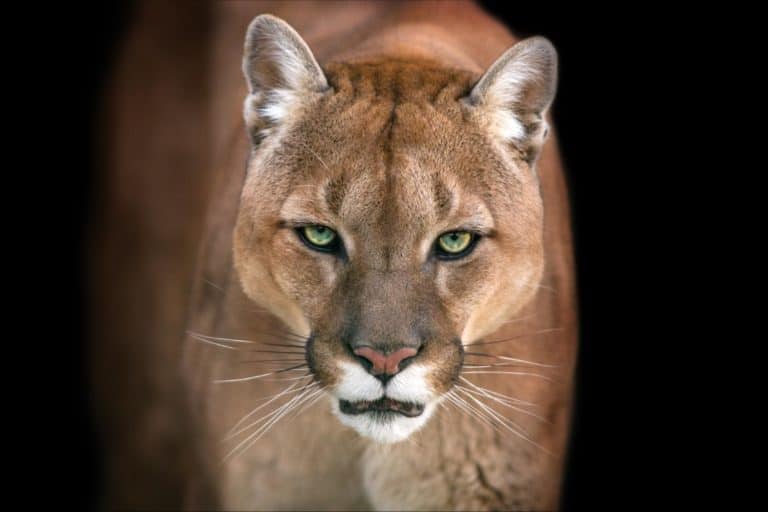
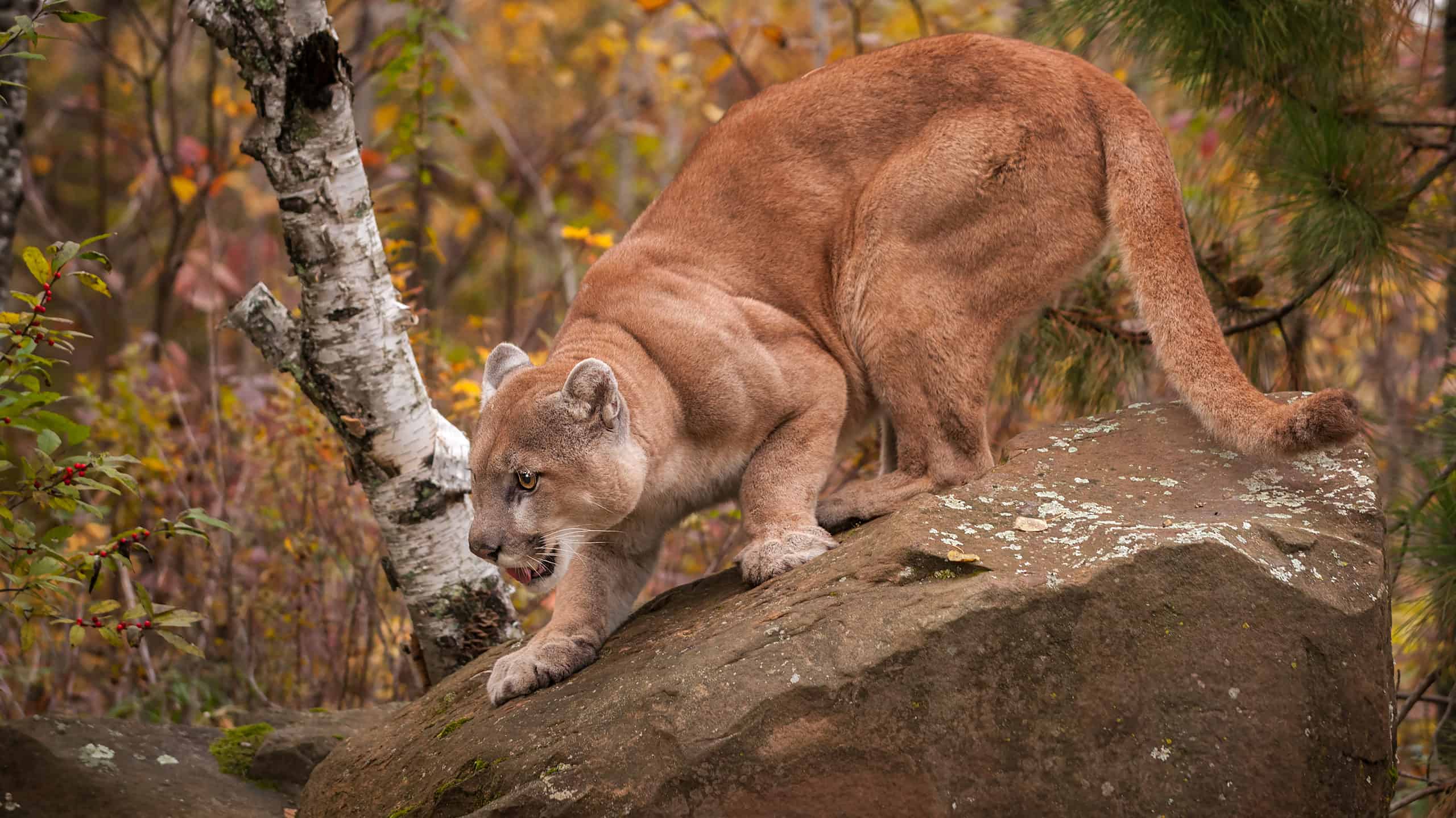
Pumas are strong, but agile hunters.
©Holly S Cannon/Shutterstock.com
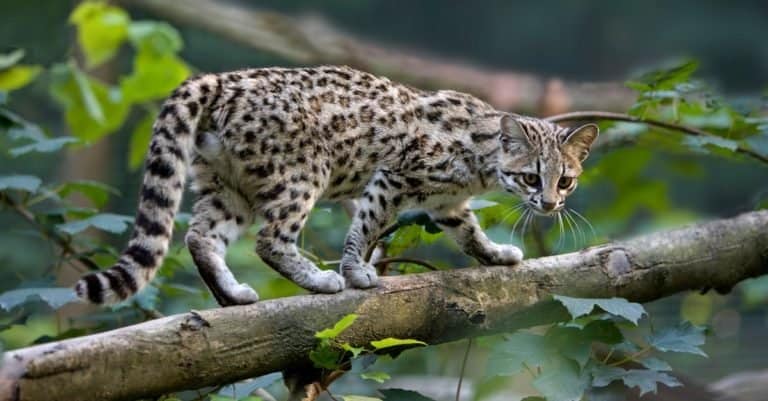
While this is bad news for arboreal mammals, it’s great for the big cats that hunt them. Margays are exceptionally skilled climbers and have few difficulties reaching the rainforest canopy. Pumas are capable climbers, but also primarily hunt on the ground or lower tree branches. Their strong bodies allow them to move quickly, and their large claws help them grip both tree trunks and varied terrain. Its agility guides its hunting methods, and it can stalk prey without ever being noticed. Margays, though slightly smaller, share many of these climbing and hunting abilities.
The Floor Belongs to Ground-Dwelling Cats
According to recent findings by the British Ecological Society, DNA from cat scat was used to determine their hunting habits. The results indicated that margays tend to hunt vertically, while pumas, jaguars, and ocelots primarily hunt on the ground. At the same time, pumas preyed on animals such as American spiders and black howler monkeys, while jaguars preferred ground-dwelling mammals like red and gray brocket deer.
The significance of this study is that the four species inhabited the same hunting grounds. This is rare for apex predators such as big cats. All of these animals are known for being solitary hunters and rarely hunt or share food with other cats, except for their own offspring. In further efforts to confirm researchers’ suspicions, trail cameras were set up to record Guatemala’s big cats. The footage also confirmed the DNA findings, showing pumas and margays hunting in trees rather than solely on the ground.
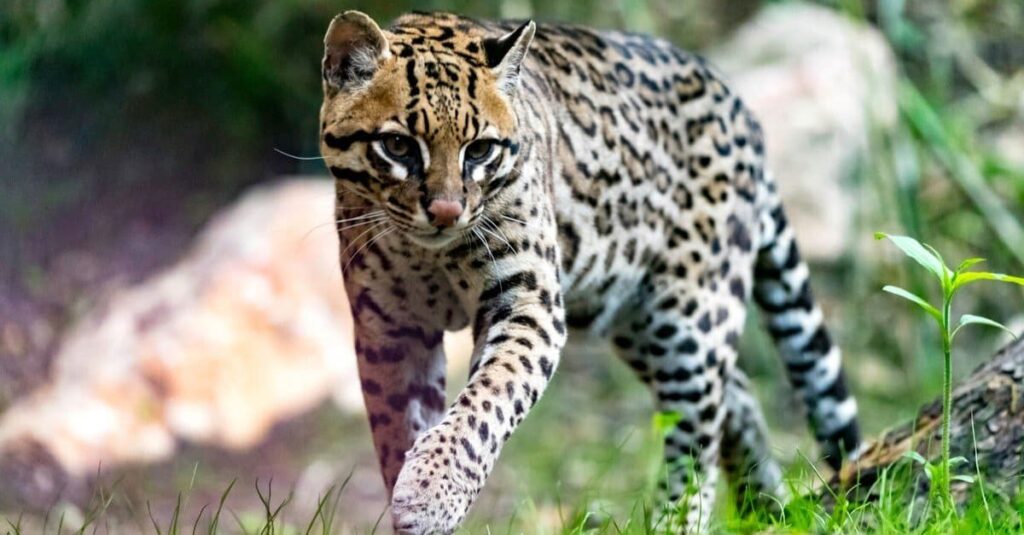
Ocelots are excellent swimmers and runners, making them almost perfect predators.
©Saad315/Shutterstock.com
Further evidence came from analyzing jaguar diets, which included deer, pigs, and armadillos. In rare cases, jaguars even hunted ocelots, another ground-dwelling cat. Ocelots consumed opossums and rodents, which are typically easier to catch on the rainforest floor. Margay scat contained both ground-dwelling rodents, such as mice and rats, and tree-climbers, such as opossums. Because pumas are the most powerful of Guatemala’s big cats, their scat contained remains of the largest terrestrial animals, while margays’ scat included more arboreal prey.
What This Study Means for Future Rainforest Conservation
Vertical hunting, though surprising, is a remarkable example of evolutionary adaptation. As climate change begins to affect the world’s biomes, some animals are changing their habits. Vertical hunting helps big cats survive when they are forced to share the same region, as in Guatemala. However, it’s also a double-edged sword. As their hunting grounds change, it becomes increasingly crucial to protect those habitats.
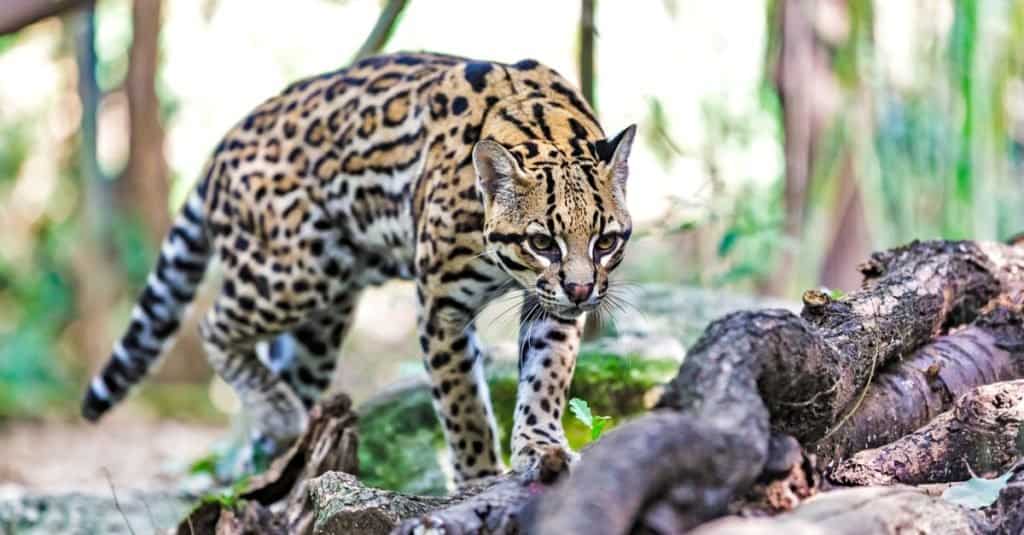
One of the smallest cats, the Margay, can hang from a branch of a tree by one back foot.
©Saad315/Shutterstock.com
Threats from deforestation and development often drive big cat species from their native lands. If this were to happen now, it could have potentially devastating consequences for animals like pumas and margays that depend on these rainforests. Pumas, margays, ocelots, and jaguars play vital roles in Guatemala’s ecosystem. Their presence at the top of the food chain helps maintain balance, which is essential in a rainforest biome. Therefore, conservation efforts from nonprofits, along with further research, are needed to protect these fragile environments.