
Quick Take
- The red panda is the only member of the family Ailuridae, once thought to have been extinct for millions of years.
- There are two distinct species of red panda, the Himalayan red panda and the Chinese red panda.
- Thumb structures, skull shapes, and coloration led scientists to classify red pandas into the wrong biological families.
- The red panda has been recognized as the only living member of the family Ailuridae since the 19th century, with recent genetic studies further confirming its unique classification.
For nearly two centuries, the true classification of the red panda was a mystery. Believed to be both a bear and a raccoon, the red panda was unsuccessfully classified by scientists into families it did not belong to. It was not until DNA testing revealed the truth that the Firefox mystery began to be solved. The red panda was no longer seen as a bear or a raccoon. Instead, it was classified as the sole surviving member of an ancient family once thought extinct for millions of years, overnight turning the red panda into the world’s loneliest species.
Why the Red Panda Was Initially an Evolutionary Mystery
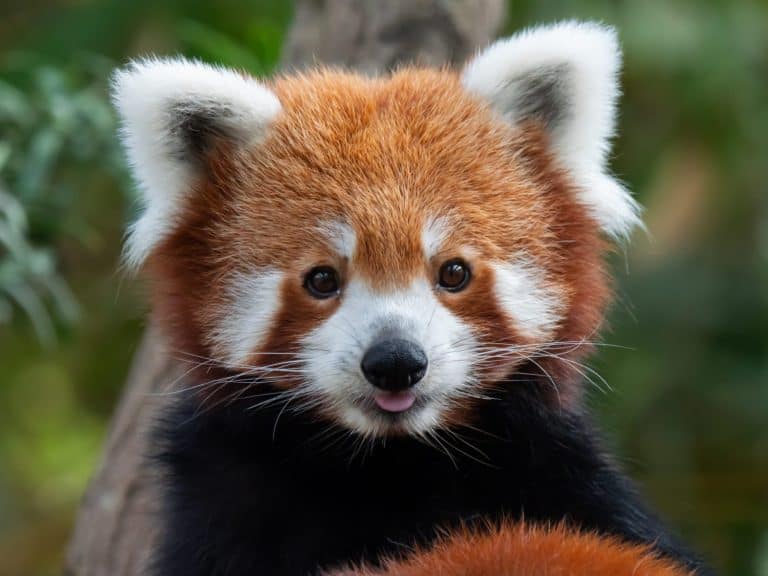
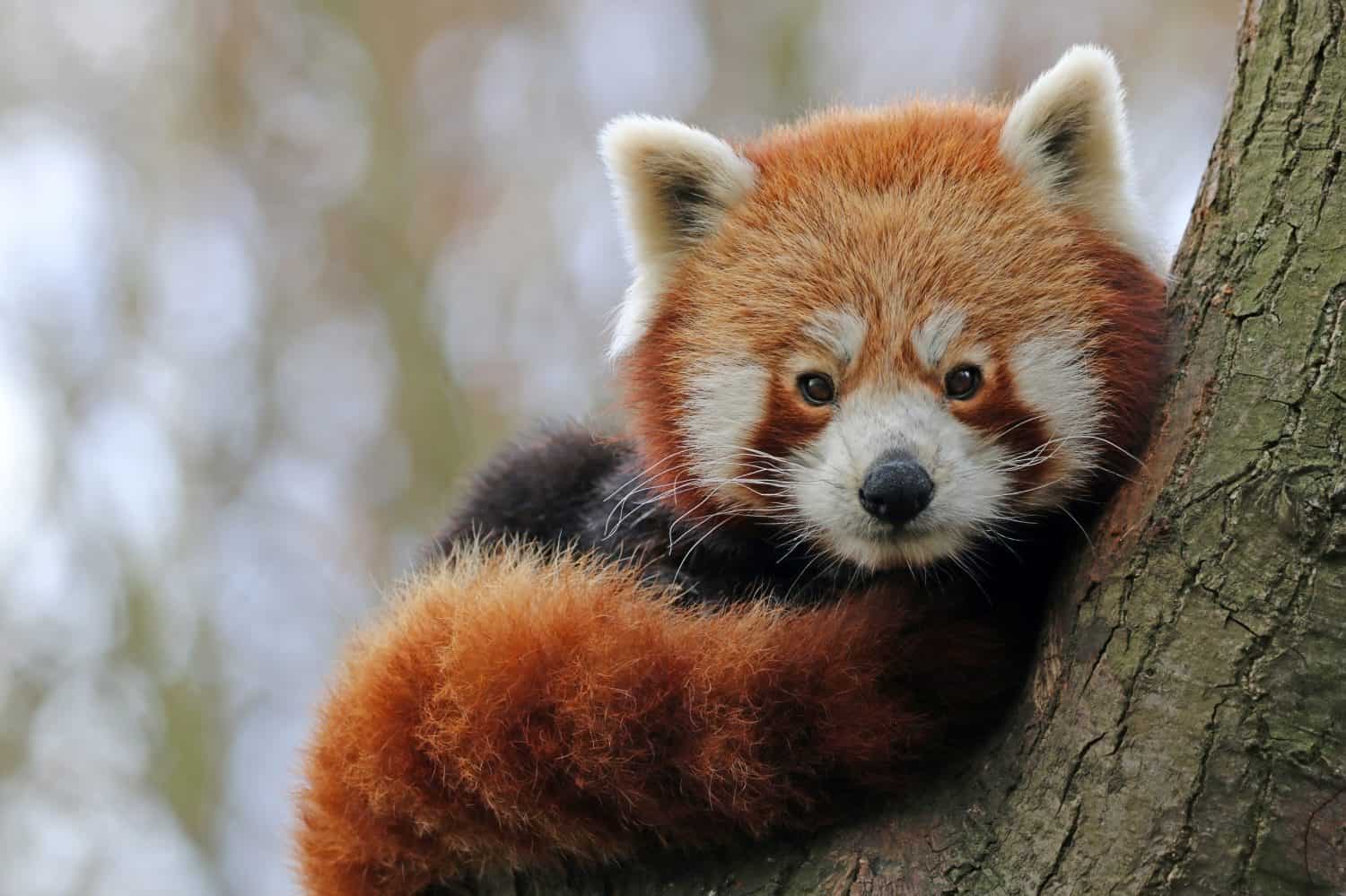
The red panda has been an evolutionary mystery since its formal discovery in 1825 by Frédéric Cuvier. With its distinctive appearance, it was difficult to determine how to classify the red panda. The animal is similar to bears due to the function of its thumbs and skull structure, and to raccoons because of its mask and ringed tail. For a time, the red panda was classified in both the Ursidae and the Procyonidae families, which are how bears and raccoons are classified, respectively.
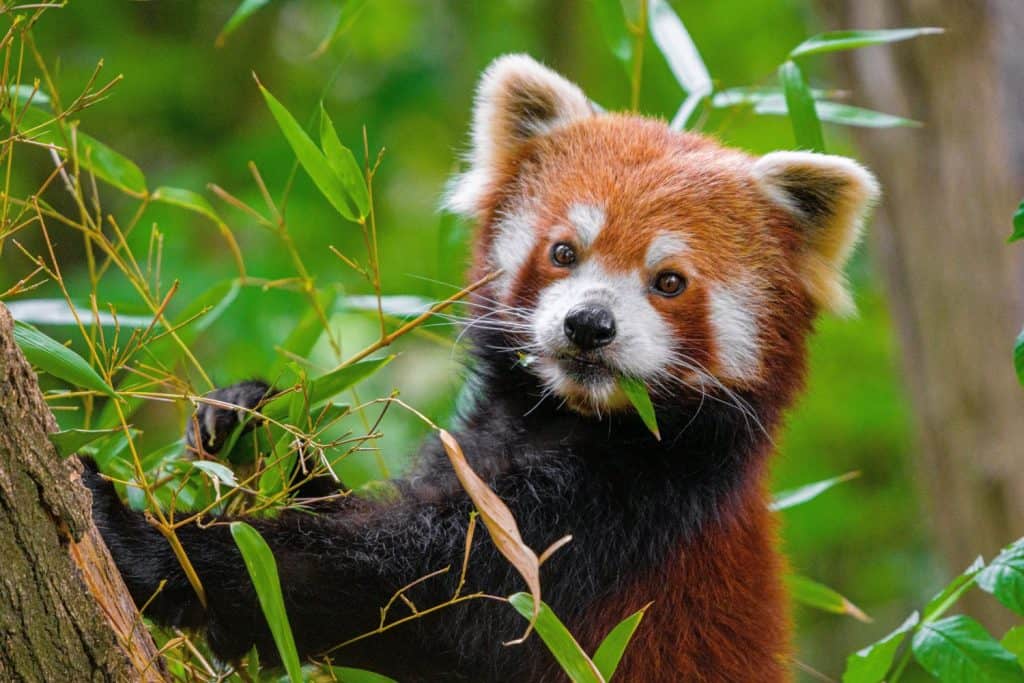
Red pandas are not bears or raccoons, but in a family all their own.
©aktarulislam068/Shutterstock.com
Thanks to DNA testing, more light was shed on the genetic makeup of red pandas. Red pandas are not related to bears, despite sharing the name “panda.” Instead, they belong to the superfamily Musteloidea. The closest relatives to the red panda, therefore, are raccoons, weasels, otters, and skunks.
But, this was not all that DNA testing revealed. Outside of being classified as belonging to the superfamily Musteloidea, red pandas belong to the family Ailuridae. This makes red pandas “living fossils,” as the last known animals classified as part of this family existed tens of millions of years ago.
Is the Red Panda the Last of Its Family?
Species have evolved over time to better adapt to their environment. In the case of the species identified as belonging to the family Ailuridae, this did not occur. Consequently, the only remaining member of the family is the red panda.

Red pandas are the sole members of the family Ailuridae.
©Foreverhappy/Shutterstock.com
The family Ailuridae originated on Earth approximately 55 to 34 million years ago. Between 18 and 25 million years ago, the lineage that would eventually give rise to the red panda originated. For numerous reasons, the other members of the family eventually went extinct, including Parailurus and Pristinailurus. Both animals have been described, based on fossil reconstructions, as larger species resembling the red panda.
It was not until 1999 that the red panda was classified in the family Ailuridae. This classification subsequently resurrected what was thought to be an extinct family, which has since been shown to comprise not one but two species.
Chinese and Himalayan Red Pandas Belong to the Same Family but Are Different Species
It was once believed that the red pandas found in the temperate regions of high-altitude forests in Myanmar, the eastern Himalayas, Nepal, India, Bhutan, and the Sichuan and Yunnan provinces of China were all the same species. However, recent research has shown this is not true.
According to a 2020 study published in Science Advances, there are distinct genetic differences between the Chinese red panda and the Himalayan red panda. Most notably, there are 50% fewer mutations in DNA in Himalayan red pandas compared to Chinese red pandas, and no shared Y chromosomes between the two pandas.

There are two separate species of red panda, the Chinese red panda and the Himalayan red panda.
©Hung Chung Chih/Shutterstock.com
The study reports that the two red panda species have been separated for at least 200,000 years. This separation is the result of neither the Chinese nor the Himalayan red pandas crossing the Yarlung Tsangpo River. Not only did the separation make the red pandas genetically different, but it also made them physically different. The Chinese species has redder fur than the Himalayan species and more prominent tail rings. This means there are two distinct species of red panda, both of which require conservation efforts.
The Red Panda Is an Indicator Species
An indicator species is one that relays the health of an ecosystem in real time. Red pandas are an indicator species, and their population decline speaks volumes about the health of the habitats they inhabit.
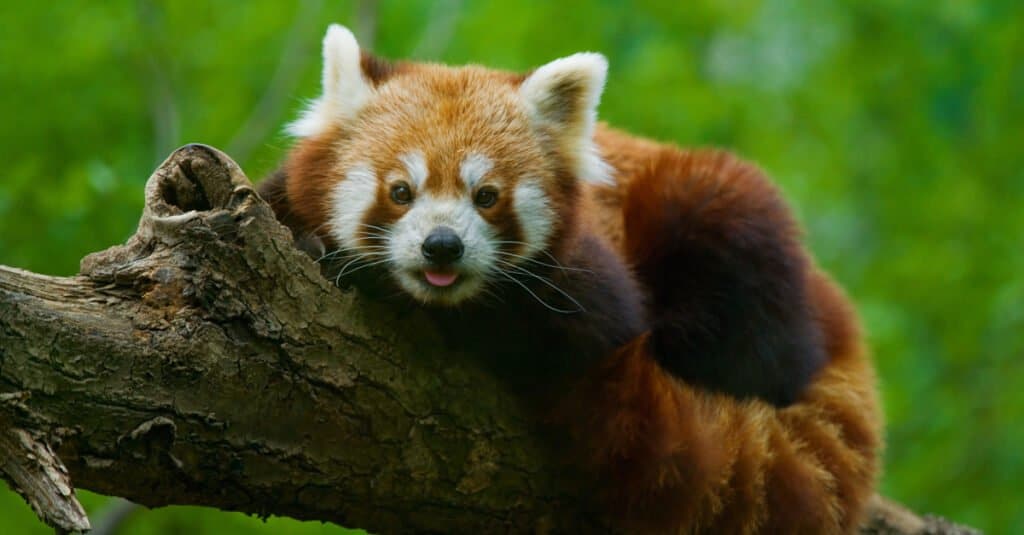
Red pandas are an indicator species, meaning their health and population are a direct barometer of how well the ecosystem is functioning.
©dean bertoncelj/Shutterstock.com
Red pandas are shy creatures who tend to live alone. They are also highly sensitive to environmental changes. Therefore, as pollution levels rise and habitat destruction and climate change intensify, the population will be adversely affected. This has been shown to have occurred significantly from the 1990s through 2015, when the population was nearly halved.
What does this mean about the ecosystems the red pandas live in? This indicates that the environmental conditions are suboptimal. This affects not only red pandas but also all other flora and fauna in the habitat. Consequently, the ecosystem is unhealthy and, over time, will have negative impacts on the region’s overall well-being.
What Does Protecting Two Species of Red Panda Mean for Conservation Efforts?
Conservation efforts generally revolve around protecting a species’ habitat, implementing captive breeding programs, and educating local populations about the importance of the species. Typically, conservation efforts focus on a single animal species. However, in the case of the red panda, there are two distinct species that require conservation to prevent extinction.
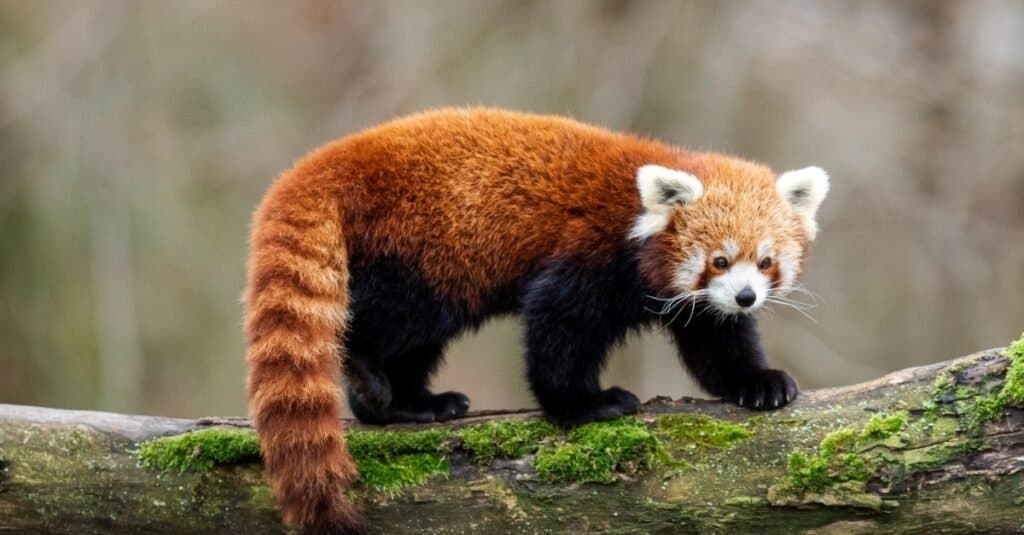
Conserving two different species of red pandas can make efforts more difficult in that the species need to remain genetically distinct, and habitats for both need restoration.
©iStock.com/AB Photography
If there were only one species, there would be no concerns about genetic diversity in red pandas. However, this has become a paramount concern, specifically for those red pandas in captivity. While the red panda does well in captivity, a proven way to increase population size, the two species cannot cohabit. If the two species interbred, the genetic integrity of both would be compromised.
This also means that, as conservation efforts work to preserve habitats and bamboo forests, all regions where red pandas live are integral to their survival. Where areas have been successfully targeted as protected habitats for other species, resulting in population resurgence, multiple regions need to be protected for both the Chinese and Himalayan red pandas. Therefore, on both sides of the Yarlung Tsangpo River, habitats must be protected to prevent the extinction of both red panda species.
Threats Red Pandas Face That Could Lead to Extinction
Red pandas are an endangered species. According to the IUCN, both the Himalayan and Chinese species have populations that are at an all-time low. This relates to the numerous threats that have plagued red pandas, resulting in a 40% population decline over the past few decades.
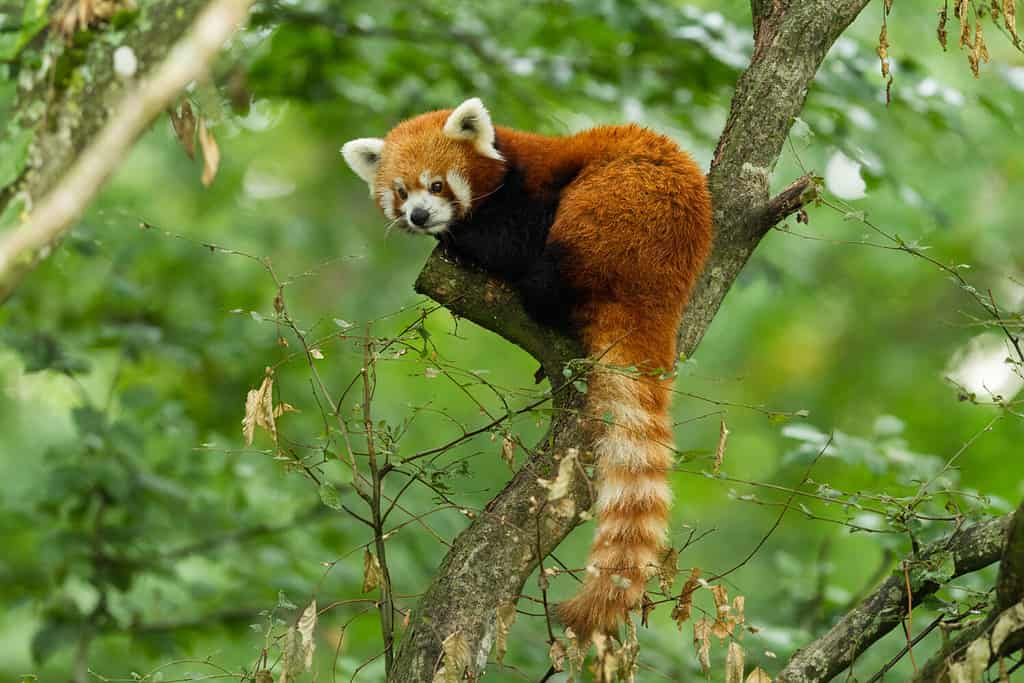
Habitat loss, reduced food availability, and poaching remain the primary drivers of the decline in red panda populations.
©AB Photographie/Shutterstock.com
In total, there are believed to be fewer than 10,000 red pandas left in the wild. This total includes both species. As their populations continue to decline, several factors are directly responsible. Those factors include:
- Habitat loss
- Loss of bamboo forests, decreasing food availability
- Accidental capture and death in traps meant for other animals
- Poached for pelts
Despite red pandas being a protected species, conservation efforts are constantly thwarted by local communities seeking to profit at the pandas’ expense. Consequently, because of the market for pelts, even with conservation efforts in place, red panda populations continue to decline. Until people understand the importance of red pandas to their ecosystems and why they need to be saved, their populations will continue to decline. If this continues for too long, there is a risk that red pandas could become critically endangered if current threats are not addressed.