
Quick Take
- Baby Surinam toads skip an entire life stage that every other amphibian goes through, which reveals something unexpected about how birth works. See the skipped life stage →
- The mother's body physically transforms during incubation in a way that looks more like a special effect than a biological adaptation. See the skin transformation →
- The male's role in this birth process is nothing like what you'd expect, a surprising fact that makes the whole system possible. Explore the male's role →
- One counterintuitive constraint of living almost entirely underwater turns out to be the exact reason this bizarre reproduction strategy evolved. See why water drove this →
Nature is full of unique forms of reproduction. The Surinam toad turns its back into a living incubator where the eggs develop and hatch. This YouTube video from Nat Geo Animals shows this fascinating process unfolding.
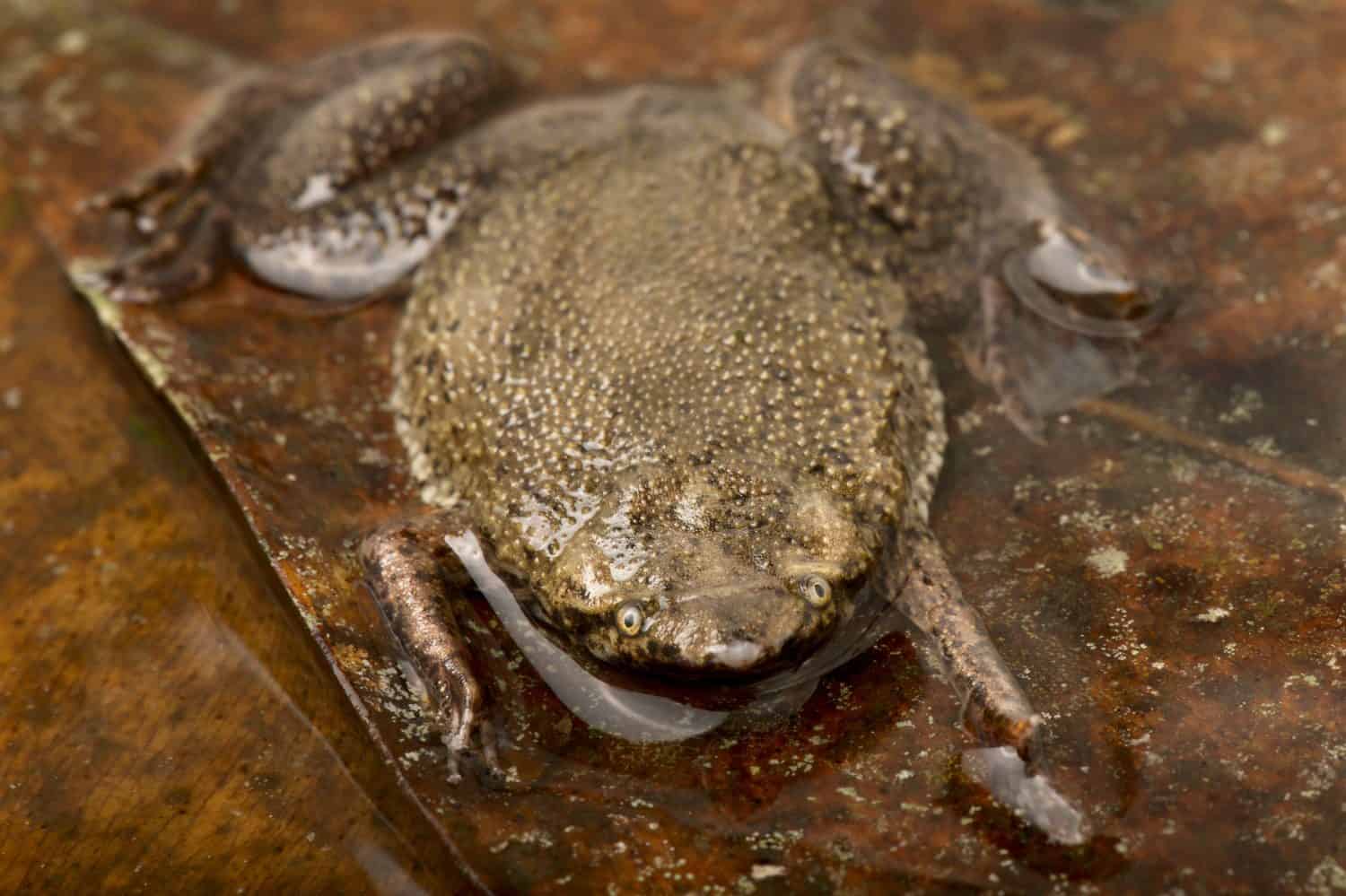
After birthing her young, the female Surinam toads back hels back to normal.
©reptiles4all/Shutterstock.com
How Surinam Toads Give Birth
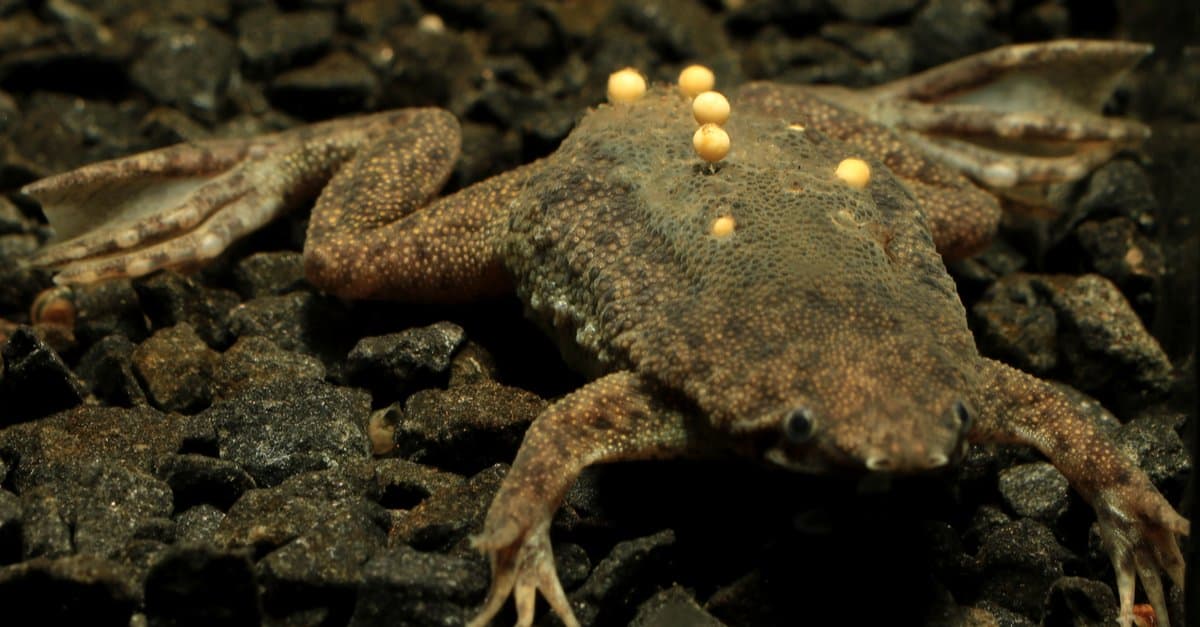
Surinam toads are one of the many amphibians living in the Amazon-riven basins. Found across Brazil, Peru, Colombia, Venezuela, Bolivia, Ecuador, French Guiana, Guyana, Suriname, and Trinidad and Tobago, they are aquatic toads that rarely come onto land. Instead, they spend nearly their entire lives resting on the muddy bottoms of rivers and ponds. Their flat bodies and brown skin help them blend in and survive in the jungle. While their camouflage is impressive, the way these toads give birth is simply amazing. Female Surinam toads release her eggs externally for the male to fertilize. From here, the male presses each egg onto the female’s back, leaving her dotted with anywhere between 60 and 100 eggs. Her back then becomes a living nursery that will hold onto the eggs until they hatch.
Over time, the mother toad’s skin will change drastically. Instead of the eggs remaining exposed, her skin swells around each egg, wrapping them in soft tissue. This creates a honeycomb look, with each pocket being a protective chamber for the egg to develop in. Rather than going through a tadpole stage, Surinam toads skip this and emerge as fully developed toads. This takes roughly three to four months, and the emergence process is amazing.
As the baby toads begin to emerge, they poke their heads out and crawl free from their mother’s back. This can be seen in the video above, and it looks almost like a horror movie. After emerging, they swim away and begin living their lives independently. Rather than laying her eggs and leaving their survival to chance, the mother toad is literally attached to them 24/7. This helps to ensure their survival up until they emerge, highlighting the extraordinary parental investment these toads make in their young.