
Quick Take
- These dolphins are considered the most tourism-impacted population on the planet, though the reason why has nothing to do with their numbers. See tourism's role →
- Daytime is actually the most dangerous time for Hawaiian spinner dolphins, and the reason is something most tourists never consider. Why daytime is dangerous →
- Regulations to protect these dolphins have existed since 2021, yet the population is still collapsing. See NOAA's failed rules →
- Ending dolphin tourism would help the dolphins, but a $100 million reason makes it nearly impossible. Explore the economic barrier →
Hawaiian spinner dolphins are a part of the fabric of the Hawaiian Islands. Despite having called the coastal waters home for generations, dolphins are now disappearing from the Hawaiian coast. If change is not made and made soon, these special dolphins may be lost from the islands forever.
Continue reading
Spinner Dolphins Are Vanishing from the Hawaiian Coast
Hawaiian spinner dolphins have called the Hawaiian Islands home for nearly 200 years. First documented in 1828, these particular spinner dolphins are isolated from other Pacific spinner dolphin groups. This means this subspecies of Gray’s spinner dolphin is distinct from other subspecies, making it particularly vulnerable.
According to a new study published in Marine Mammal Research, Hawaiian spinner dolphins’ vulnerability is increasing with a newly documented population decline. Currently, just 9% of the population are calves. To have annual pod growth, 17% of the annual population needs to be composed of calves.
Because too few calves are being born, the population cannot remain stable and will continue to decline. This is because, although Hawaiian spinner dolphins can live up to 25 years, they reproduce slowly. This means that any dip in calf production can have long-term negative effects on the population.
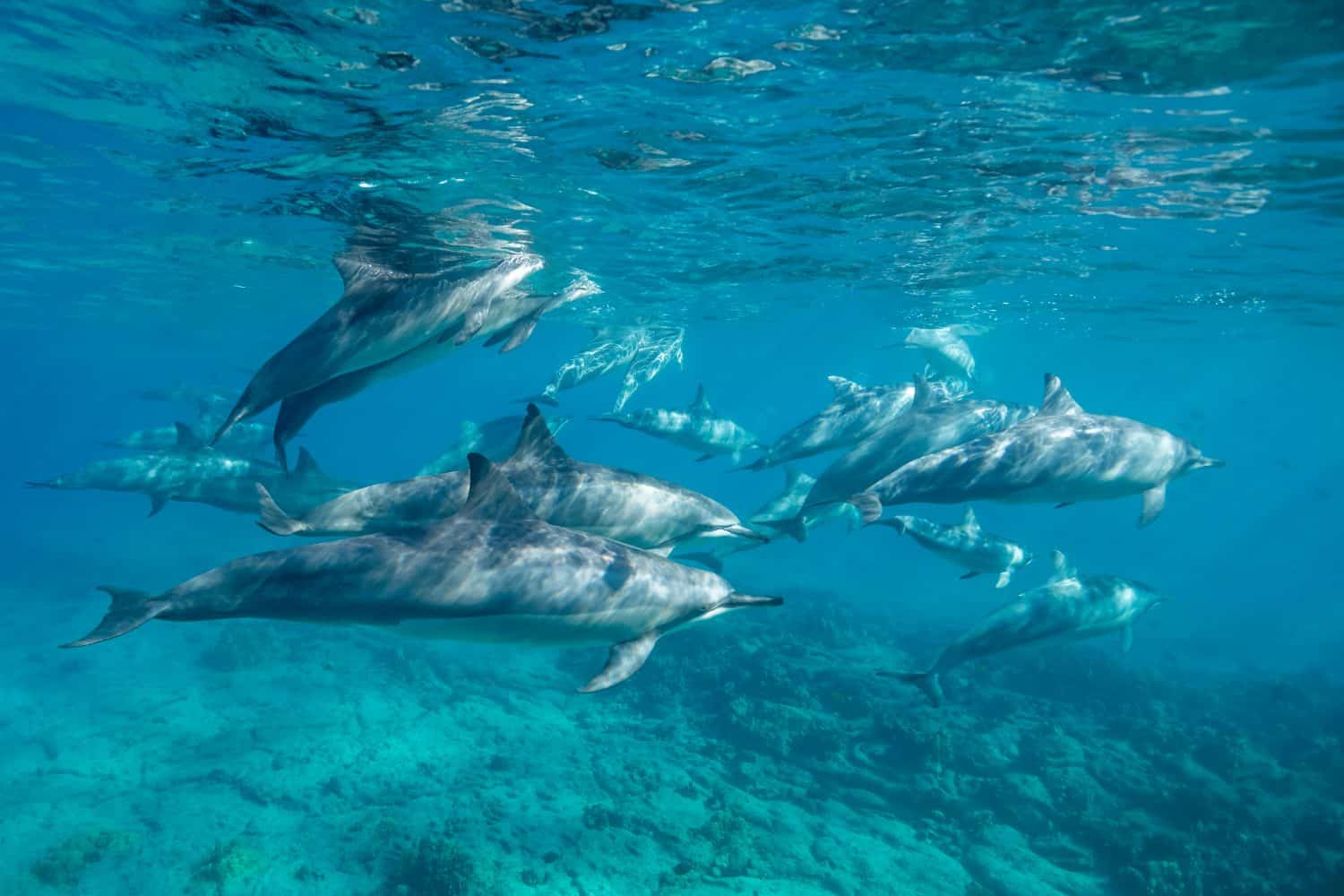
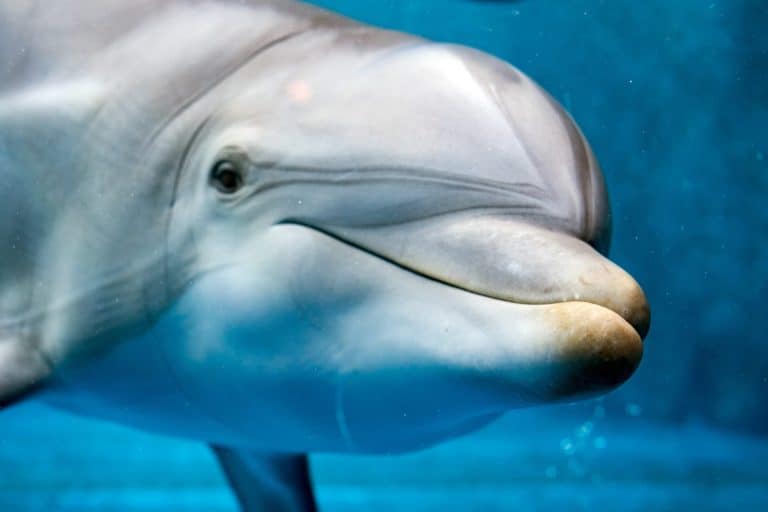
Hawaiian spinner dolphin population has significantly fewer calves and juveniles needed to keep the population steady.
©wildestanimal/Shutterstock.com
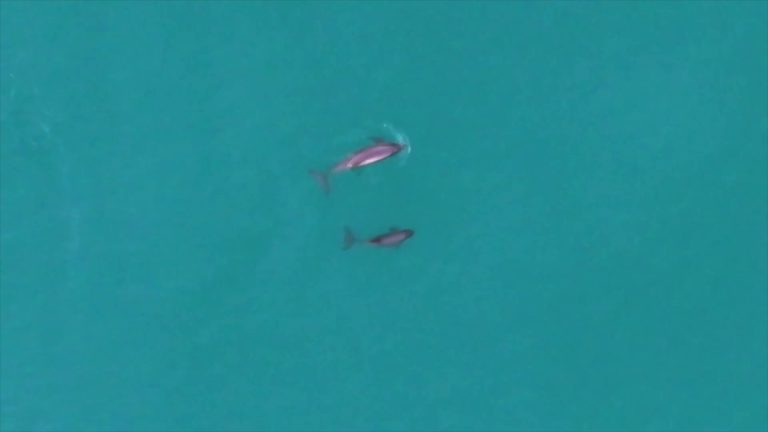
To determine what percentage of the population was dolphin calves, researchers collected aerial images using drones. Doing so allowed researchers to develop three distinct age groups. Those groups are as follows:
- Calves: Under two years old
- Juveniles: Two years old to nine years old
- Adults: Over nine years old
The photographic evidence clearly showed more adults than juveniles or calves, indicating that the population may not be able to sustain itself in the future.
Could Tourism Be a Factor Behind the Dolphins’ Population Decline?
Based on the study’s findings, yes, tourism is a major factor in the decline of the Hawaiian spinner dolphin population. In fact, this dolphin population is the most affected by tourism activity of all dolphin populations worldwide.
According to the study, Hawaiian spinner dolphins are consistently bothered because they are easy to locate. During the day, they can be found in the shallow waters off the islands’ coasts. The dolphins return to the same location day after day, making it easy to schedule boat tours or for snorkelers and kayakers to approach the pods.
According to the study’s lead author, Fabien Vivier, a doctoral student at the Hawai’i Institute of Marine Biology, the greatest harm to dolphins occurs during daylight hours.
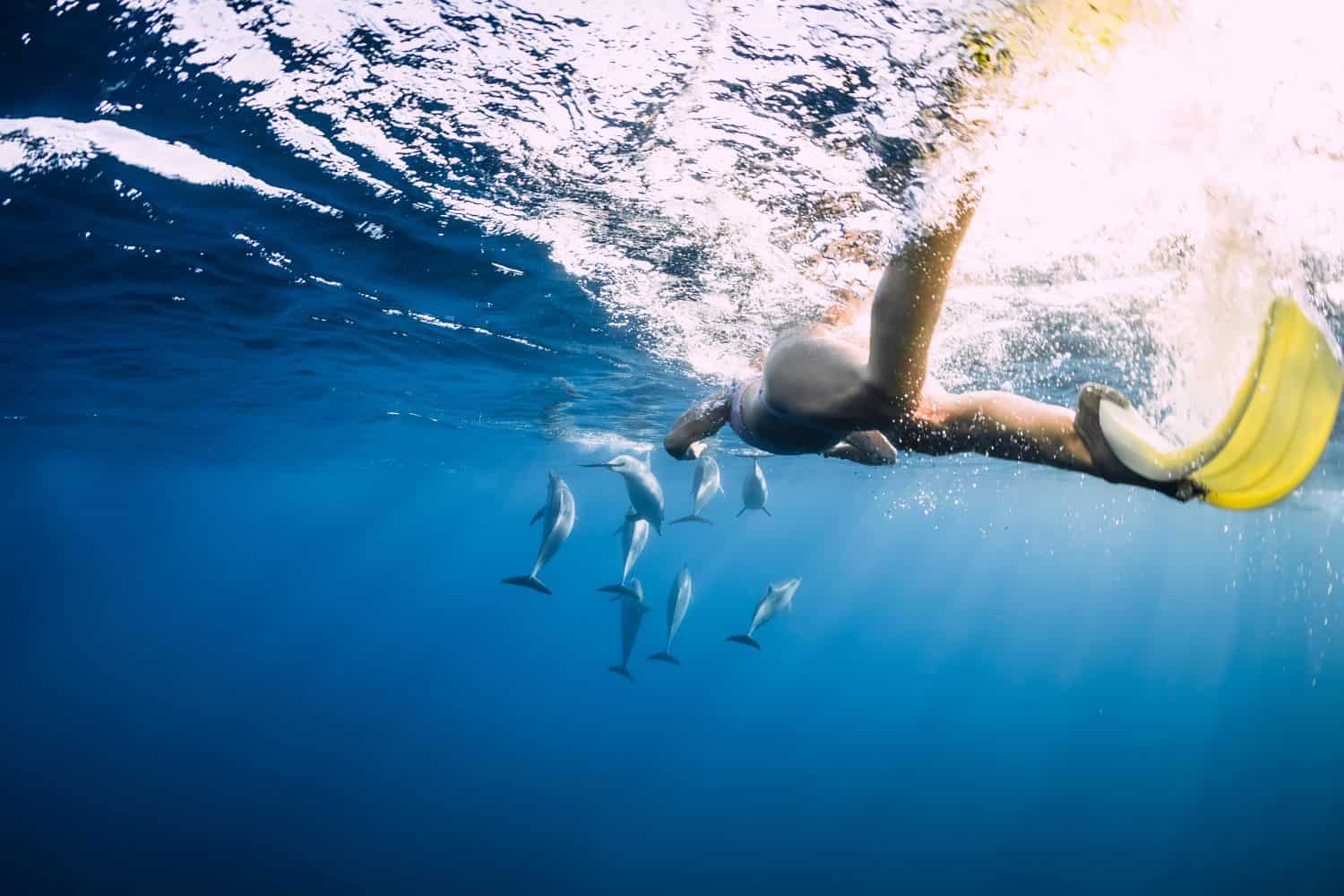
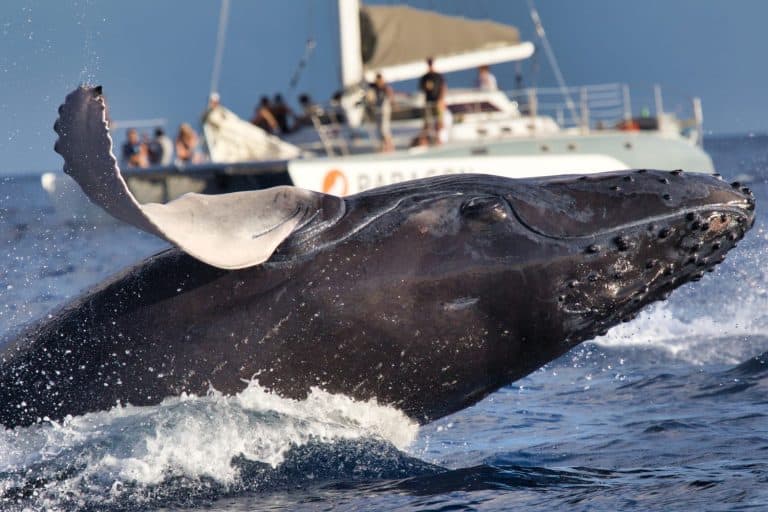
Dolphin tourism plays a major role in the decline of Hawaiian spinner dolphin populations.
©Wonderful Nature/Shutterstock.com
“The evidence suggests chronic human disturbance—especially tourism and recreational-related interactions during critical dolphin resting periods—as a likely contributing factor affecting reproductive success and calf survival,” Vivier explained in a press release. “The findings support stronger conservation actions, such as time-area closures for human activities, alongside continued long-term monitoring—actions that have long been called for.”
Given this information, one might think ending dolphin tourism in Hawaii would be straightforward. However, dolphin tourism is now one of the state’s largest economic drivers, contributing over $100 million annually. Therefore, simply ending dolphin tourism, while beneficial for the dolphins, is unlikely to happen.
Why Daylight Hours Are So Important For Hawaiian Spinner Dolphins
Hawaiian spinner dolphins spend the nighttime hours hunting. The pod will split into several smaller groups, working together to get their fill of lanternfish, squid, shrimp, and more. It is only when the sun begins to rise that the dolphins come back together and head toward the shallower, clear-water island bays.
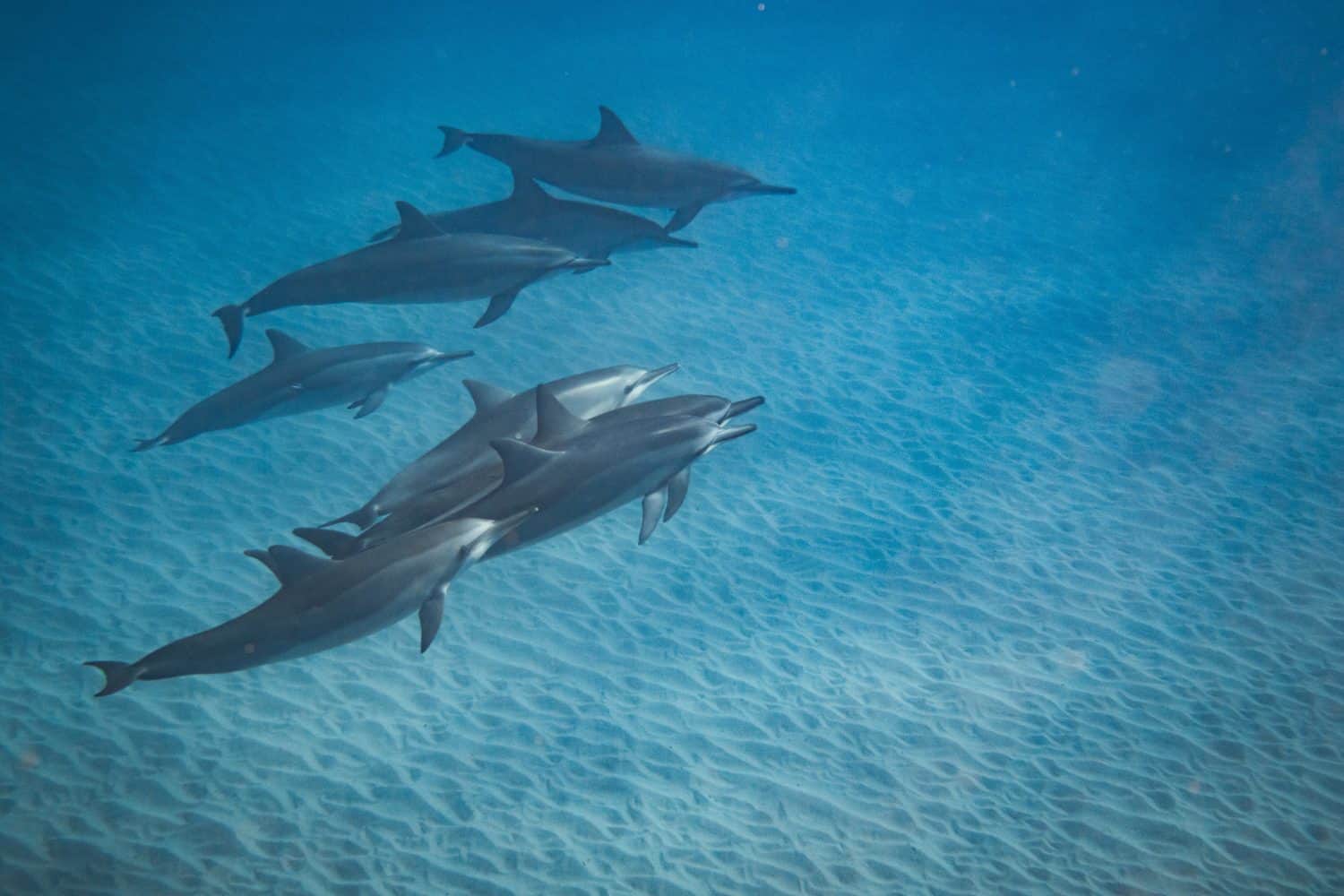
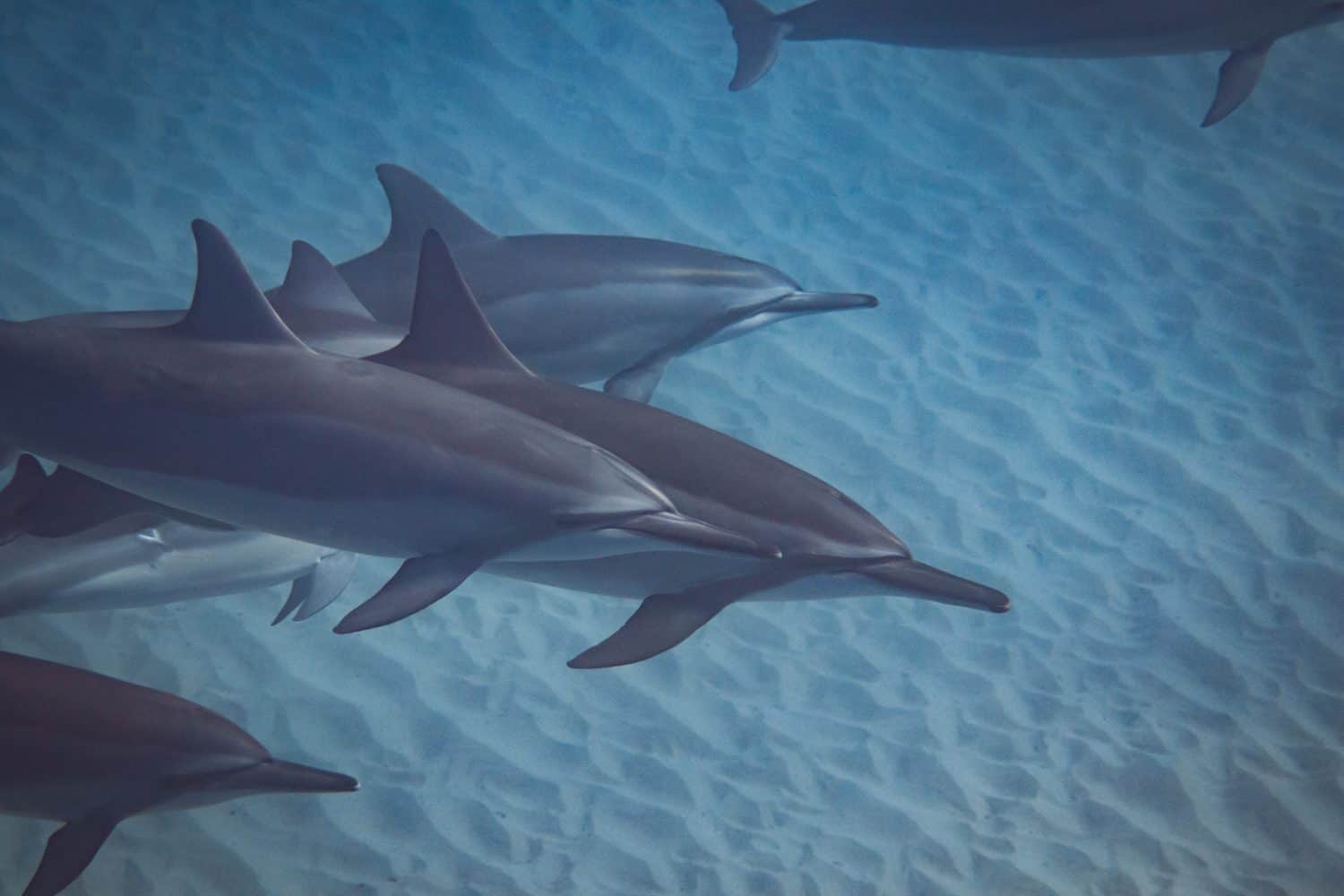
Hawaiian spinner dolphins rest together during the day after a night of hunting.
©Tommy Pierucki/Shutterstock.com
During the daylight hours, Hawaiian spinner dolphins rest. The pod comes close together for protection, especially against sharks. As the dolphins synchronize their breathing, they also turn off their sonar while resting. The clear waters near the islands’ shoreline are crucial because they allow the dolphins to visually detect potential dangers.
Dolphins never fully sleep; instead, they rest by shutting down parts of their brain. However, this rest is disrupted when tourists are nearby on boat tours or attempting to swim with them. Dolphins do not get adequate sleep, which harms their hunting and reproduction. It also causes fatigue and stress. All of these factors hinder the growth of the Hawaiian spinner dolphin population and may be a key reason for its decline.
NOAA Rules and Regulations Regarding Dolphins
For years, it has been clear that Hawaiian spinner dolphins have not received the protection they need. To combat this, the National Oceanic and Atmospheric Administration developed and later finalized rules and regulations in hopes of allowing Hawaiian spinner dolphins to better relax in the waters off the Hawaiian coast.
The rules and regulations that NOAA implemented include:
- People and vessels are to remain 50 yards away from the dolphins
- No swimming with dolphins
- No approaching dolphins at any time
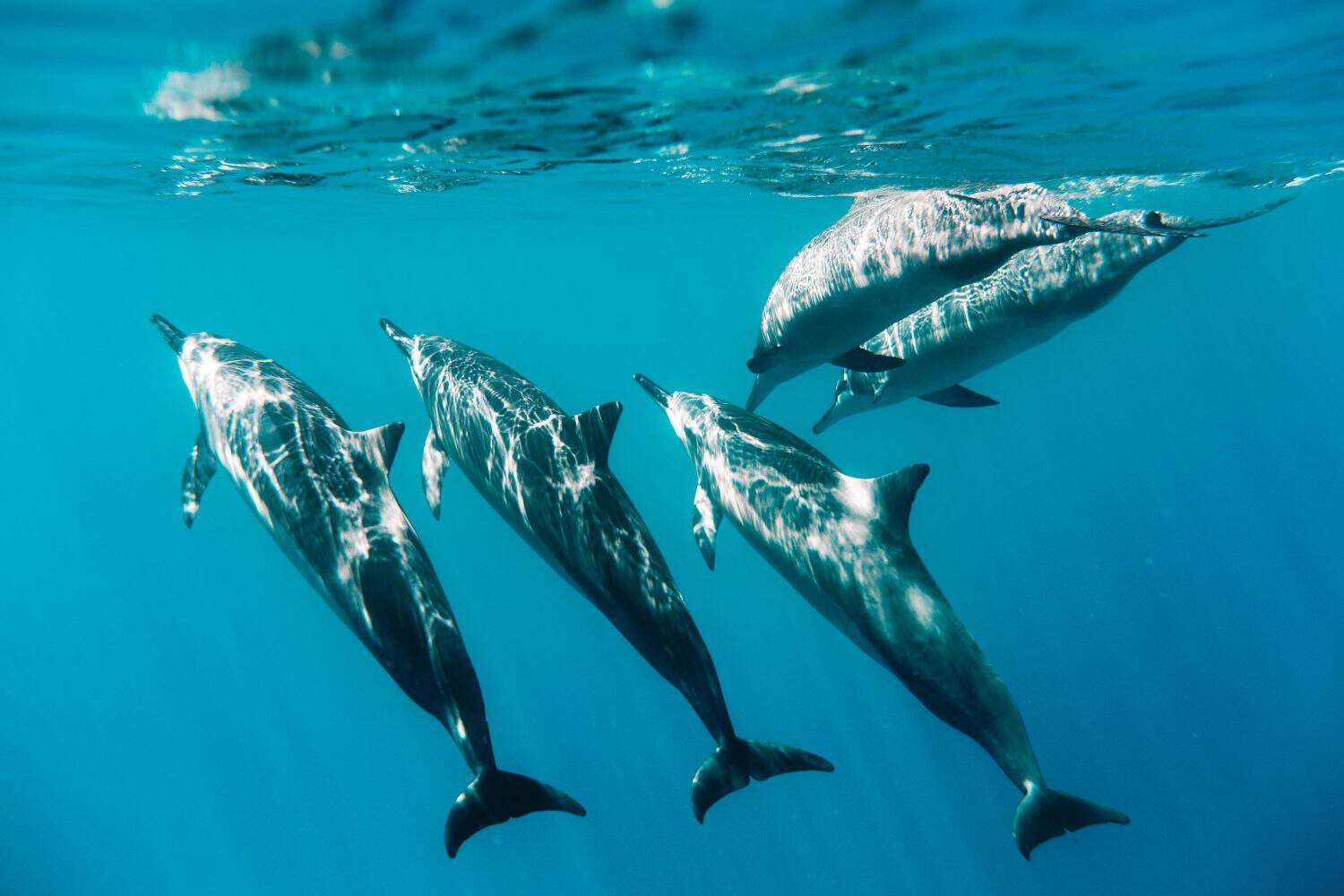
NOAA has established rules and regulations to protect the Hawaiian spinner dolphins, yet those rules continue to be broken.
©Heather Goodman/Shutterstock.com
Those who do not follow NOAA rules and regulations face penalties and fines. Since their adoption in 2021, people have continued to get too close to the Hawaiian spinner dolphins. As a result, 76 fines ranging from $100 to $4,500 have been issued.
The authors note that it is still too early to determine whether tourism alone is the primary cause of the Hawaiian spinner dolphin population decline. However, it is clear that tourism is not helping the situation. Perhaps it is time to put stricter regulations in place, as NOAA considered several years ago. It may be the only thing to save the Hawaiian spinner dolphins from disappearing completely.