
Quick Take
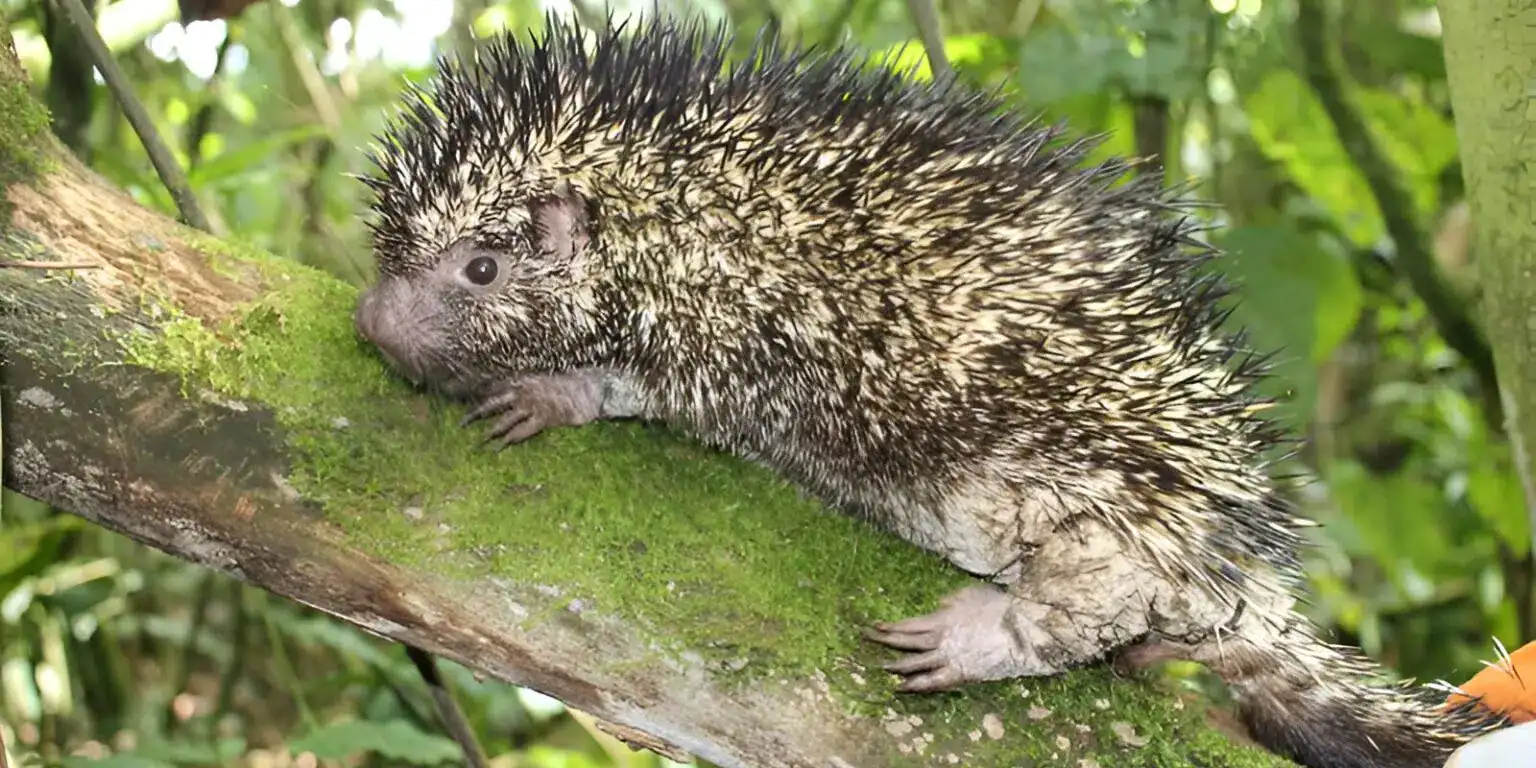
- Coendou vossi marks Colombia’s first new porcupine species in 126 years, described in the Journal of Mammalogy.
- Despite resemblance, Coendou vossi is smaller than Coendou quichua, about 2 ft long with a longer prehensile tail.
- A mitochondrial DNA difference of more than 3% confirms Coendou vossi as a distinct species.
- Read on to discover the estimated five percent of mammals still undiscovered and how shadow diversity shapes conservation.
You’d think that porcupines climbing trees would be visible and therefore well-studied. Roughly the size of housecats with thousands of quills that can rustle vegetation, North American porcupines squeak, moan, and grunt to communicate with each other and signal danger.
But biologists just discovered a new species of South American porcupine, Coendou vossi, just hiding in plain sight. A paper in the Journal of Mammalogy reports this “Voss’ porcupine,” the first new species described in 126 years in Colombia, now bringing the total known species to seven. The species name honors Robert S. Voss, a mammal researcher at the American Museum of Natural History (AMNH), who studied porcupines of the genus Coendou.

Until recently, Voss’ porcupines had been mistaken for their close relatives, the widespread Quichua porcupines (Coendou quichua), whose range includes Colombia, Panama, and Ecuador. Mammal expert Héctor E. Ramírez-Chaves, a professor at the University of Caldas, Colombia, spearheaded the sorting out of Colombian porcupine species. He was suspicious that porcupines reported from a specific area along the Magdalena River Valley and Caribbean regions of Colombia might be something other than the common Quichua species.
“The research work began in 2018 when a group of scientists was analyzing porcupines in Colombia, particularly the Coendou quichua species,” says Ramírez-Chaves in an article. “However, we began to notice differences between this species and some porcupine populations inhabiting the Caribbean region’s dry forest and the Magdalena River’s inter-Andean valley in Colombia.”
Ferreting out a unique porcupine species, however, was not a small task. Ramírez-Chaves and his team made night expeditions into muddy Colombian forests, collected photos taken by local farmers, and searched for porcupine specimens in museum collections in Colombia, Denmark, England, Sweden, and the U.S. The combination of evidence pointed to a new species living in the wet and dry forests of the Magdalena Valley and nearby coastal regions, an “endemic” species known only from Colombia.
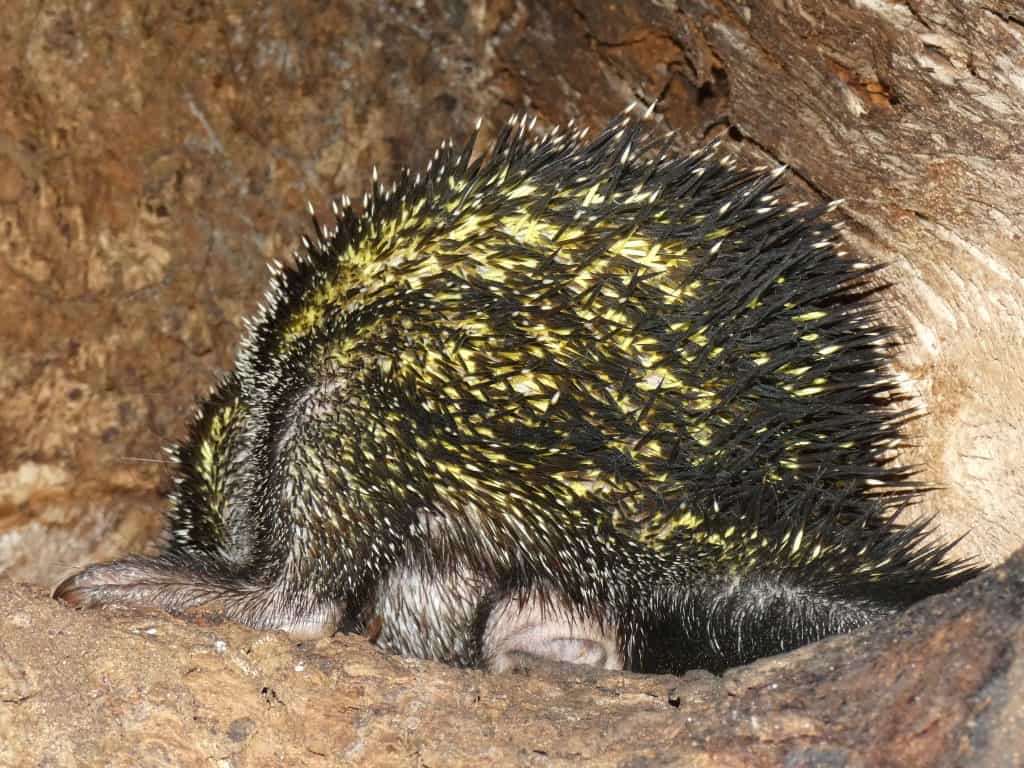
This Andean Porcupine (Coendou quichua) ranges broadly from Panama to Ecuador.
Coendou vossi looks nearly identical to its close Quichua porcupine relative, but smaller. It measures only about two feet long from nose to tail and has a unique, longer prehensile tail that the porcupine wraps around tree branches to hold on. A comparison of mitochondrial DNA, a common marker used to barcode species, revealed a difference of more than three percent in C. vossi’s gene sequence, sufficient to mark it as a distinct species.
Voss’ porcupines spend their days resting in tree cavities and caves, venturing out at night to find edible fruits. Like their Coendou sp. cousins, they have strong incisors for chewing on leaves, fruits, and tree bark. Their spines are tri-colored (white base, black middle, lighter tip) and 1 to 2 inches long, hiding the short, dark fur underneath. When seeds get stuck in their fur and quills, arboreal porcupines act as seed dispersers, unwittingly propagating trees along forest edges.
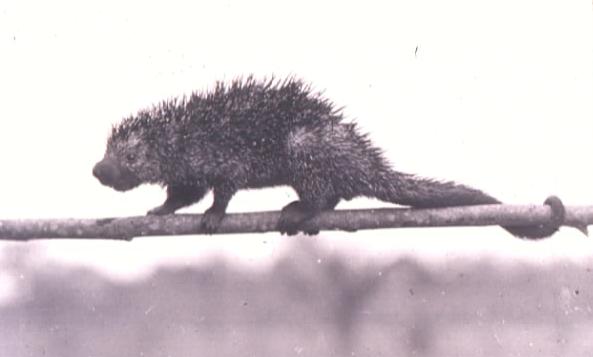
This 1928 photo, taken in Panama, was perhaps a preview of the hidden species. Note the prehensile tail.
©Crane Pacific Expedition, 1928/no known copyright restrictions – Original / License
Unlike noisy North American porcupines (Erethizon dorsatum), these Colombian porcupines are quiet and elusive. Unfortunately, they are limited to the Magdalena River Valley and nearby forests, which at this point are reduced to small patches surrounded by farmland and ranches.
“For me, it is interesting that there is a huge part of the biodiversity of Colombia that is understudied,” says Ramírez-Chaves in an article.
In addition to naming the new Voss’ porcupine, the research team clarified the classification of C. rothschildi (Rothschild’s porcupine). While previously lumped together with other species, the study highlights that these three are ecologically distinct: Quichua porcupines favor high-elevation Andean forests, Rothschild’s porcupines stick to the humid forests of the Pacific coast, and the newly named Voss’ porcupine claims the drier lowlands.
While the genetic divergence between C. quichua and C. rothschildi is low, the study authors conclude that “morphological and geographic differences, niche overlap, and results of the single-locus delimitation methods support the hypotheses that these species represent independent evolutionary lineages.”
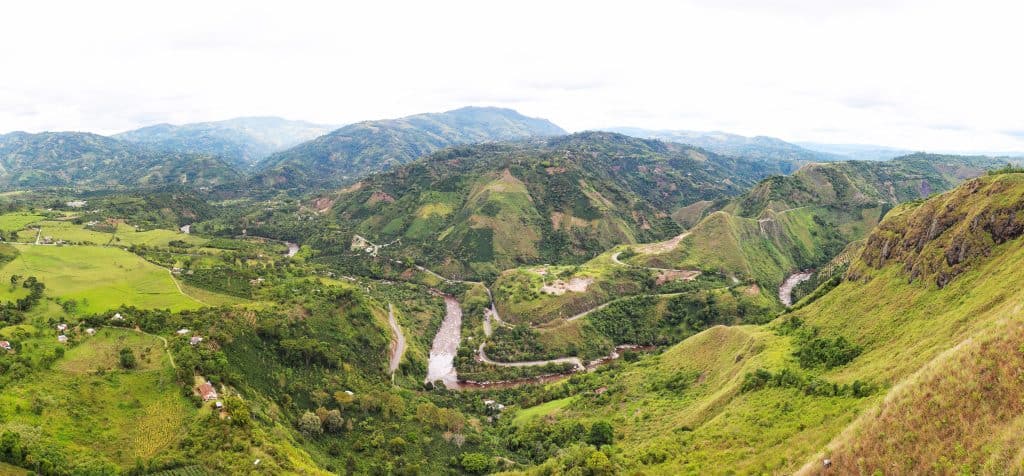
Here, you can see the farm development around the Magdalena River, Huila Department, Colombia
The realization that what was previously thought to be a single species of porcupine is actually three species begs the question of how many other mammal species remain hidden in plain sight. A study published in Ecology and Evolution estimated the number of undescribed mammals using a model based on discovery processes thus far. The results predict that five percent of the world’s mammals remain undiscovered, which amounts to several hundred additional species.
A recent paper published in Cambrian Prisms: Extinction labels the compilation of still-undiscovered species “shadow diversity,” toward recognizing their intrinsic value, even though they remain hidden.
When planning for ecosystem protection, such shadow diversity should be considered to ensure that these still-to-be-studied species do not become ‘dark taxa’ that go extinct before they are even named.