
There are some pretty strong examples of camouflage in nature that can sometimes make you do a double-take. Over centuries, various birds, snakes, marine life, and other animals have adapted to blend in with their surroundings, doing their best to hide in plain sight. One of these amazing creatures is the great potoo. Great potoos are famous for their creepy and uncanny appearance when active, but they also have some of the best camouflage, which even experienced birdwatchers may miss. This YouTube Short by @1MinuteAnimals shows off this bird’s amazing camouflage. Read here to learn more about the great potoo!
©Rob Jansen/Shutterstock.com
About the Great Potoo
The great potoo is part of the potoo, or Nyctibiidae, family. This family of birds is made up of seven species, all of which are nocturnal and possess strong camouflage. The great potoo is the largest in the family. Other species include the common potoo, rufous potoo, Andean potoo, northern potoo, long-tailed potoo, and white-winged potoo. The great potoo ranges throughout Mexico and Central America down to much of South America. They inhabit tropical forests, savannas, and almost any location with plenty of trees and foliage. Besides their camouflage, they are somewhat difficult to spot due to their population distribution. While not communal birds, they are rare in some areas and common in others, depending greatly on the availability of suitable trees for resting.
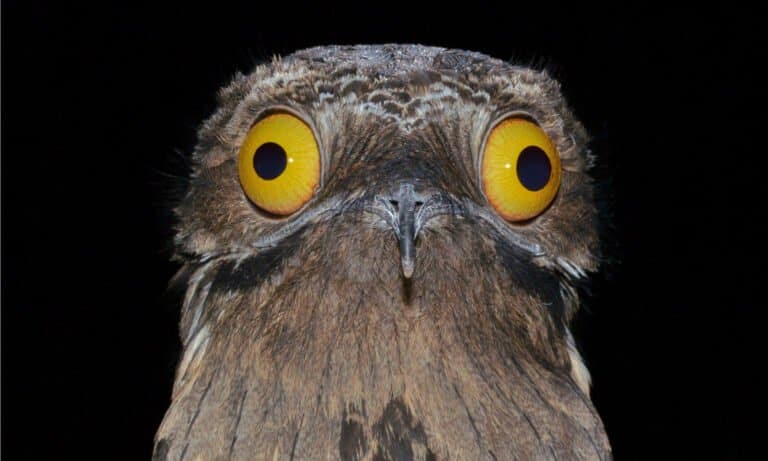
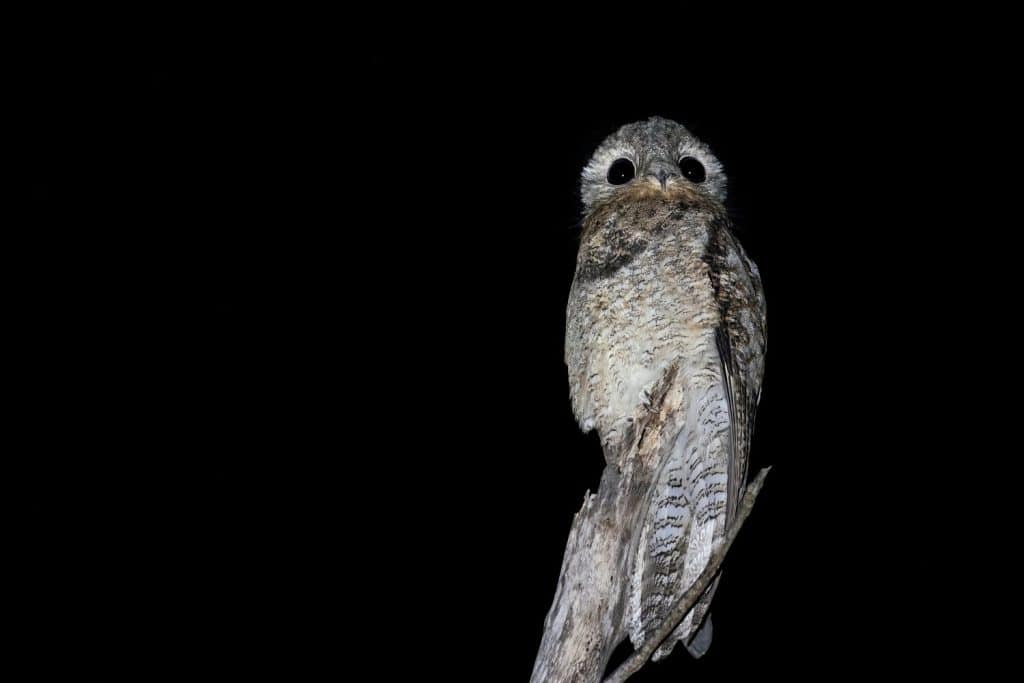
Although they rest during the day, these birds are nocturnal and extremely active at night. At night, they hunt for their prey. Their main diet consists of larger insects such as beetles, grasshoppers, cicadas, and more. Using their large, wide beak, they can easily consume the large insects they encounter. While insects make up their primary diet, they may also hunt bats or small birds in mid-flight. They hunt using a method called “sallying.” This hunting style requires the hunter to sit perched at a high location and wait for prey to pass by. When prey eventually passes by, the great potoo quickly launches to catch it with its large beak, then returns to the same perch to repeat the process. Because they hunt at night, these birds have extremely large, dark eyes, which are perfect for seeing in the dark and also contribute to their uncanny appearance.
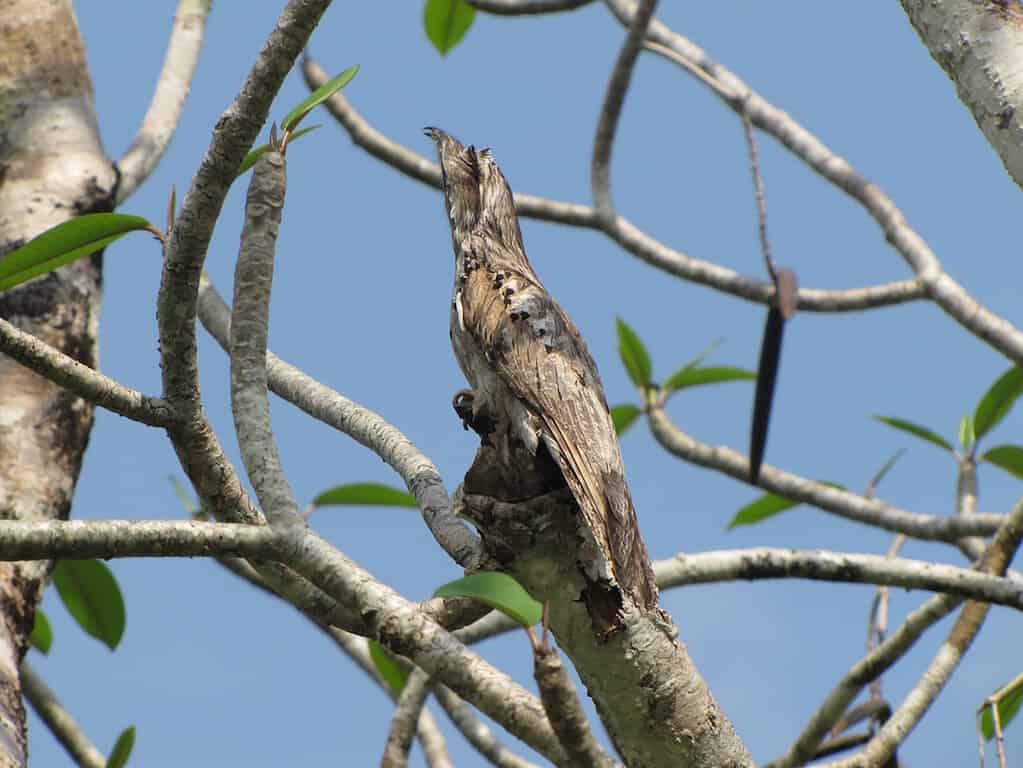
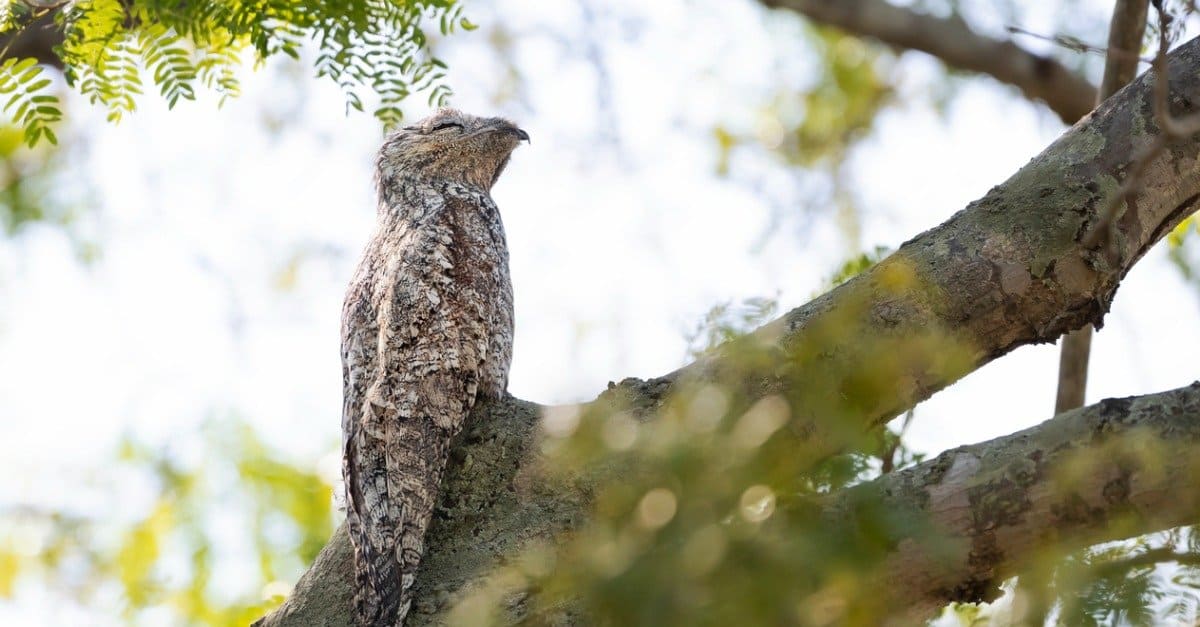
The potoo is a solitary, nocturnal bird with complex plumage of grey, black, and brown that resembles tree bark so that they blend in.
©iStock.com/Natalie Rabinowitz
Masters of Camouflage
The great potoo is a master of camouflage, using its feather patterns and arrangements to blend extremely well with its surroundings. Their feathers contain a mix of brown, gray, and black, with streaks and spots scattered across them. This pattern resembles the bark of the trees on which they perch to hunt. As they are nocturnal, during the day, they are practically immobile. They stay frozen in place, pointing their head and beak straight up to resemble a broken tree branch. Their camouflage is so effective that even their eyelids are adapted for this immobile lifestyle. Their eyelids have small, slit-like openings, allowing the bird to see even while blending into the background.
The Great Potoo’s Creepy Song
While their appearance alone is creepy enough, the great potoo is also known for its eerie song. After hearing it, the sound lingers in your mind in an unsettling way. Their calls are long and drawn out, consisting of eight creepy descending pitches. The calls are often described as mournful and creepy, and are the source of Latin American folklore. Because of its supernatural sound, some folklore claims that the call is the cry of wandering spirits. These calls have important meanings for the birds. Each bird has a similar yet unique call that is used to identify mates. The calls attract mates and declare territory, making them an essential form of communication for the species’ survival.