
Quick Take
- The elusive Asian golden cat was recently spotted in a national park in Thailand.
- There are an estimated 7,000 Asian golden cats left, sparking a need for conservation.
- Catching Asian golden cats on camera traps helps to better understand the shy, solitary wild cats.
- Asian golden cats face threats from habitat loss, poaching, and poisoning, leading to population declines.
With news of animal populations threatened with extinction, becoming regionally extinct, or being eradicated from the planet entirely, those working in conservation may begin to wonder if their hard work is all for naught. Then, stories of species thought lost emerge, leaving a glimmer of hope that not all is lost.
Such is the case of a recent discovery that left experts speechless after a camera captured the ultra-rare ‘fire tiger’ in the wild. The fire tiger, or Asian golden cat, is so elusive that its population is hard to estimate. But as more are captured on camera traps, a better understanding of Asian golden cats can be gained, and conservation efforts can be tailored to suit their survival needs.
Where Experts Found the ‘Fire Tiger’
The Asian golden cat is one of the least understood wild cats. They are solitary, nocturnal, and quite shy. This combination makes the Asian golden cat difficult to spot. But thanks to non-invasive technology, one was captured on film, and wildlife experts could not be more thrilled.
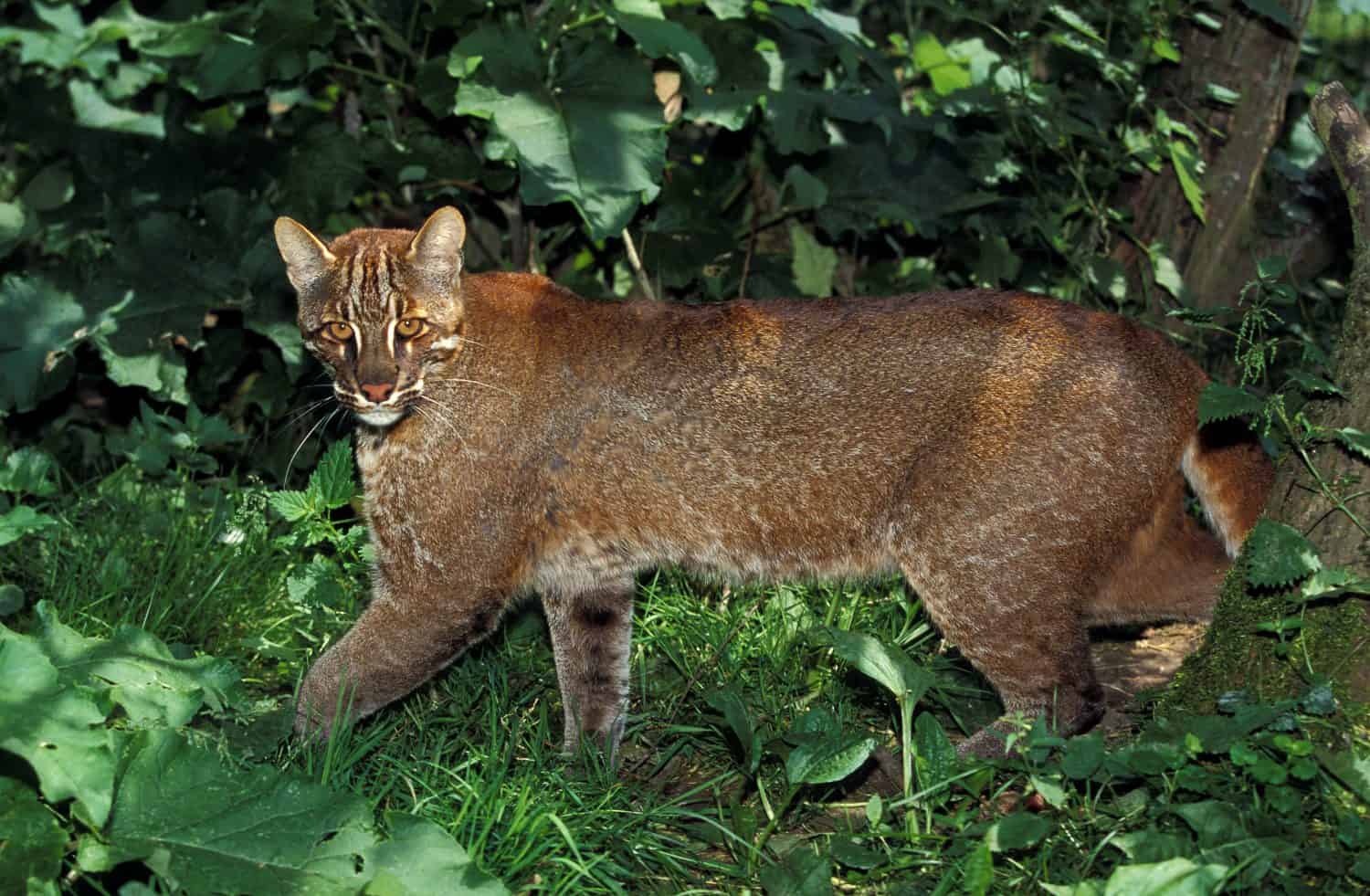
Known as the “fire tiger” in Thailand, the Asian golden cat is notoriously elusive. However, in January 2026, a camera trap placed in Khao Yai National Park captured a video of one. The small wild cat, with red to rust-colored fur, black stripes on its face, long legs, and a slim build, was seen walking through the lush forest.

An Asian golden cat was recently caught on a camera trap in Khao Yai National Park in Thailand.
©Signature Message/Shutterstock.com
The fact that the Asian golden cat chose Khao Yai National Park as a potential home reflects the hard work and conservation efforts officials have made to make the park a safe place not only for wild cats but also for other threatened and endangered species. It also highlights the health and biodiversity of Khao Yai, allowing multiple species to thrive.
While it is good news that the Asian golden cat was spotted on a camera trap, it does not indicate that the population is increasing. In fact, according to estimates, the exact opposite is true.
Why Asian Golden Cat Populations Are in Decline
Asian golden cats have been facing a population decline throughout Asia for decades. As a result, only an estimated 7,000 Asian golden cats remain in the wild. According to experts, however, there is no way of knowing just how many of these wild cats are truly left because they are so rarely seen. Therefore, numbers could be significantly lower than what estimates state.
The Asian golden cat population is facing a rapid decline for several reasons. Some of the most common reasons for population decline include:
- Habitat loss
- Poaching
- Poisoning
- Snare capture
- Lack of prey
As a result of these stressors, the Asian golden cat populations have dramatically decreased. In some parts of Asia, it is believed that the Asian golden cat is regionally extinct.
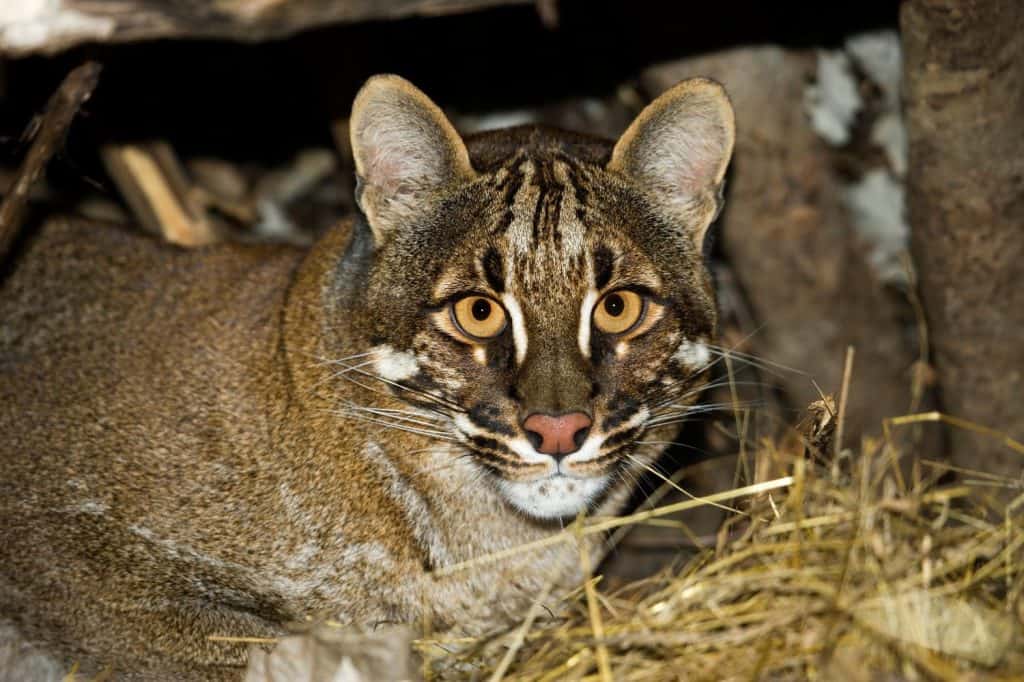
Asian golden cat populations are declining due to habitat loss, poaching, and the like.
©slowmotiongli/Shutterstock.com
According to the IUCN, the Asian golden cat is considered “near-threatened.” This categorization dates to 2014, and the organization states that it requires updating. The IUCN also notes that the population is declining.
Despite the Asian golden cat being protected under Appendix I of CITES and the Indian Wildlife Protection Act, 1972, it continues to struggle to survive, underscoring the importance of conservation efforts.
Where Are Asian Golden Cats Typically Found?
Asian golden cats were once found across Asia in large numbers. Historically, they were once most abundant from India to China. But as their habitat was lost, these shy cats found they had far fewer places to roam and call home. Consequently, the regions where Asian golden cats are found today are significantly smaller.
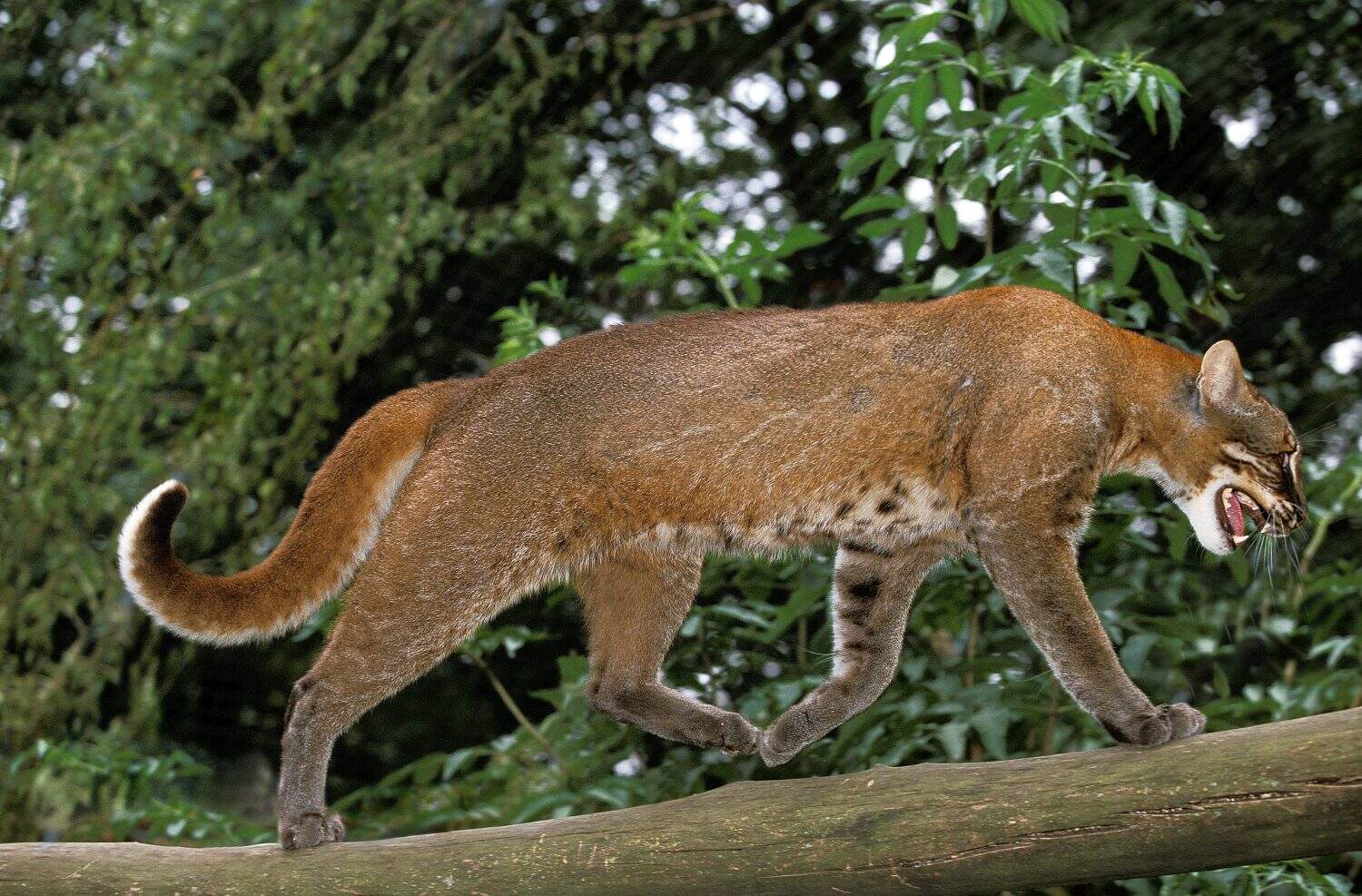
Asian golden cats live in a forest habitat in Southeast Asia, Northeastern India, Bhutan, and Eastern Nepal.
©slowmotiongli/Shutterstock.com
Asian golden cats prefer a forest habitat with rocky outcroppings to survey the area below them. Some of the habitats include:
- Rainforests
- Tropical forests
- Subtropical evergreen forests
These habitats were once widespread, but have disappeared over the last several decades due to deforestation, climate change, and agricultural expansion. As a result, Asian golden cats are now found only in fragmented regions of Southeast Asia, Northeastern India, Bhutan, and Eastern Nepal.
Why the Discovery of the Asian Golden Cat Is Important
This discovery of the Asian golden cat in Thailand is especially important because it was believed these wild cats were extinct in the region. If the Asian golden cat has indeed found a long-term home in Khao Yai National Park, a UNESCO World Heritage Site and a highly biodiverse region in the country, there may be hope for the species’ survival.
In terms of safety from poachers and habitat loss, Khao Yai National Park is one of the best places the Asian golden cat could choose to call home. However, what makes the discovery of the wild cat on the camera trap so important is that it gives scientists an opportunity to learn more about the elusive creature.

The discovery of the Asian golden cat on video can lead to a better understanding of populations, habits, and how to better save the wild cats from extinction.
©slowmotiongli/Shutterstock.com
Given how little is known about the Asian golden cat due to its solitary and nocturnal nature, glimpses into its habits and range can be very helpful for understanding how to save the species from extinction. The exact population number in Thailand is unknown. However, by tracking Asian golden cats with camera traps without disturbing them, populations can be estimated, the cats’ health can be observed, and a rigorous assessment of whether conservation efforts are successful can be conducted.
There may never be an exact population count of the Asian golden cat, but the more that is learned about these incredible creatures, the more conservation efforts can be tailored to prevent their regional and complete eradication.
What Is Being Done to Save the Asian Golden Cat From Extinction?
Until December 2025, it was believed that the Asian golden cat was completely extinct in Vietnam. Thanks to the camera trap footage, one was observed within the boundaries of Pu Hoat Nature Reserve, to the surprise and delight of biologists. While this indicates that the wild cat’s territory is expanding, it does not necessarily imply that Asian golden cat populations are increasing. Therefore, conservation efforts are still necessary if the Asian golden cat population is to remain stable or even grow in the future.
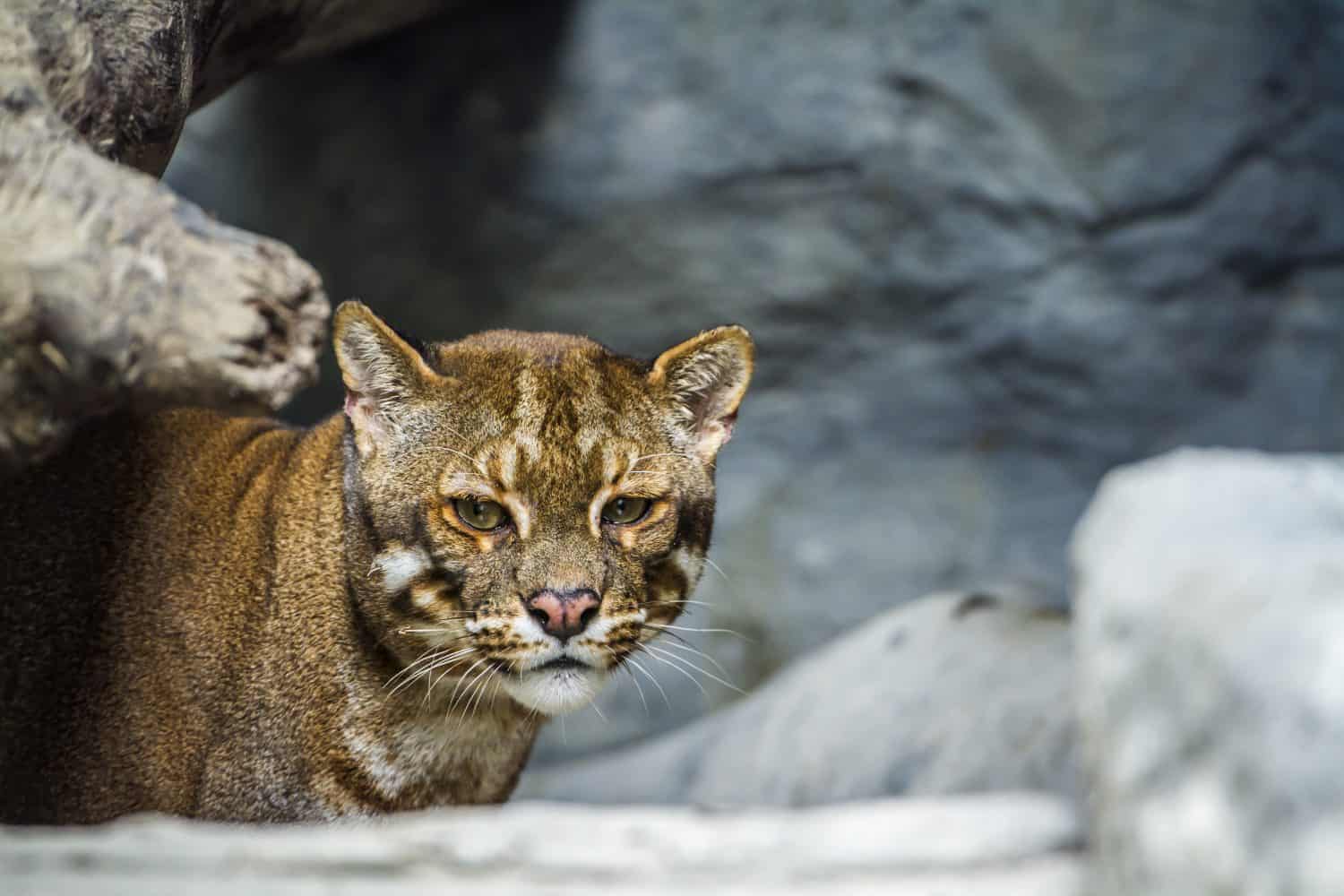
Conservation efforts, such as removing snares, stopping habitat loss, patrolling for poachers, and more, have been implemented to protect wild cats.
©PACO COMO/Shutterstock.com
A variety of tools have been implemented to prevent the Asian golden cat from going extinct. Some of the most common conservation efforts include:
- Removing snares from protected areas
- Educating local populations about how to live peacefully with the Asian golden cat, rather than seeing them as a threat, and discouraging the poisoning of animal carcass bait
- Stopping forest degradation
- Preserving more habitats to stop habitat loss
- Patrolling for poachers
The hope, with Asian golden cats returning to regions where they were once abundant, is that more will follow. But as a 2021 study notes, nearly 80% of the population is “seriously threatened by forest loss and hunting.” Consequently, a majority of the population is at risk.
If the Asian golden cats are not better protected, with support from local populations, there is no telling if the wild cats will survive. But with camera traps capturing glimpses of Asian golden cats in numbers not seen before, all is not lost. Instead, it is an opportunity to help a predator that is often overlooked because of its shy, solitary nature and small stature, rather than watch yet another apex predator be lost through no fault of its own.