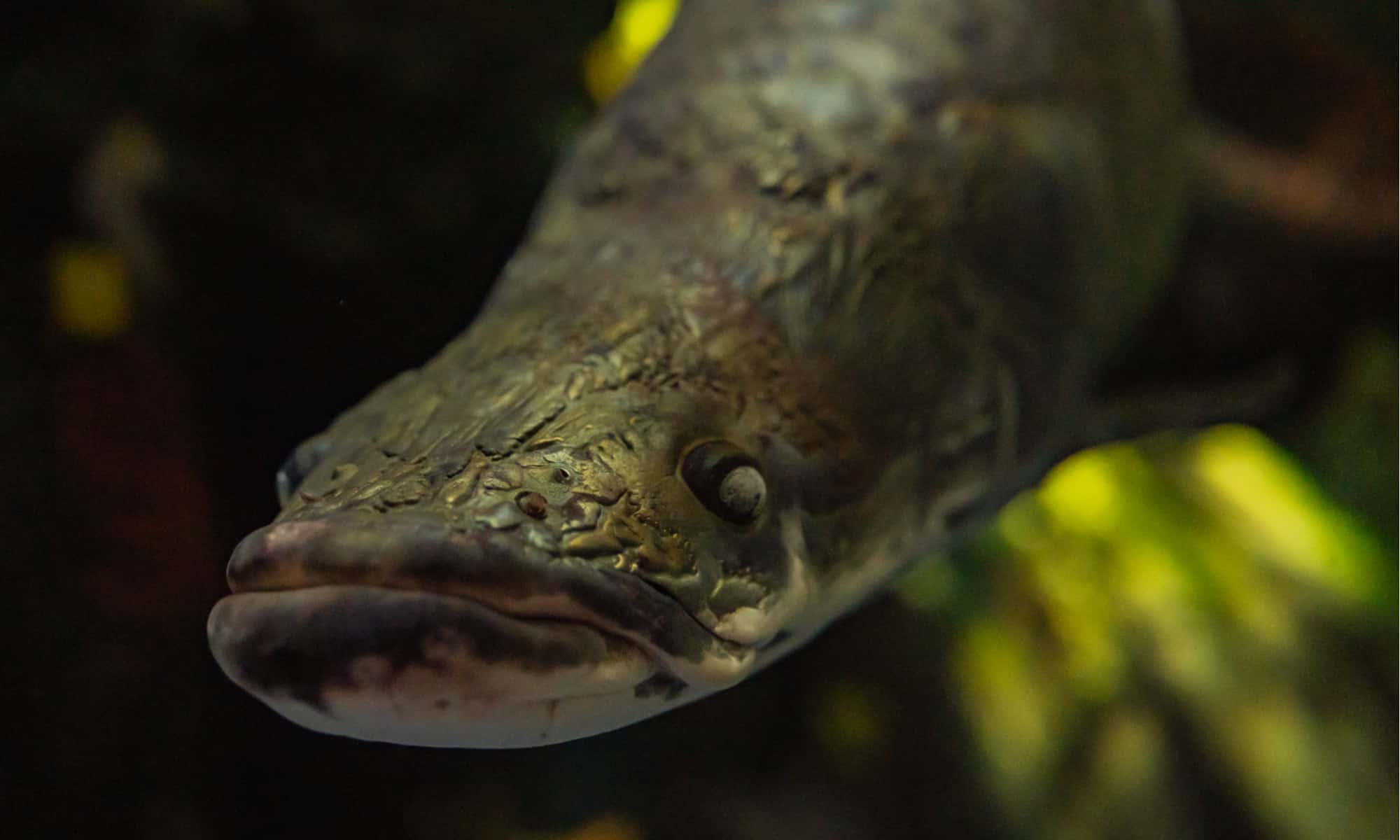

South America’s Amazon River is the second-longest river system in the world at 3,976 miles long. It flows east from its three headstreams—the Marañón, the Apurímac, and the Mantaro rivers—high in the Peruvian Andes to its mouth in Northern Brazil. While the Nile is the longest river in the world at 4,130 miles, the Amazon River has the largest drainage basin in the world, covering 2,702,715.11 square miles. Additionally, the Amazon is the largest river in the world by water discharge volume, depositing 7,910,485.35 cubic feet of water per second into the Atlantic Ocean.
The Amazon River is home to a diverse array of plant and animal species, including more than 3,000 known species of freshwater fish. Because much of the Amazon remains unexplored, it is estimated that there are millions of undiscovered species living there. Therefore, many of the largest fish species in the region likely remain undiscovered. Continue reading to learn about the three biggest fish species in the Amazon that scientists have discovered and classified.
3. Tambaqui
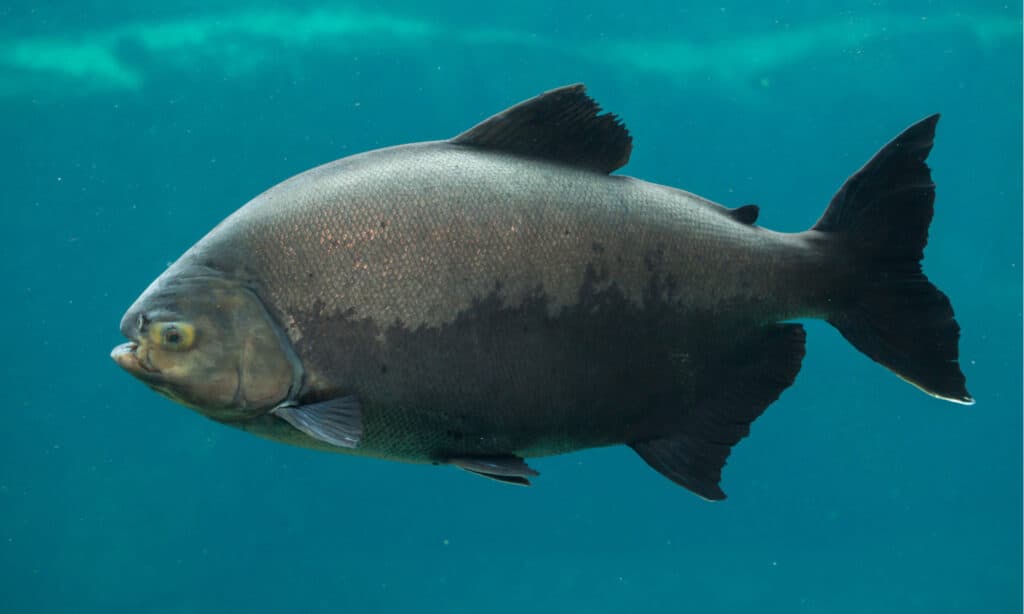
Tambaquis are native to the Amazon but have been introduced in Thailand, Hong Kong, Singapore, and Puerto Rico.
©Vladimir Wrangel/Shutterstock.com
The tambaqui (Colossoma macropomum) is a large fish native to the Amazon River. They measure up to 3.6 feet long and weigh up to 97 pounds. Tambaquis resemble piranhas in shape, with juveniles often being mistaken for such. They are omnivores whose diet primarily consists of fruits, nuts, and seeds that fall into the water, in particular those of both woody angiosperms and herbaceous plants. Tambaquis also eat wild rice, zooplankton, and will sometimes prey on shrimp, insects, small fish, and snails. They have evolved strong molar-like teeth to properly chew and crush their food.
Similar to birds, tambaqui play a vital role in seed dispersal, as seeds can remain in their digestive tracts for a week or more. Adult tambaqui migrate to flooded forests during their non-breeding season, which overlaps with the Amazon’s flood season. The seeds they transport when migrating to flooded forests from main river channels and their whitewater spawning grounds are integral to the renewal of the Amazon Rainforest. Tambaquis typically disperse seeds across distances of 328 to 546 yards, with a maximum recorded dispersal distance of 3.41 miles.
Tambaquis are a popular food fish, and despite now being kept in aquaculture, wild populations are still overfished. Additionally, many wild tambaquis that are caught are juveniles. Habitat loss and disruption caused by the ongoing deforestation of the Amazon also threaten the species, which in turn threatens the renewal of the Amazon. The IUCN currently lists the tambaqui as Near Threatened.
2. Piraíba
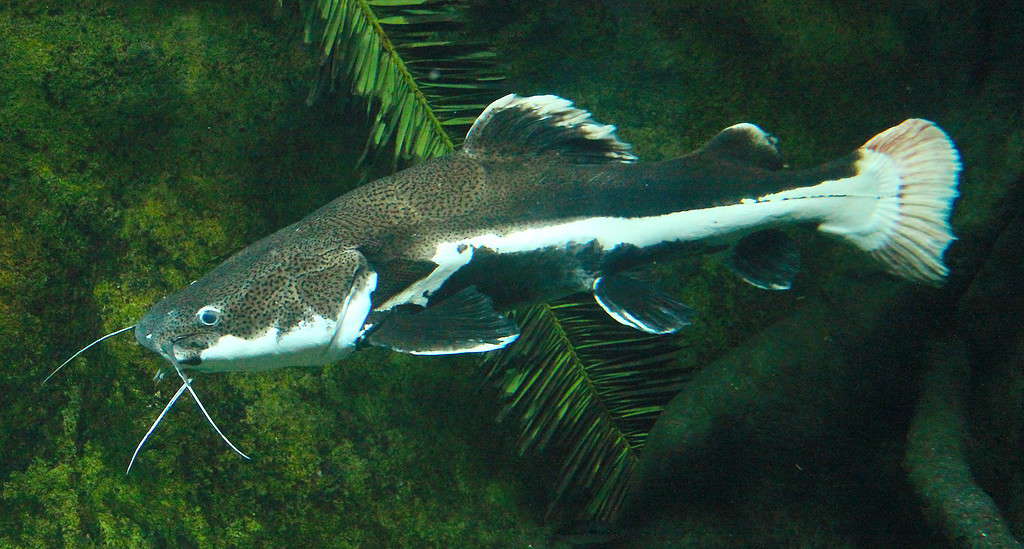
Other common names for the piraíba include kumakuma, valentón, lau lau, and goliath catfish.
©Usien / CC0 – Original
The piraíba (Brachyplatystoma filamentosum) is native to the basins of the Amazon and Orinoco Rivers in Northern Brazil and the Guianas. It is the largest catfish species in South America, measuring up to 10 feet long and often weighing around 330 pounds. The name piraíba is reserved for individuals weighing 110 pounds or more, while specimens weighing less are called filhote.
Piraíbas are apex predators that prey on a wide variety of other fish species. Similar to other catfish species, they are covered in external taste buds. Piraíbas use these taste buds to locate and track their prey. They are noted for successfully preying on difficult species, including toxic Colomesus pufferfish, river stingrays (Potamotrygonidae), and armored catfish (Doras and Oxydoras). The only known natural predator of piraíbas is the river dolphin (Inia). However, river dolphins often fail to kill and fully consume piraíbas, leaving the maimed or crippled piraíba to escape but remain vulnerable to scavengers like the vulture catfish (Calophysus macropterus).
While the piraíba is a popular game fish, it has more value as a food fish. In addition to their meat, the residue from their skin is rich in proteins and fatty acids and is often used as an alternative to gelatin. Like the tambaqui, piraíbas have been overfished, and local fisheries have reported decreasing catches. Piraíbas are also a highly migratory species known to travel distances of over 1,240 miles within the Amazon River basin. Because of this, the construction of dams and habitat destruction pose threats to the species. Despite these factors, piraíbas are considered Least Concern by the IUCN.
1. Arapaima
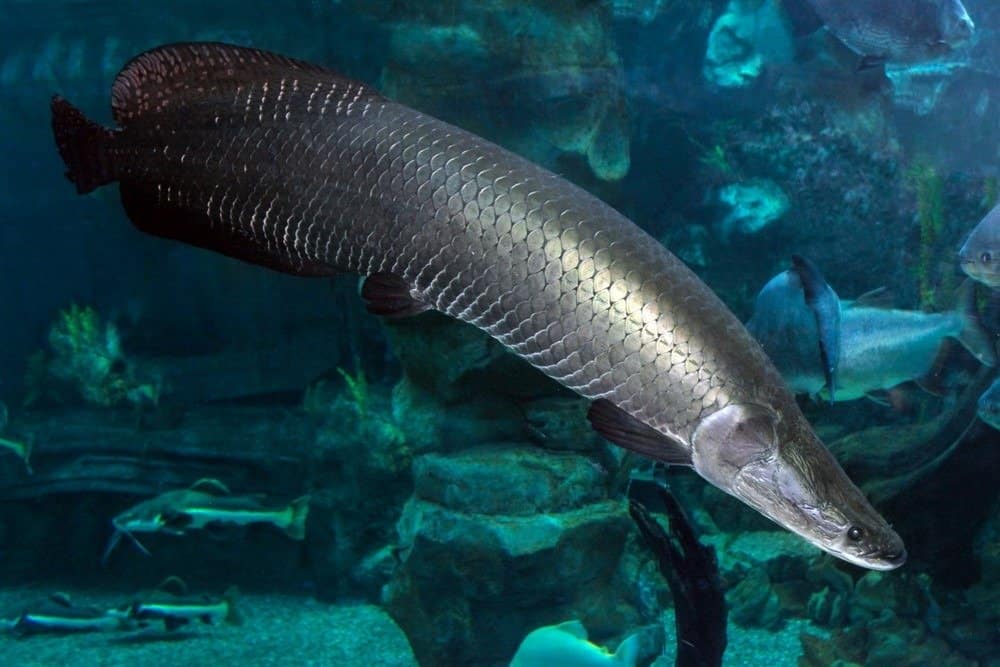
Arapaimas are native to the Amazon and Essequibo basins.
©Tatiana Belova/Shutterstock.com
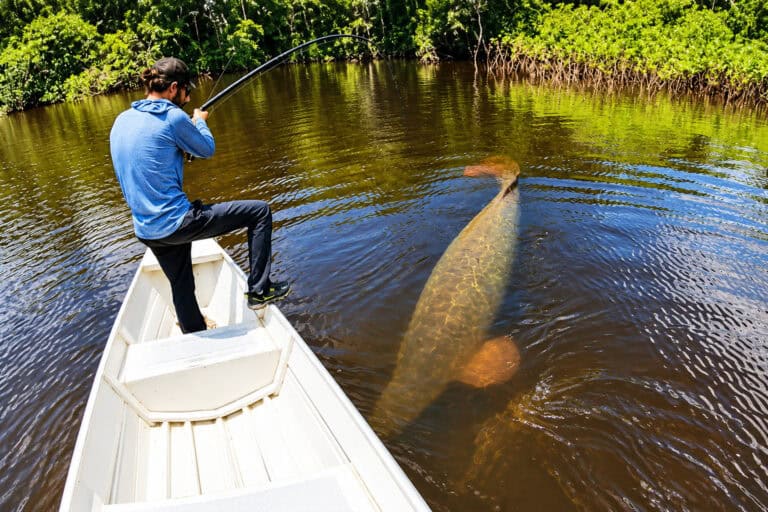
The arapaima (Arapaima gigas), also known as the pirarucu, is the largest fish species to have been discovered in the Amazon River. These fish measure 7 to 10 feet long and can weigh up to 440 pounds, making them one of the world’s largest freshwater fish. Arapaimas are covered in flexible gray armored scales; in adult males, up to 70 percent of these scales take on a red coloration. These scales are an evolutionary adaptation that safeguard the arapaima from its natural predators. A study by Advanced Engineering Materials confirmed that the bite force and puncturing ability of piranhas are not strong enough to penetrate the arapaima’s scales.
Adult arapaima primarily prey on other fish and invertebrates, while juveniles primarily prey on insects and fish larvae. Similar to dolphins (Odontoceti), arapaimas are obligate air breathers that surface every 5 to 15 minutes because their gills do not extract enough oxygen from the water. Because of how often they come to the surface, arapaimas will sometimes prey on birds and mammals or eat fruits and seeds floating on the water.
Unfortunately for arapaimas, their frequent surfacing has made them a target for anglers and commercial fishing. Arapaimas are an important food fish, and arapaima filets are considered a delicacy. Similar to the other fish on this list, this has led to significant overfishing in their native habitat. Despite this, and despite habitat loss having led to a documented decline in arapaima populations, the IUCN lists them as Data Deficient because the vastness of the Amazon has made it impossible to gather precise information. However, the IUCN has not assessed the species since 1996.