
Quick Take
- Cloned fish share identical DNA, yet they behave like completely different individuals. See individual behavior →
- Amazon mollies have survived without males for 100,000 years, but their real mystery is not how they reproduce. It is what happens after. Explore their reproduction →
- Group behavior in these fish isn't fixed. It shifts week to week in a way that challenges how scientists define animal collectives. Discover shifting group dynamics →
Nature often has a way of finding balance. Our oceans are teeming with life, and each species plays a role in its environment. One of the clearest examples of this is found in fish shoals, where patterns–and balance–often mean life or death.
One study observed this behavior among Amazon mollies. These clonal fish use gynogenesis to create offspring, resulting in thousands of genetically identical copies of themselves. But despite their similarities, scientists found something unusual. Though their shoal formations were flawlessly coordinated, the fish making them were entirely different.
Amazon Mollies Have a 100,000-Year-Old Survival Adaptation
For human reproduction, cloning feels like a Sci-Fi concept, but the Amazon molly has perfected it. This asexual species reproduces through all-female gynogenesis, which uses sperm to start the process without any of a male’s DNA. The fish then give live birth to females that are genetically identical to themselves, ensuring the species’ survival for generations.
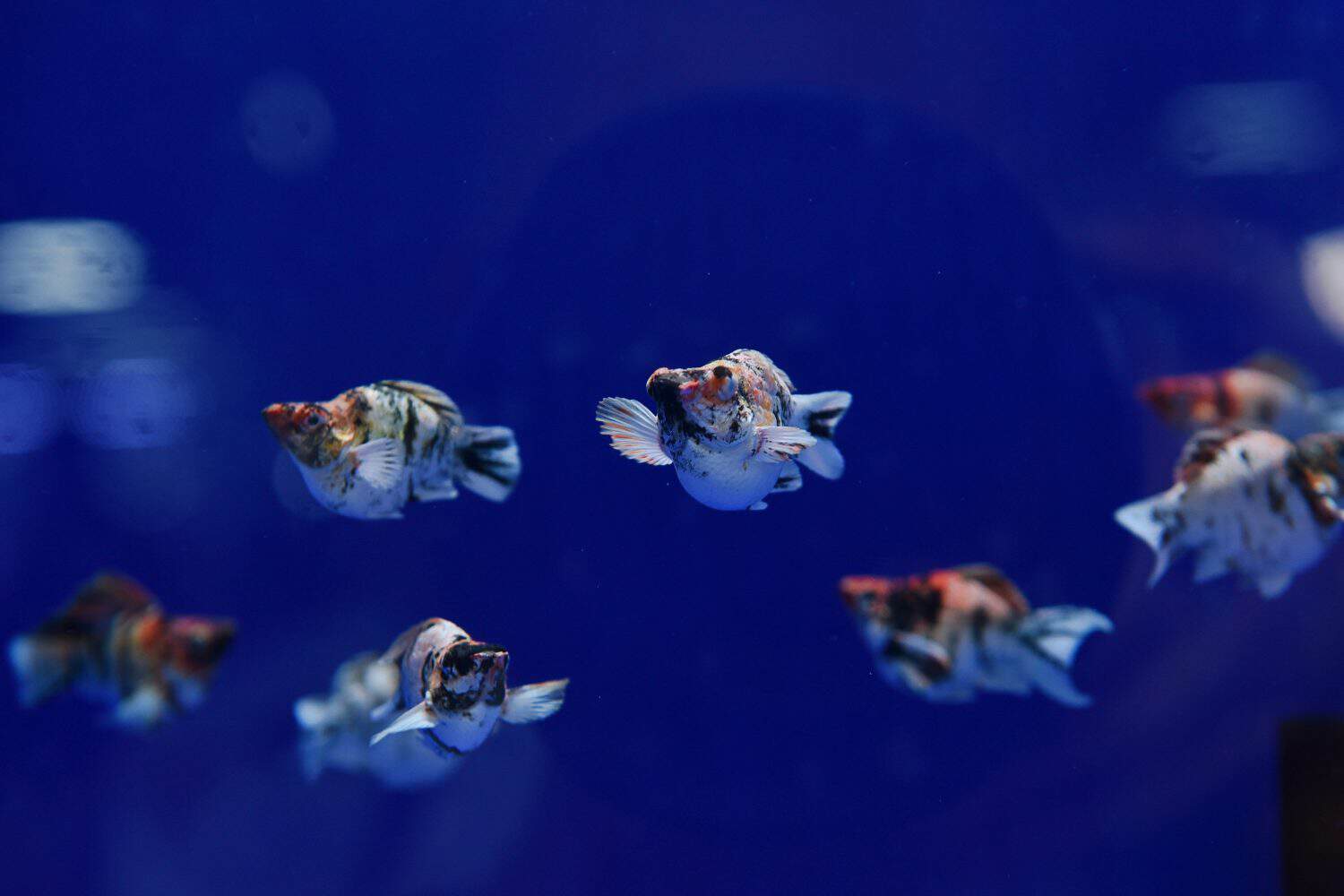
Cloned fish share a genetic makeup, but could be more individualistic than scientists previously thought.
©Keung/Shutterstock.com
Scientists estimate this process began roughly 100,000 years ago, when a hybrid mating gave rise to the Amazon molly we observe today. And now, that same fish is being studied once again, but not for its genetic similarities. Instead, a joint study by the Cluster of Excellence ‘Science of Intelligence (SCIoI)’, the Leibniz Institute of Freshwater Ecology and Inland Fisheries (IGB), Humboldt-Universität zu Berlin, and UC Davis focuses on their differences.
In the study, published in Current Biology, the research team observed ten groups of Amazon molly over a 55-day period. They followed the fish from birth to adulthood, tracking their movements and habits individually and as a coordinated unit.
Do Cloned Fish Retain Their Individuality?
One thing the research team sought to discover was whether cloned fish operate as one mind. Because their DNA is identical, this should, in theory, ring true. However, researchers were surprised to learn that in the case of the Amazon molly, this is far from accurate.
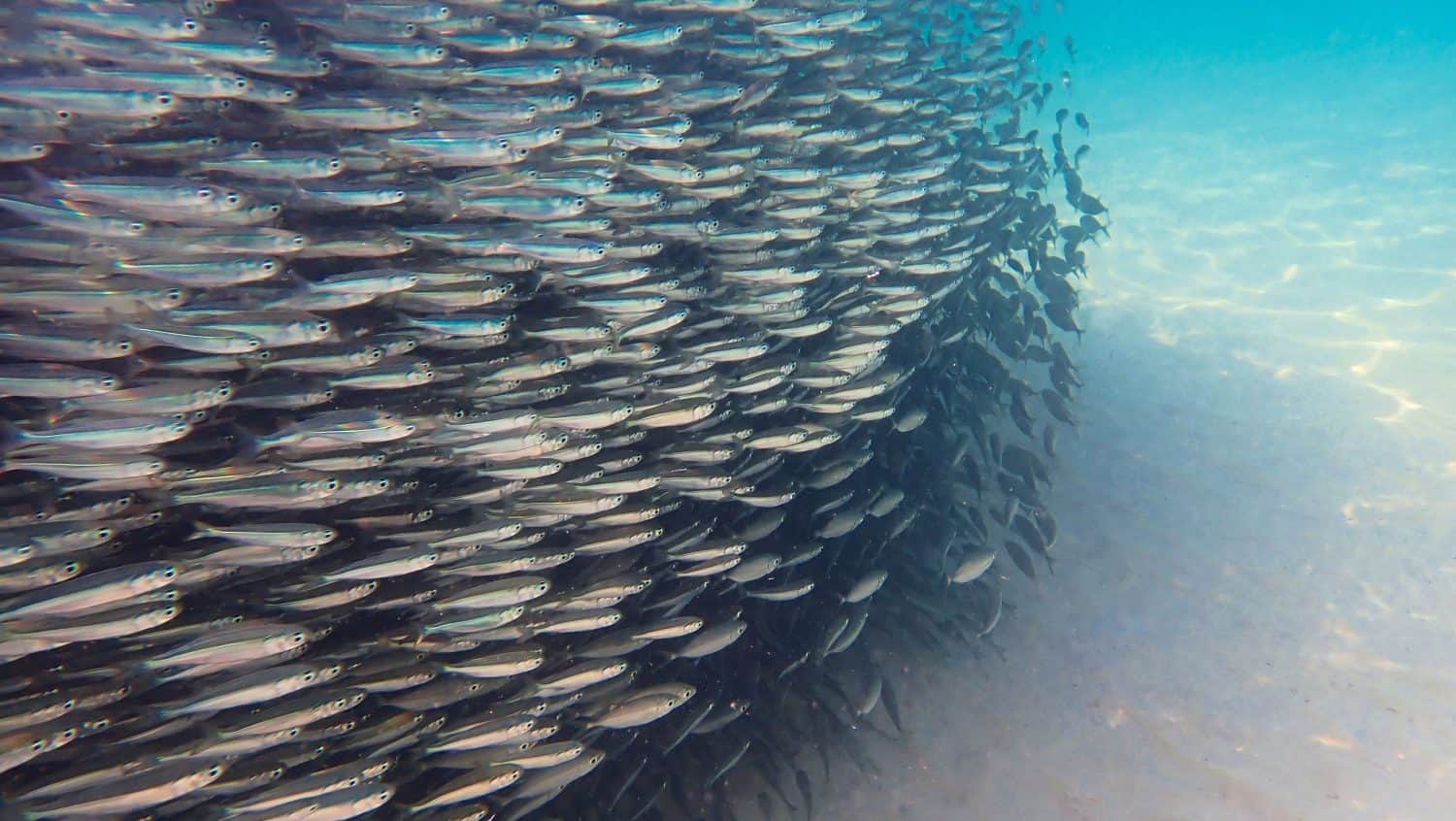
The first two weeks of each Amazon molly’s life differed from those of fully mature individuals. This species typically forms shoals, which differ from schools. While shoals are more loosely organized, schools are characterized by coordinated, synchronized swimming. However, in the early days of an Amazon molly’s life, it does not immediately join a shoal. Until roughly three weeks of age, the fish operate independently from their group.
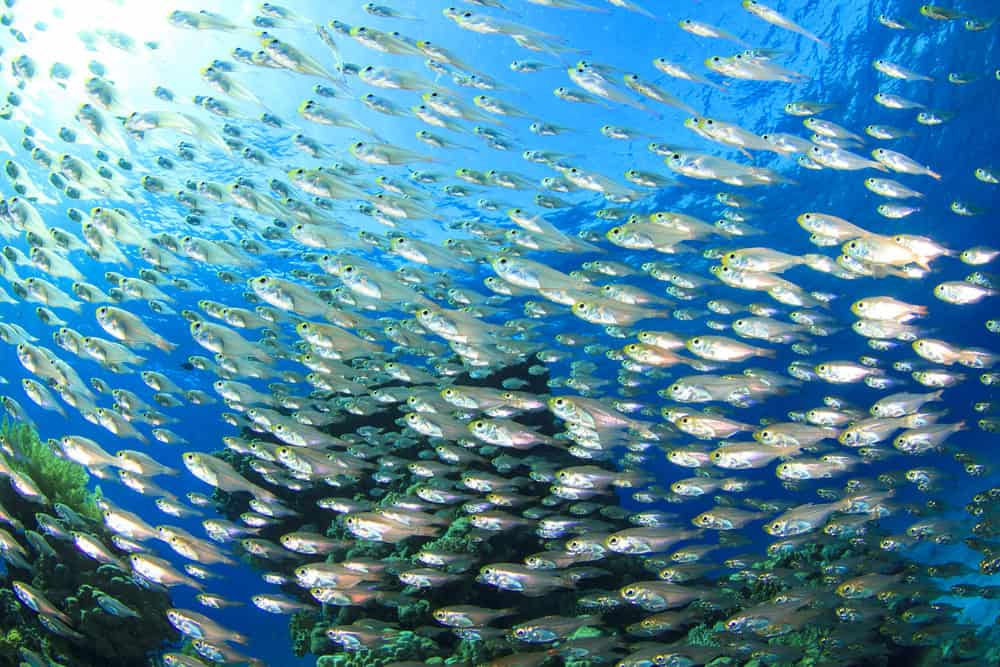
Shoal behavior may hinge on the behavior of a single fish.
©Rich Carey/Shutterstock.com
Dr. David Bierbach, author of the study from the Cluster of Excellence “Science of Intelligence,” was quoted as saying, “A swarm is more than the sum of its parts. This study of clonal fish shows that social experiences during development play a key role in the emergence of group behavior.”
Researchers also noted differences in the behavior of some Amazon mollies. They determined that at the start of an Amazon molly’s life, they retain individual needs that differ from those formed as a group, or shoal. As time went on, these needs eventually coordinated with their group’s needs.
A Single Fish May Influence the Group’s Decisions
A shoal of Amazon molly may operate more independently than scientists previously thought. During their observations, the team noticed that individual fish’s behavior was influenced by the group. Whereas a school of tightly knit fish operates uniformly over time, the Amazon molly shoals observed changed their behavior over time.
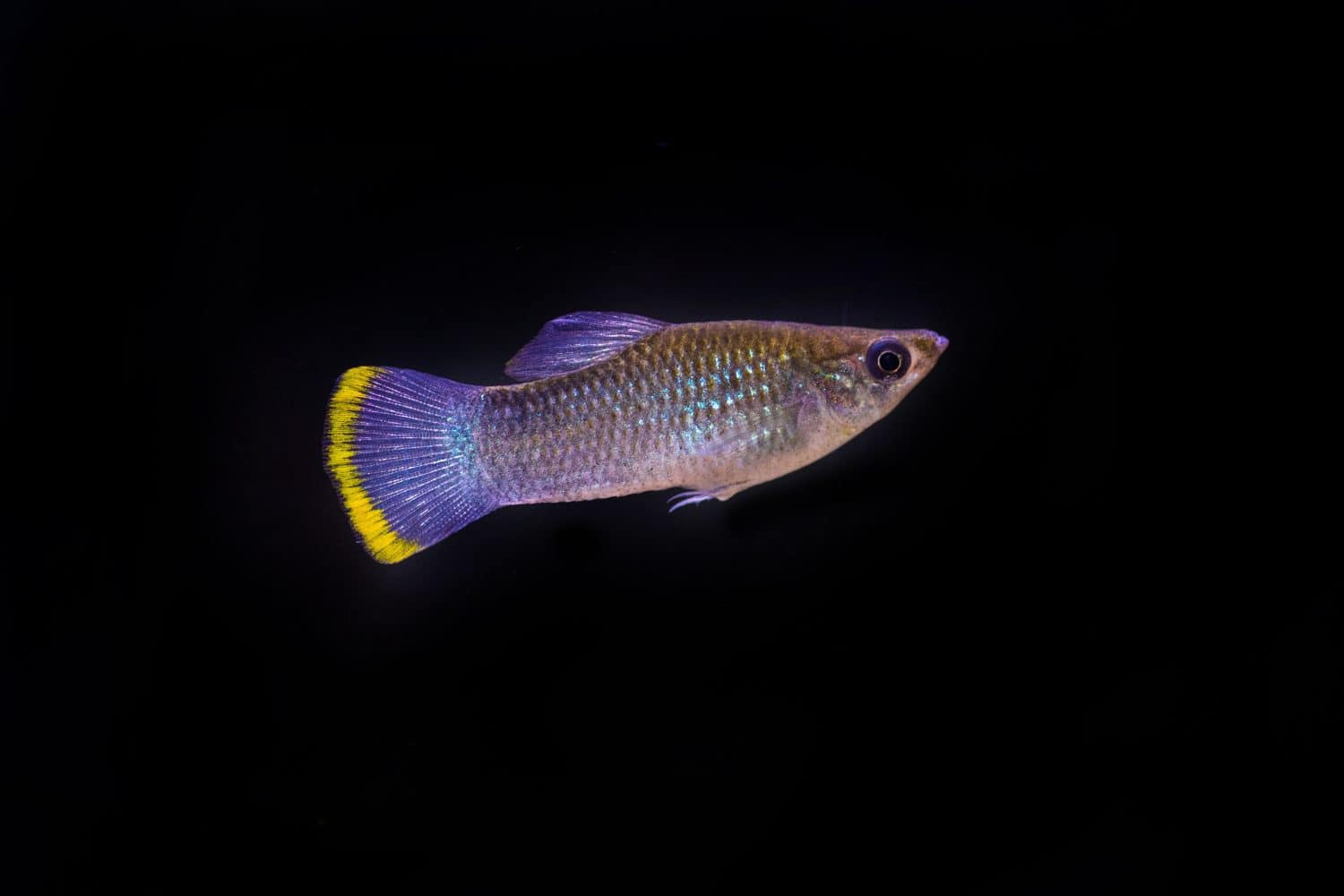
Mollies act independently during the early stages of their lives, later joining a shoal.
©dnbiotopes/Shutterstock.com
Their habits varied from one week to the next, suggesting that the fish were somehow communicating their needs. Researchers observed consistent changes as the shoal moved and evolved, highlighting the importance of social cues, even among cloned individuals. While contradictory, the team watched ten Amazon molly groups adapt as if they were working together, rather than functioning mindlessly on instinct alone.
Group Mindset May Not Apply
Researchers did not study which individual behaviors contributed to these changes in shoal activity. However, they confirm that decisions may stem from the group’s response to a single fish’s behavior. If one Amazon molly moves differently, another may catch on, triggering a domino effect down the shoal. This insight proves not only that cloned fish possess high intelligence but also that they can adapt to sudden environmental or social changes.
For scientists, this evidence shifts the focus from viewing species like the Amazon molly as a group to seeing them individually. “Animal groups are often treated as relatively stable entities, with characteristic patterns of movement or social organization. But the results from the Amazon molly suggest that these group-level characteristics can change substantially during development,” said Bierbach.