
Quick Take
- Reaching 15 million years further into the past, this specimen achieves the earliest record of dome-headed evolution.
- A 1-meter length constraint exposes the inaccuracy of historical size depictions for Zavacephale rinpoche.
- High vascularity within the skull domes suggests these structures were designed for active, physical combat.
- Scouting the Khurken Dukh Formation was vital to finally resolve the contentious lineage of bird-hipped dinosaurs.
The dome-headed dinosaur is easily one of the most standout-looking creatures of the Cretaceous period. The image of their hardy dome-heads has slowly seeped into the public imagination via movies like “Jurassic Park.” Those dome-heads were basically all that was known about these dinosaurs until now. A newly discovered skeleton of one of these creatures is revealing new details about one of history’s most extraordinary-looking creatures.
Children across the globe have come to love pachycephalosaurs for their unique features, thanks to mass media and pop culture. However, they long remained a frustration for paleontologists. Most people’s conception of this creature was based on incomplete skeletons. Their thick, bony skulls survived the fossilization process easily, while time pulverized the less sturdy skeletons into dust millions of years ago. Now, a discovery deep in the Gobi Desert of Mongolia has finally given scientists the complete skeleton they were looking for: a newly described species. Let’s learn more about Zavacephale rinpoche and what this discovery tells us about this enigmatic herbivore that lived over 100 million years ago.
Meet the Pachycephalosaurs
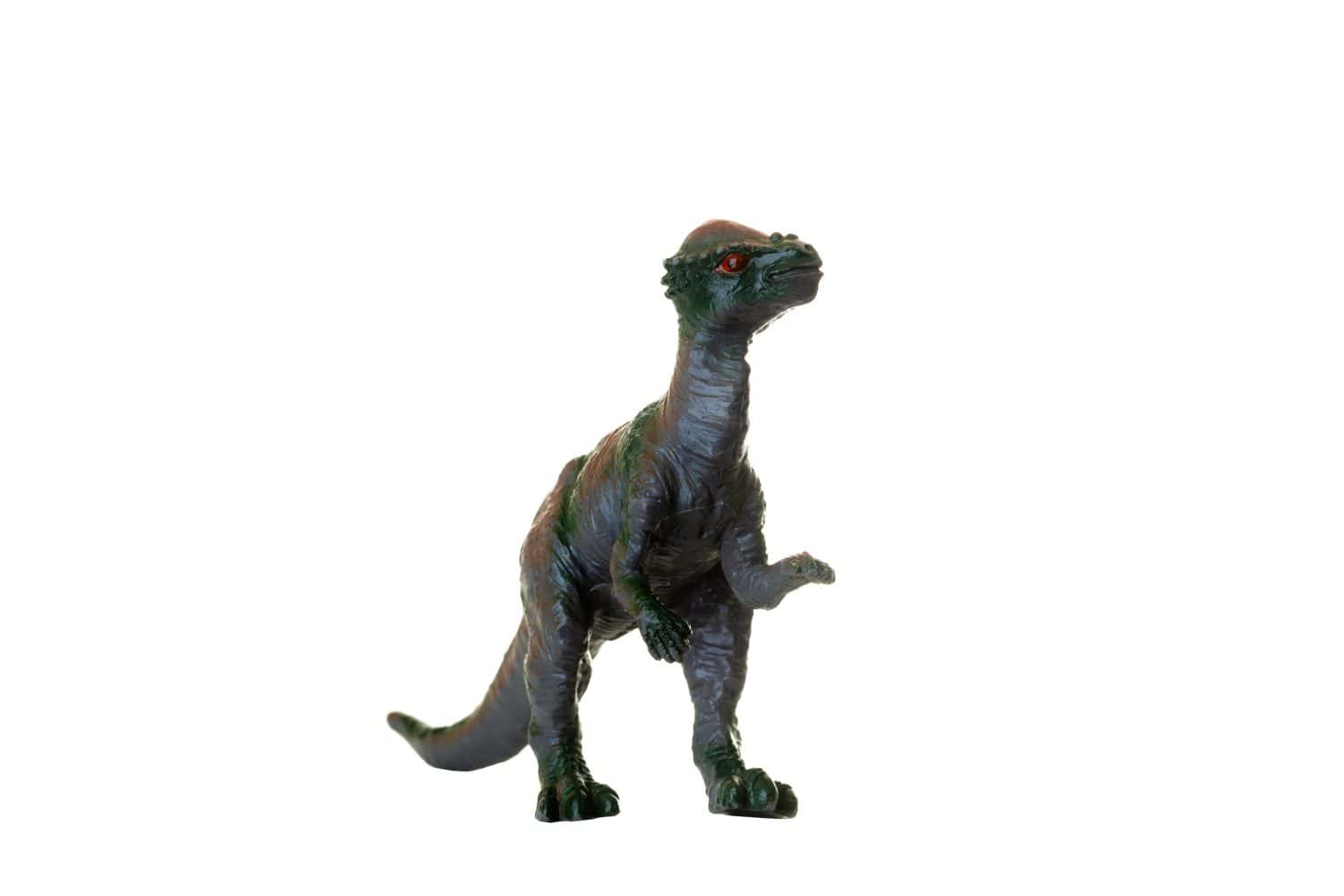
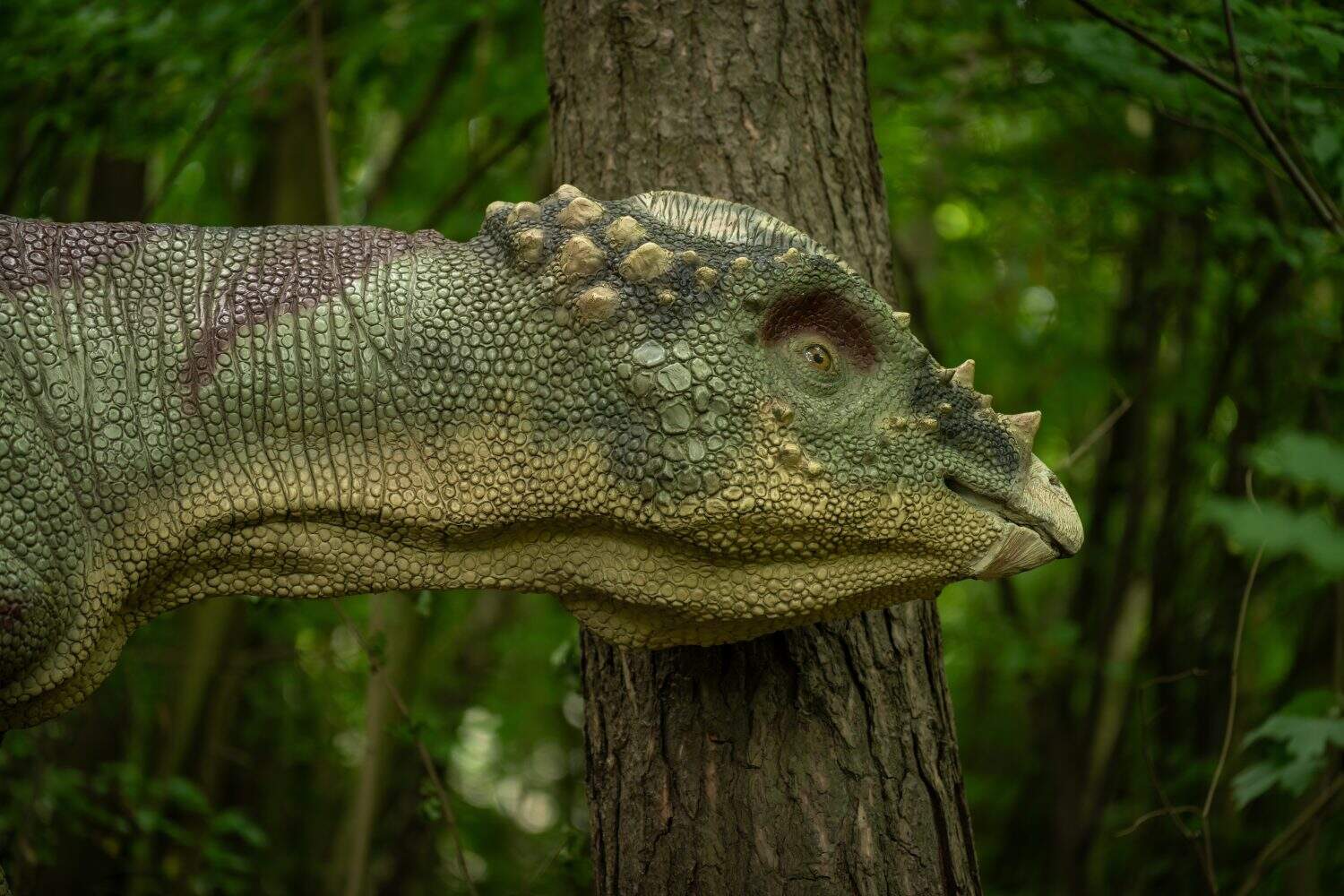
Many people know these dinosaurs due to their depiction in popular media like the “Jurassic Park” movie series.
©Antonio Gravante/Shutterstock.com
Pachycephalosaurs, known as bone-headed dinosaurs, were a group of bipedal herbivores that lived mostly during the Late Cretaceous period. These creatures had short forelimbs and stiff tails for balancing. They also had leaf-shaped teeth to help them chew up fruits, seeds, and soft vegetation. However, people best know these dinosaurs for their massive, thick skull domes. In some species, like Pachycephalosaurus wyomingensis, these skull domes could reach up to 10 inches in thickness.
For a long time, only the fossils of these sturdy skull domes remained from a once-thriving lineage. In recent years, scientists have slowly added to the knowledge base surrounding pachycephalosaurs. For one, scientists discovered stomach stones in newer specimens. This suggests that these creatures had internal gut grinders to break down tough vegetation. As for the skull domes themselves, scientists debate their exact purpose. Some say males used their sturdy skulls in dominance competitions. Others say they used them primarily for species recognition or sexual display. Then again, recent studies found high vascularity in the skull bones, supporting the idea of competition since they could potentially heal from impacts.
Pachycephalosaur in Full
Whatever the case, those skulls were really the only remaining feature of these creatures that scientists could study. However, the discovery of a new species in the Gobi Desert in Mongolia provides scientists with a better look at these rare and mysterious dinosaurs. Known as Zavacephale rinpoche, findings about this newly described species were recently published in “Nature.” It is the most complete skeleton of its kind ever found. Zavacephale rinpoche also predates other pachycephalosaur fossils by at least 15 million years.
According to Dr. Lindsay Zanno, a scientist who co-authored new research into the species, this specimen is filling in the blanks. She said, “Before Zavacephale, our record of pachycephalosaurs was almost exclusively limited to their indestructible domes. With such scanty skeletons, we were left to wonder about basic aspects of their anatomy, like what their arms would have looked like and how their digestive system functioned.”
Movies like “Jurassic Park” made dome-headed dinosaurs seem to be the size of small sedans. However, they were actually much smaller. The newly described Zavacephale rinpoche, for example, measured less than one meter in length. It was discovered in the rocks of the Khurken Dukh Formation in Mongolia. This new species also calls into question the previously considered linearity of skull dome evolution.
Bird-Hipped Dinosaurs
Scientists hope to find more complete specimens to learn more about the dome-headed features of pachycephalosaurs, like the newly described Zavacephale rinpoche.
©Gorodenkoff/Shutterstock.com
In general, pachycephalosaurs stand out in the fossil record thanks to their distinctive skulls. They are also part of a larger group of ornithischians, or bird-hipped dinosaurs. This group evolved during the Late Triassic period, more than 230 million years ago. This group also includes creatures such as ankylosaurs, iguanodontians, and ceratopsians.
By the time pachycephalosaurs appear in the fossil record, they already had their distinctive thick skull domes. These defined features also suggest that these creatures must have been evolving for millions of years beforehand. The discovery of this new species, Zavacephale rinpoche, upends even that notion. That’s because this new species is the oldest and earliest diverging member of the pachycephalosaur group. The new findings push back the origin of dome-headed pachycephalosaurs by at least 15 million years.
Scientists are excited about this discovery because it tells them more about a mysterious species. It also suggests that more complete skeletons are out there waiting to be discovered. As Professor Paul Barrett told the Natural History Museum, the object is more skeletons. He said, “The relationships of pachycephalosaurs to the bird-hipped dinosaurs are also contentious, so we need to find fossils of a really primitive pachycephalosaur to help link the group more closely into the dinosaur family tree. This will help us get a better idea of how they evolved into such unusual animals.”