
Many people confuse squirrel nests with bird nests, but the two have quite a few recognizable differences. From their construction and materials to their location and shape, the nests vary in many ways. For one, squirrel nests are much less structured and neat than bird nests. Wondering how to tell the difference between a squirrel’s nest and a bird’s nest? Keep reading to learn more.
Squirrel Nest
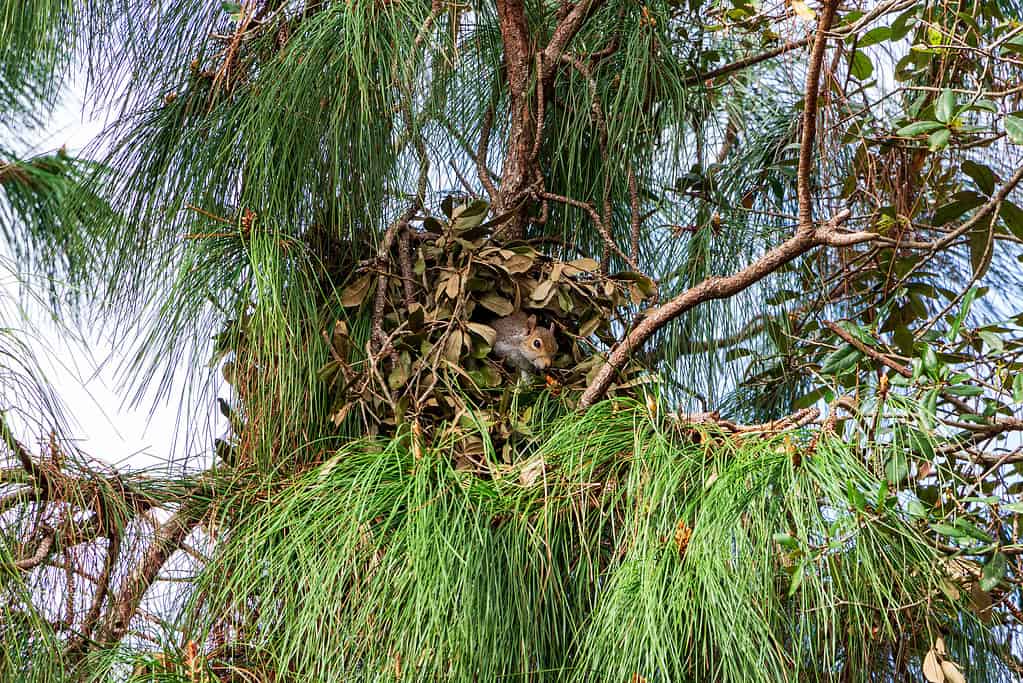
Squirrel dreys often look like a mess of leaves high up in a tree.
©iStock.com/Sunshower Shots
According to Mary Mack Gray, in-house ornithologist at Birdbuddy and expert on all things birds, squirrel nests, which are actually called dreys, are usually “round, enclosed, leaf-covered balls high in a tree, built for warmth and protection.”
To better understand their appearance and makeup, especially in comparison to bird nests, here are some specifics to keep in mind:
Structure and Materials
Squirrel nests use many of the same materials as bird nests, and their structures are somewhat similar. However, squirrel nests are often messier, bulkier, and less secure.
“Squirrel nests are typically round, ball-like structures made from leaves, twigs, and moss,” says Gray. “The outer layer is rough (sticks and leaves), while the inner chamber is lined with softer materials like grass, bark, or shredded leaves for insulation.”
Ironically, many squirrel nests are actually abandoned bird nests that squirrels turn into dreys. They’ll continue building off the existing, neater bird nests to create their dome-shaped homes. Of course, squirrels will usually only take over nests that are located in trees, as they don’t typically create homes in other structures.
Location
According to Gray, squirrel nests are “found high in trees, often nestled in the fork of large branches close to the trunk for stability.”
“Some squirrels may also use tree cavities (hollow trees) for extra warmth and protection during winter,” she adds.
Unlike birds, squirrels typically don’t stray from trees when building their homes. You likely won’t find dreys on man-made structures or ledges, like you would bird nests.
Size and Shape
When it comes to size, squirrel dreys take the cake in comparison to bird nests.
“Dreys are usually larger and bulkier than bird nests—about the size of a basketball,” says Gray. “They appear as dense, closed balls of leaves and sticks rather than open cups.”
Many experts describe squirrel dreys as messy. You might notice twigs and leaves sticking out of the sides, and you likely won’t be able to spot a visible opening the way you would with a bird nest. They often appear like a buildup of material clumped together between tree branches.
Purpose
According to Gray, squirrels use their nests for shelter, sleeping, raising young, and year-round protection. In other words, they don’t just serve the single purpose of rearing young, as is the case for bird nests. While birds abandon nests after the babies have flown the coup, squirrels stick around.
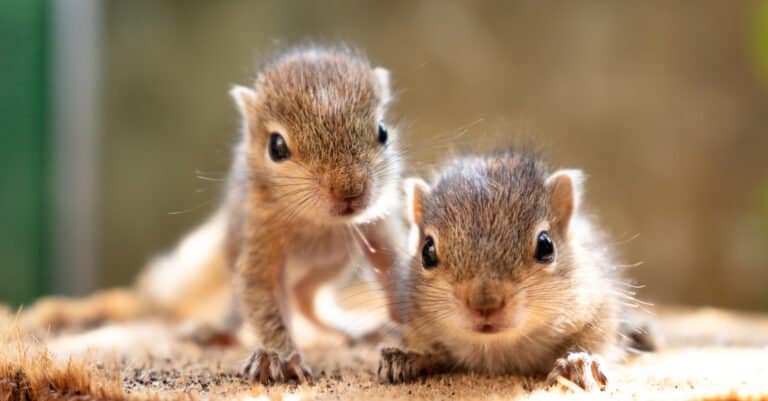
Baby squirrels usually stay in their nests for a few months at a time while developing. However, adult squirrels will still use it for protection and warmth during colder months, even after the babies have grown.
Bird Nests
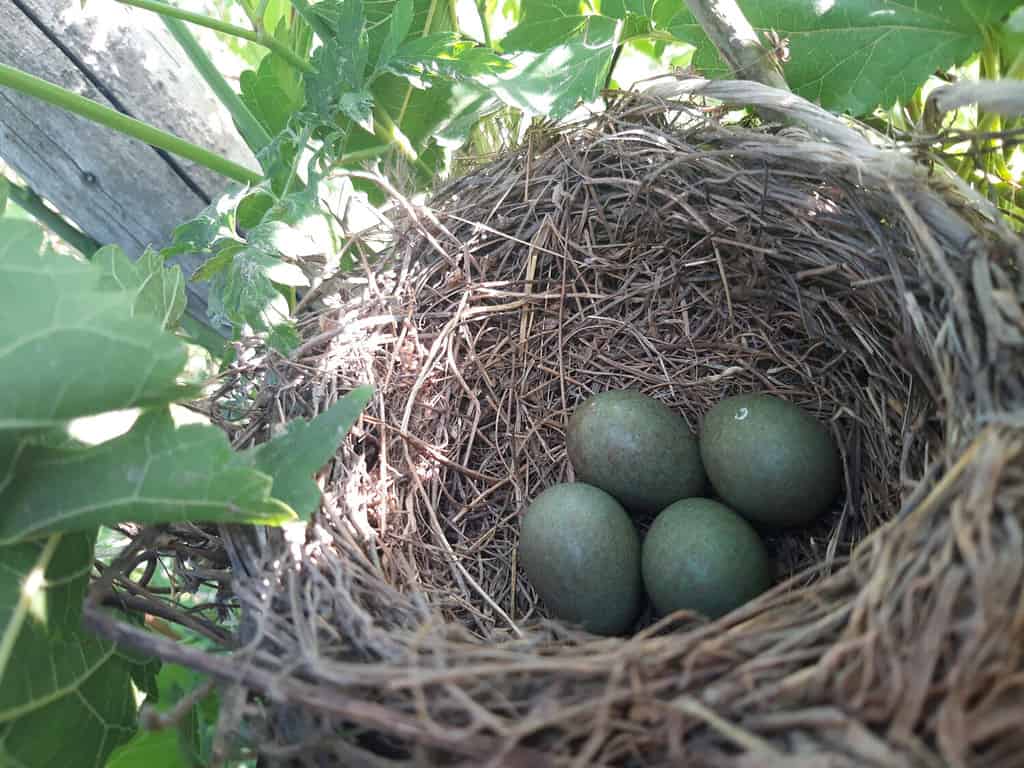
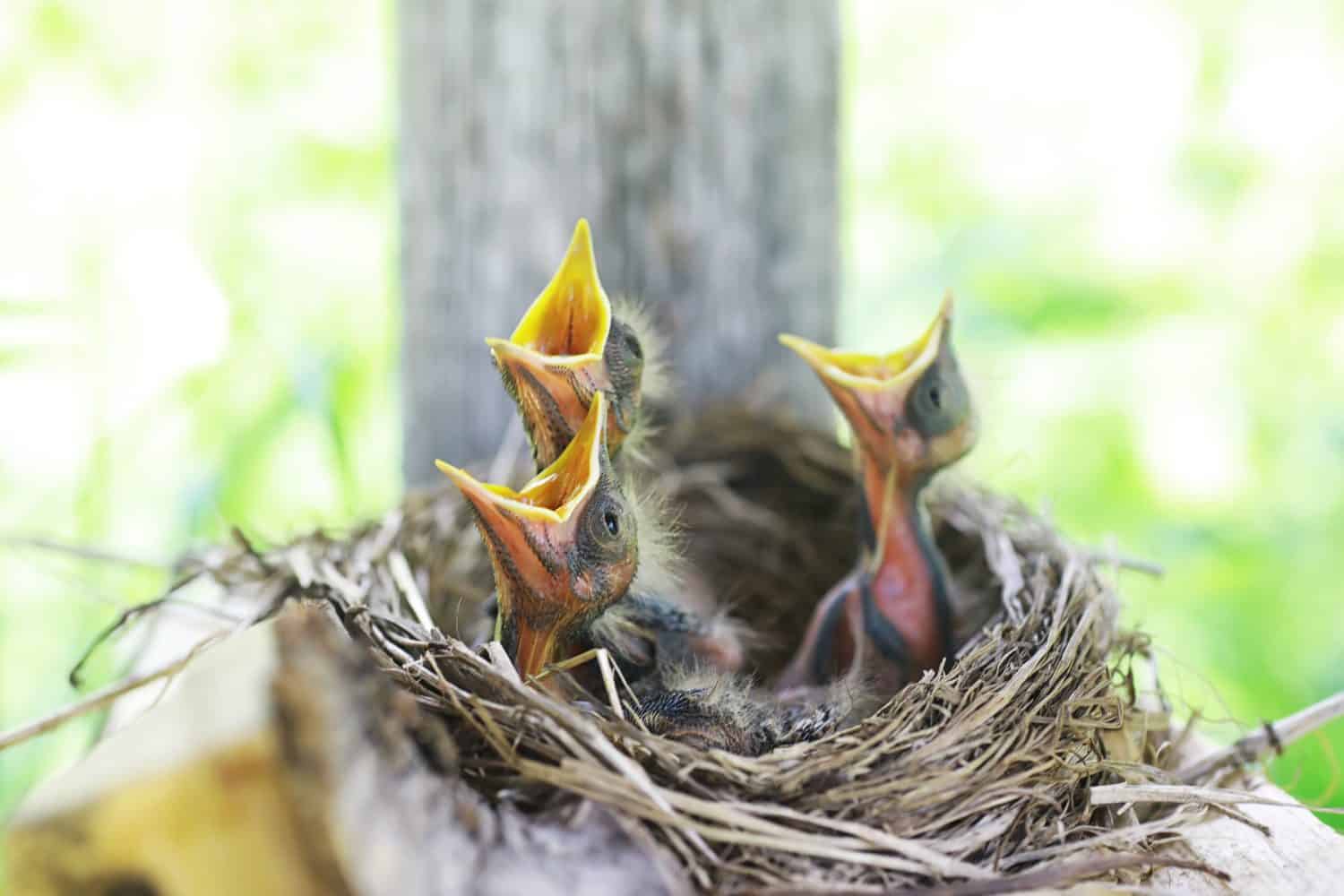
Bird nests are much neater and structured than squirrel nests.
©Genc Subhan/Shutterstock.com
Generally speaking, bird nests “are open, tidy structures, often cup-shaped, [and] used mainly for eggs and chicks,” says Gray.
Here are the specific qualities of bird nests, particularly in comparison to squirrel dreys:
Structure and Materials
As stated earlier, bird nests include many of the same materials as squirrel nests. However, their structures vary.
“Bird nests vary widely by species, but are often cup-shaped or platform-like,” says Gray. “Made from grass, twigs, feathers, mud, and other fine materials.”
Location
Birds usually build their nests on tree branches, ledges, in bushes, and sometimes even on man-made structures. Gray points out that they’re typically more exposed and open than squirrel nests, which are often tucked away and higher in trees. For example, you might notice a small bird nest in your flowerpot or even in the wreath on your front door. Due to their small size, unlike squirrel dreys, birds can fit their nests in various locations.
Size and Shape
According to Gray, bird nests are typically smaller and neater than squirrel nests. Additionally, while squirrel dreys are closed domes, bird nests are cup-shaped and open, usually with a distinct inner bowl. This provides ample room for birds to lay their eggs, as well as for the eggs to hatch and the chicks to grow. Overall, it’s a much more put together and tighter structure than a squirrel nest.
“The open top is a clear giveaway that it’s a bird nest,” she explains.
Purpose
According to Gray, bird nests are “primarily used during breeding season for laying eggs and raising chicks.”
While squirrels use their dreys year-round, birds usually abandon their nests after the chicks are grown. Most birds only use their nests for a few weeks after hatching. However, some species occupy them for longer, especially if their baby’s development times are longer.