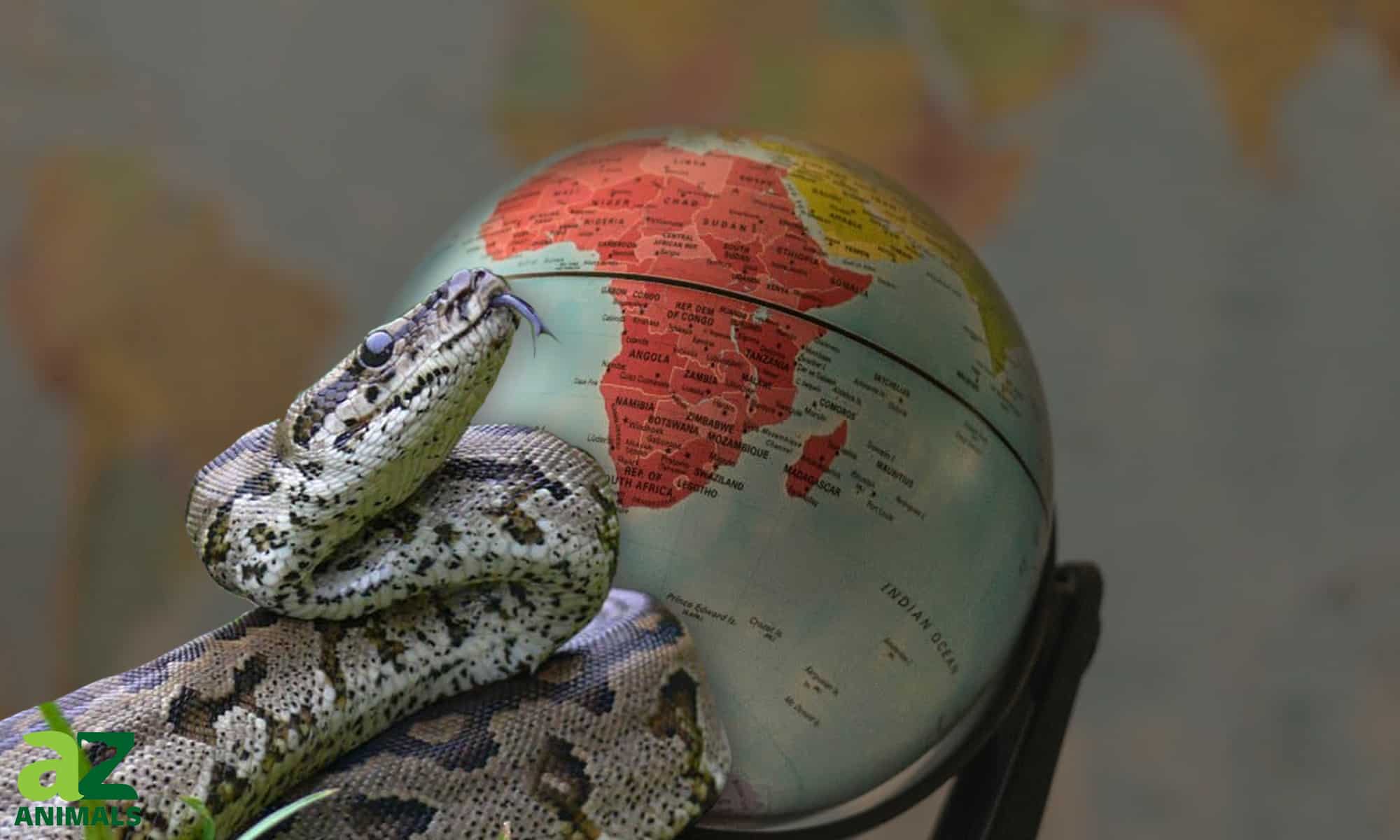

Snakes (Serpentes) are one of the most feared reptiles in the world, with an estimated 200 million to 1 billion people worldwide having ophidiophobia, which is the fear of snakes. However, most snakes are not aggressive, typically retreating rather than attacking when confronted. Snakes play a vital role in their local ecosystems; they keep the populations of their prey species at sustainable numbers and, in turn, are sometimes prey for larger animals. The ecologically diverse continent of Africa is home to over 600 species of snakes, including 130 venomous species, some of which are among the the six largest snakes in Africa.
6. Gaboon Viper
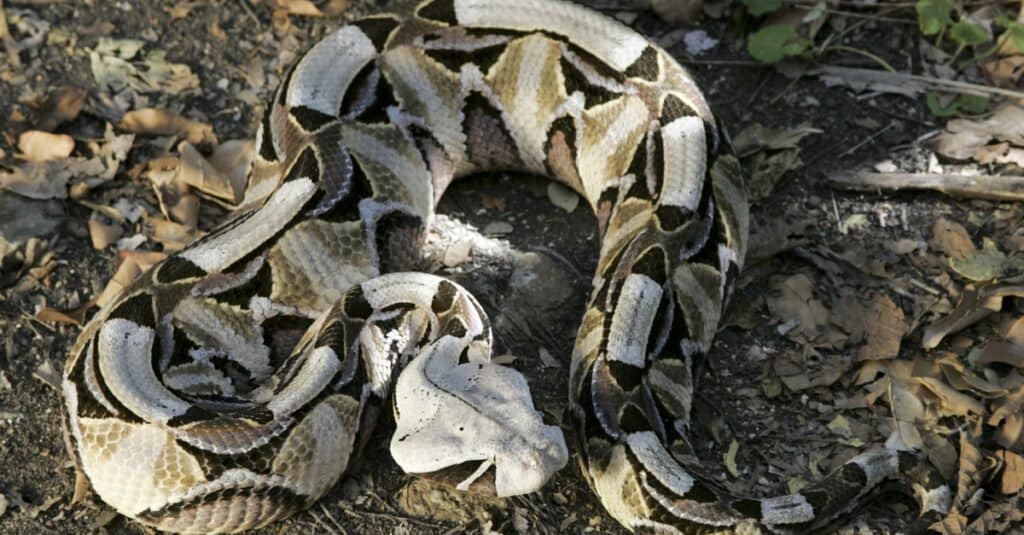
The Gaboon viper is also known as the butterfly adder.
©Stu Porter/Shutterstock.com
Gaboon vipers (Bitis gabonica) are the largest species in the viper family and have the longest fangs of any snake species. The Gaboon viper’s body measures up to 6.7 feet long, and its fangs measure up to 2 inches in length. These vipers can weigh between 19 and 25 pounds, with females being larger. Gaboon vipers are easily recognized by their large, triangular heads and thin necks. They are native to sub-Saharan Africa, where they are found in savannas and rainforests.
The Gaboon viper has the highest venom yield of all snake species. Its venom is cytotoxic and cardiotoxic, causing damage and disruption to cells and the cardiovascular system, which can result in necrosis. It uses this venom to subdue its prey and, unlike other vipers, holds onto it until it dies. Their prey consists of rabbits, doves, guineafowl, and occasionally tree monkeys.
5. Giant Spitting Cobra
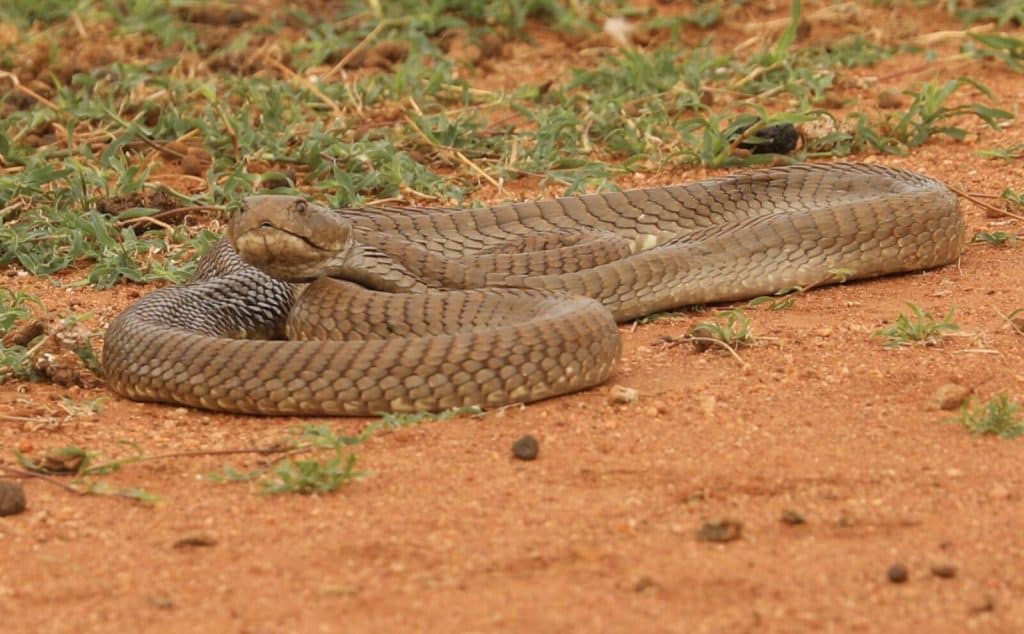
Giant spitting cobras are found in parts of Kenya, Ethiopia, Uganda, and Somalia.
The giant spitting cobra (Naja ashei), also known as Ashe’s spitting cobra, is the largest species of spitting cobras in the world. On average, they measure 4.3 to 6.6 feet long and weigh around 3.5 pounds. Larger specimens have been recorded at up to 8.9 feet long and 7.9 pounds in weight. These cobras are native to Eastern and Northeastern Africa, where they are found in dry lowlands. They can either inject their venom through a bite or shoot it, and it contains neurotoxins and cytotoxins. This venom can cause permanent blindness if it gets in the eyes.
4. Forest Cobra
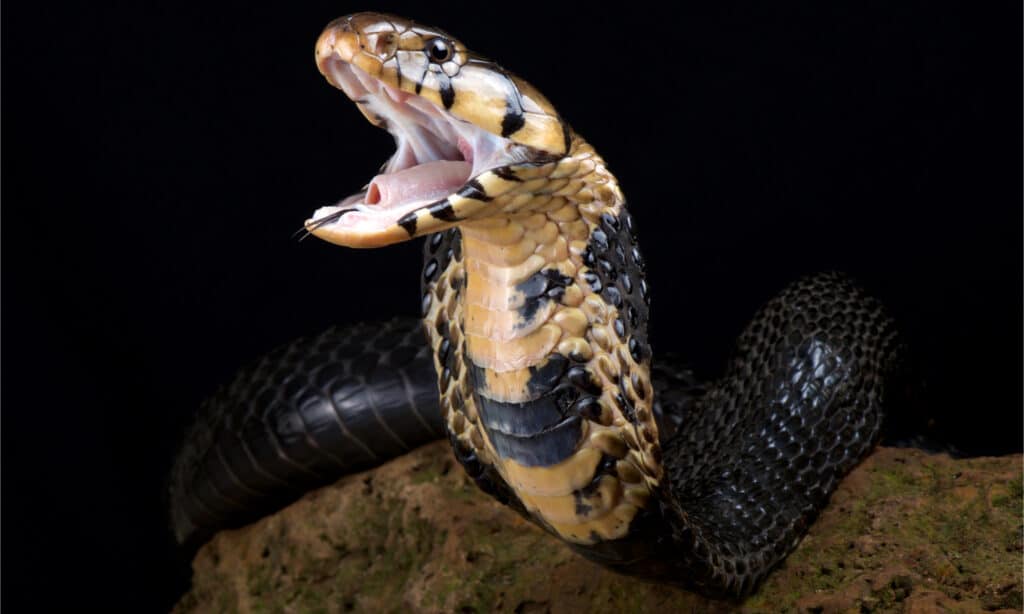
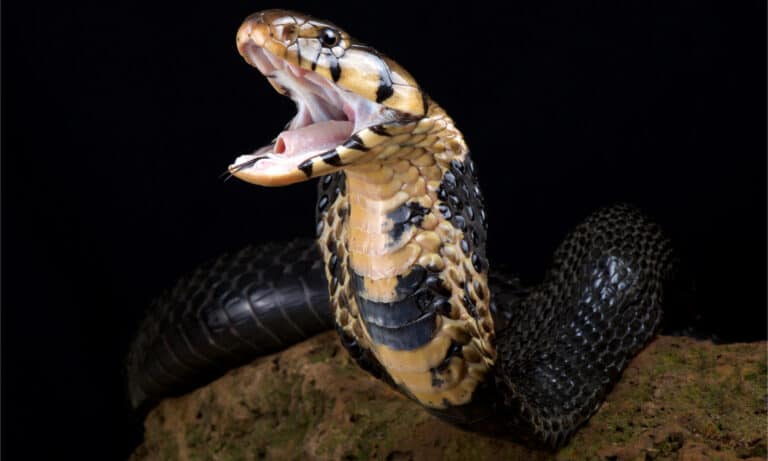
Forest cobras have a large and broad head with a hood that extends down to the neck.
©reptiles4all/Shutterstock.com
The forest cobra (Naja melanoleuca) is not only the largest true cobra in Africa, but also in the entire world. These venomous snakes typically measure 4.6 to 8.9 feet long, with a record length of 10 feet 6 inches. They weigh 4.4 to 7.9 pounds, with males and females being similar in size. These cobras are primarily found in the tropical rainforests of Western and Central Africa, hence their common name. Their prey includes bird eggs, fish, rodents, monitor lizards, mudskippers, and other snakes.
Unlike most snakes, forest cobras are known for their aggression and quick strikes when threatened. However, their bites are the least common of all African cobras because of their remote habitat. Their venom contains neurotoxins and cytotoxins, which damage cells. Forest cobras inject a large quantity of venom when they bite, making rapid administration of antivenom necessary for survival.
3. Black Mamba
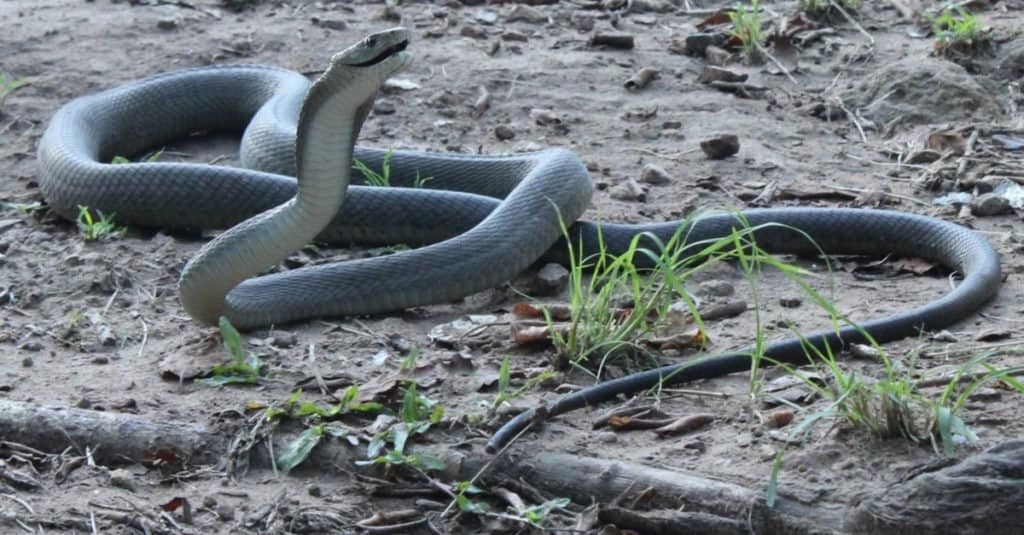
The black mamba is the longest venomous snake in Africa.
©Cormac Price/Shutterstock.com
One of sub-Saharan Africa’s most famous and feared snakes, the black mamba (Dendroaspis polylepis) measures up to 14 feet long, with an average of 8.2 feet long. These mambas typically weigh 3.5 to 4.4 pounds, with large individuals weighing up to 5.3 pounds. They have slender bodies, narrow heads, black eyes, and gray or dark brown scales. Their common name references the black coloring inside their mouths.
Black mambas are highly venomous apex predators that primarily prey on small, warm-blooded animals, including bats, rodents, birds, and hyraxes. The black mamba’s venom contains dendrotoxins, a type of neurotoxin that causes paralysis and respiratory failure if untreated. Therefore, mambas do not hold onto their prey after biting; instead, they wait for the venom to take effect before swallowing their prey whole.
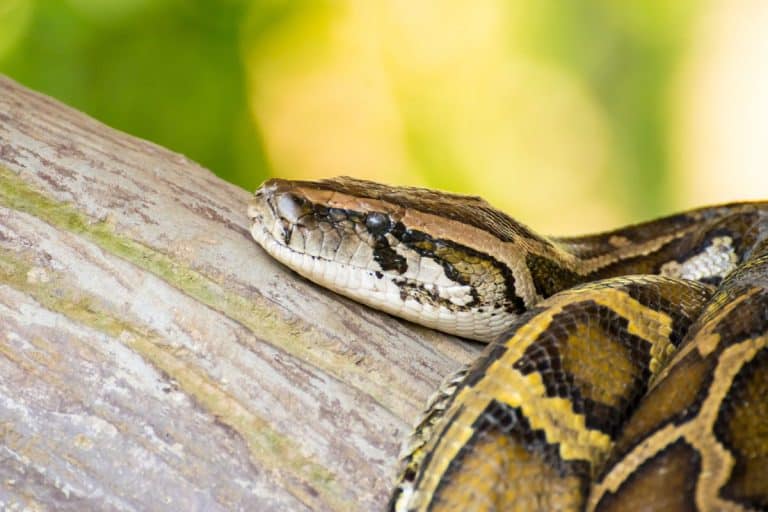
2. Southern African Rock Python
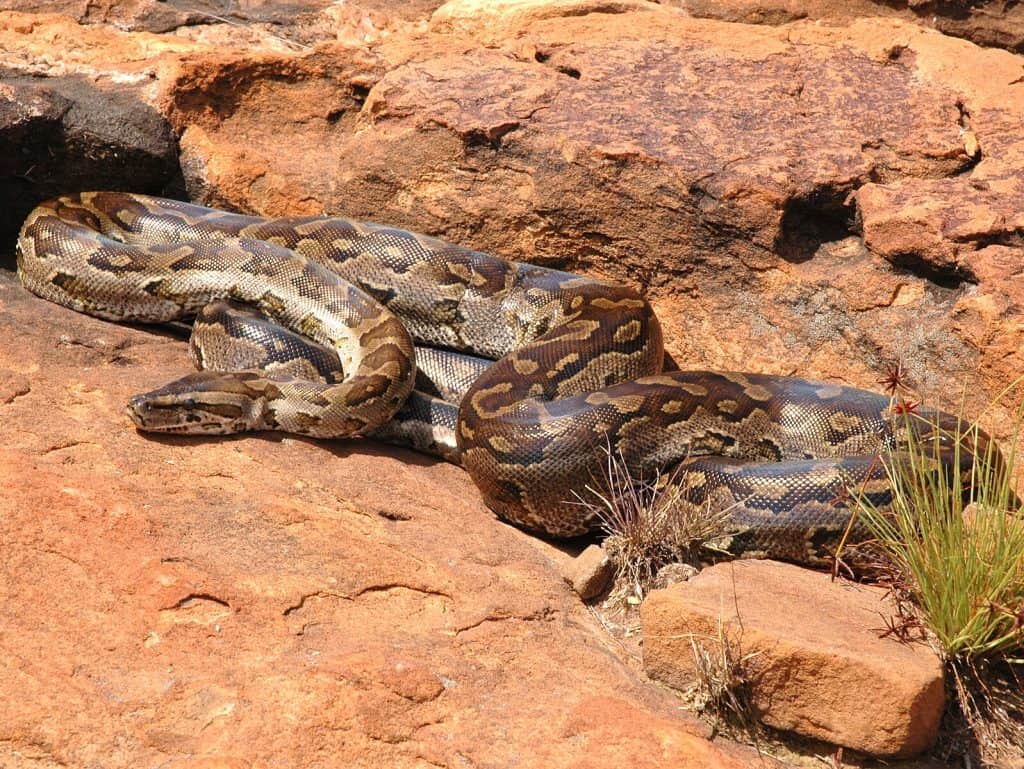
©Graham J. Alexander, University of the Witwatersrand, Public domain, via Wikimedia Commons – Original / License
The Southern African rock python (Python natalensis) is the second-largest snake in Africa and the fifth-largest in the world. These pythons typically measure 9 to 13 feet long, with large individuals measuring around 16 feet long. Females are larger, weighing up to 132 pounds, while males weigh up to 88 pounds. Visually, they resemble their northern relative, the Central African rock python (Python sebae), but are noticeably smaller and duller in color. The IUCN now lists the species as Near Threatened because of ongoing population declines.
1. Central African Rock Python
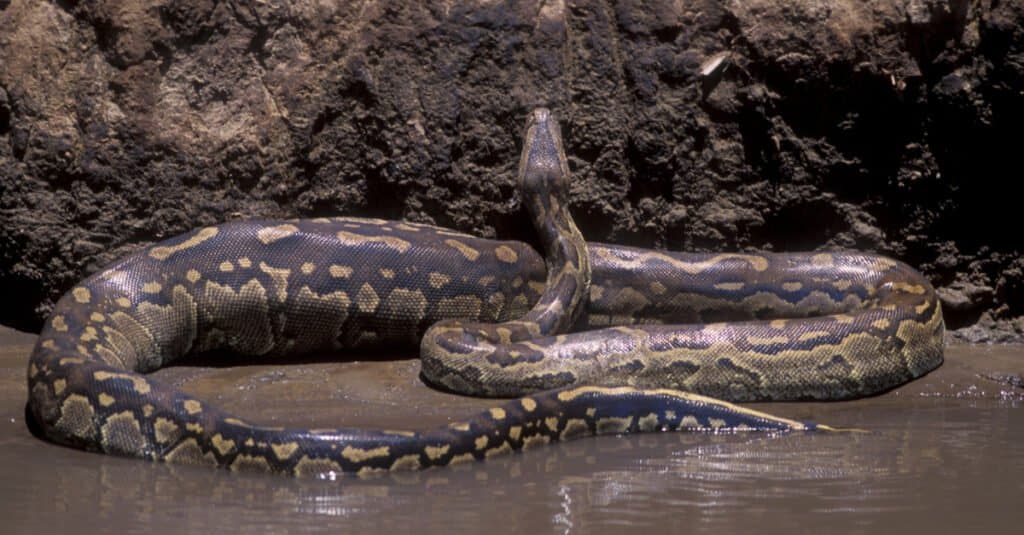
©zaferkizilkaya/Shutterstock.com
The largest snake in Africa, and the fourth-largest globally, is the nonvenomous Central African rock python. They can measure up to 19 feet 8 inches long; however, most specimens measure 10 to 12 feet long. Adults can weigh up to 200 pounds, with most averaging between 121 and 143 pounds. Similar to their southern relatives, females are larger than males. Like all pythons, they use their large bodies to constrict their prey before swallowing it whole. These rock pythons prey on antelopes, monkeys, vultures, monitor lizards, fruit bats, and crocodiles. The largest animals they have been observed eating include a 150-pound spotted hyena and a 130-pound impala.
Central African rock pythons are native to Central and Western sub-Saharan Africa and have become an invasive species in Florida. In its native range, this python lives near permanent bodies of water in habitats ranging from semideserts to forests. In sub-Saharan Africa, they are often hunted for leather, and because many people in the region consider their meat a delicacy. This, combined with habitat destruction by the oil industry, has led the IUCN to list them as Near Threatened.