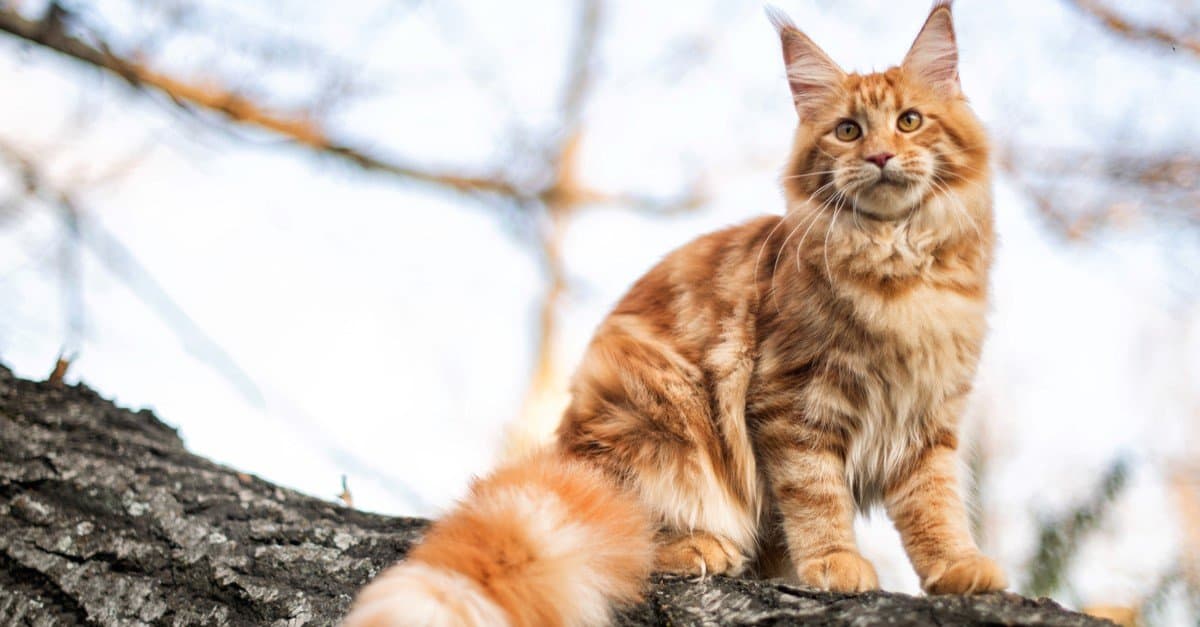

The Maine Coon has long reigned as one of the largest and most magnificent domestic cat breeds in the world. Males frequently weigh 13 to 19 pounds, and it’s not uncommon for some to even exceed 20 pounds. These gentle giants stand out for their imposing size, strength, and strikingly rugged appearance. But what drives the Maine Coon to such an impressive size, and what makes it so unique among other domestic cats?
Shaped by the Elements
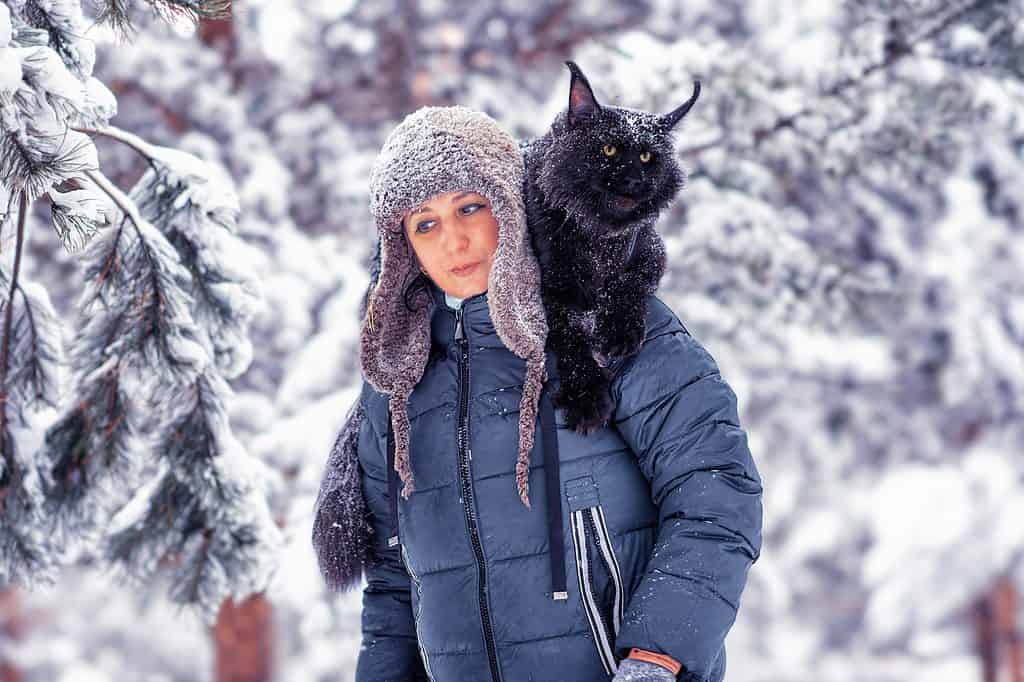
Maine Coons are gentle giants with affectionate personalities.
©Sergey Ginak/Shutterstock.com
The Maine Coon is North America’s only native long-haired domestic cat breed. While the exact details of its ancestry remain a mystery, its deep roots are firmly planted in the northeastern United States. By the 1870s, these impressive felines were popping up in local competitions and Boston cat shows.
The relentless environment of New England’s cold winters pressured and molded the Maine Coon with the traits it needed to survive. Natural selection strongly favored the largest, most robust cats with superior endurance. Cats that survived had heavier bodies to conserve heat and dense coats to shield against the cold. Cats with strong musculature and keen senses thrived in snowy New England winters, as they were efficient climbers and hunters even amid deep snow drifts and could locate hidden prey. Over several generations, only the cats best equipped for this environment managed to survive, reproduce, and pass on their genes.
Built for Harsh Winters
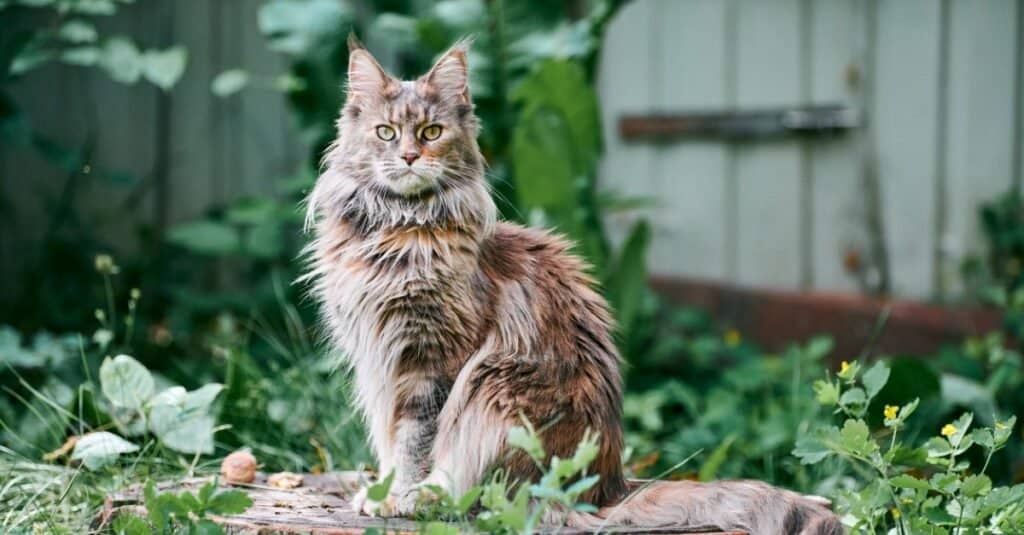
A Maine Coon’s coat has an oily base that helps to repel water.
©iStock.com/TRAVELARIUM
Despite their enormous size, Maine Coon’s don’t just simply pack on the pounds; they also have a fundamentally larger and more robust frame and impressive muscle mass. They have dense, heavy bones, a long, rectangular torso, and a broad chest supported by strong, muscular legs. The cats’ powerful construction provides them the strength they need to hunt, climb, and navigate rugged, cold terrain.
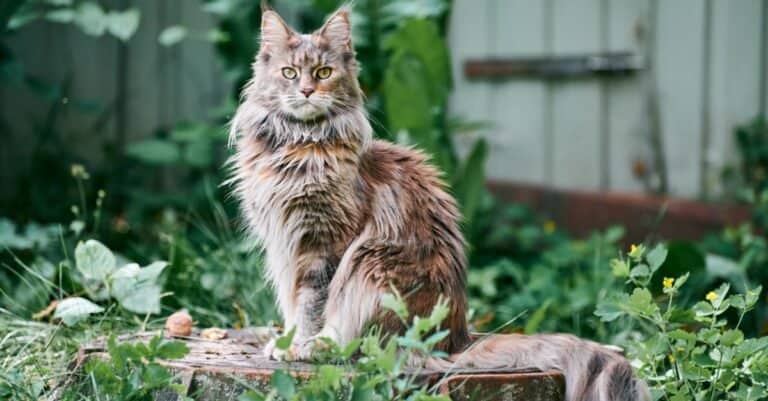
Even the cats’ faces are optimally structured for the cold weather. Their large, tufted ears provide warmth and insulation, as well as enhanced hearing for pinpointing their prey under the snow. Maine Coons also have wide-set eyes that offer exceptional low-light vision for hunting in the darkness of winter. The cat’s long muzzle is also perfectly designed for grabbing prey and drinking from icy water sources.
Maine Coons have stunning, thick, long-haired fur coats that make them look even larger than they are. The outer fur is water-resistant to protect the cat from rain and snow. The undercoat, in contrast, is dense and woolly to provide warmth and insulation against freezing temperatures. Maine Coons also have rather long, plume-like tails that they wrap around their bodies for extra warmth and protection. The cats’ enormous paws help distribute weight when walking on snow, and the tufts of hair between their toes help protect their sensitive pads.
Slow Maturity
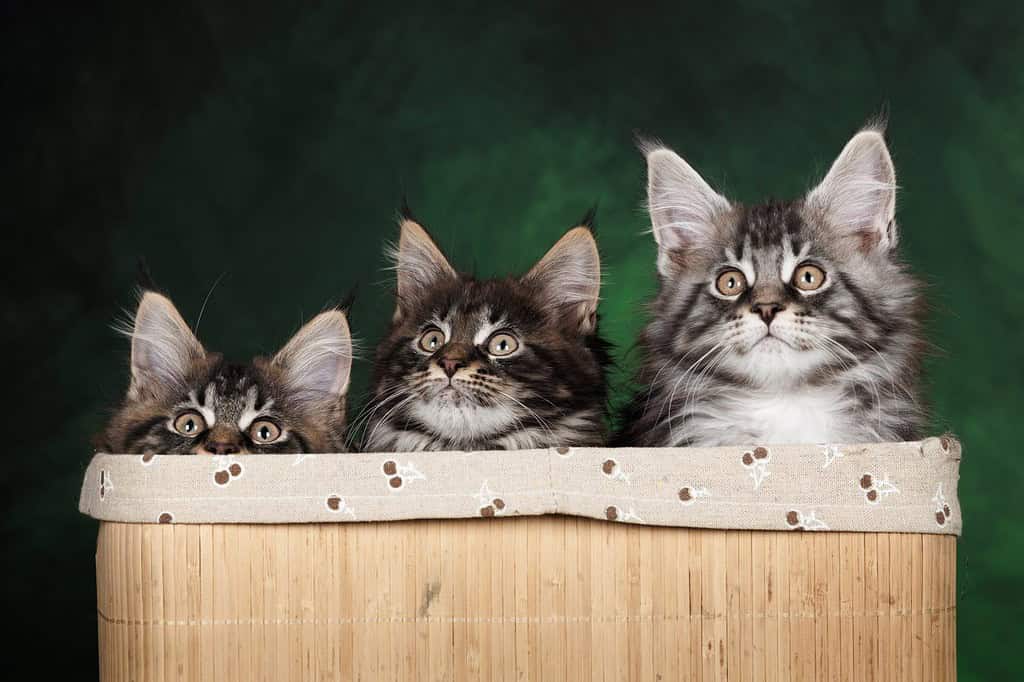
At a year old, Maine Coons often still look like awkward, lanky teenagers.
©otsphoto/Shutterstock.com
While it usually only takes a year for most domestic cats to reach their full size, Maine Coons are exceptionally slow developers, taking three to five years to completely fill out. Their full coats, fluffy neck ruffs, and dramatic plume-like tails can take several years to completely form. The breed’s prolonged development is one of the reasons why Maine Coons grow to become the magnificent, massive cats we see today.
A Wide Gene Pool
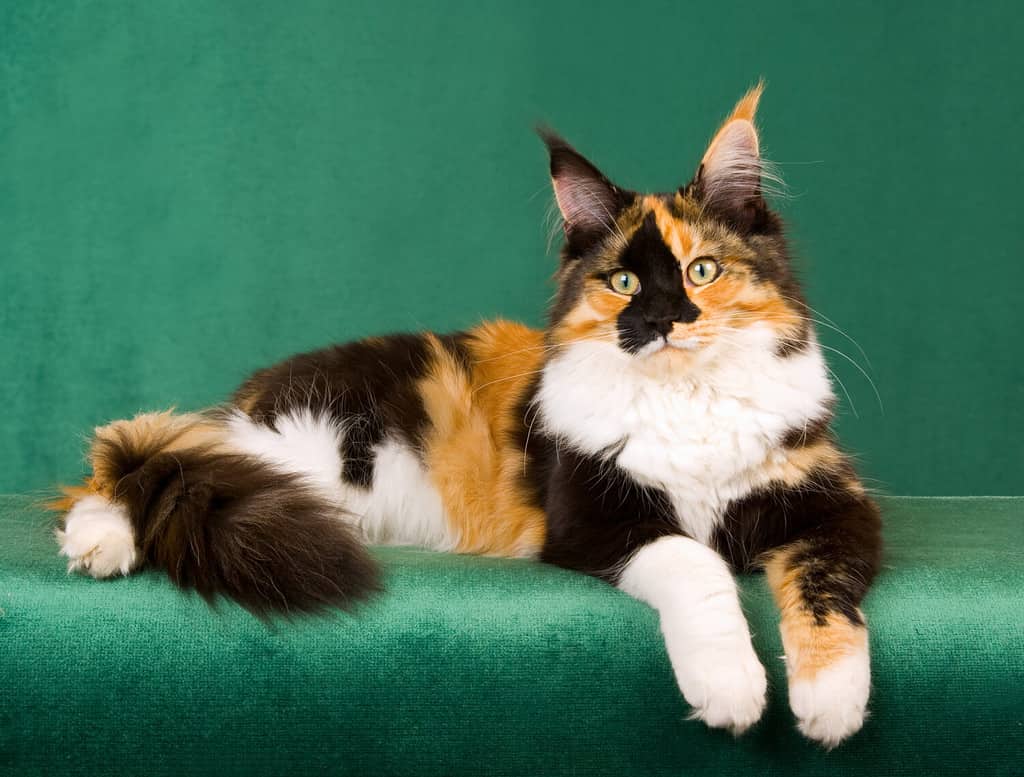
Maine Coon cats come in nearly every color imaginable.
©Linn Currie/Shutterstock.com
The Maine Coon holds a rather unique place among pedigree cats due to its natural origins and superior genetic diversity. DNA testing consistently shows that Maine Coons maintain a relatively high level of genetic variety that is much higher than many purebred breeds. This diversity is crucial to the cats’ massive size, as it supports healthy skeletal development and strong immune systems. Because Maine Coons evolved naturally rather than through the blending of other established breeds, their genetic foundation naturally supports their large, healthy frames.
The Breeder’s Role
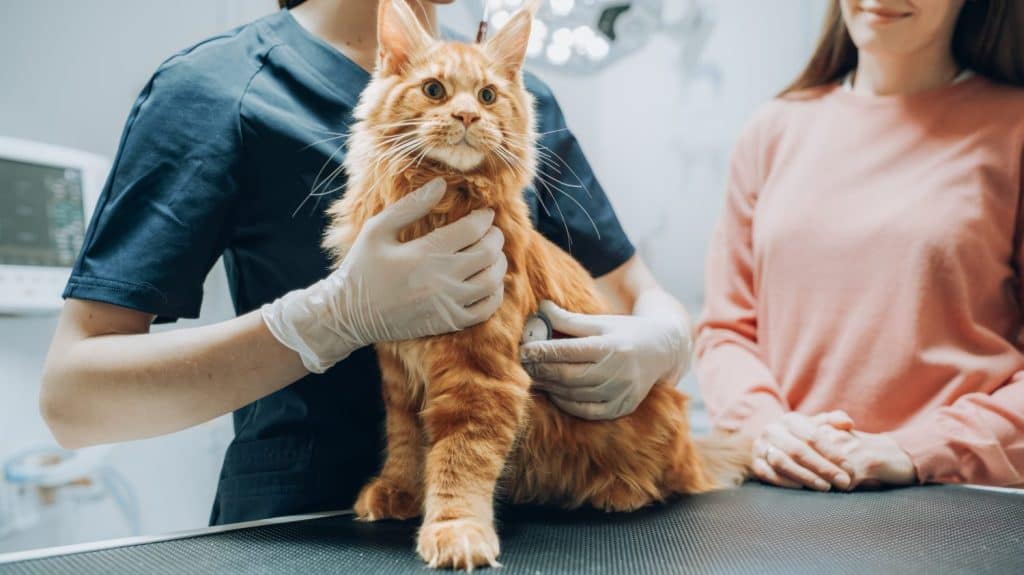
Maine Coons are typically robust and healthy cats with strong immune systems.
©Gorodenkoff/Shutterstock.com
While the Maine Coon’s size began as a natural adaptation for survival, modern breeders have also played a large role in refining and enhancing these traits. Additionally, a group known as the “Clones” — cats that were heavily linebred — also contributed significantly to the gene pool.
Breeders practice selective pairing, favoring cats that clearly exhibit the desired robust structure, including large, sturdy frames, powerful musculature, heavy bone structure, tufted ears, and winter-ready coat. By rigorously adhering to a breed standard, they have made these naturally large traits even more consistent and predictable in today’s Maine Coons.
The Maine Coon’s ancestors not only survived but thrived amid the intense cold of New England. These resilient cats were built for endurance, with a robust genetic foundation and a heavy-boned, muscular frame. Today, this natural blueprint is carefully reinforced by modern, selective breeding practices, with the ultimate goal of balancing the breed’s impressive size while also preserving its overall health, functionality, and genetic diversity.