
Quick Take
- The Maine Coon is one of the largest domestic cats, weighing up to 18 pounds.
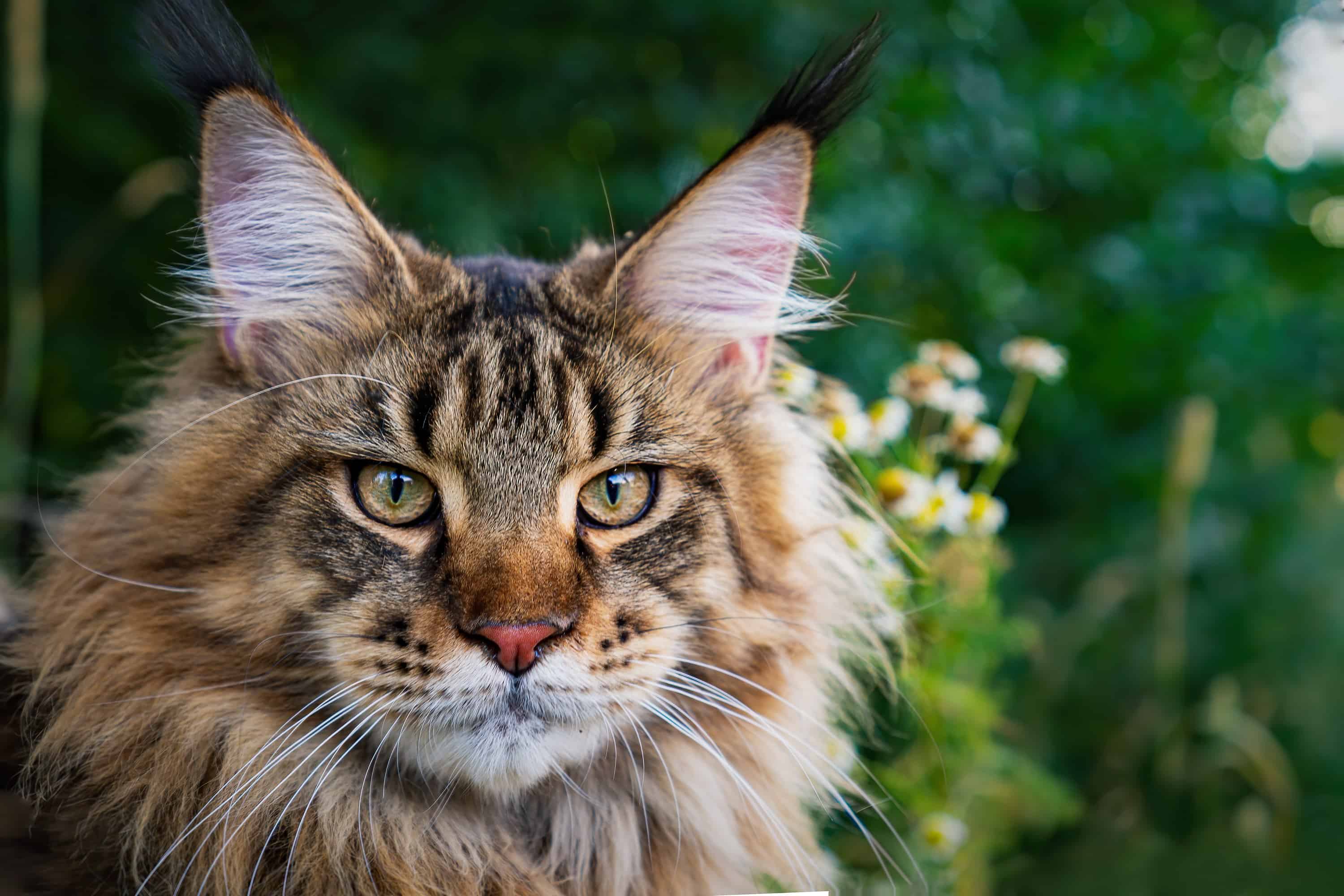
- Distinctive appearance includes tufted ears, a thick coat, and a fluffy tail, with over 75 color patterns. Daily brushing is needed to prevent tangles.
- The most accepted origin story is that long-haired European cats, brought to the New World by English settlers, evolved to adapt to New England’s harsh winter climate.
Few other breeds can match the majesty and mystique of the Maine Coon cat. With its lush, thick fur, large size, and distinctive tufted ears and bushy tail, the Maine Coon is one of the most instantly recognizable cat breeds in the world.
Named after the state where they were first discovered, Maine Coons carry an air of mystery wherever they go. Their appearance, unique from all other domestic cat breeds, is the subject of much speculation. How did they get their distinctive faces? Why are they so much larger than other domestic cats? What’s going on with those ear tufts and the super fluffy tail?
One popular — but completely impossible — theory is that the breed came about through a chance breeding between a long-haired domestic cat and a raccoon. That’s biologically impossible, but it doesn’t stop the speculation. While many Maine Coons may well have coat colors and patterns similar to a raccoon, there is no biological relationship between the two species.
Read on to discover more Maine Coon origin myths, learn everything there is to love about this unique breed, and find out the most widely accepted origin story for this beloved cat breed.
The Myths of Maine Coon Origins
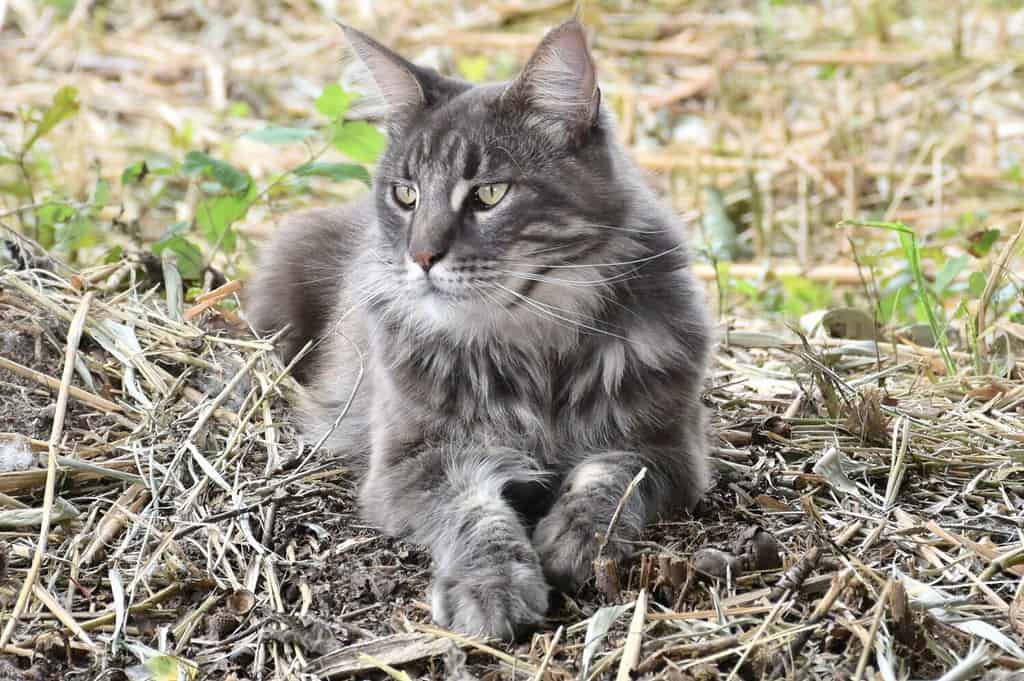
Despite one popular theory, Maine Coons did not come about from cross-breeding between a long-haired cat and a raccoon.
©pix-l passion/Shutterstock.com
Perhaps because of its unique appearance and size, Maine Coons find themselves the subject of fanciful speculation about how they came to be. It was definitely not due to cross-breeding between a raccoon and a domestic cat. That’s an easy myth to dispel, as it’s biologically impossible.
Other myths, though, are a bit more imaginative and may even seem believable. For example, there is a theory involving Marie Antoinette and a naval rescue attempt during the French Revolution. The story goes that the designated rescue ship had six Turkish Angora cats on board as it headed to the New World. Once the ship anchored along the New England coast, those long-haired cats bred with native short-haired cats on shore. A fanciful tale, but highly unlikely.
Another origin story involves the English seafarer Captain Charles Coon, who is said to have taken his long-haired cats with him on sailing voyages. According to the story, Captain Coon’s cats bred with local cats, resulting in the ancestors of the Maine Coon breed we know today. While this story may be closer to the truth, there is no evidence that Captain Coon or his cats were directly responsible.
According to Carrie Profenno, creator of Maine Coon Cat Nation and an expert on the breed, there is another theory sometimes floated among Maine Coon fans. She notes, “Some believe the Maine Coons of today are the descendants of a lynx or bobcat hybrid. While more genetically possible than the raccoon theory, there’s no evidence to support this theory.”
What Makes Maine Coons So Special?
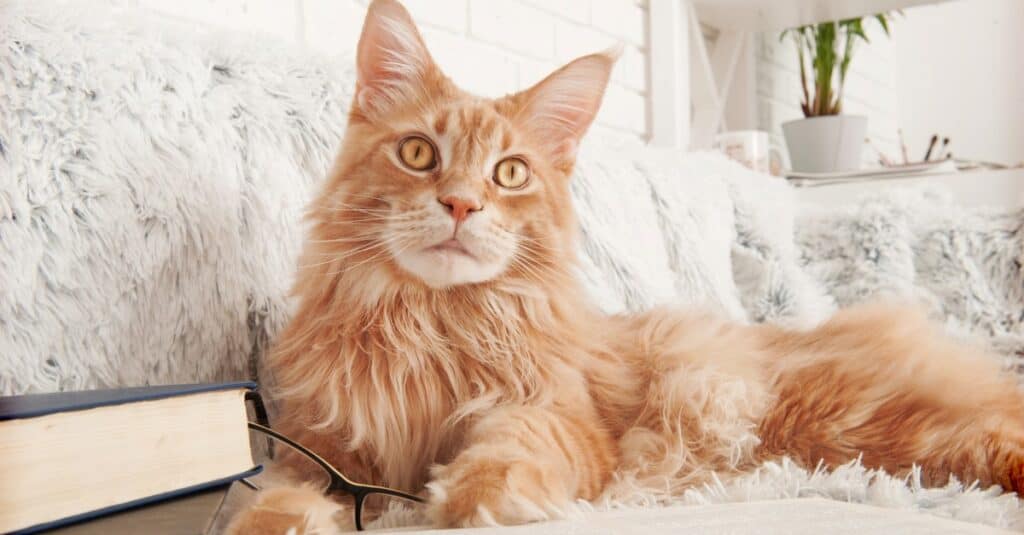
The Maine Coon is the largest cat on average, making them also the heaviest cat.
©Artbox/Shutterstock.com
The male Maine Coon weighs between 13 and 18 pounds on average and stands between ten and 16 inches tall. Females weigh slightly less on average, between nine and 12 pounds. Some Maine Coons can grow up to 25 pounds or more. This is quite large by domestic cat standards. Maine Coons grow slowly compared to other cats, reaching their mature size somewhere between three to five years old.
Maine Coons live on average between 12 and 15 years. They are generally healthy, but they do suffer from some common health issues, such as hip dysplasia and spinal muscular atrophy.
Personality-wise, Maine Coons are friendly, smart, and playful. They’re easy to train and make great additions to any home. They are gentle and good-natured, making them ideal for families with small children. They also get along with other pets.
According to Profenno, one of the things people love about Maine Coons is how dog-like they can be. “Owners constantly share stories with me of how their cats come when called, follow them from room to room, and even play fetch,” she says. “This is a behavior they are quite proud to brag about. Maine Coons are highly interactive and enjoy being involved in whatever their families are doing.”
Their rugged, thick coats do require regular brushing to prevent tangles and matting. They come in more than 75 different solid colors and combinations, plus two distinct tabby patterns, so no two Maine Coons are identical.
So how did this most regal of cat breeds actually come into existence? Read on to discover the most likely theory.
Owners constantly share stories with me of how their cats come when called, follow them from room to room, and even play fetch.
Carrie Profenno, creator of Maine Coon Cat Nation
The Maine Coon’s Most Likely Origin Story
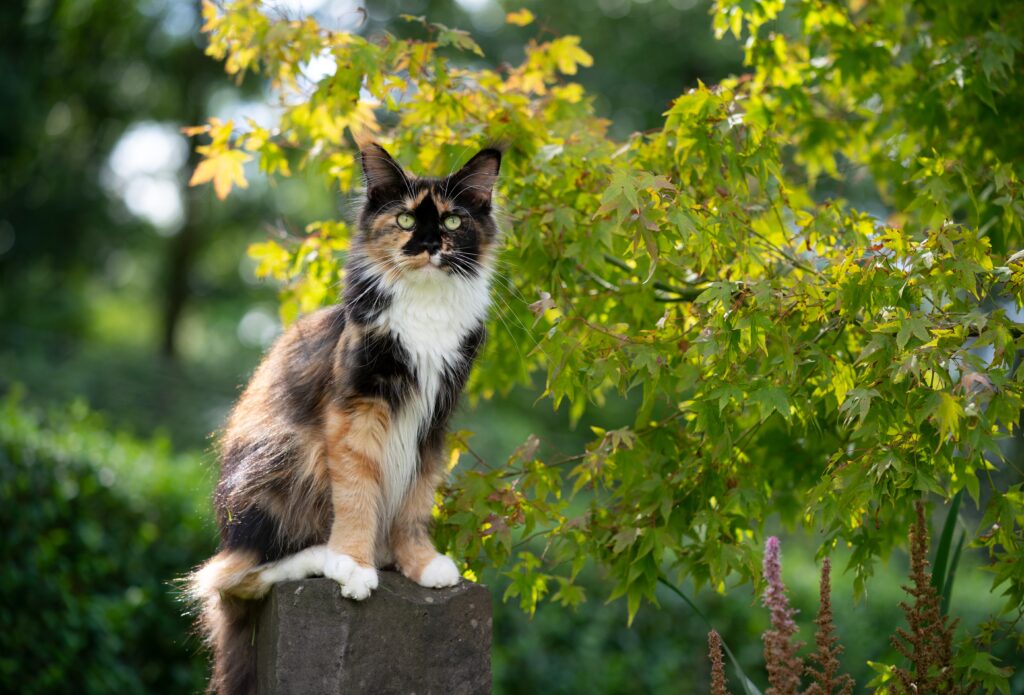
Maine Coons come in nearly endless color combinations, including this distinctive calico pattern.
©Nils Jacobi/Shutterstock.com
While many theories exist to explain the Maine Coons we know today, none can be conclusively proven. While it is fun to speculate that historical figures like Marie Antoinette or Captain Coon played a significant role, the reality is likely more mundane.
The most widely accepted theory, according to Profenno, is that today’s Maine Coon breed descended from long-haired cats brought to the New World by early English settlers. As generations of these long-haired cats bred and adapted to the harsh winter climate in places like Maine, their appearances changed. “The cats that thrived were the ones with thick coats, big paws, and strong bodies,” notes Profenno. “Over time, that became the look we recognize today. It is a classic case of climate-driven natural selection.”
The Maine Coon was designated the official state cat of Maine in 1985.