
Quick Take
- The greater honeyguide leads African honey hunters to wild beehives, then feeds on leftover beeswax and larvae after the honey is harvested.
- Research shows honeyguides learn and respond to region-specific human hunting calls, proving the partnership is shaped by behavior on both sides.
- This ancient tradition, still practiced by communities like the Yao people near Niassa National Reserve, is declining as modernization replaces traditional honey hunting.
Although dogs were the first animals to be domesticated by humans, other animals have been cooperating with people in mutually beneficial relationships for over one million years. In one example, in parts of Africa, wild birds lead humans to beehives. Honey hunters use special calls to signal the wild birds, known as honeyguides.
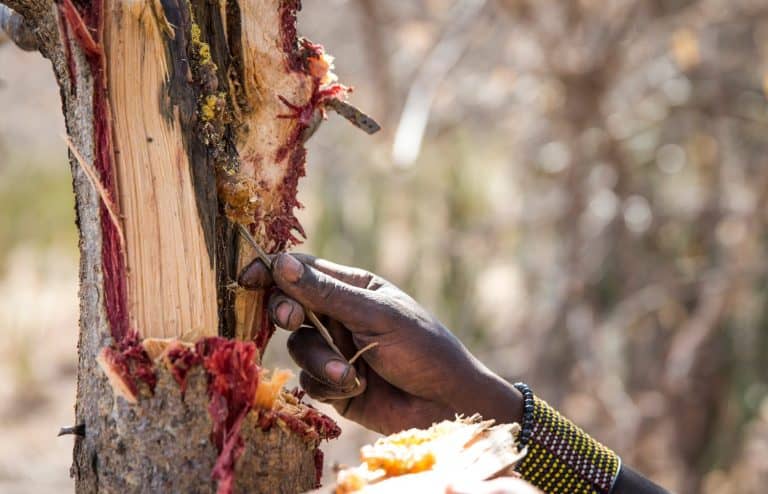
The honeyguides arrive and lead the humans to the beehives, which are usually found in trees. Next, the humans blow smoke to calm the bees and open the bees’ nests with axes. Honey hunters take the honey, leaving the beeswax for the hungry birds. Mutualistic relationships like this are incredibly rare between humans and wild animals. And such mutualistic relationships are becoming increasingly rare due to ecological and cultural changes.
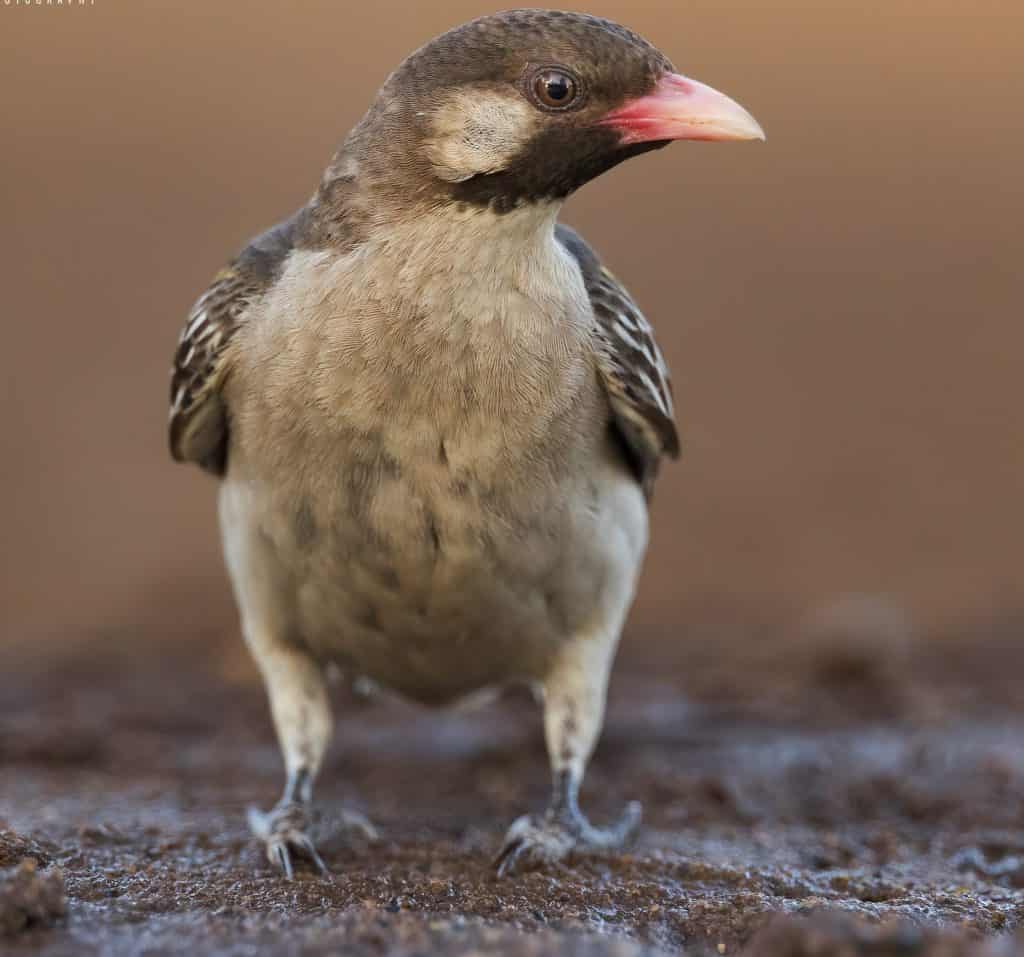
Unlike the female, the male greater honeyguide has a pink beak and black throat.
©Michael Heyns, CC BY-SA 4.0, via Wikimedia Commons (cropped from original) – Original / License
About the African Greater Honeyguide
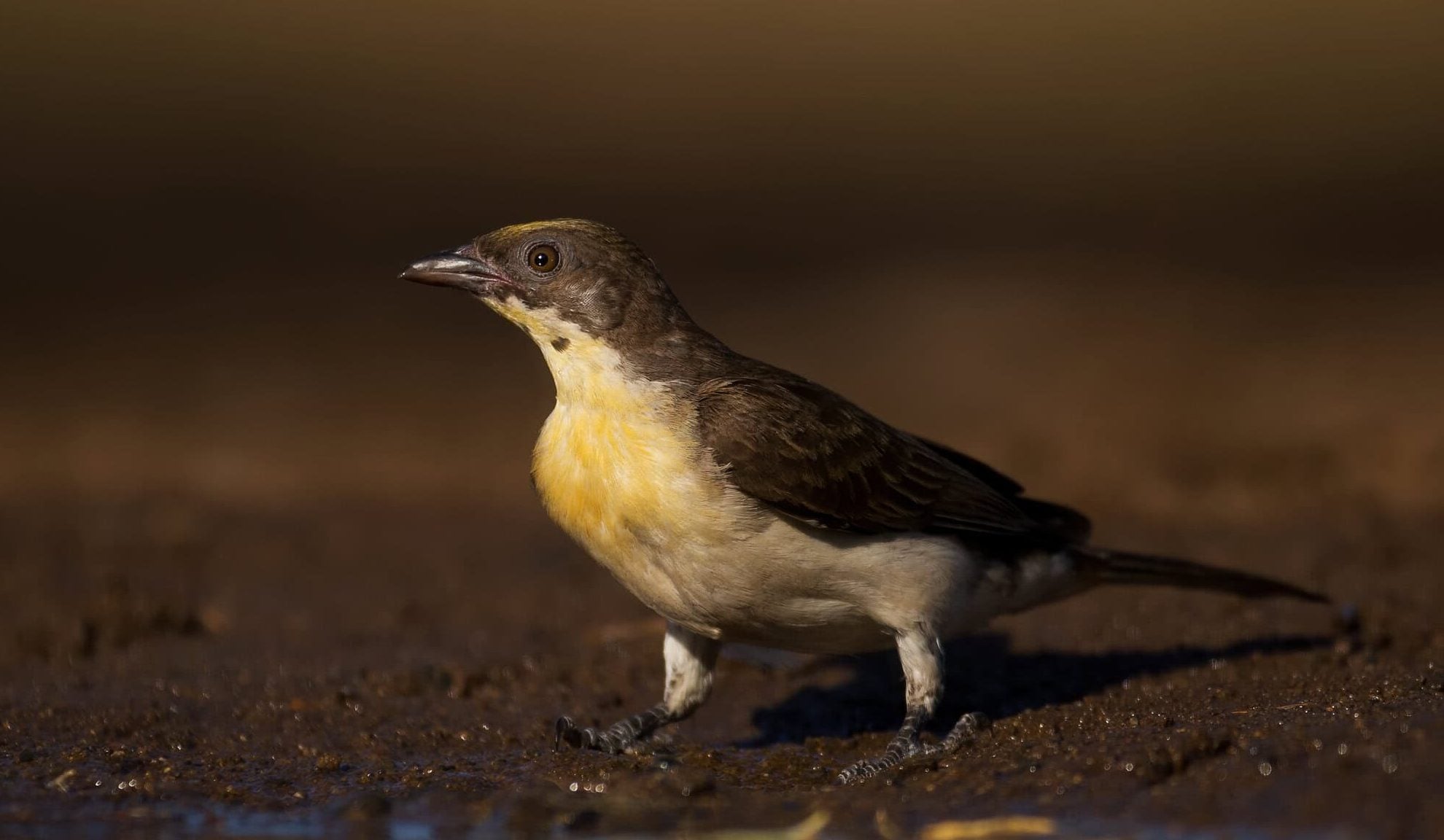
There are many examples of mutualism in the animal world, but few that involve humans working with wild animals. In Africa, a nondescript wild bird known as the greater honeyguide (Indicator indicator) helps humans locate hard-to-find bees’ nests. In return, the bird benefits by eating the leftover honeycomb and bee larvae, which would have been difficult for the bird to access on its own.
The greater honeyguide is about the same size as the European starling (Sturnus vulgaris). The males have a black throat, yellow patches on their shoulders, and a pink bill. Females, on the other hand, are more of a dull brown without the distinctive markings of the males. The birds have strong beaks that have adapted to be able to tear off pieces of honeycomb and reach the bee larvae in their nests. They are also uniquely able to digest the beeswax, which is unusual among birds.
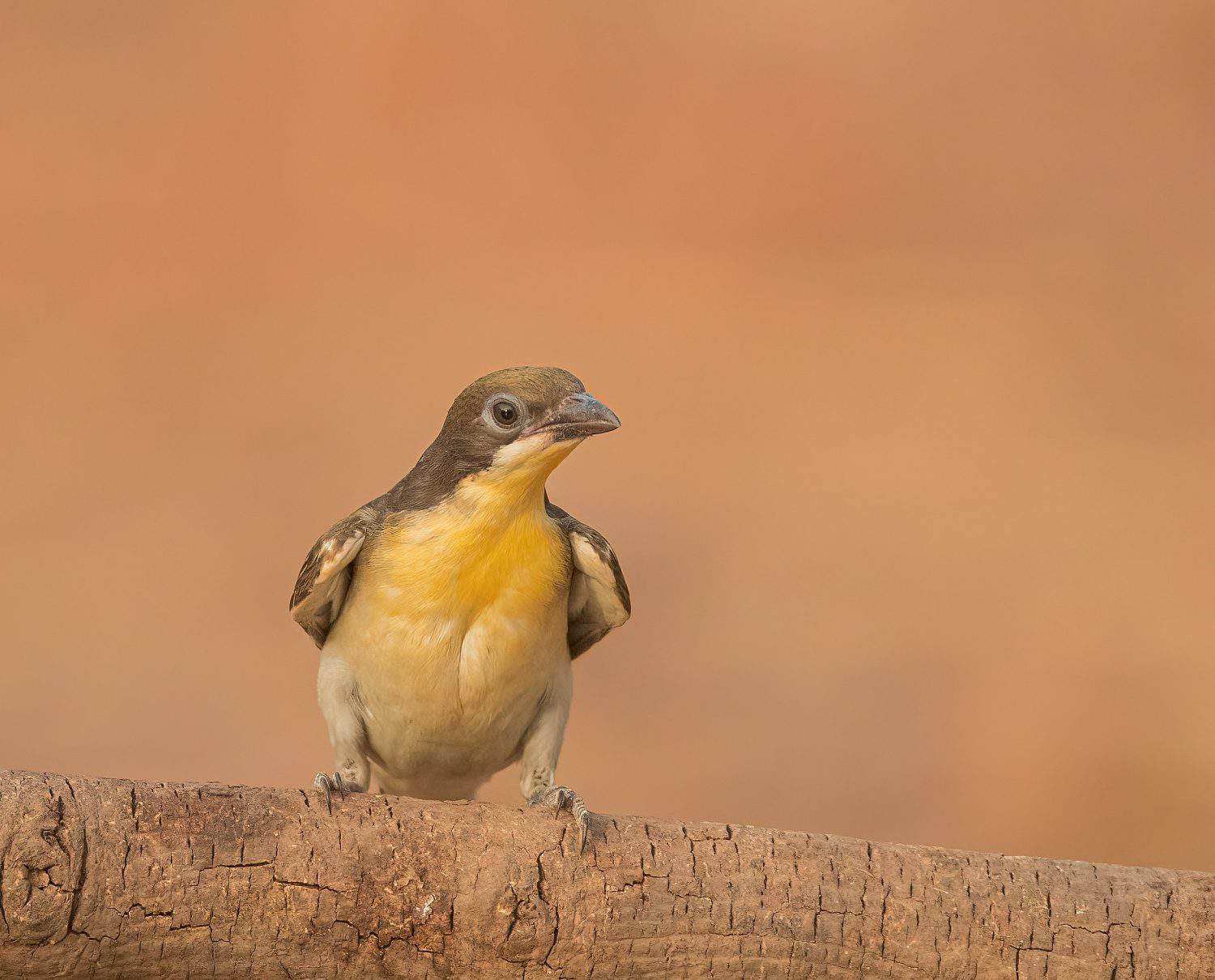
The greater honeyguide is about the size of a starling.
©Pascal De Munck/Shutterstock.com
Another unusual behavioral trait of these birds is that they do not raise their own young. Instead, they lay eggs in the nests of other species, often destroying the original eggs before laying their own. The unsuspecting bird then raises the honeyguide chicks as its own.
Honeyguides Learn Local Dialects
Research from 2023 uncovered a fascinating fact about the human-bird relationship. Honeyguide birds learn the local dialect of the humans in their area. Scientists found the honeyguides did not respond to calls from honey hunters from a different region. This demonstrated to the scientists that the honeyguides’ behavior is learned.
Brian Wood, co-author of the study, told National Geographic that although scientists already understood that human honey hunters have a learning process passed down through generations, “we wanted to know if there is a learning process involved on the birds’ side of the relationship, too.”
Honey Hunting with Honeyguides Today
According to National Geographic, honey hunting with honeyguides was once a common practice across Africa. But today, it’s only seen in a few remaining communities, including rural areas of Kenya, Mozambique, and Tanzania. Gathering honey is a highly valued skill in Africa. Honey is an important resource used for food, medicine, and rituals. Honey hunters are highly regarded in their communities, and fathers pass down their knowledge to their sons.
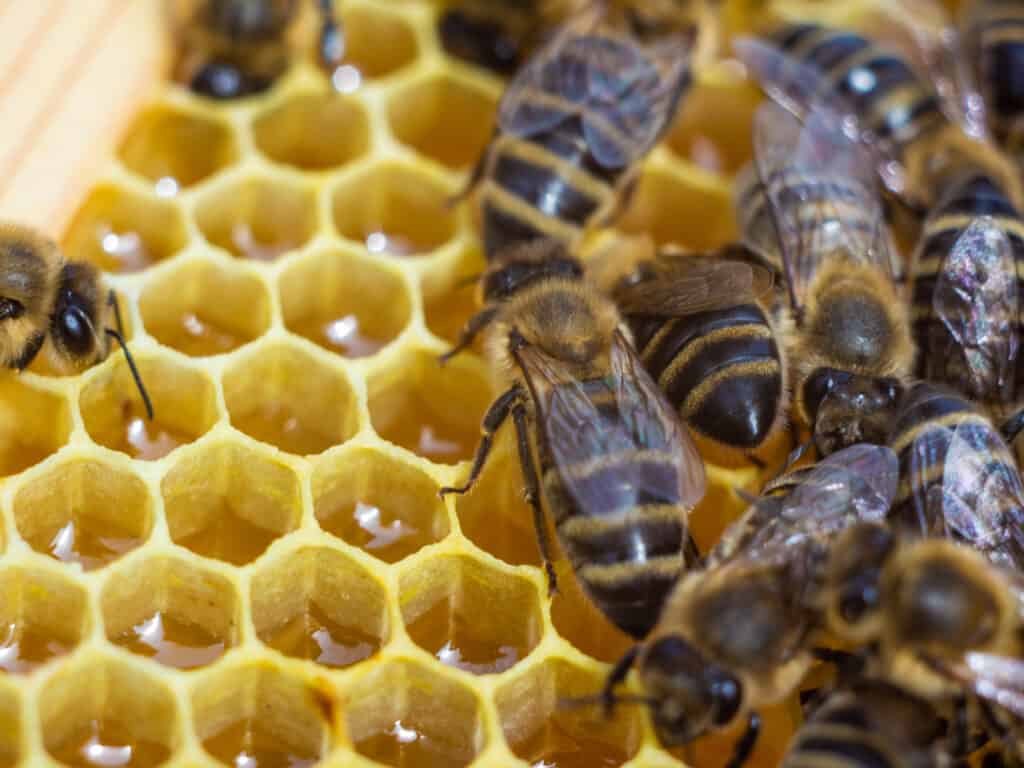
Honeyguides have adapted to be able to digest the wax from the honeycomb.
©Goncharov Taras/Shutterstock.com
Researchers working on a project to better understand modern honey-hunting communities followed honey hunters from the Yao people on a local honey hunt. The Yao people live near and inside the Niassa National Reserve in northern Mozambique. Researchers watched as the honey hunters made calls to the birds. The birds heard the calls and chattered in response.
The birds flew through the trees until they reached a tree containing a bee’s nest. When the hunters found the beehive, they used smoke to calm the bees before chopping open the nest with an ax. Finally, the honey hunters collected the honey-filled honeycombs, leaving behind wax combs without honey. As the hunters left the area, the honeyguides flew down and ate the remaining wax.
Examples of Human-Wild Animal Cooperation Are Fading
As the ancient tradition of honey hunting with honeyguides declines in Africa, other examples of animal-human mutualism are also becoming less common. For example, fishermen in southern Brazil and similarly in Myanmar have working relationships with dolphins. Like the honeyguides, the dolphins have learned that it’s beneficial to herd fish into the fishermen’s nets. This allows fishermen to catch more fish, while the dolphins have an easier time feeding on the gathered fish. However, in Brazil, only two villages still practice this tradition. For many fishermen, industrial fishing has replaced this cooperative relationship.
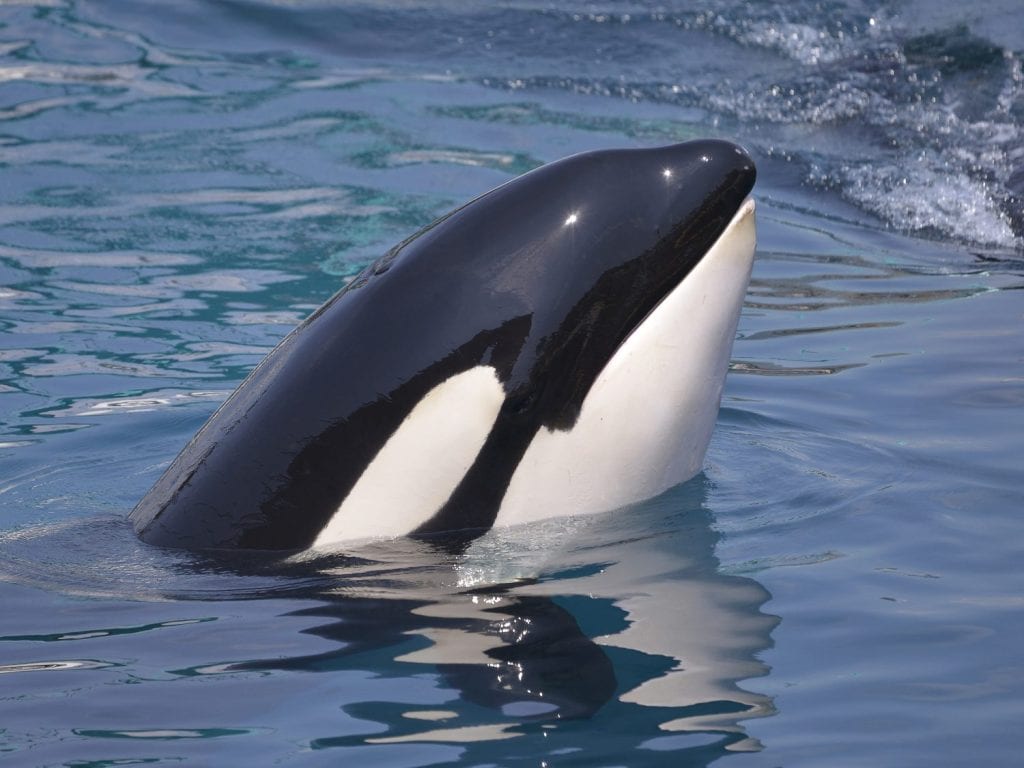
Indigenous people and orcas used to work together to hunt for marine animals.
©Christian Musat/Shutterstock.com
There are records from the past showing that Indigenous peoples in Russia and Australia used to hunt cooperatively with orcas. But this practice ended when European settlers forced them to move away from the land. Indigenous peoples in North America also used to hunt cooperatively with wolves to bring down large prey, such as bison.
In one study that looked at the significance of human–wildlife cooperation, the authors said there are “important benefits to both the human and wildlife communities involved.” Further, the authors found “wider impacts on the local ecosystem.” Finally, the authors recommend that efforts to preserve biological and cultural diversity should consider interactions between humans and animals.