
Quick Take
- Trap-jaw ants have a built-in escape mechanism that weaponizes their own body against predators, and this strategy has nothing to do with running. See the escape strategy →
- Their jaws snap shut faster than any human reflex can register, and yet the truly strange part is what that speed is actually used for. See how the snap works →
- These ants generate jaw force so disproportionate to their size it seems physically impossible, and yet they routinely use those same jaws for something remarkably delicate. Explore their jaw strength →
- A predator invading a trap-jaw ant nest triggers a group response that looks less like defense and more like an organized evacuation. See the nest defense response →
When disturbed, some ants tend to move in multiple directions without rhyme or reason. Other ants, however, will take a proactive approach to escaping danger by literally catapulting themselves to safety. But just how do trap-jaw ants perform this task? It is all thanks to the energy stored in their jaws.
Trap-Jaw Ants Can Catapult Themselves Out of Danger
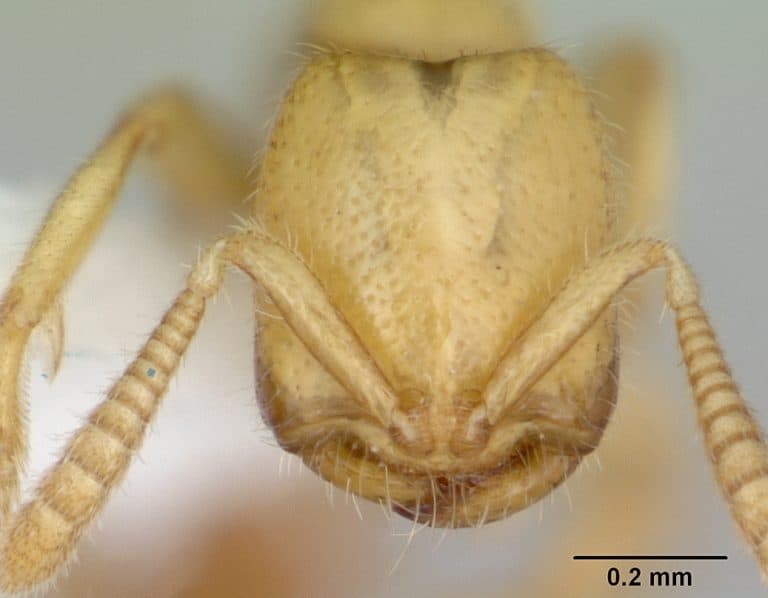
At first glance, trap-jaw ants appear to be fearsome creatures due to their large mandibles. However, these mandibles are used for more than just hunting. They are also used to get the ants out of danger.
Trap-jaw ants have mandibles that hold a great amount of elastic and kinetic energy for their size. The force created when the mandibles snap shut is hundreds of times greater than their body weight. Therefore, it does not matter if trouble is inside or outside the nest, as these ants can escape quickly.
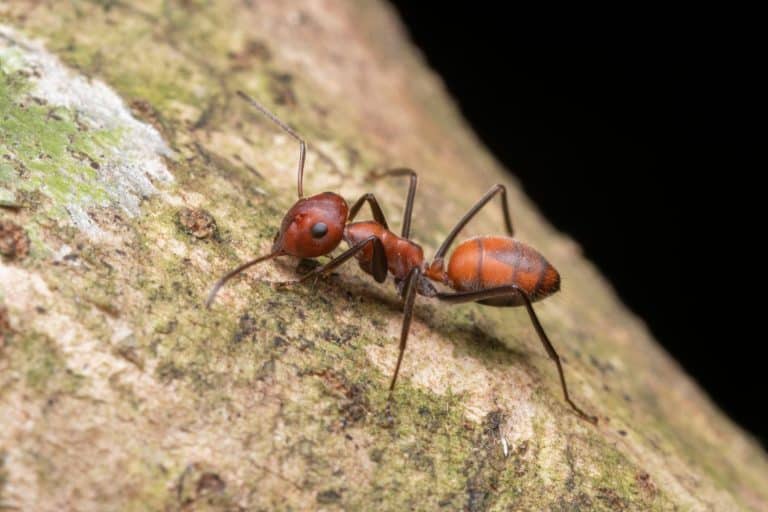
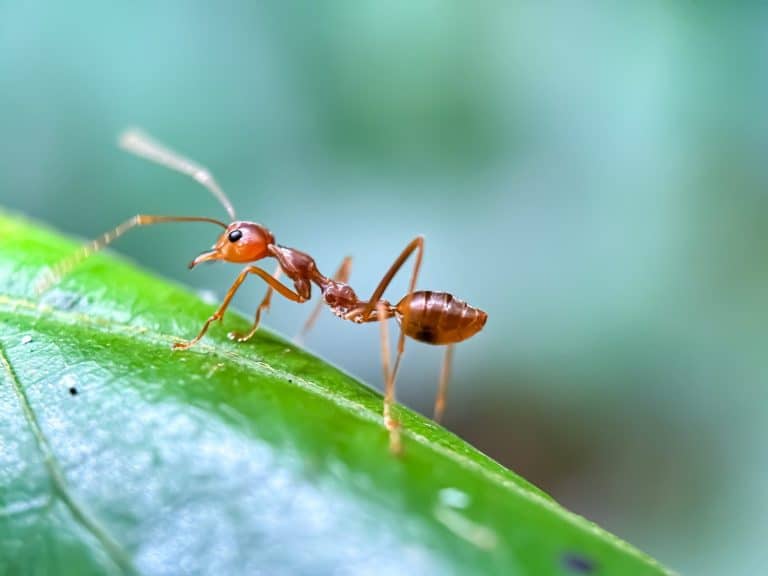
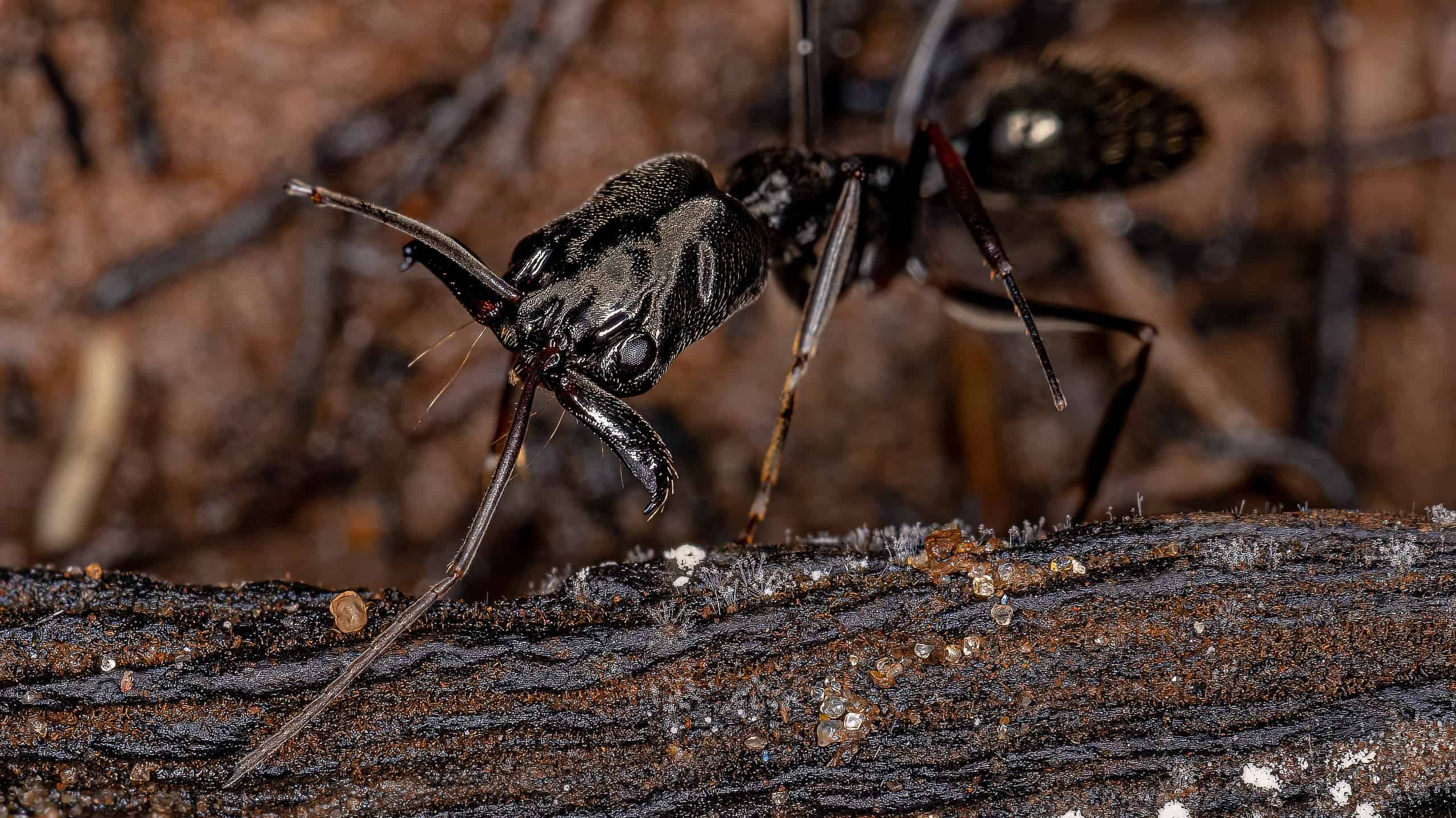
Trap-jaw ants can launch themselves to safety thanks to their strong mandibles.
©kurt_G/Shutterstock.com
If a predator approaches a trap-jaw ant, the mandibles will extend. The trap-jaw ant will then strike its mandibles against a hard surface, catapulting itself out of danger while simultaneously confusing the predator.
However, if a predator wanders into a nest, trap-jaw ants can escape from there as well. They simply line themselves up with the opening of the nest so that when they use the same catapulting method, they launch themselves out of the nest. The ants then work together to create a new nest, free from predators.
Perhaps most incredibly, trap-jaw ants can perform this move time and again without injury. This means trap-jaw ants can repeatedly use this escape mechanism without risk of injury.
Process Behind How Trap-Jaw Ants’ Mandibles Work
The trap-jaw ant has evolved over generations to possess the lightning-fast mandibles it has today. Although trap-jaw ants have always had fast-closing mandibles, the mechanism that triggered this action has evolved over time.
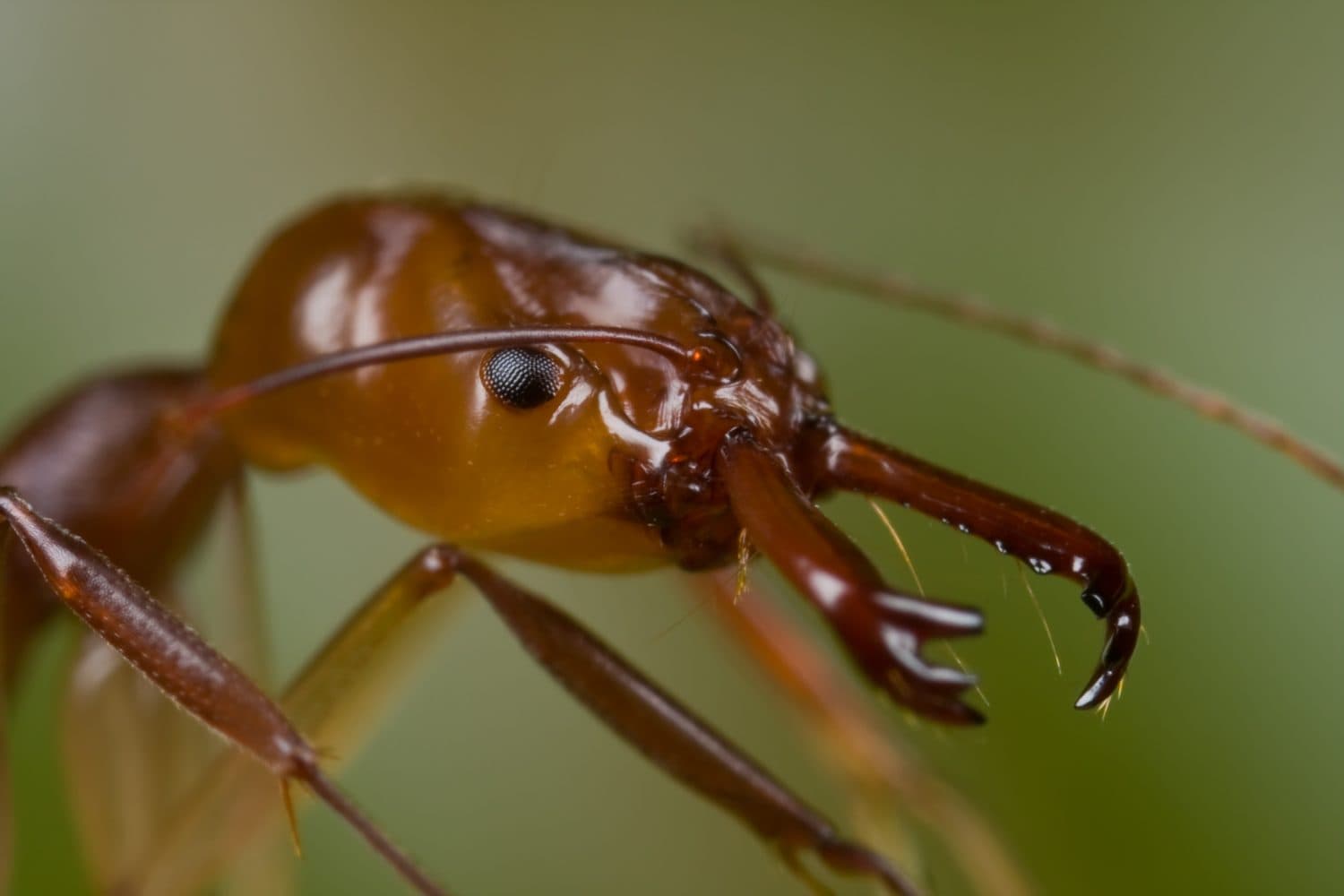
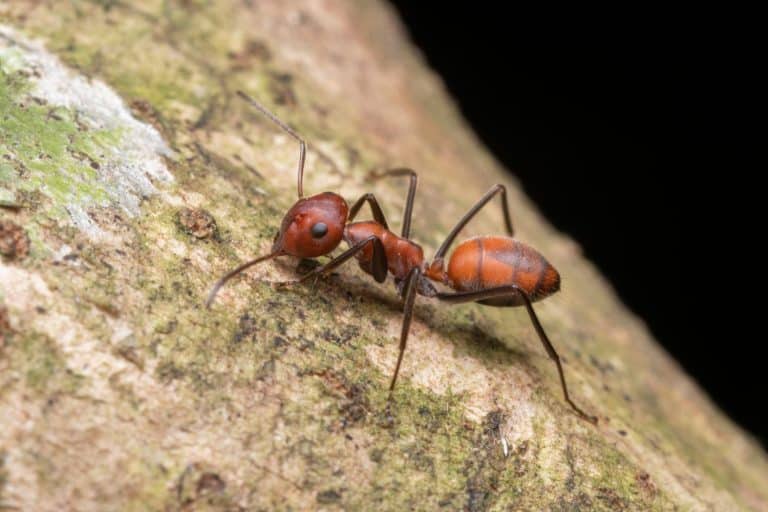
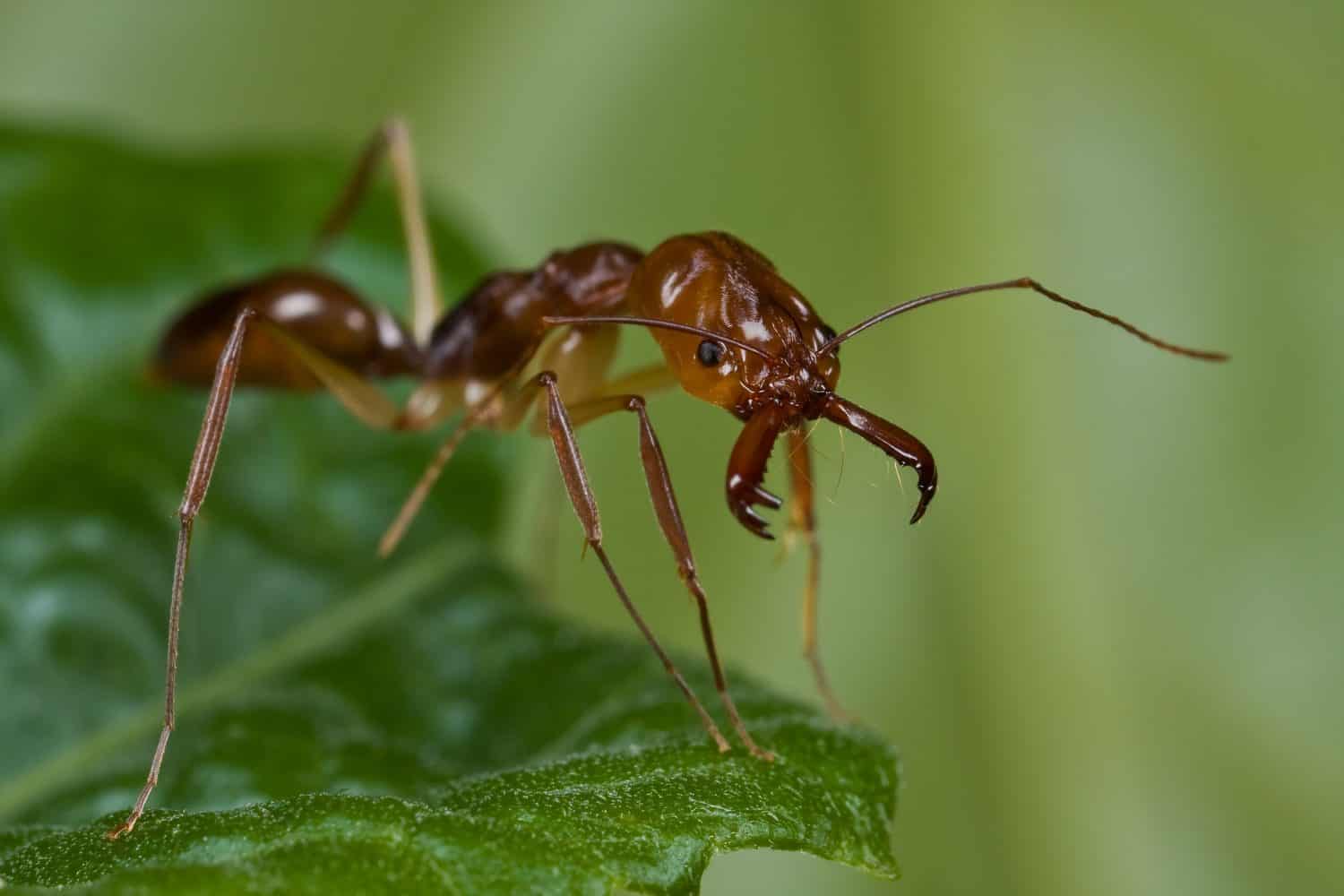
Trap-jaw ants’ mandibles are like a spring trap, releasing kinetic energy when they snap shut at 145 miles per hour.
©kurt_G/Shutterstock.com
Trap-jaw ants’ mandibles work a bit like a spring trap. This is because the mandibles are locked open when the labrum forms a latch. The mandibles are kept open thanks to strong muscles. These muscles store elastic energy, which is released when the mandibles snap shut.
Small sensory hairs inside the mandibles trigger them to snap shut when touched. The elastic energy is converted to kinetic energy, snapping the mandibles closed. This occurs 2,300 times faster than the blink of a human eye, or at around 145 miles per hour. Therefore, when hunting prey, the trap-jaw ant has already struck before the creature it targeted knows what happened.
How Strong Are Trap-Jaw Ants’ Mandibles?
Trap-jaw ants have incredibly strong mandibles. In fact, when compared to other animals, they have one of the strongest mandibles relative to body size. When combined with speed, it is easy to see why trap-jaw ants are such formidable hunters.
The strength of the trap-jaw ant’s mandibles is 300 to 500 times the weight of the ant’s body. This can be anywhere between 5.6 pounds and 11.2 pounds of force.
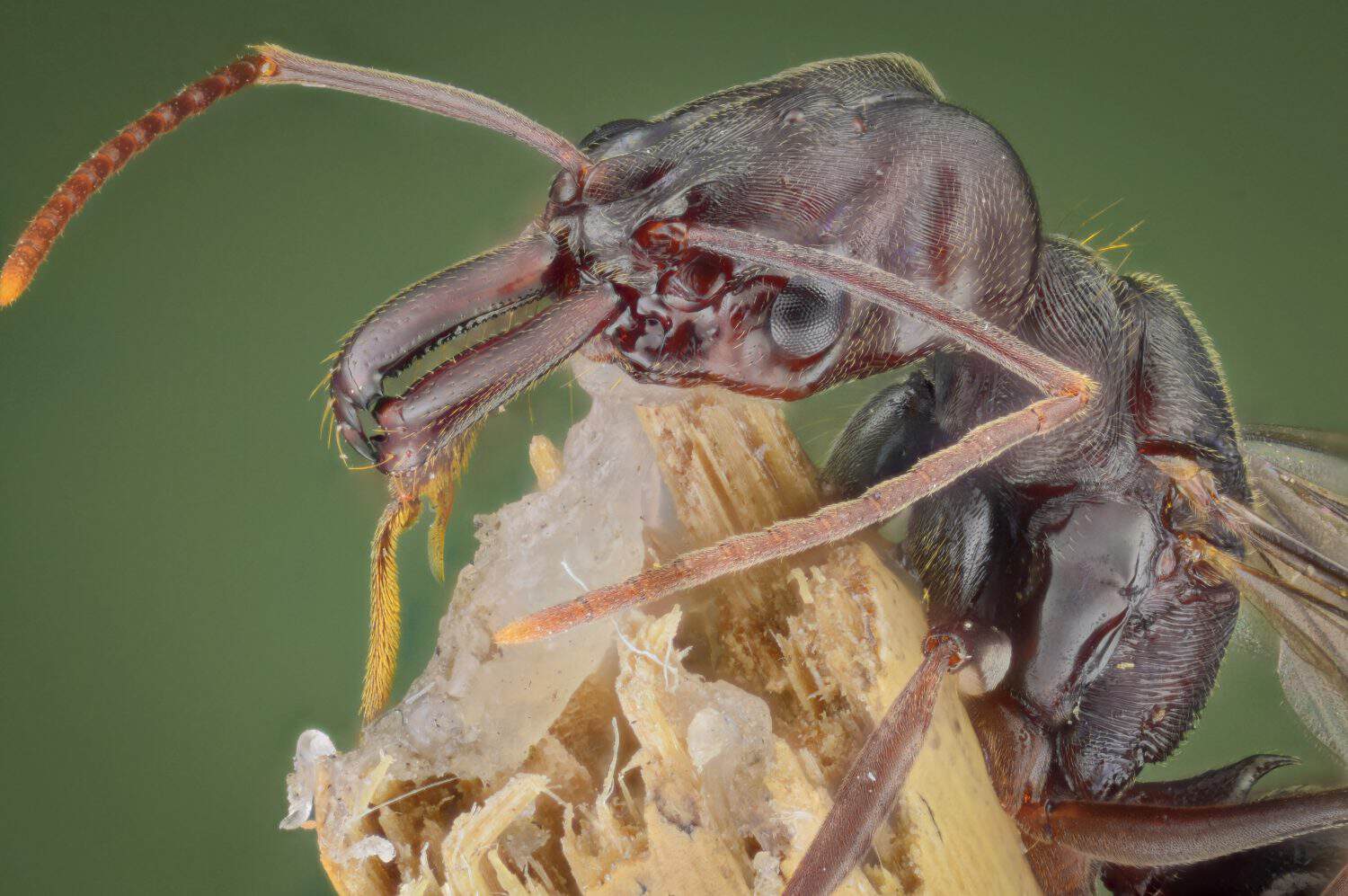
Trap-jaw ant mandibles create a force of 300 to 500 times their body weight when snapping closed.
©Danny Radius/Shutterstock.com
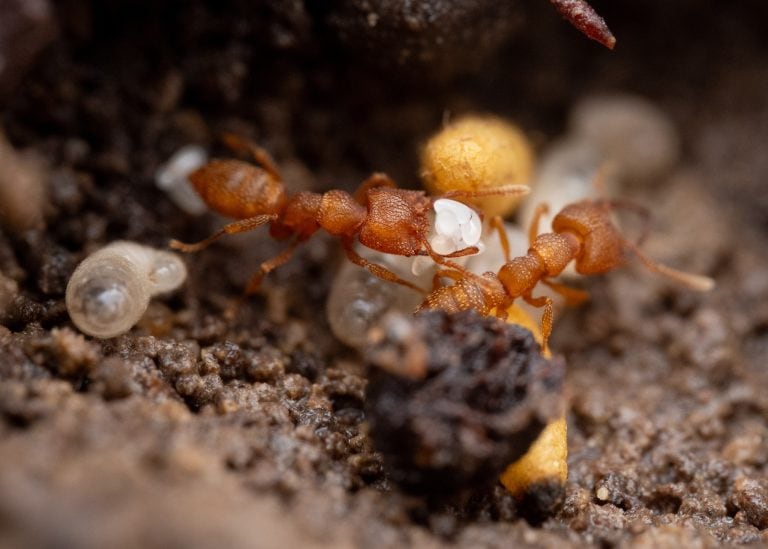
Despite the strength of their mandibles, these ants were observed to be very delicate when tending eggs and larvae, ensuring the next generation matured. Additionally, the jaws were used for digging purposes.
Both uses demonstrate that trap-jaw ants can control how they use their mandibles. While they possess incredible strength and speed, the mandibles are truly a multitasking tool that plays a significant role in trap-jaw ant survival.