
Quick Take
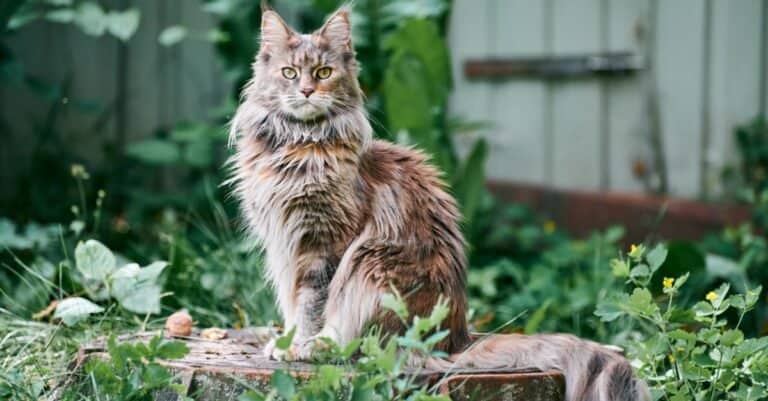
- Theodore Scritches McWiggles weighs 33 pounds, far exceeding the typical Maine Coon male of 13–19 pounds.
- Maine Coons grow slowly. They fill out their frames over 3 to 5 years, and tails and neck ruff develop gradually.
- Maine Coons shed heavily year-round and require daily brushing. Some benefit from monthly baths to loosen undercoat.
Theodore Scritches McWiggles is not your ordinary housecat. This 33-pound Maine Coon recently broke the internet with this TikTok video — and possibly the structural integrity of a few chairs. With the body mass of a lion cub and the playful soul of a toddler, Theodore has become the oversized poster child of the Maine Coon breed. Maine Coons are renowned for their majestic fluff and dog-like personalities, but Theodore pushes the limits of expectation. How does a domestic feline achieve these epic proportions, and are all Maine Coons such Titan-class cuddle machines?
How Big Do Maine Coons Really Get?
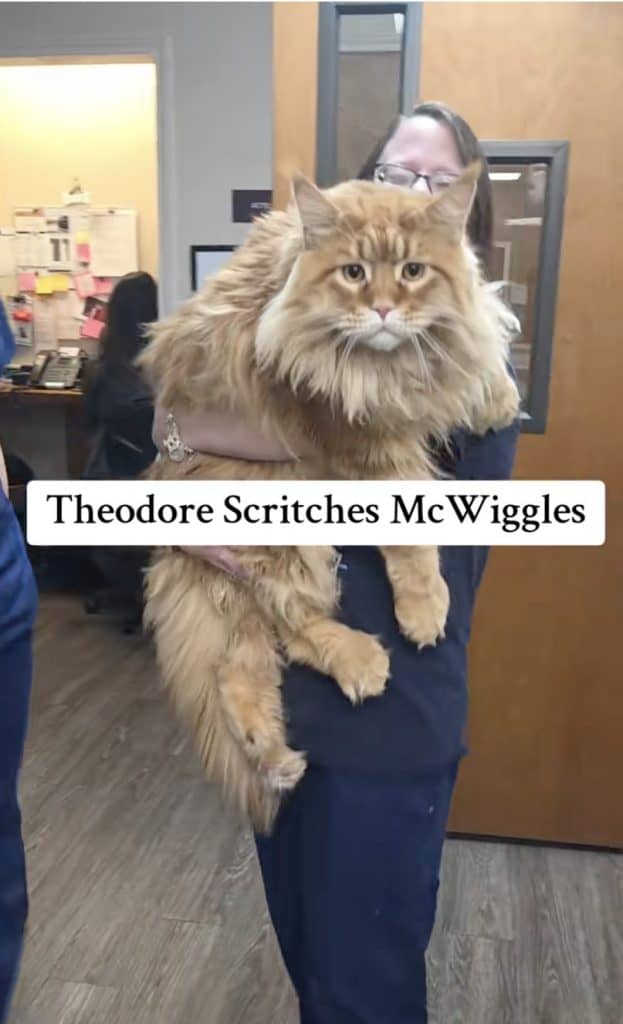
Theodore Scritches McWiggles is primarily an indoor cat and loves hanging out with his human mama.
©TikTok / @tonnagrimm
Maine Coons have rightly earned the title of “gentle giants.” While a typical male weighs between 13 and 19 pounds and females range from 9 to 12 pounds, Theodore is clearly in a league of his own. Theodore’s exceptional mass is a rare anomaly, exceeding the typical size for the breed.
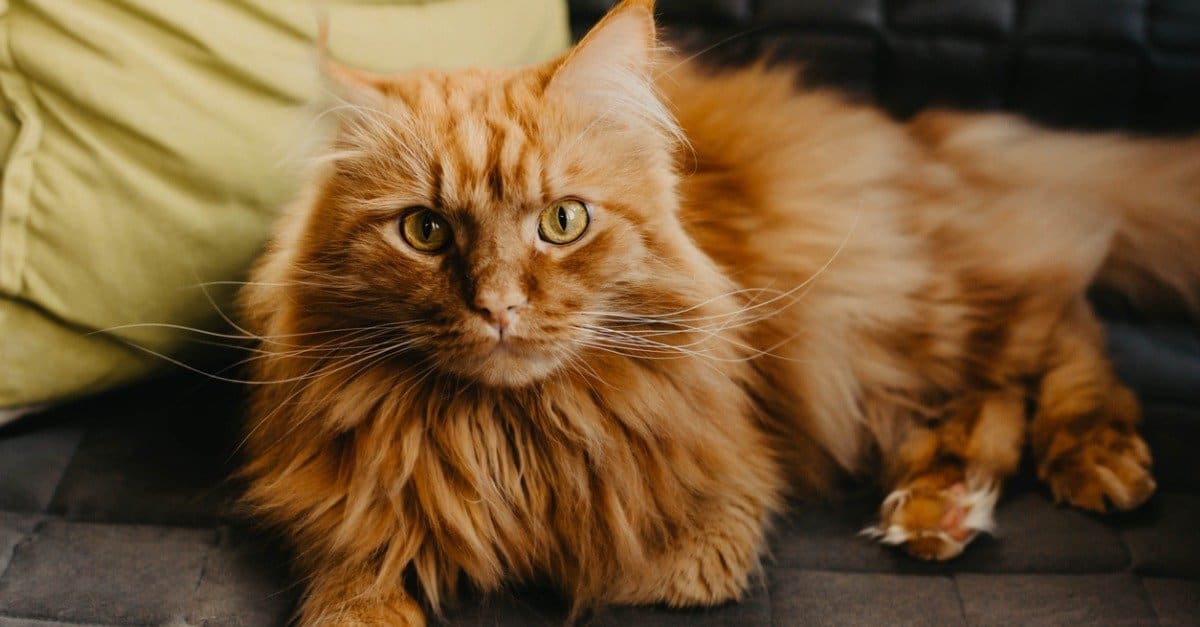
The Maine Coon’s powerful frame is a product of evolution, forged by the harsh, freezing winters of New England. As true survival machines, Maine Coons have tall, broad-chested frames and dense musculature, making them perfect for climbing and hunting in rugged terrain. Their square muzzles are ideal for firmly grasping prey and drinking icy water. Every aspect of the breed is naturally engineered for survival in frozen forests and fields.
A Slow Burn to Stardom
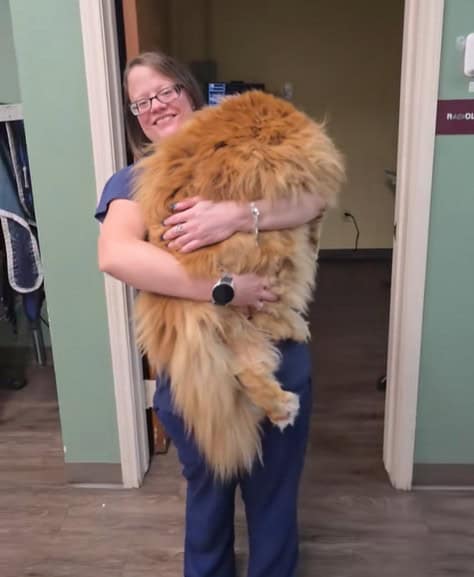
Theodore’s father was 27 pounds, while his mother was 21 pounds.
©TikTok / tonnagrimm – Original
Although Maine Coons begin life as tiny kittens, they defy the typical feline growth timeline. While most housecats are fully grown by the time they are a year old, Maine Coons grow more slowly, filling out their powerful frames and dense muscles over three to five years.
Their signature features also take longer to develop. A Maine Coon’s iconic, feathery tail begins developing around five months of age and continues to gain volume for several years. The thick, insulating neck ruff often does not fully emerge until the cat is about two years old, and the winter coat also takes several years to reach its maximum insulating density.
Do Maine Coons Shed?
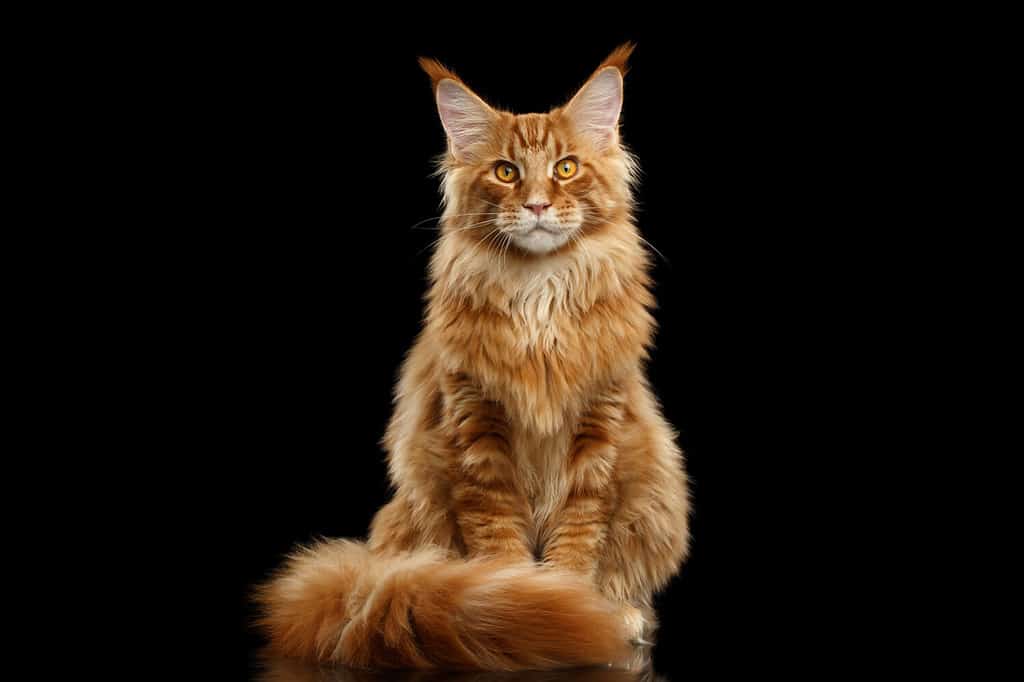
Teaching kittens about grooming routines helps them to cooperate better as adults.
©Seregraff/Shutterstock.com
As the ultimate cold-weather cats, Maine Coons are equipped with a luxuriously layered, water-resistant coat that repels snow and wind. However, this impressive insulation comes at a cost: lots of shedding. The amount of shed hair varies by cat, but owners should prepare for consistent fur storms throughout the year. Living with a Maine Coon means accepting regular sweeping, frequent vacuuming, and finding cat hair in unexpected places.
Managing this amount of fluff and preventing painful mats requires a consistent grooming routine. Most Maine Coons need daily brushing, especially on the tail, belly, and neck ruff. Some may benefit from monthly baths to loosen dirt and undercoat fur. Nail maintenance is also crucial and may require veterinary assistance if the cat is uncooperative. The most effective strategy is to start grooming early, as a Maine Coon kitten familiar with grooming will grow into a cooperative adult.
The Soul of a Gentle Giant
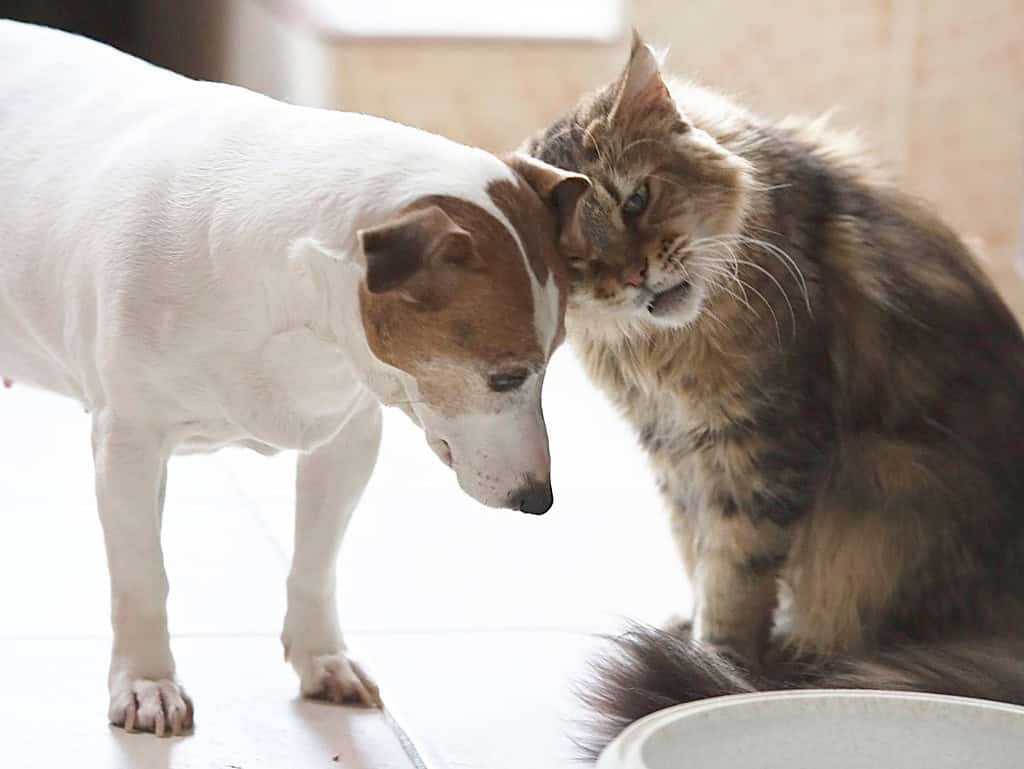
Maine Coons are social animals and enjoy the company of all shapes and sizes.
©Heidi Bollich/Shutterstock.com
Despite their majestically rugged exterior, Maine Coons are famously affectionate and goofy. Owners frequently report dog-like behaviors from their cats, such as following them around the house, learning tricks and routines quickly, and even spontaneously engaging in games of fetch. Maine Coons are highly social creatures and thrive on companionship and mental stimulation. They can make excellent family pets, as they are gentle and tolerant with children, houseguests, dogs, and other animals.
Maintaining a Massive Maine Coon
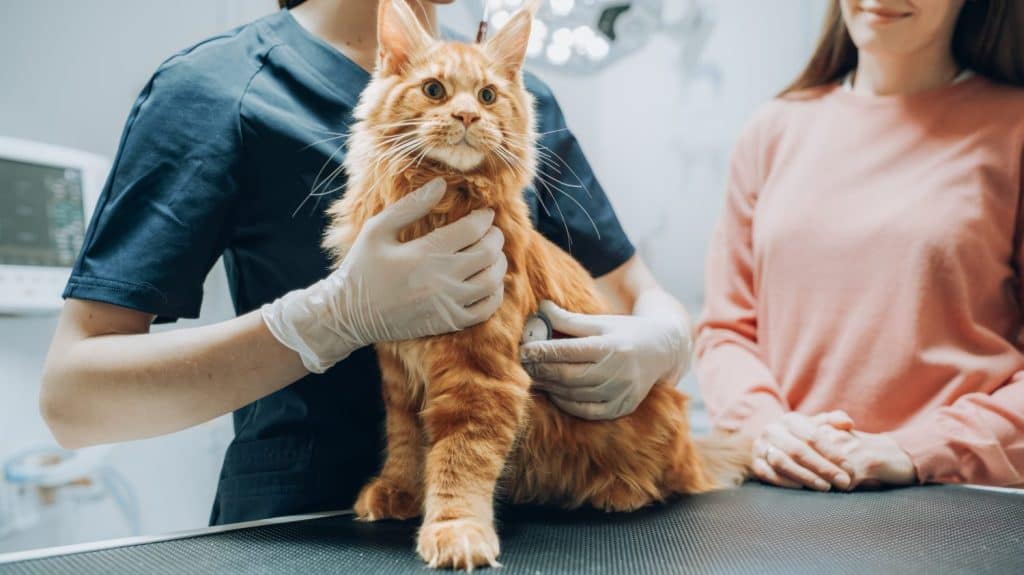
It is important to regularly brush your cat’s teeth and check its nails.
©Gorodenkoff/Shutterstock.com
Given their ancestry, Maine Coons can handle the outdoors — they were naturally selected for harsh climates like the freezing, snowy conditions of winters in Maine. However, modern owners prefer to keep their cats indoors, primarily for safety. As a high-value breed, Maine Coons can be targets for theft, and indoor life can protect them from predators, disease, and traffic.
If kept indoors, these large, active cats need plenty of environmental enrichment. They require space for movement, vertical climbing, mental engagement, exploration, and places to hide. Enrichment is essential for the breed.
As large, active, and naturally athletic cats, Maine Coons need a protein-rich diet that includes both high-quality wet and dry foods. They often have large appetites, so owners should be careful not to overfeed them. Despite their rugged evolution, Maine Coons—like many purebred animals—are prone to specific genetic risks. Owners should be aware of:
- Hypertrophic Cardiomyopathy (HCM). This genetic heart condition often presents around age three, with subtle signs such as appetite loss or changes in breathing.
- Polycystic Kidney Disease (PKD). This is a slow-developing condition that may manifest through weight loss, excessive thirst, or vomiting.
- Spinal Muscular Atrophy (SMA). This genetic neuromuscular disorder causes a cat to walk unsteadily and lose muscle mass in its hindquarters.
You can follow the adventures of Theodore Scritches McWiggles on his very own TikTok account.