Quick Take
- One fish on this list can top 40 pounds, and most anglers who catch one won't keep it for a reason that might surprise you. See why anglers release it →
- One fish on this list is genetically the same as another species, yet only one of them shows up in Illinois during summer. Knowing the difference could change your whole trip plan.
- Targeting catfish at the wrong time of day almost guarantees an empty cooler, and the article reveals the narrow window when they're actually catchable. Find the best fishing window →
- Illinois' best summer fishing spot is not a hidden lake. It is hiding in plain sight in the middle of Chicago. Discover Lake Michigan fishing →
Summer fishing in Illinois offers warm, active angling across diverse waters. Massive reservoirs, scenic rivers, and countless smaller lakes and forest preserve waters yield abundant opportunities for anglers across the state. However, Lake Michigan is the crown jewel of Illinois’ summertime fishing scene, with charter boats operating out of major hubs like Montrose Harbor in Chicago and North Point Marina in Winthrop Harbor. For those staying close to the shoreline, summer mornings and evenings still yield great opportunities for fishing around the rocky harbors, piers, and lakefront parks. Continue reading to discover the best fish to catch in Illinois this summer.
Largemouth Bass
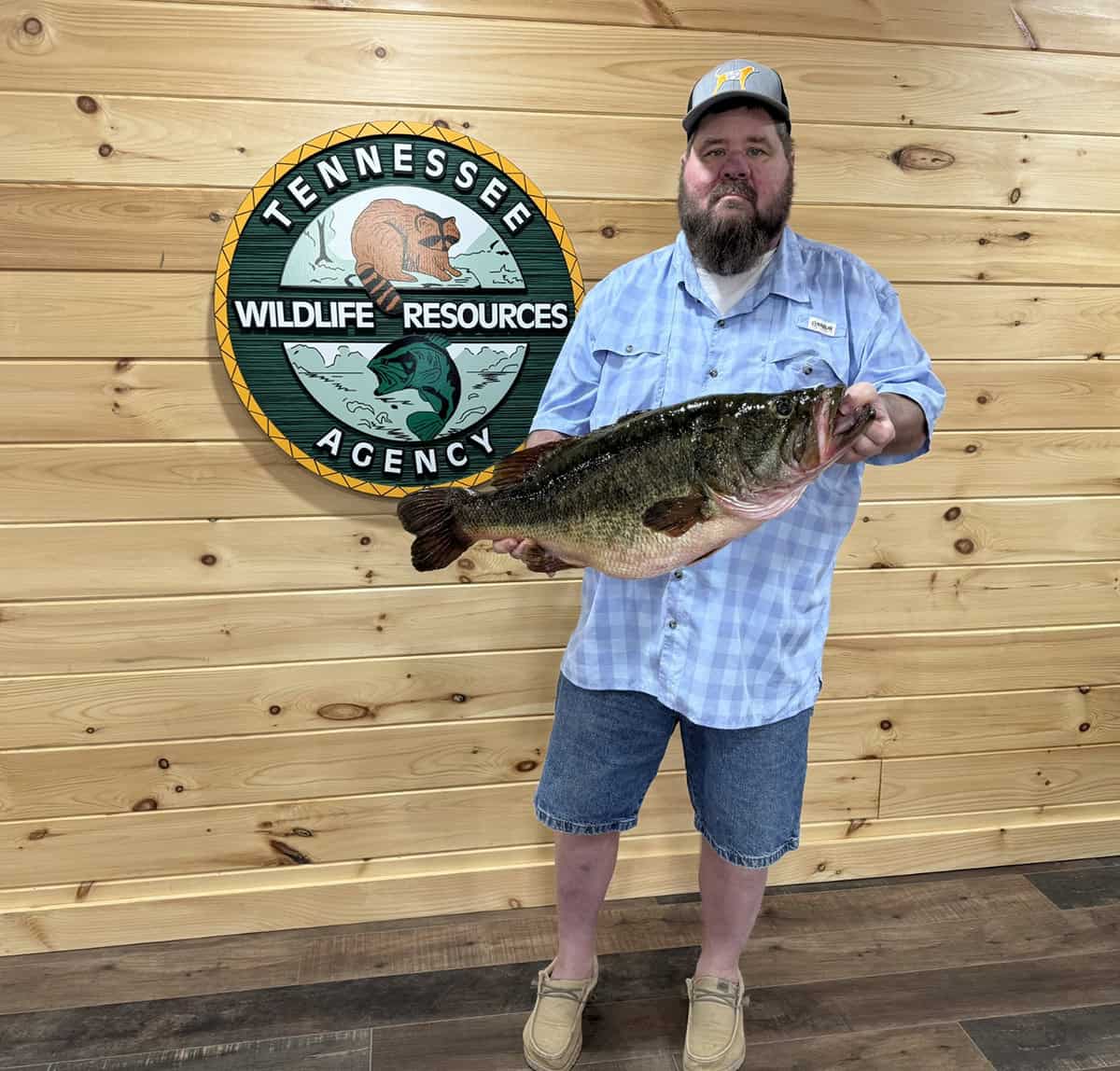
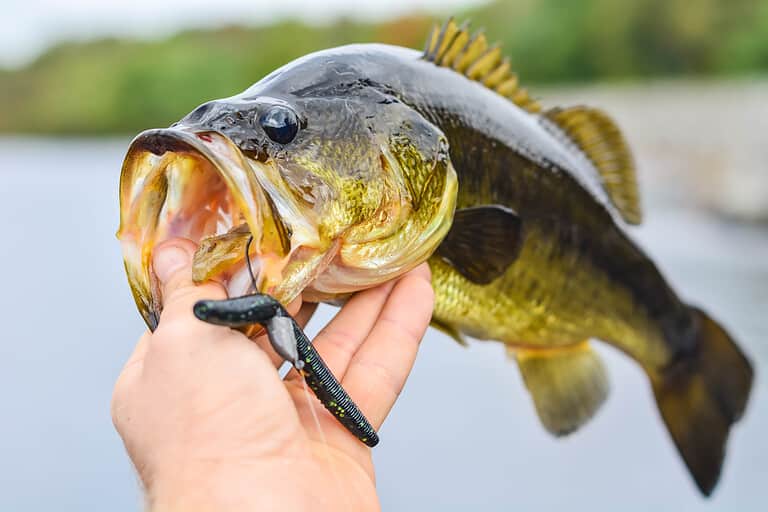
Largemouth bass (Micropterus nigricans) are a popular native game fish in Illinois. They have a dark green back, a white belly, a prominent horizontal dark stripe, and an upper jaw that extends past the rear margin of the eye. An average summer largemouth bass in Illinois is 10 to 20 inches long and weighs one to three pounds.
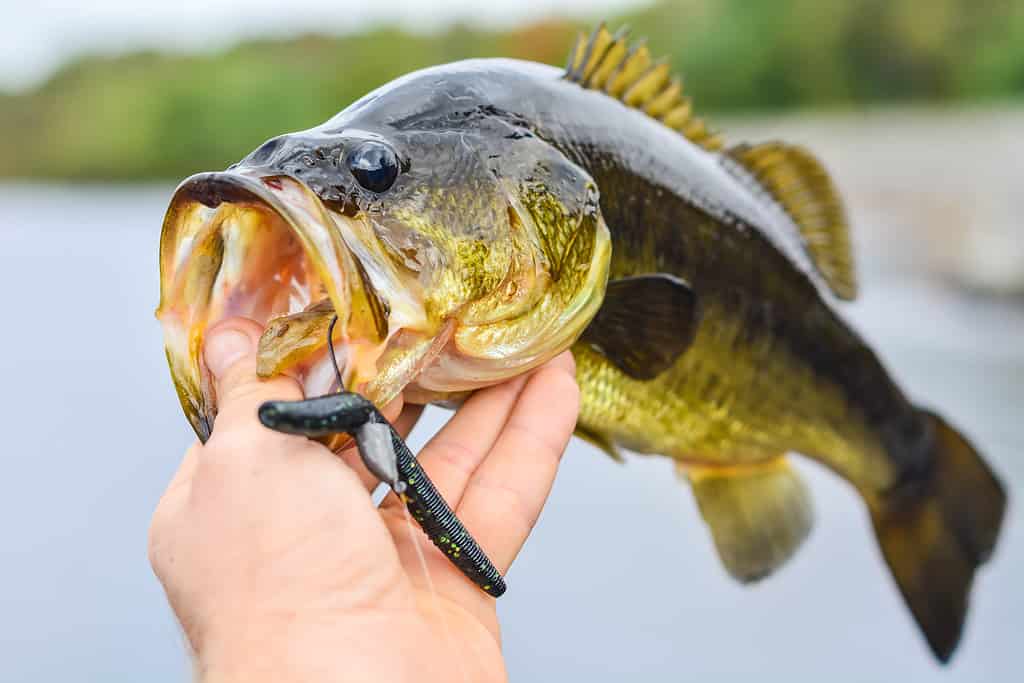
Largemouth Bass are not considered a culinary species.
©michal dziekonski/iStock / Getty Images Plus via Getty Images
Anglers find them lurking around heavy aquatic vegetation, submerged timber, and deeper structure in popular spots like Lake Shelbyville and the Fox Chain O’Lakes. Largemouth bass are not considered a culinary treat. Although they are edible, largemouth bass are primarily considered a catch-and-release sport fish rather than a species to be kept for eating.
The statewide daily bag limit for largemouth bass in Illinois is generally 6 fish (singly or in aggregate with smallmouth and spotted bass), but many waters now have a 12-inch or 15-inch minimum length limit. Always check site-specific regulations before fishing.
Steelhead Trout
Steelhead trout (Oncorhynchus mykiss) are genetically identical to rainbow trout, but unlike rainbow trout, steelhead live in large open waters like the Great Lakes rather than remaining in small streams. They are sleek, silver fish with small black spots. A mature steelhead trout is typically 20 to 30 inches long and weighs 6 to 10 pounds.
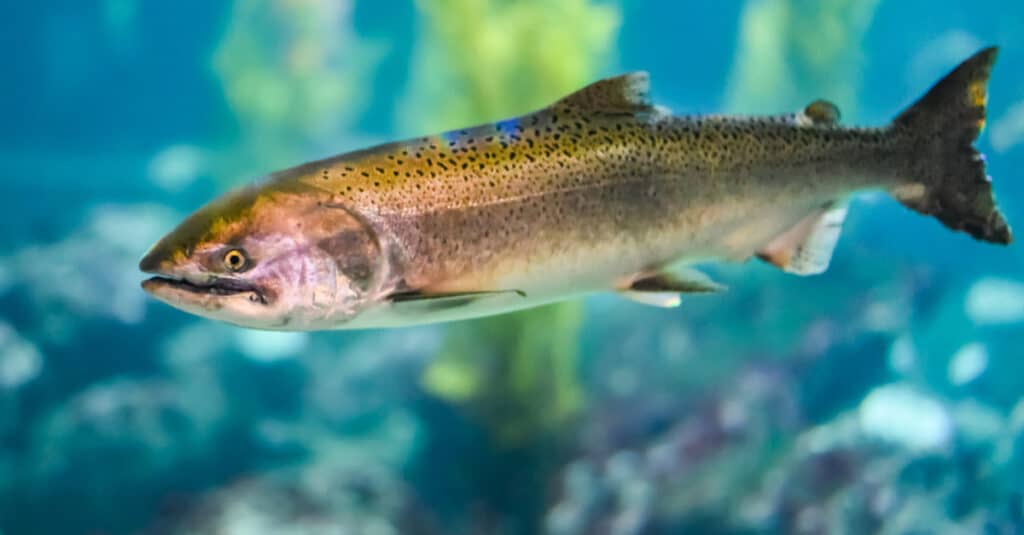
Steelhead trout lurk in the deep water of Lake Michigan.
©David A Litman/Shutterstock.com
During the summer, when populations of stocked rainbow trout have declined, anglers can troll the deep, cool waters of Lake Michigan for steelhead.
The daily limit for trout in Illinois, including steelhead trout, is 5 fish per angler in aggregate, regardless of species, both in Lake Michigan and inland waters.
Known for their flaky, orange flesh, steelhead trout is praised as a top culinary treat.
Channel Catfish
Channel catfish (Ictalurus punctatus) have a smooth, drab gray body, a deeply forked tail, and eight barbels (whiskers). They average 12 to 32 inches in length and weigh 2 to 15 pounds. These bottom feeders are found in deep pools, around bridge pilings, and near logjams in rivers and reservoirs throughout Illinois. As this species is nocturnal, they are most active between dusk and dawn.
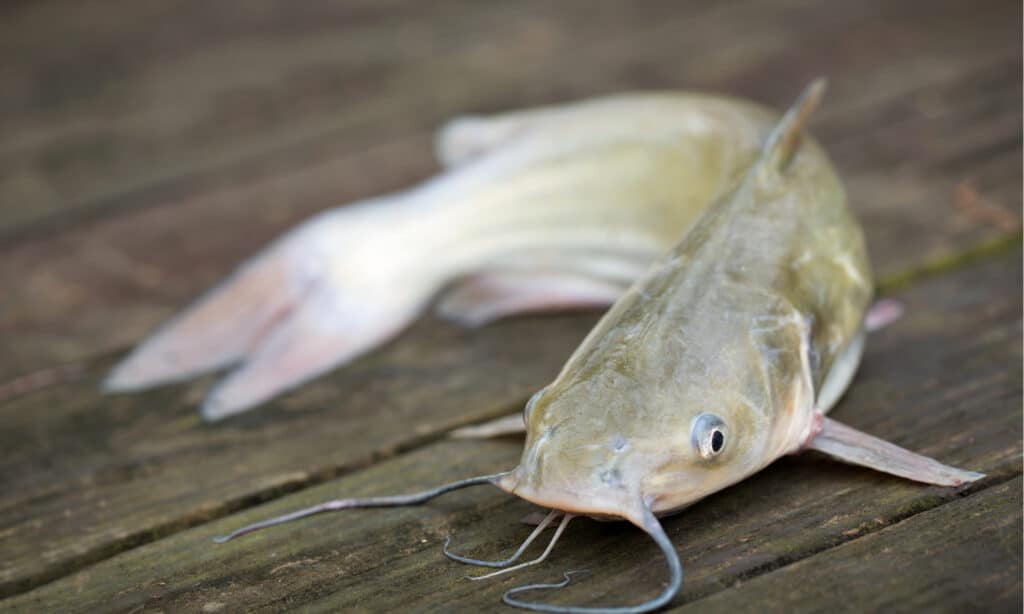
Channel catfish are usually bottom feeders.
©Jennifer White Maxwell/Shutterstock.com
In Illinois, the statewide daily bag limit for channel catfish is 6 fish per day, though some lakes and managed areas may have stricter site-specific regulations.
Channel catfish are considered a culinary delight.
Black Crappie
Black crappie (Pomoxis nigromaculatus) are recognized by their silvery-green sides, which are heavily speckled with irregular black blotches. They average 10 to 12 inches in length and weigh between 1 and 1.5 pounds.
In Illinois, the best crappie fishing is found in southern reservoirs like Rend Lake and Kinkaid Lake, where anglers must adapt to deeper, cooler water as these deep-bodied, laterally compressed fish congregate near submerged timber, brush piles, or weed edges. Highly prized for their firm, sweet, white flakes, black crappies are widely considered an exceptional culinary treat.
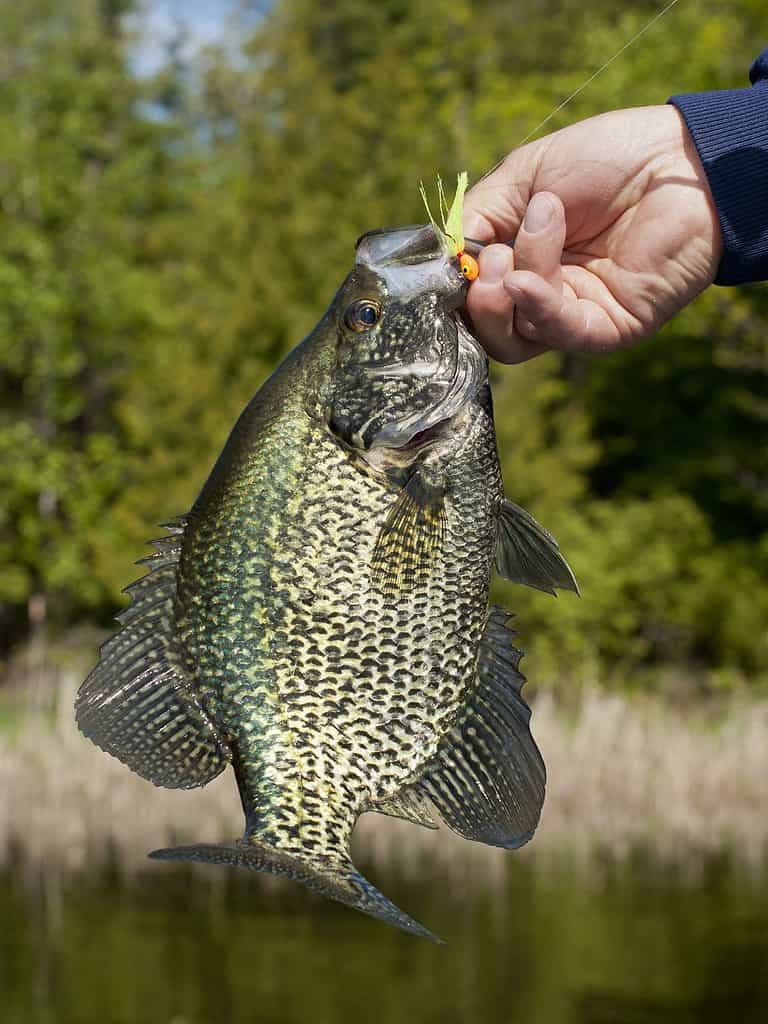
Black crappie is a delicious panfish species.
©Steve Oehlenschlager/Shutterstock.com
Illinois has a 10-inch minimum length and a 10-fish daily limit for crappie on many waters, but regulations can vary by location. Always check local rules before fishing.
Muskellunge
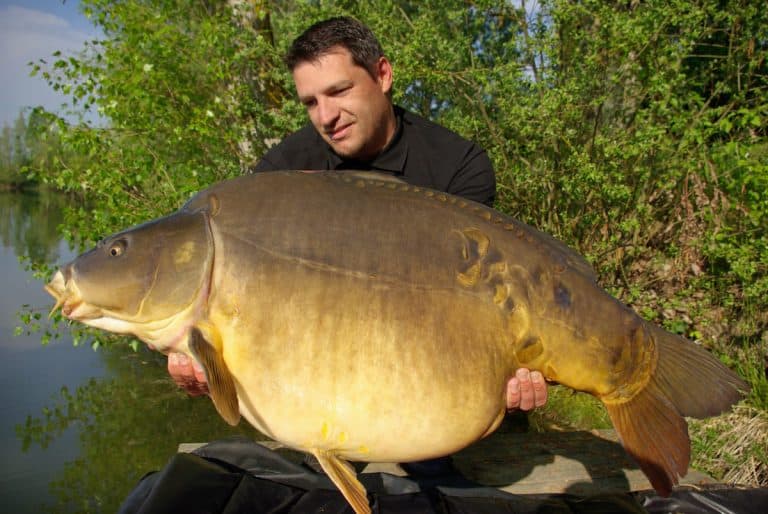
Muskellunge (Esox masquinongy), or muskies, offer an exhilarating challenge for anglers due to their formidable size and strength. Easily recognized by their elongated, torpedo-shaped, light silver to greenish-brown bodies, and distinct dark vertical bars or spots along their flanks, muskies have duckbill snouts lined with needle-sharp teeth. In Illinois waters, mature muskies average between 34 to 40 inches in length and typically weigh 10 to 20 pounds, though trophy catches can exceed 40 pounds.
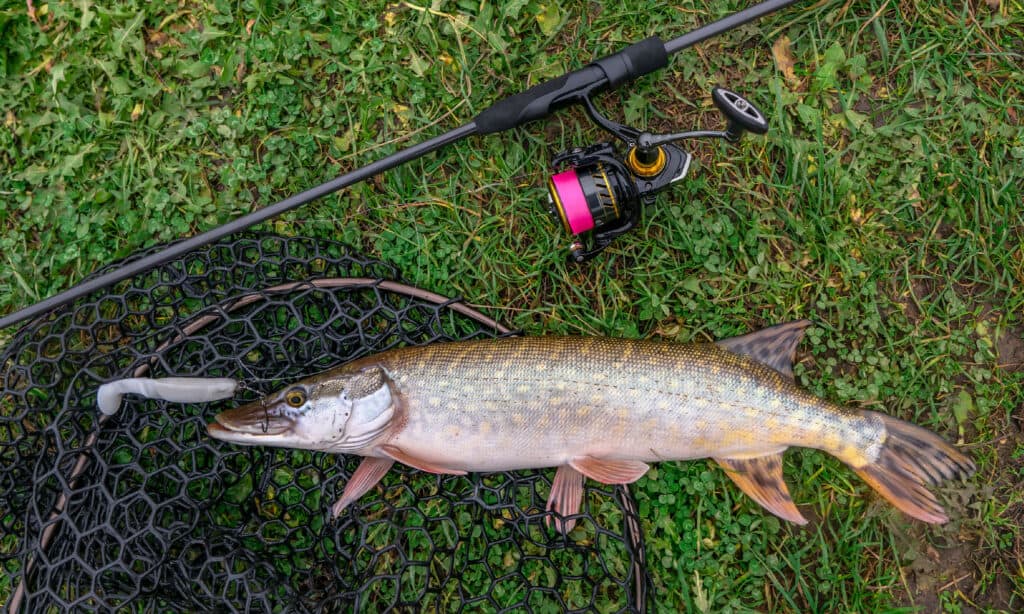
Muskellunge are more of a sport fish than a culinary dish.
©iStock.com/FedBul
During the summer heat, anglers can find them in cool depths, near steep drop-offs, or hiding within heavy weed beds. The best places to fish for muskies in Illinois include Lake Shelbyville, Kinkaid Lake, Fox Chain O’Lakes, and the Pierce Lake chain.
Despite their size, muskies are not considered a culinary treat; their flesh is often described as bony, bland, and strongly flavored. The vast majority of anglers practice strict catch-and-release to preserve these prized sport fish populations.
Yellow Perch
Yellow perch (Perca flavescens) are golden-yellow fish featuring six to eight dark, vertical olive-green bars on their sides and bright lower fins. Averaging 6 to 10 inches in length and weighing about one-fourth to one-half pound, these schooling fish move to deeper weed lines, drop-offs, and structures in Lake Michigan, Northern glacial lakes, and the Mississippi River during warm weather.
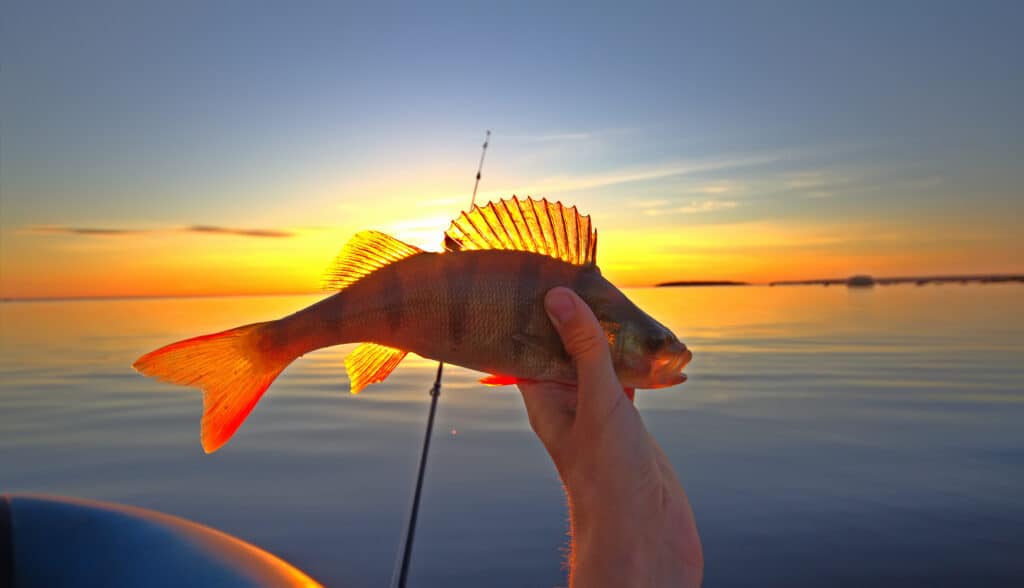
The yellow perch is a favorite of anglers, both for its level of fight and also its great taste.
©Maximilliam cabinet/Shutterstock.com
The daily bag limit for yellow perch in Illinois waters of Lake Michigan and connected rivers is 15 fish per day. Limits may vary in other locations, so check local regulations.
Yellow perch have firm, flaky white meat that is sweet and considered exceptional table fare.