Quick Take
- Puffins lack teeth, yet slippery fish stay locked in place through multiple dives. The mechanism responsible is stranger than you'd expect. See the tongue mechanism →
- Most seabirds eat each fish as they catch it, but puffins exploit a built-in biological trick to save time and energy. Discover the biological trick →
- The number of fish a puffin can hold at once is more than just impressive. It is the difference between a chick surviving or starving. See the beak capacity →
Birds that dive for their prey can spend hours in the water chasing fish. After each fish is caught, it is consumed on the spot, and the hunt continues until the bird has had their fill.
One bird has managed to streamline this process. Instead of eating each fish individually, a puffin often holds a dozen fish in its beak without dropping one. This feat is made possible by a special mouth feature that saves the puffin both time and energy while hunting.
The Puffin Has a Serrated Tongue to Keep it from Losing Fish
Puffins are coastal birds that dive for their prey. This hunting style can be exhausting, especially during months when food tends to be scarcer. To combat fatigue and make the most of each dive, puffins have a unique way of securing fish. The method is not only efficient, but it also ensures fish stay in place until puffins are ready to eat them.
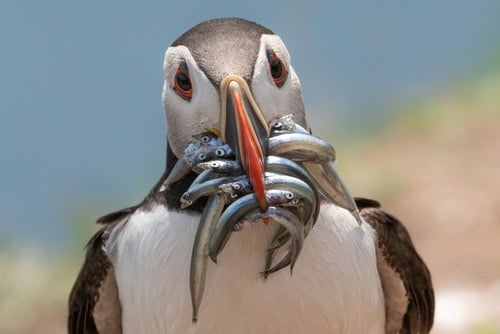
Puffins have a serrated tongue that helps keep multiple fish in place as they hunt and dive.
©Rbmurray Photography/Shutterstock.com
As birds, Puffins do not have teeth to keep slippery fish from escaping their beaks. Instead, they have backward-facing spines on their tongues. These spines move the fish to the roof of their mouth, where they are held in place by another set of spines. Thanks to these serrations, puffins can line fish up in their mouths horizontally, one after another. The birds dive multiple times until they have a desired number of fish in their beak, before returning to shore to consume their catch of the day.
How a Puffin Hunts
Puffins require approximately 40 fish per day to maintain their weight. When caring for chicks, that number increases exponentially. Because of this, puffins have to hunt multiple times during daylight hours to keep their health in tip-top shape.
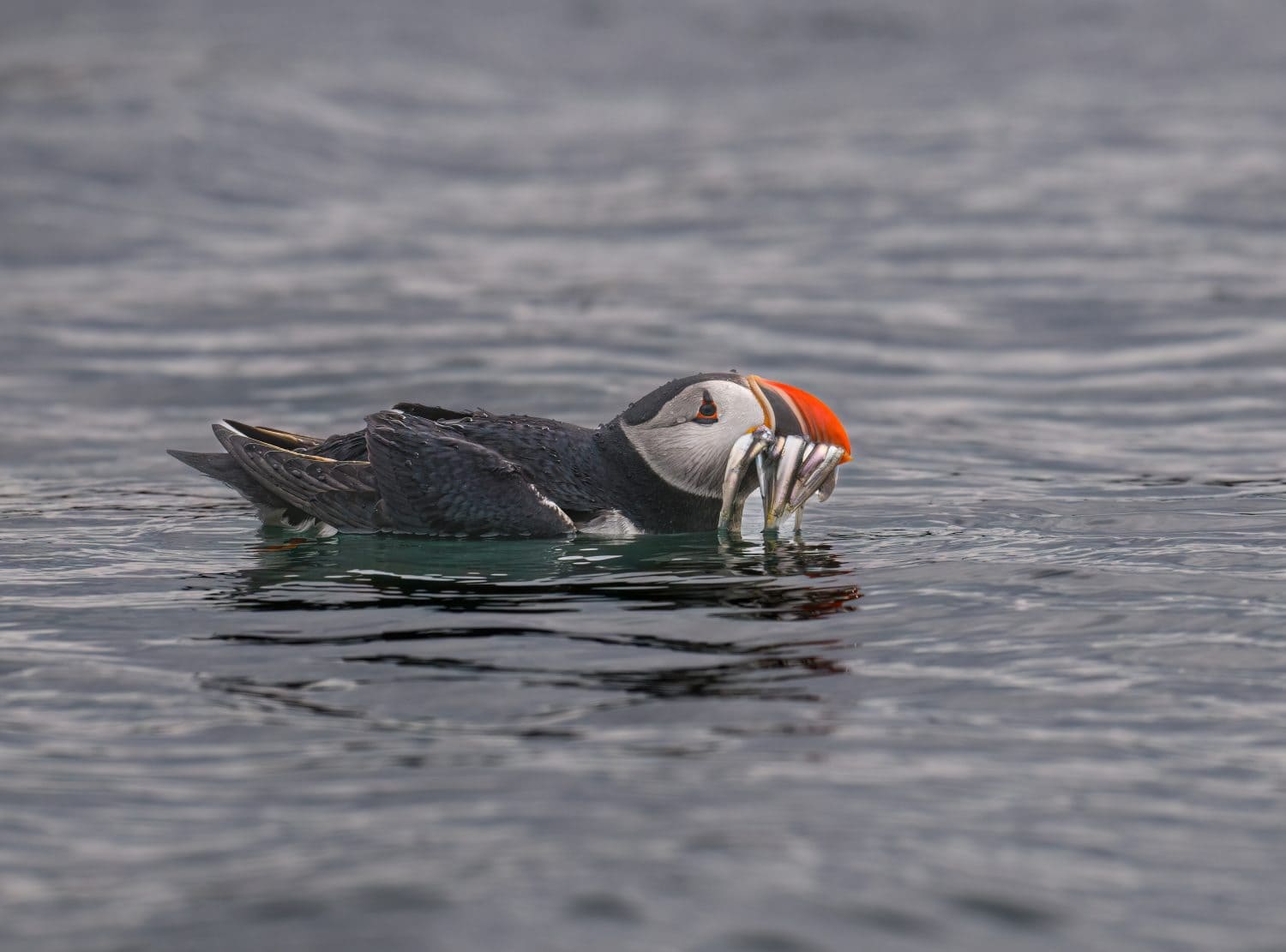
Puffins use their wings to push themselves through the water as they hunt for fish.
©FotoRequest/Shutterstock.com
Fortunately, according to Biology Insights, puffins are quite skilled at fishing. They can find their desired prey in both the shallows and deeper water up to 200 feet below the surface. As puffins move gracefully and quickly through the water, swimming with their wings and using their feet to keep them on course, they trap fish in their beak.
Once the puffin has a number of fish securely held in its beak, it will return to the surface and back to shore to enjoy its meal.
How Many Fish Can a Puffin Hold at One Time?
Puffins have beaks that are between 10 and 15 inches in length, depending on the species. The prey they target tends to be sprats, eels, herring, and capelin, which are between two to six inches long. This means, on average, a puffin can hold 10 or more fish in their beak at one time. A few sources estimate the maximum number of fish their beak can hold is between 62 and 68! Some puffins are able to do this in one fell swoop, while others use their serrated tongues to keep their fish from escaping as they dive for more.
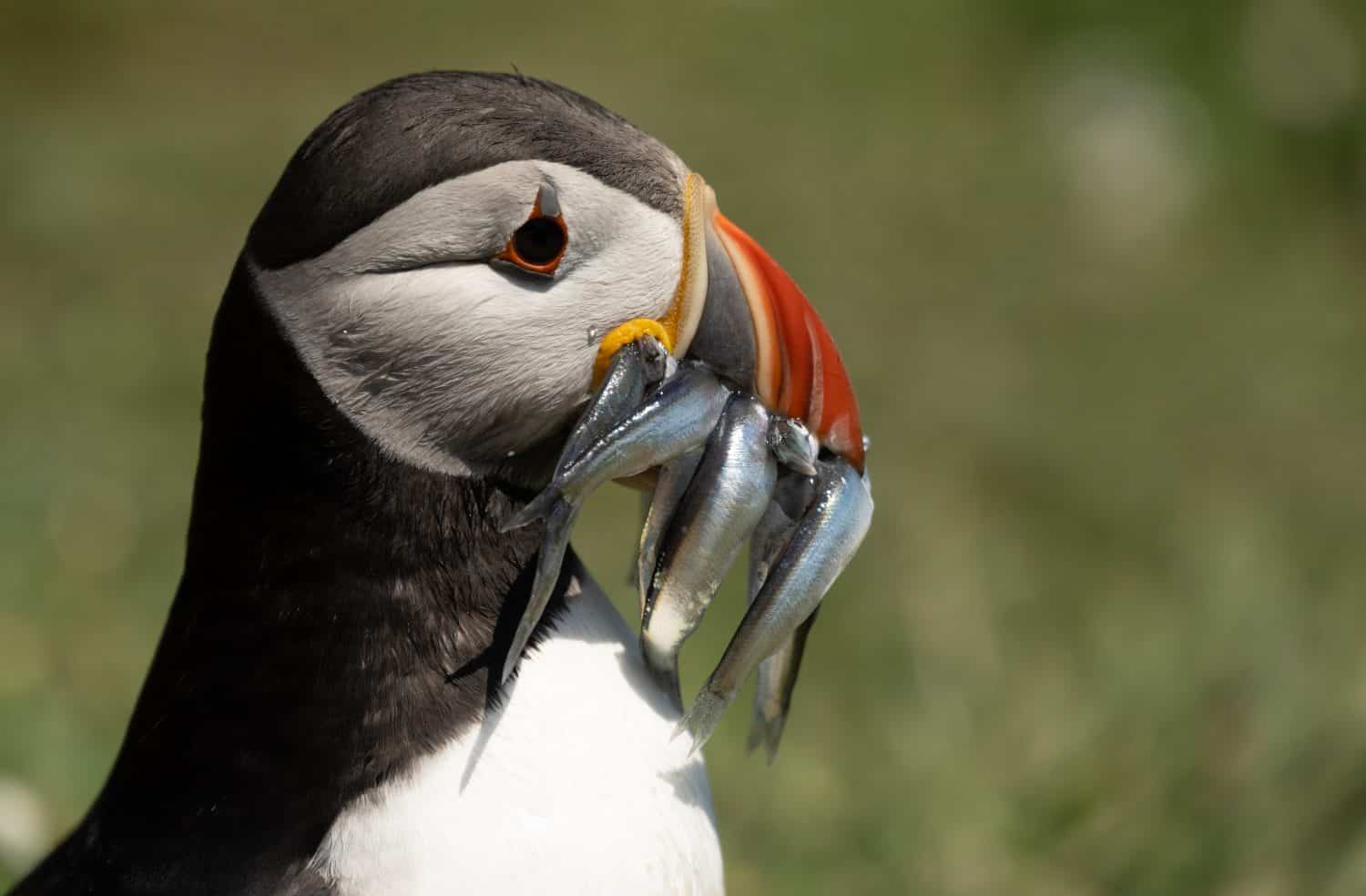
Puffins can hold at least 10 fish at a time, with some sources reporting much higher numbers.
©Dawn Biggs/Shutterstock.com
The fact that puffins can secure so many fish at one time makes them efficient hunters, which is especially necessary when caring for chicks. With both parents catching multiple fish at once, less time is spent in the ocean, and chicks are fed more often. This unique hunting strategy also reduces the energy adult puffins use to feed. Consequently, the puffin’s serrated tongue is more than a novelty; it is a necessary tool for survival.