
Quick Take
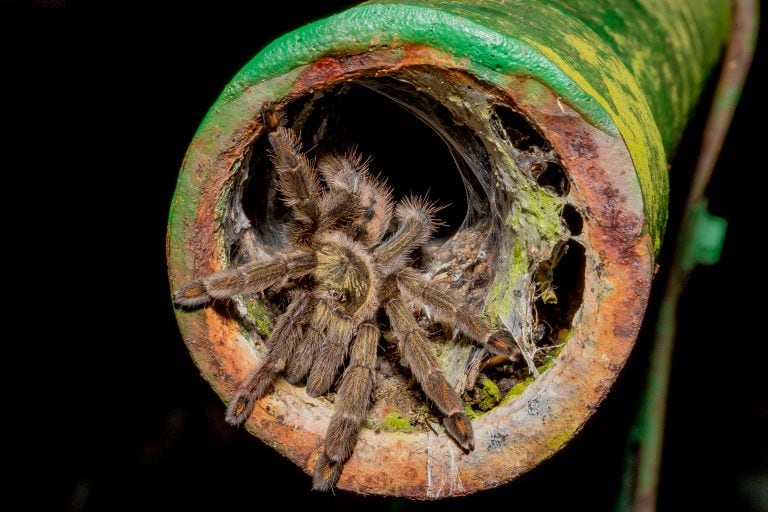
- Survival in the arid soil of the Gran Chaco requires silk-lined walls to keep tarantulas’ burrows humid.
- Members of the Bumba genus have type IV urticating setae, which are short, very fine hairs with pointed tips and barbs.
- Contrary to expectations, several burrowing species thrive in regions defined by seasonal flooding.
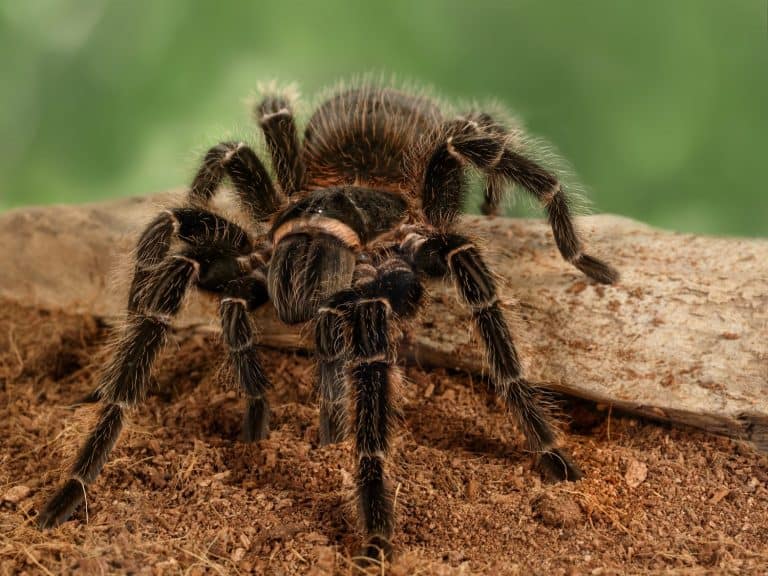
- Grammostola tarantulas are medium to large spiders that can reach leg spans of up to 8 inches.
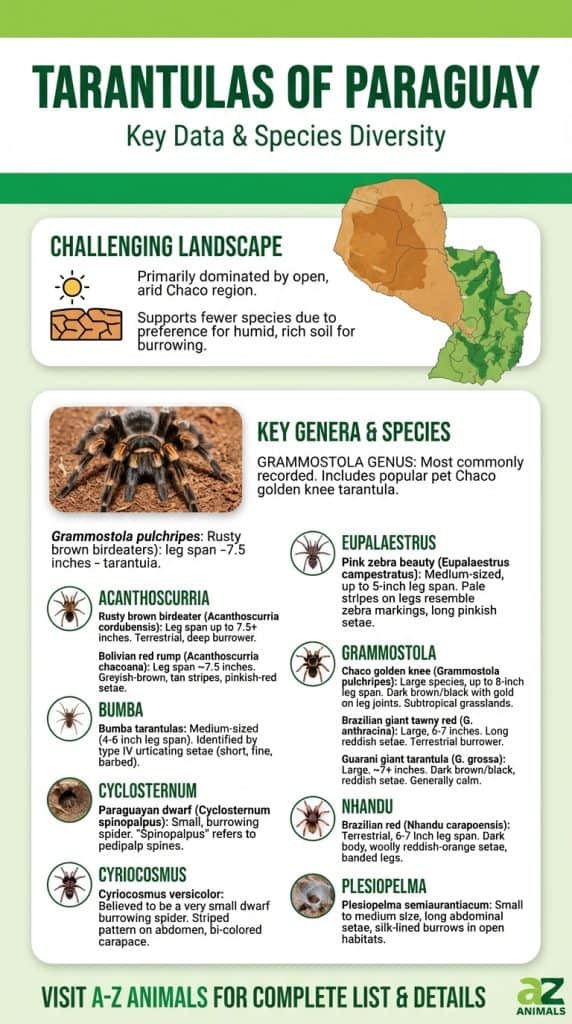
Paraguay is home to at least a dozen described tarantula species. While Paraguay does have forested regions, the landscape is primarily dominated by the more open, arid Chaco region, which supports fewer species. New World tarantulas prefer richer, more humid soil for burrowing, which is not as prevalent in the drier Chaco of Paraguay.
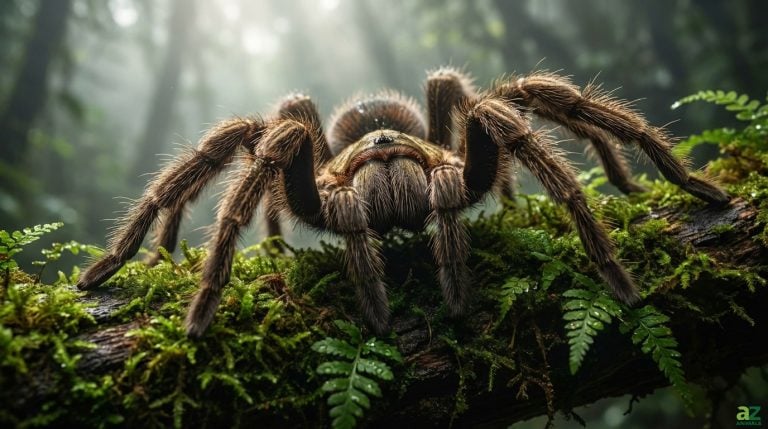
Deep in the arid heart of the Chaco, these massive burrowers have evolved to conquer a landscape most species can’t survive.
©A-Z Animals
The genus Grammostola is the most commonly recorded in Paraguay and includes the popular pet species, Grammostola pulchripes, also known as the Chaco golden knee tarantula. The following list includes all currently recognized tarantula species in Paraguay, based on the World Spider Catalog as of December 2025. For a comprehensive reference, see our complete list of all tarantula species.
Acanthoscurria Ausserer, 1871
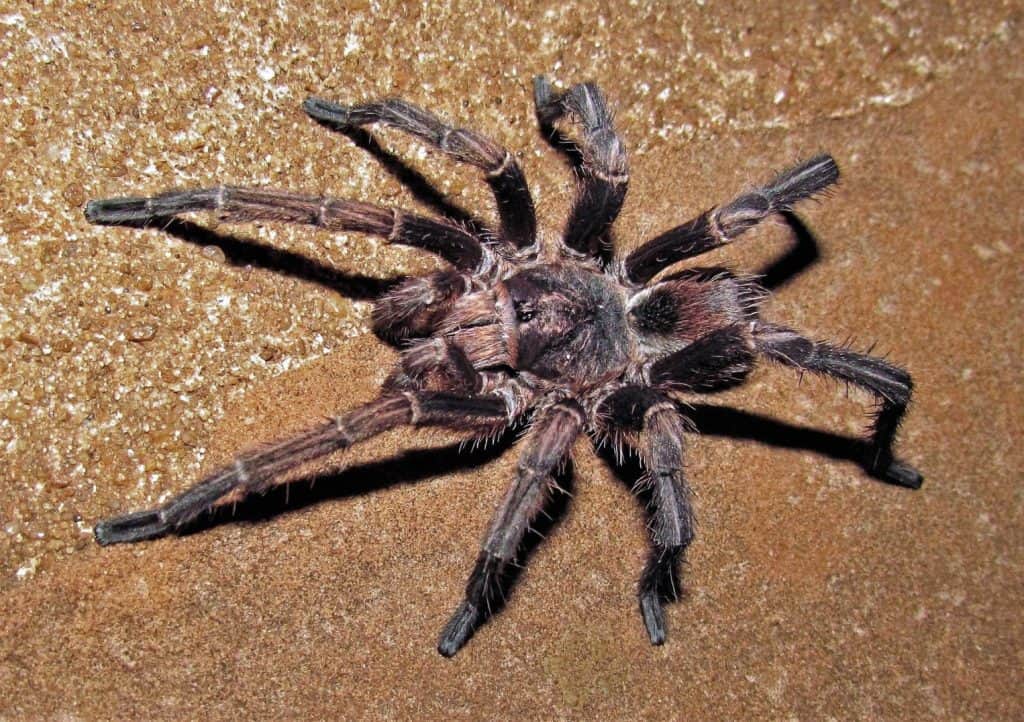
The rusty brown birdeater, Acanthoscurria cordubensis, has a leg span of up to 7.5 inches or more.
Acanthoscurria chacoana Brèthes, 1909
- Common name: Bolivian red rump or Bolivian pink
- Distribution: Brazil, Bolivia, Paraguay, Argentina
Acanthoscurria chacoana is a large spider that can reach up to about 7.5 inches. This burrowing spider inhabits dry thorn forests, savannas, and grasslands with seasonal flooding. A. chacoana is greyish-brown to dark brown with tan stripes on its legs and pinkish-red hairs (setae) most prominent on its abdomen.
Acanthoscurria cordubensis Thorell, 1894
- Common name: Rusty brown birdeater
- Distribution: South America, except Colombia, Suriname, Ecuador, and Chile
Acanthoscurria cordubensis, previously known as Acanthoscurria suina, is found throughout South America, including Paraguay. These medium to large spiders have a leg span of approximately 6 to 7.5 inches. They are terrestrial spiders that dig deep, tubular, heavily webbed burrows. A. cordubensis is a brown spider with reddish setae on its legs and abdomen.
Acanthoscurria musculosa Simon, 1892
- Common name: Brazilian black velvet
- Distribution: Bolivia, Paraguay, Argentina
Acanthoscurria musculosa is medium to large size with a leg span between 5 and 7 inches. It is a burrowing spider, typically found in more humid environments. A. musculosa is dark brown to black with tan bands on its legs and light brown setae on its legs and abdomen.
Bumba Pérez-Miles, Bonaldo & Miglio, 2014
Bumba tarantulas are medium-sized terrestrial spiders with a leg span between 4 and 6 inches. Tarantulas in this genus can be distinguished by type IV urticating setae. These are short, very fine hairs with pointed tips and barbs. B. mineiros has a reddish-brown cephalothorax and legs and a dark abdomen. the type specimen has a total length of 1.34 inches, and its longest legs (pair IV) measure 1.87 inches. Its original location in Paraguay is unknown.
Bumba mineiros Lucas, Passanha & Brescovit, 2020
- Common name: N/A
- Distribution: Paraguay, Brazil
Cyclosternum Ausserer, 1871
There is little information about Cyclosternum spinopalpus, but it is known to be a small, burrowing spider. The species was initially described as Tmesiphantes spinopalpus by Schaefer from a specimen in Paraguay. It was later transferred to the genus Cyclosternum following taxonomic revisions. The name “spinopalpus” refers to the spines on its pedipalps (the small appendages near the mouth).
Cyclosternum spinopalpus (Schaefer, 1996)
- Common name: Paraguayan dwarf
- Distribution: Paraguay
Cyriocosmus Simon, 1903
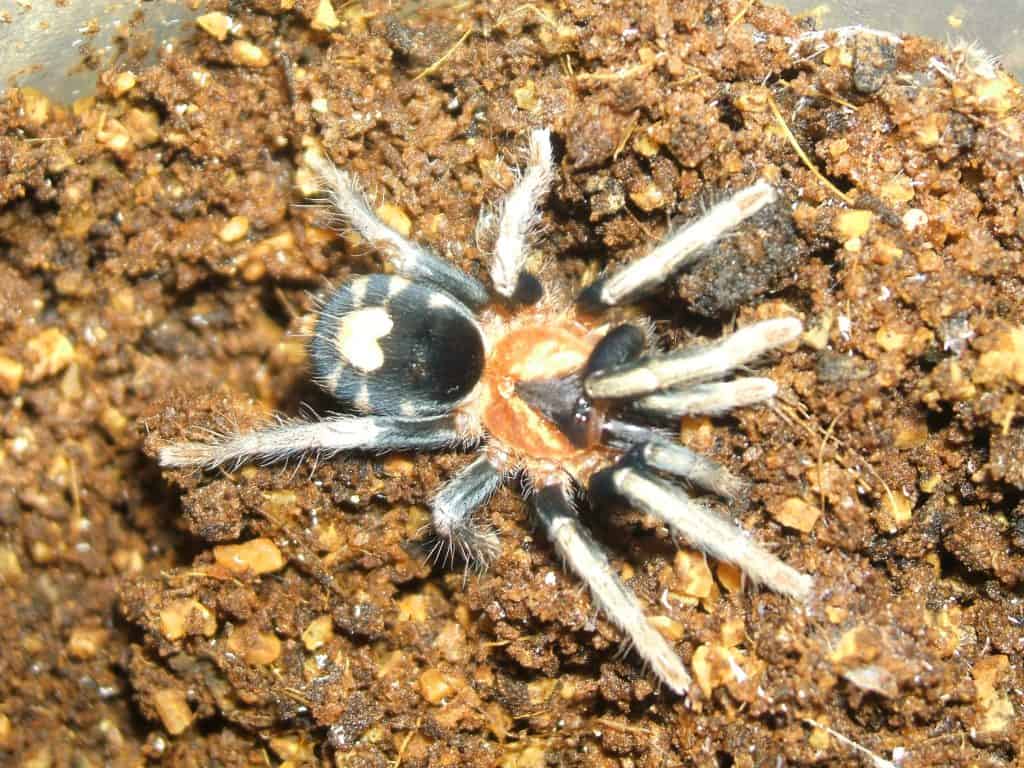
Most spiders in the genus Cyriocosmus have striped patterns on their abdomens.
Cyriocosmus versicolor (Simon, 1897)
- Common name: N/A
- Distribution: Paraguay, Argentina
Little is known about Cyriocosmus versicolor, but the Cyriocosmus genus is known for dwarf or pygmy tarantulas. Based on known traits of this genus, C. versicolor is believed to be a very small burrowing spider. It has a bi-colored carapace, with rusty brown and dark brown to black coloration. Its abdomen is dark with a large, circular, rusty-colored patch at the rear. These coloration details are inferred from limited descriptions. The legs are banded, alternating between dark brown to black and lighter brown.
Eupalaestrus Pocock, 1901
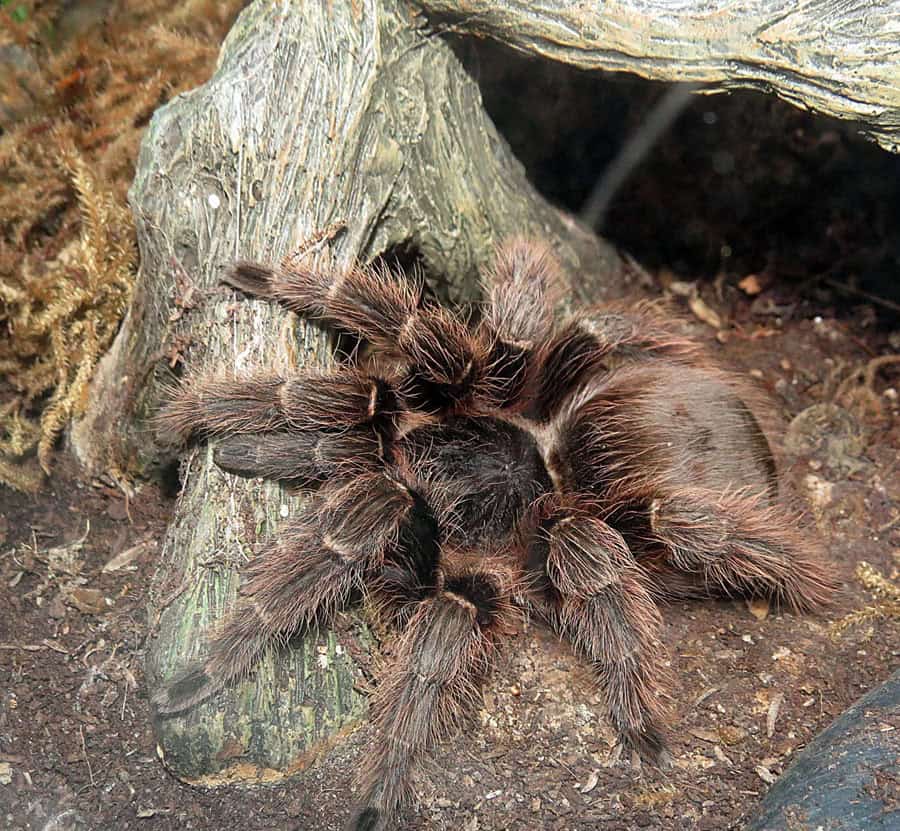
The pink zebra beauty, Eupalaestrus campestratus, has long, pinkish setae on its abdomen and legs.
Eupalaestrus campestratus (Simon, 1891)
- Common name: Pink zebra beauty
- Distribution: Brazil, Paraguay, Argentina
Eupalaestrus campestratus is a medium-sized burrowing spider with a leg span of up to 5 inches. It has a dark brown body with pale stripes on its legs that are said to resemble zebra markings. It also has long, pinkish setae on its abdomen and legs. They favor subtropical habitats with distinct wet and dry seasons, such as those found in Paraguay’s Chaco region. These spiders are popular in the pet trade, as they are often described in captivity as relatively docile compared to other large theraphosids.
Grammostola Simon, 1892
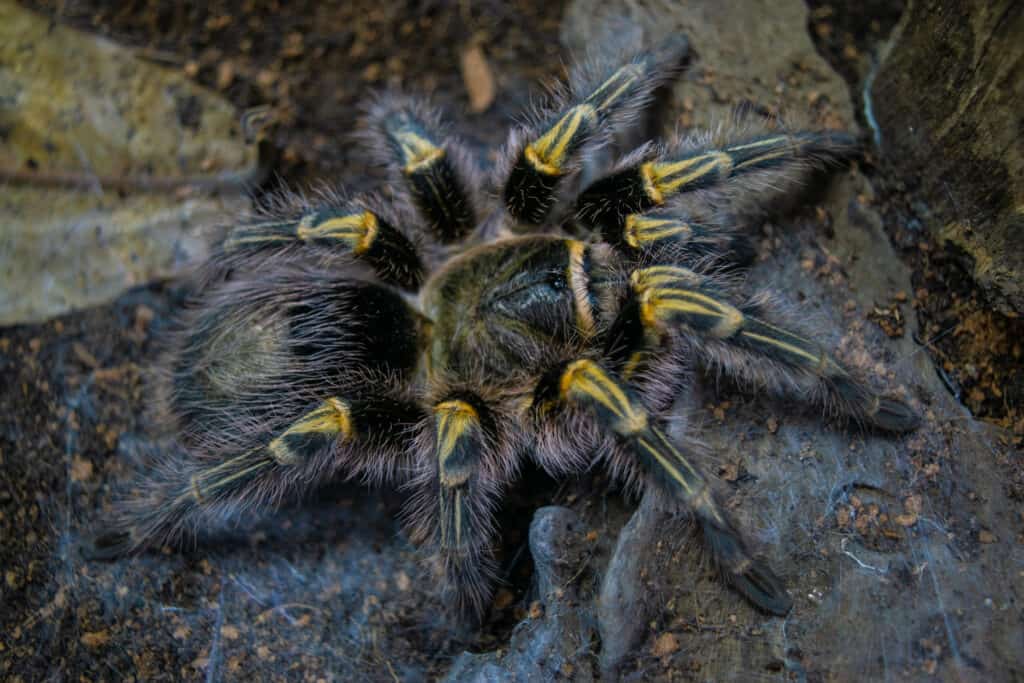
The Chaco golden knee, Grammostola pulchripes, measures up to 8 inches.
©NATTHAWAT101/Shutterstock.com
Grammostola anthracina (C. L. Koch, 1842)
- Common name: Brazilian giant tawny red
- Distribution: Brazil, Uruguay, Paraguay, Argentina
Grammostola anthracina is a terrestrial burrower with a confirmed presence in Paraguay. G. anthracina is a brown tarantula with long, reddish-colored setae on its legs and abdomen. It is a large, bulky spider, with most sources indicating it can reach between 6 and 7 inches.
Grammostola borelli (Simon, 1897)
- Common name: N/A
- Distribution: Paraguay
Grammostola borelli was originally described as Eurypelma borelli by Simon in 1897. When Eurypelma was determined to be a synonym of Avicularia, the species previously classified under Eurypelma were re-evaluated. E. borelli exhibited characteristics inconsistent with the newly defined Avicularia genus but matched those of Grammostola. As a result, the spider was reclassified as Grammostola borelli following subsequent taxonomic revisions.
Grammostola grossa (Ausserer, 1871)
- Common name: Guarani giant tarantula
- Distribution: Brazil, Paraguay, Uruguay, Argentina
Grammostola grossa is a large, robust spider with a leg span that is upwards of 7 inches and a body size of around 3 inches. They are typically dark brown to black, with reddish setae on their abdomen and variable carapace coloration. G. grossa is a terrestrial burrower with a generally calm temperament.
Grammostola pulchripes (Simon, 1891) Type Species
- Common name: Chaco golden knee
- Distribution: Paraguay, Argentina
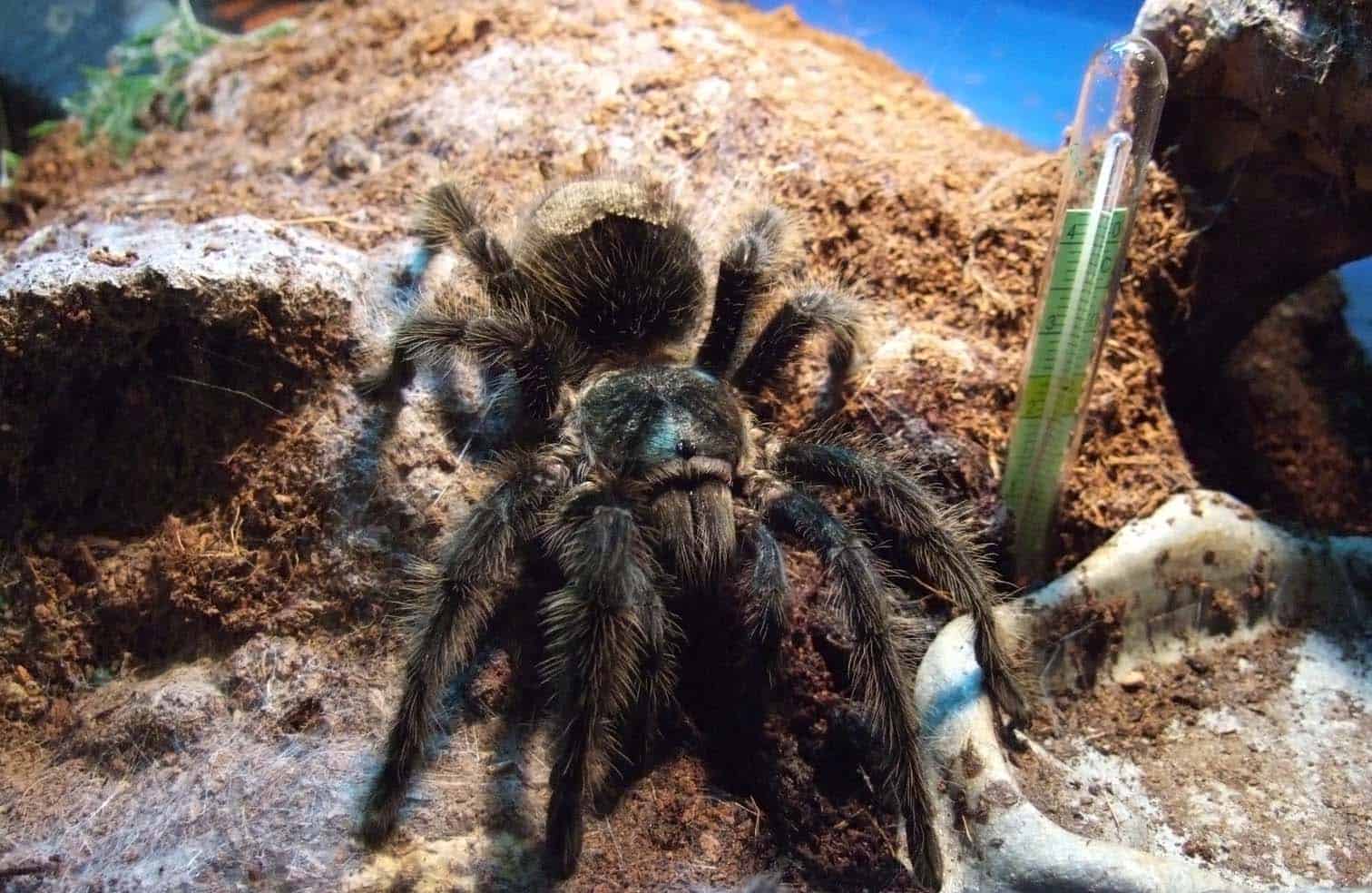
Grammostola pulchripes is a dark brown to black spider with gold bands on its leg joints and pale setae on its legs and abdomen. It is one of the larger Grammostola species, measuring up to 8 inches in leg span. These burrowing spiders live in the subtropical grasslands of the Gran Chaco region where there is seasonal flooding. In captivity, they rarely show defensive behaviors.
Nhandu Lucas, 1983
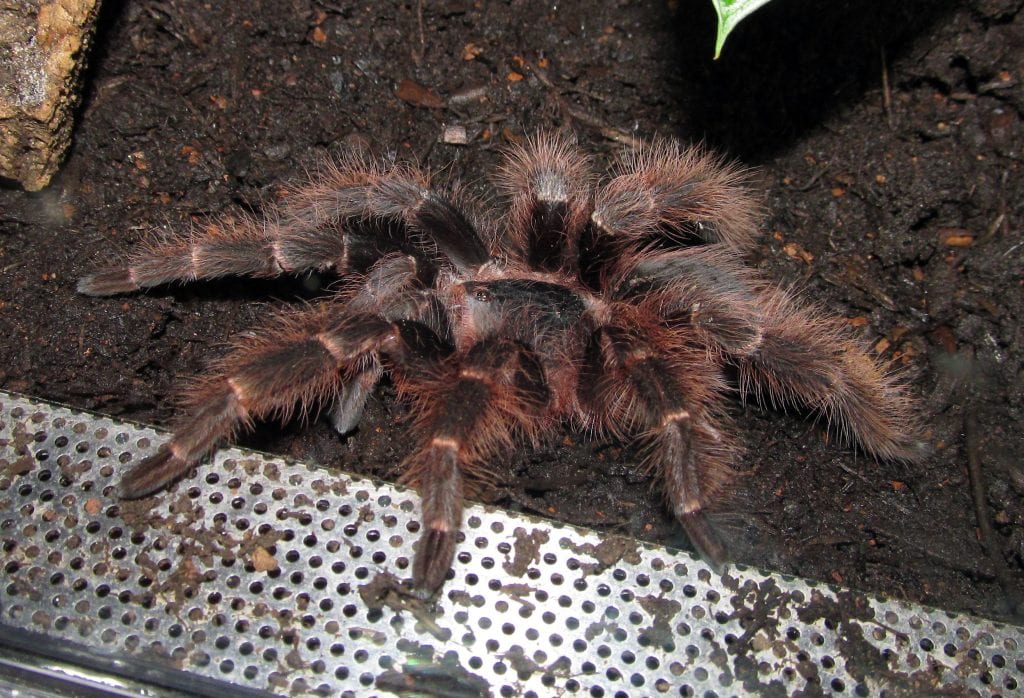
The Brazilian red, Nhandu carapoensis, is native to Brazil and Paraguay.
Nhandu carapoensis Lucas, 1983 Type Species
- Common name: Brazilian red
- Distribution: Brazil, Paraguay
Nhandu carapoensis is a terrestrial spider that is found in shallow burrows in subtropical and tropical forests. These tarantulas have a dark body, long, woolly reddish-orange setae on their abdomens, and banded legs. N. carapoensis has a leg span of 6-7 inches.
Plesiopelma Pocock, 1901
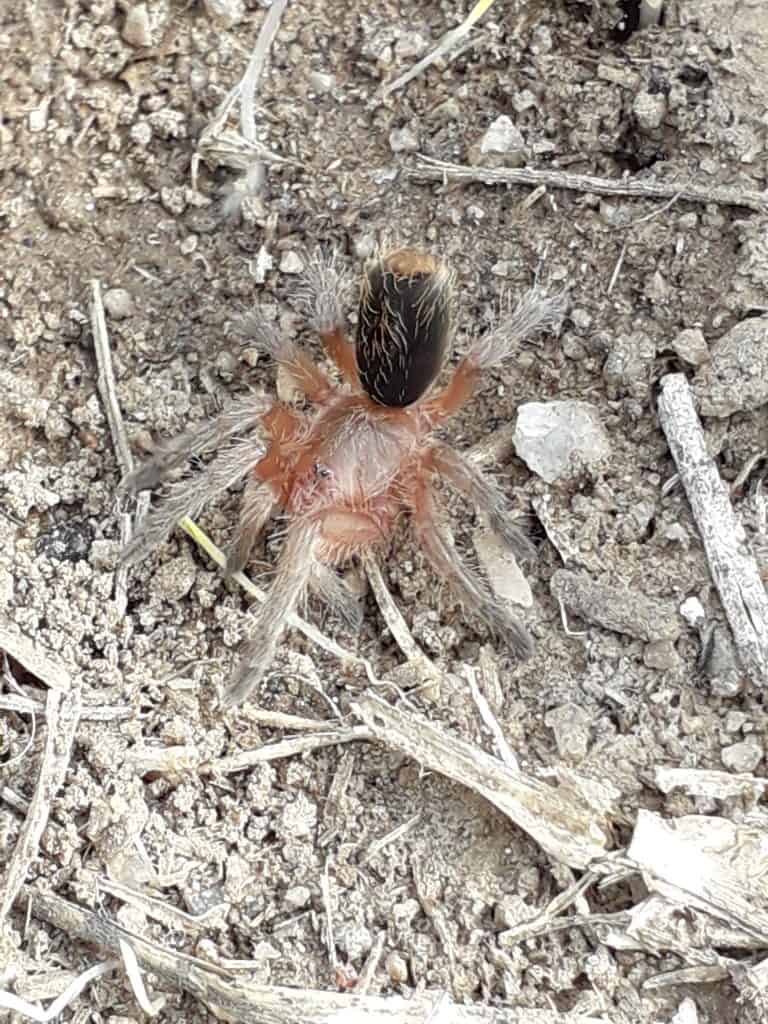
The Plesiopelma genus consists of 13 species native to South America.
Plesiopelma semiaurantiacum (Simon, 1897)
- Common name: N/A
- Distribution: Paraguay, Uruguay
Not much is known about Plesiopelma semiaurantiacum. However, it can be identified by typical characteristics of the Plesiopelma genus, such as small to medium size, long abdominal setae, and the habit of building silk-lined burrows in open terrestrial habitats.