
Quick Take
- Argonaut octopuses are rarely seen by humans, as they live in the open ocean away from shores.
- Females have a thin shell that carries their eggs, giving them the nickname ‘paper nautilus.’
- Males have a detachable arm used for reproduction.
Octopuses are an extremely diverse group of sea life. With roughly 300 species in total, there are many octopus species that are unfamiliar to most people. One example is the argonaut, a type of octopus that lives in the open ocean. This Instagram post by @hashem.alghaili shows a close-up picture of one, along with some interesting information about its biology. Read here to learn more about these fascinating octopuses.
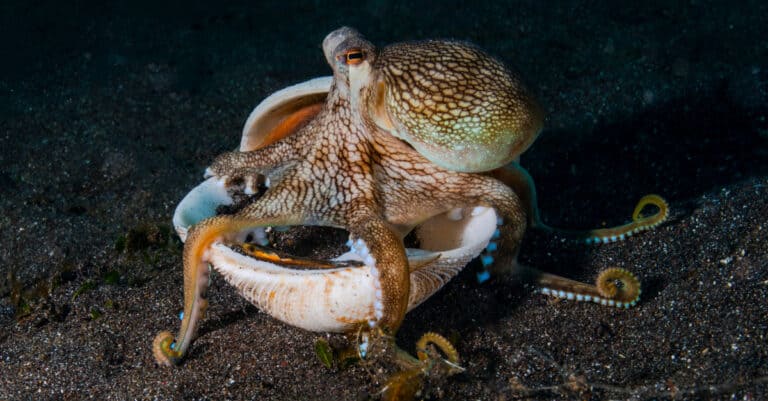
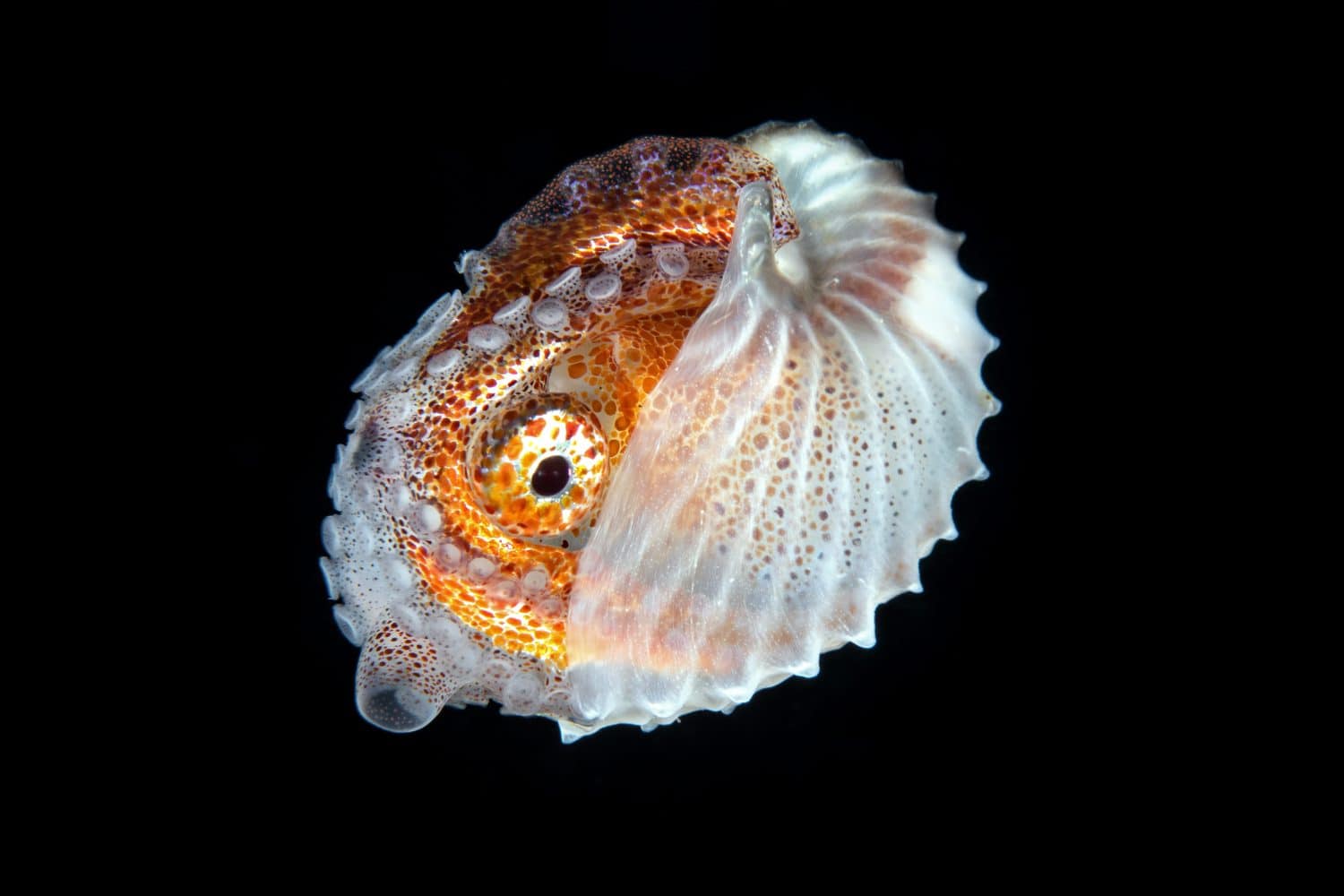
The argonaut octopus is also commonly referred to as the paper nautilus because of its paper-thin shell.
©Sam Robertshaw/Shutterstock.com
About the Argonaut
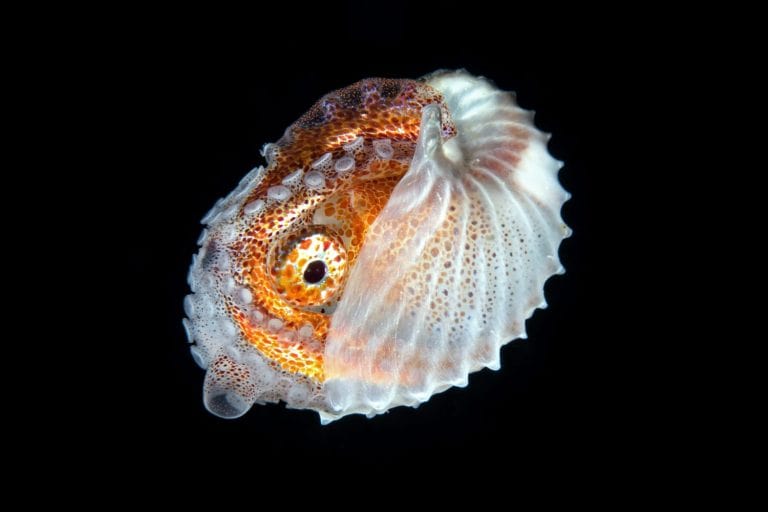
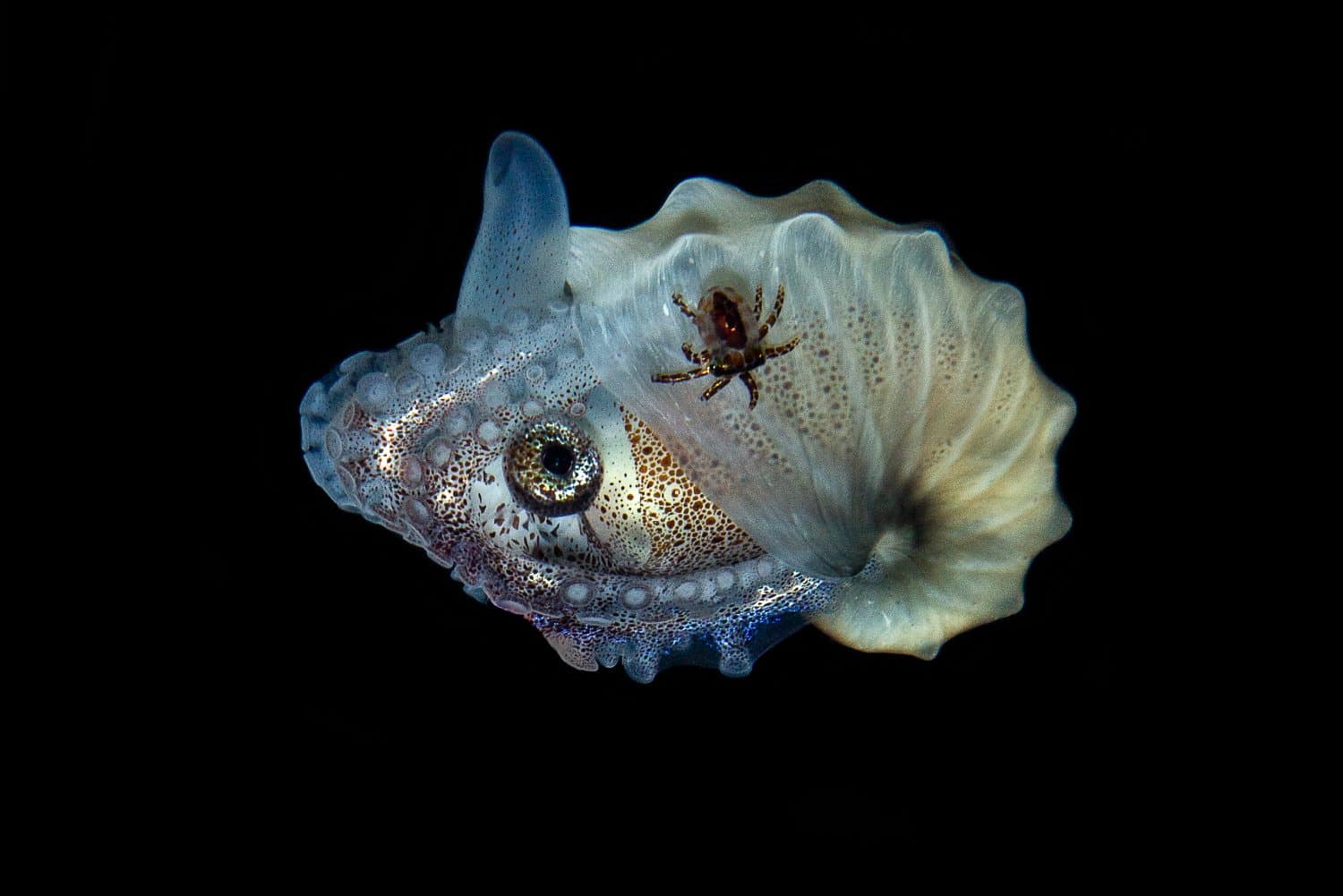
The argonaut octopus is a species of pelagic octopus, or open-ocean dweller. Unlike most octopus species that reside on the seafloor, argonauts often live near the surface, riding the currents. Since they live far offshore, they are rarely encountered by humans, making the photo above extremely interesting. At first glance, argonauts don’t look like octopuses at all; they resemble seashells. This ‘shell’ is actually an egg case produced only by females. Two of their arms secrete calcium carbonate, the same mineral found in seashells. Females use this shell both to protect and carry their eggs and as a buoyant float.
Argonauts are a well-known and extreme example of sexual dimorphism, which means that males and females of the same species have noticeable differences. This is most apparent in their size. Females can reach a total length of 17–19 inches (including arms), while males are typically less than 1 inch long. As mentioned above, only females have shells; males do not. Additionally, females can reproduce multiple times during their lives, while males have short lifespans and mate only once. For reproduction, the male has a specialized arm called a hectocotylus, which detaches and swims to the female to deliver sperm. A remarkable aspect of their biology is that females can store multiple hectocotyli from different males and fertilize their eggs whenever they are ready. This unusual form of mating evolved because it is difficult to find mates in the open ocean, and it allows females greater control over reproduction.