Quick Take
- Goblin sharks are the only members of the Mistukurinidae family, with a 125-million-year-old lineage.
- These sharks are perhaps best known for their odd jaw structure, which gives them a decidedly odd appearance.
- They have flexible, extendable jaws that help them catch prey.
The ocean is full of terrifying creatures, and sharks are just one example. Many of us are familiar with commonly spotted species like bull sharks, great whites, and leopard sharks. But you are likely less familiar with the oddity known as the goblin shark. One YouTube video by Slate shows a rare goblin shark found on Florida’s shore. These creepy-looking fish are fascinating for a variety of reasons and are perhaps most notable for their uniquely structured jaws.
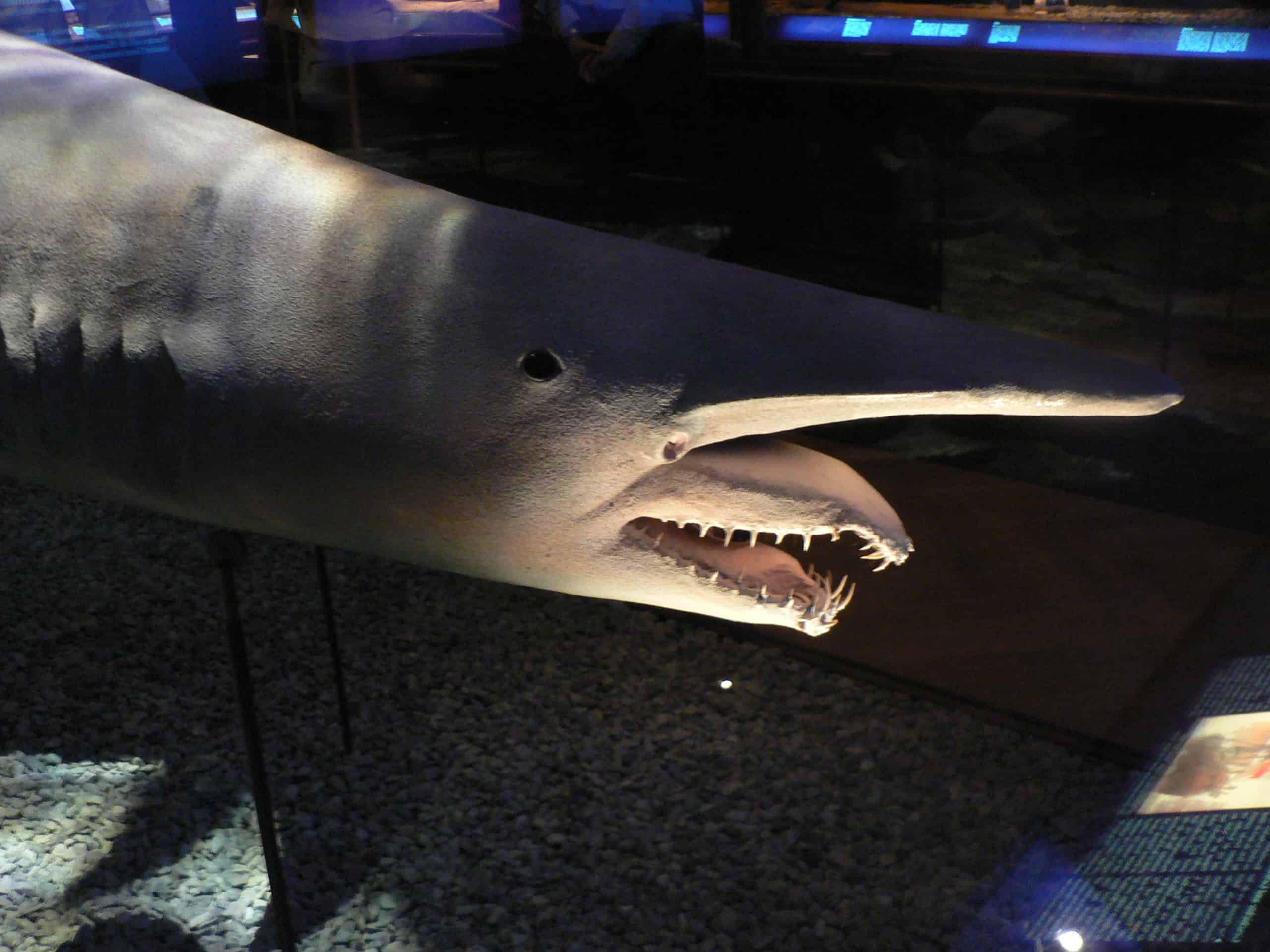
The Goblin shark is nicknamed “hobgoblin shark” in Spain and “imp shark” in France.
©Peter Halasz / CC BY-SA 3.0 / Wikimedia Commons – Original / License
About the Goblin Shark
Goblin sharks are easily one of the strangest shark species out there. Famous for their lineage, they are the only species in the family Mitsukurinidae. Because they date back roughly 125 million years, they are often referred to as “living fossils.” Goblin sharks are deep-sea fish, inhabiting environments such as slopes and canyons. These habitats can be 1,000 to 4,000 feet deep, making goblin sharks extremely rare to encounter. While they can be found in oceans throughout the world, the first species was discovered in 1898 in Japan, and although they are found worldwide, sightings remain rare everywhere due to their deep-sea habitat. Since they live so far down, these sharks pose practically no threat to humans.
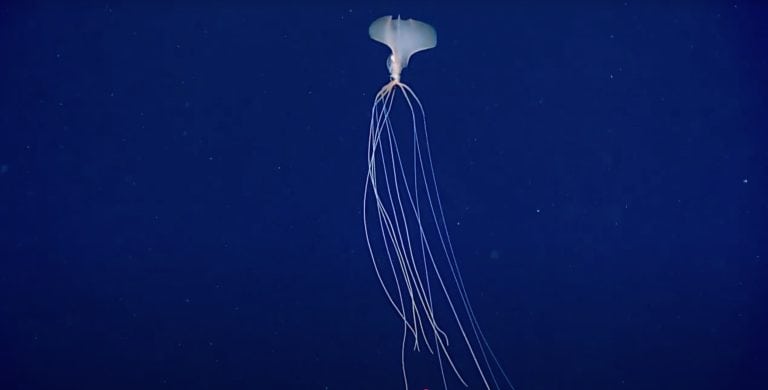
Deep-sea environments limit the diet of these sharks, which feed on squid, crustaceans, and other deep-sea creatures. To catch this prey, goblin sharks engage in an extraordinary hunting method using electroreceptors in their snouts. These receptors can detect electromagnetic fields generated by nearby prey. Using this ability, they drift slowly through the water before ambushing victims.
Goblin Shark Jaw Structure
The jaw structure of goblin sharks acts as a trap that catches prey off guard. Most animals have jaws that are attached to the skull, making them rigid. Goblin sharks, however, have jaws loosely connected by muscles and ligaments. These flexible structures allow for a range of motion unlike that of most animals. Goblin sharks can extend their jaws outward, an incredible adaptation that helps them catch prey that would otherwise be out of reach. The ability also compensates for their slow swimming, as these sharks are famous for being sluggish in the water.
The ligaments within the jaw stretch, creating tension. When the prey is within striking range, the ligaments release like a stretched rubber band. The jaw then shoots forward at about 10 feet per second. This rapid extension of the jaws allows the goblin shark to snatch prey with remarkable speed. After locking onto prey, the shark opens its mouth and drifts in its direction, consuming its meal.