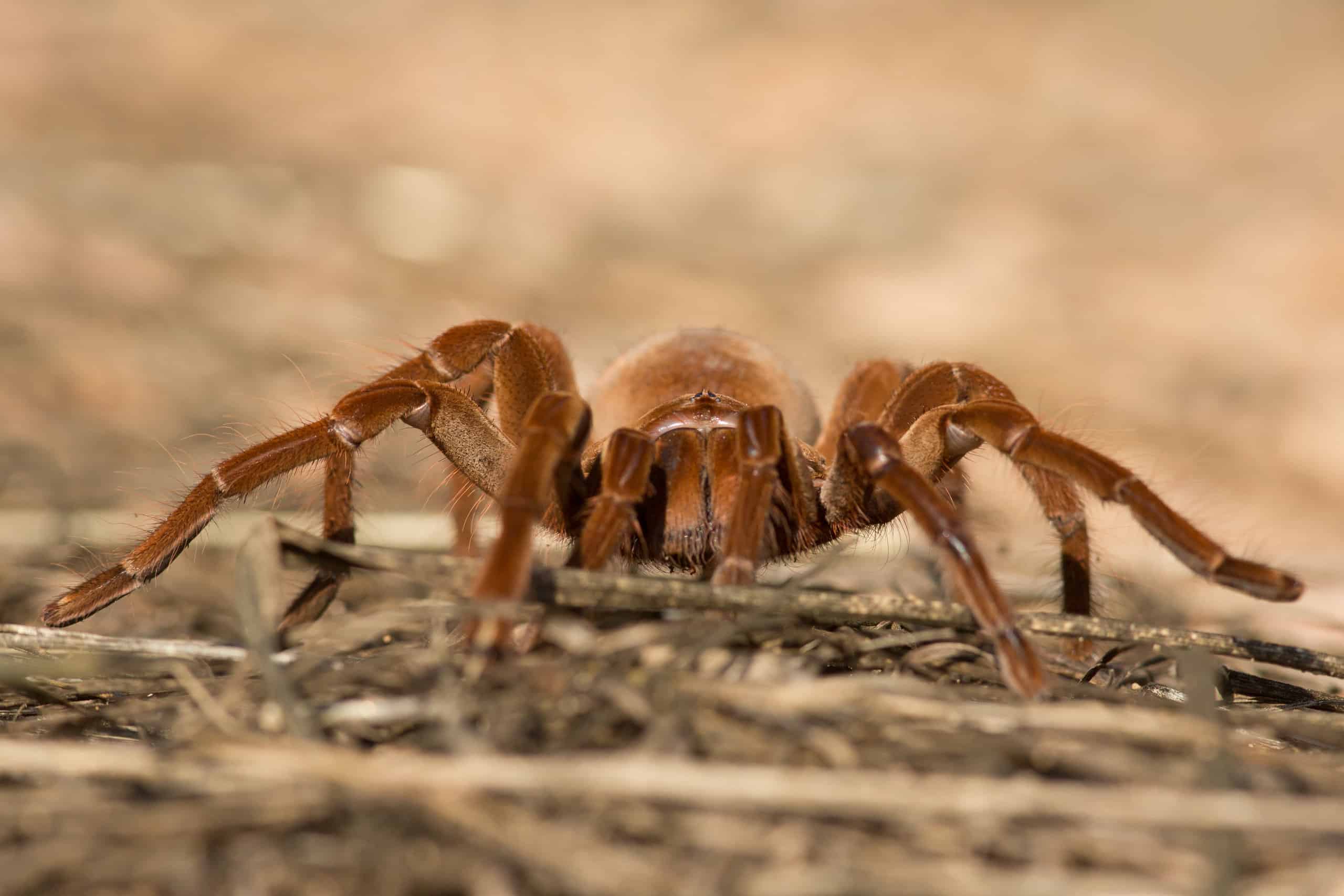

Fear of spiders, or arachnophobia, is a common phenomenon. For some, it can be triggered by spiders no bigger than the head of a pin. Can you imagine what it would be like, then, to come face to face with the largest tarantula in the world? This massive arachnid is the king of creepy crawlers and is bigger than any spider you are likely to encounter.
The Largest Tarantula in the World
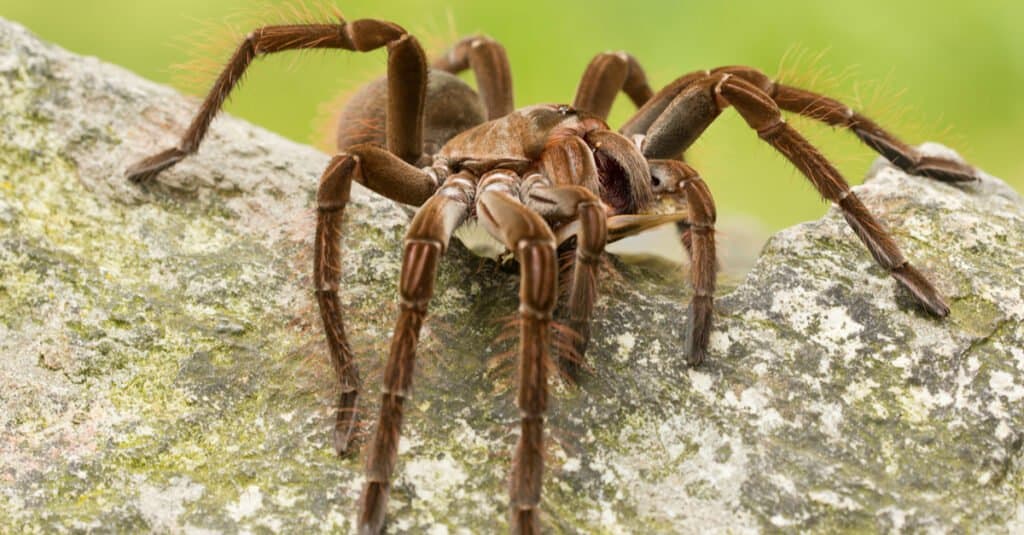
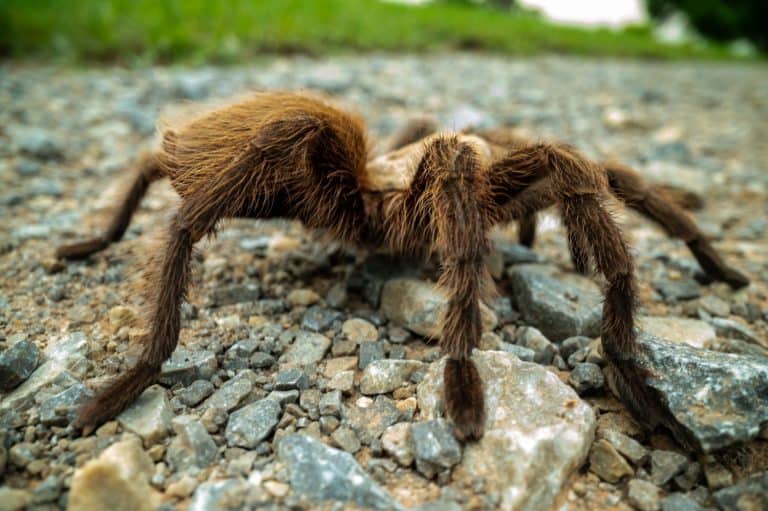
The body length and mass of the Goliath birdeater tarantula make it the largest in the world.
©Milan Zygmunt/Shutterstock.com
The Goliath birdeater tarantula (Theraphosa blondi) isn’t just a big spider; it’s the largest tarantula and the biggest spider on Earth! Its body alone can be 4.75 inches long and its legs can span up to 11 inches. These astoundingly large spiders can weigh over 6 ounces. Female birdeaters are typically larger than males and can live for 20 years, while males live for only a few years.
To grow so big, these impressive spiders must repeatedly shed their exoskeletons in a process called molting. Young birdeater spiderlings will molt up to six times in their first year, and it takes another year or two for them to fully mature.
Like other spiders, Goliath birdeaters have eight legs and eight eyes, although their poor eyesight isn’t very reliable. Instead, these spiders use the sensitive hairs on their legs, which can detect the slightest vibrations to help them navigate their surroundings. Goliath birdeater tarantulas also use their hair in unique defensive ways. These hairs, called urticating hairs or bristles, can be rubbed together by the tarantula to produce a loud hissing sound audible from nearly 15 feet away. They will also defend themselves by flinging their barbed hairs at predators, which causes a painful and itchy sensation.
Goliath birdeater spiders have reddish-brown and black coloring, and their third and fourth pairs of legs have distinct spines. Near their mouths are two pairs of special appendages: pedipalps, which the spiders use to feel and grab food, and chelicerae, which contain their fangs and venom.
Where Goliath Birdeater Tarantulas Live
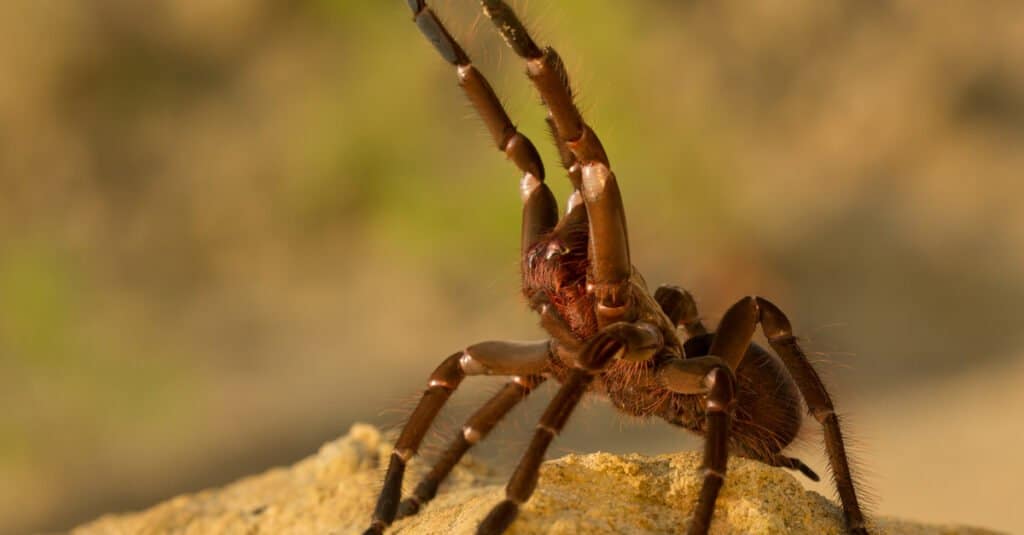
Goliath birdeater tarantulas have large fangs that are an inch long.
©Milan Zygmunt/Shutterstock.com
Goliath birdeater tarantulas are native to South America, where they live in deep, humid rainforests. They primarily inhabit the northern regions of the continent, including French Guiana, Guyana, Suriname, Brazil, and Venezuela.
Goliath birdeater tarantulas inhabit the rainforest forest floor, living in deep burrows or under rocks and roots, and are commonly found in marshy or swampy areas within these forests.
What Goliath Birdeater Tarantulas Eat
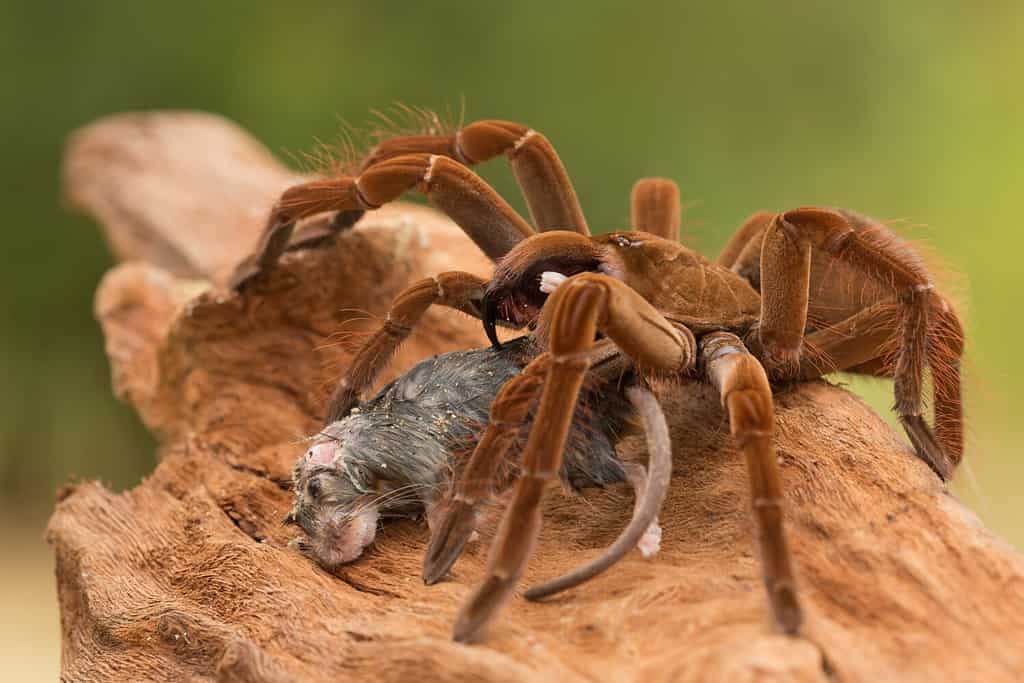
Adult Goliath birdeater tarantulas typically shed once a year.
©Milan Zygmunt/Shutterstock.com
Despite their name, Goliath birdeater tarantulas rarely eat birds. While they might occasionally prey on a young bird, they generally prefer insects, invertebrates, worms, amphibians, and small reptiles.
So, how (and why) did they get their “bird-eating” name? The term birdeater comes from early naturalists and explorers who heard stories of enormous spiders preying on birds in South America. The most famous example is an engraving from 1719 by naturalist Maria Sibylla Merian, which depicts a tarantula eating a hummingbird. The image became widely known and helped shape the tarantula’s infamous reputation as a birdeater, even though these large spiders rarely eat birds. Goliath birdeaters are nocturnal hunters, meaning they are active at night. During the day, they sleep in silk-lined burrows deep in the soil.
Are Goliath Birdeater Tarantulas Dangerous to Humans?
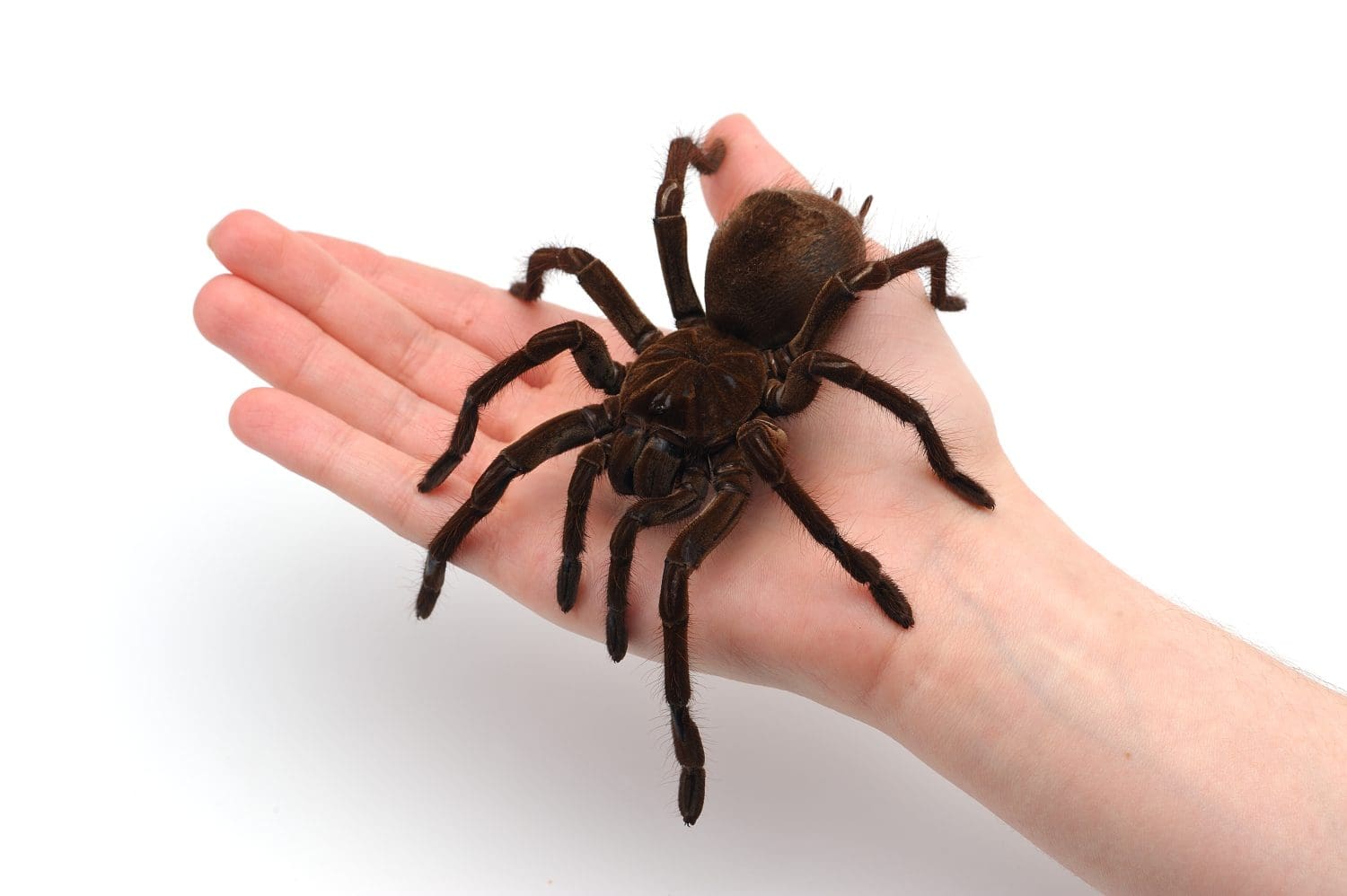
Goliath birdeater tarantulas are solitary creatures.
©PetlinDmitry/Shutterstock.com
Goliath birdeater tarantulas are venomous, but their venom is only mildly toxic and not considered medically significant to humans. However, their inch-long fangs can deliver a painful bite. Some experienced enthusiasts keep these massive spiders as pets, although they are known to be the least friendly species of tarantula.
The spiders’ massive size and widespread notoriety have also earned Goliath birdeater tarantulas a place in local cultures. In some communities, Goliath birdeaters are hunted and eaten as food. Locals roast the spiders over an open flame to remove their irritating hairs before eating them.
Threats to the Goliath Birdeater Tarantula
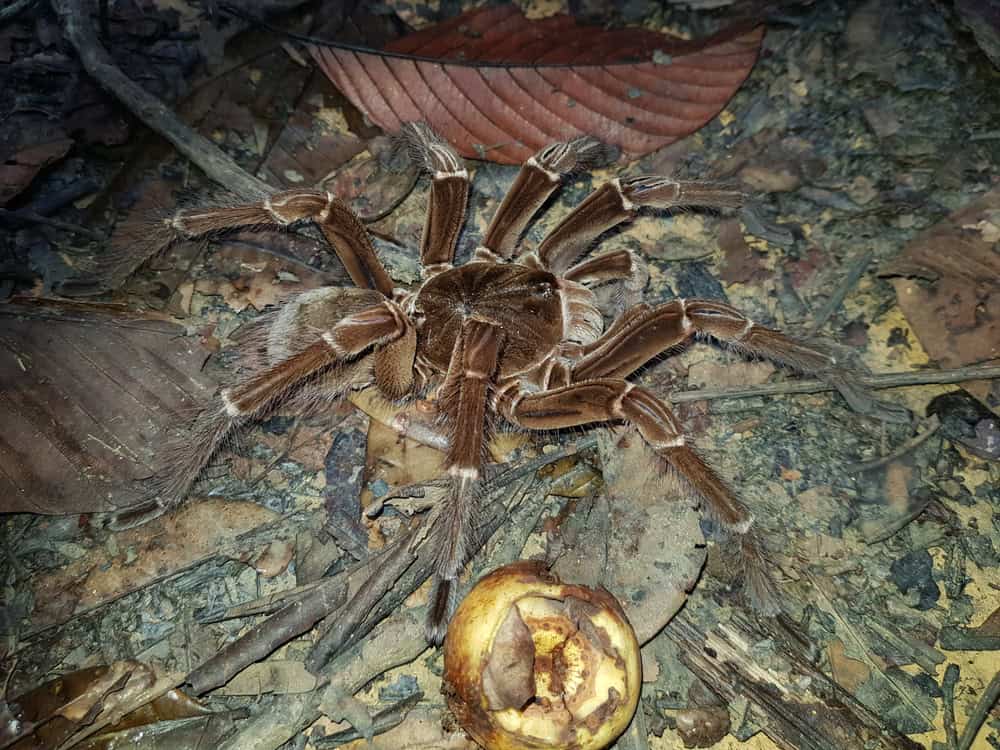
Preserving South America’s rainforests is crucial to the survival of the Goliath birdeater tarantula.
©guentermanaus/Shutterstock.com
Despite their fearsome reputation, Goliath birdeater tarantulas have many natural predators. The tarantula hawk wasp often hunts spiders and can paralyze them with its venomous sting. A variety of mammals, such as coatis, kinkajous, opossums, and some mongooses, dig into the spiders’ burrows.
Like many rainforest species, these giant spiders are also threatened by the loss and fragmentation of their habitat. Although the Goliath birdeater tarantula has not been formally assessed by the IUCN Red List as of October 2025, its future depends on the preservation of healthy rainforest ecosystems. These fragile environments are under constant threat from pesticides, logging, agriculture, and expanding human development.