
Sugar gliders and bush babies may look alike at first glance, with their tiny frame, large eyes, and perky ears, but these nocturnal, tree-dwellers are evolutionarily very distant. Bush babies are small primates native to sub-Saharan Africa, while sugar gliders are marsupials from Australia, New Guinea, and nearby islands. Both are omnivores and forage at night, but bush babies are more closely related to monkeys and apes, whereas sugar gliders are closer kin to kangaroos and possums. Their resemblance is an example of convergent evolution: two unrelated species evolving similar traits to thrive in similar environments. Keep reading to fully understand the key differences between bush babies vs sugar gliders.
This post was updated on September 22, 2025 to clarify bush baby nicknames, legality of owning bush babies in the U.S., diets, sugar glider taxonomy debate, African logging regions, and sugar glider predators.
Bush Baby vs Sugar Glider: Main Differences
| Bush Baby | Sugar Glider | |
| Classification and Names | Primate Nicknamed: Galagos | Marsupial No nicknames Young are called joeys |
| Range and habitat | Naturally found in sub-Saharan Africa Usually illegal to own in the United States | Naturally found in New Guinea, Australia, and Indonesia Domesticated as pets in the United States |
| Diet | Omnivore | Omnivore |
| Species | 20 different species Likely more undiscovered species | 3 distinct species |
| Research challenges | Politically unstable environments Nocturnal behaviors Tree-dwelling nature | Easier to study as a domesticated pet Nocturnal behaviors Tree-dwelling nature |
| Human pressures | Deforestation | Land clearance |
| Predators | Owls Mongoose Primates | Feral cats Snakes Kookaburra |
Comparing Bush Baby vs Sugar Glider
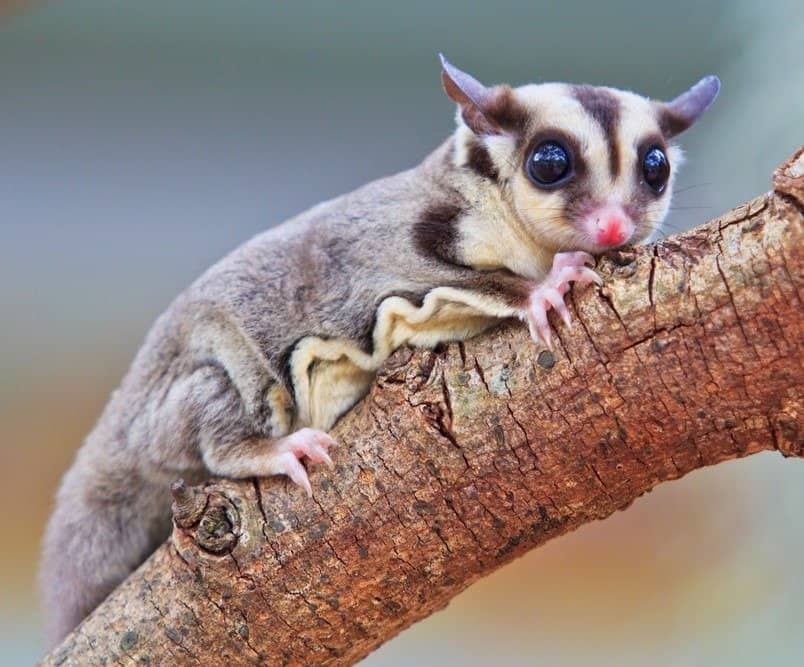
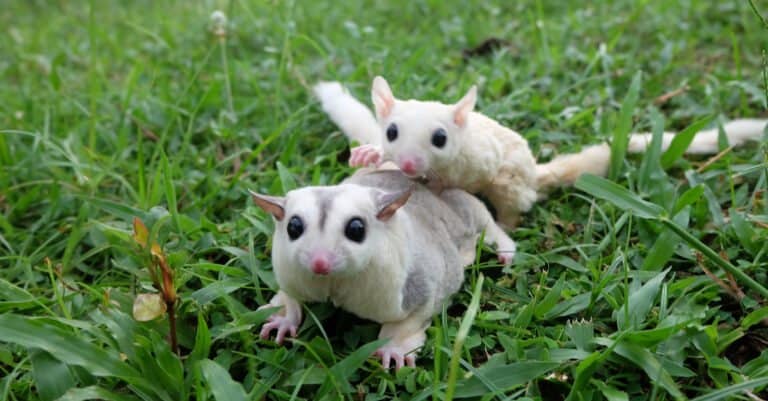
Sugar gliders are nocturnal tree dwellers.
©apiguide/Shutterstock.com
The key difference between a bush baby vs sugar glider is that bush babies thrive in Africa while sugar gliders are mostly found in Australia and surrounding islands. In addition, their nicknames, range, habitat, and diet all differ. There are also differences in the number of discovered species, research challenges, human pressures, and predators.
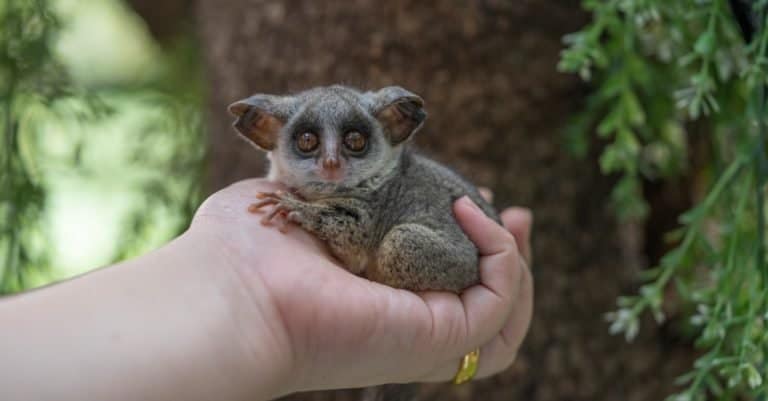
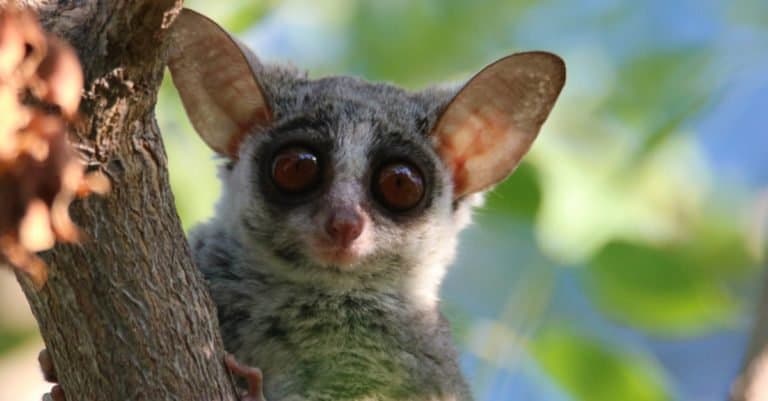
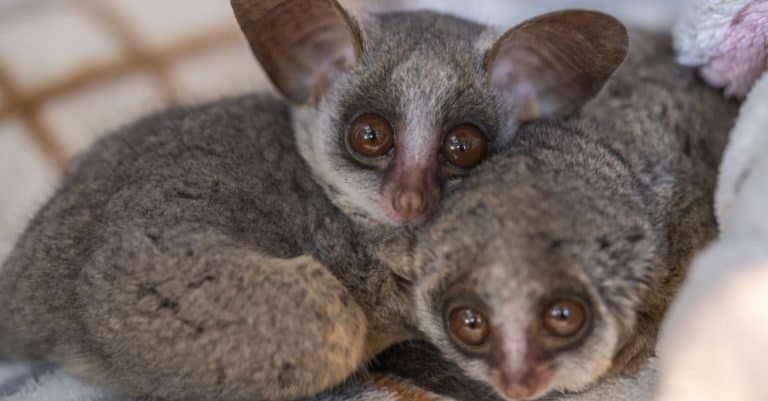
Bush babies and sugar gliders both have large ears and saucer-like eyes. While bush babies thrive throughout the sub-Saharan African continent, sugar gliders have a more limited range. When it’s time to go to bed, bush babies and sugar gliders can be found resting in tree hollows.
Both bush babies and sugar gliders are omnivores. They like dining on insects, plants, birds, frogs, and lizards. Sugar gliders are particularly fond of sweet pollen and tree sap.
There are a ton of different bush baby species. A new species was just discovered in the Angolan forest! However, there are only three sugar glider species. One of the species has been around for a while. While two of the sugar glider species are recent findings.
Studying the different bush baby species can be difficult since these animals are nocturnal. Bush babies make things even harder by living in politically unstable locations. Since sugar gliders are domesticated pets, it’s much easier to learn about them.
Sugar gliders and bush babies also deal with human pressures and natural predators. For example, chimpanzees are particularly good at catching bush babies, and sugar gliders must watch out for feral cats.
Bush Baby vs Sugar Glider: Nick Names
Bush babies are primates that go by the nicknames galagos and nagapies.
Sugar gliders are marsupials. You can think of them as tree-dwelling opossums that glide. They don’t have a lot of nicknames, but their young are called joeys.
Bush Baby vs Sugar Glider: Range
Bush babies live in forests, grasslands, and savannas. Their populations are primarily found in the sub-Saharan African forest.
Sugar gliders have a more limited range. They live throughout the eastern coast of New Guinea, Indonesia, Australia, and a few surrounding islands. They prefer living in forested habitats and cultivated plantation areas. You can find sugar gliders in dry forests or wild rainforests.
Bush Baby vs Sugar Glider: Habitat
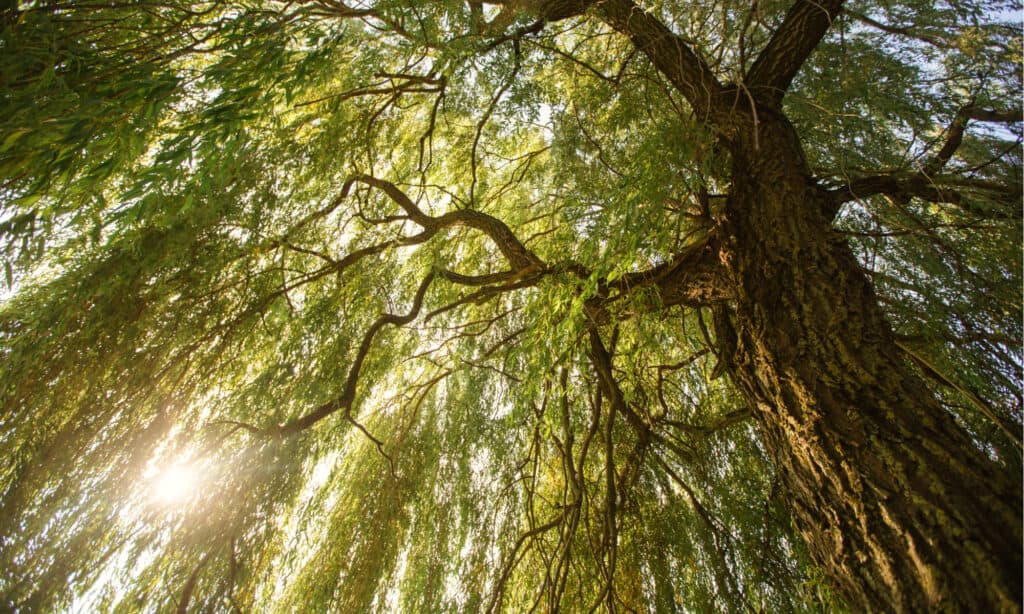
Bush babies spend most of their lives in treetops.
©Tatyana Volkova/Shutterstock.com
When a bush baby or sugar glider wants to sleep, it’ll probably go inside a tree hollow. They can also be found hanging out in bits of tangly vegetation. There’s even one species, Senegal Bush babies, that make a shelter out of abandoned beehives and old bird’s nests. Sugar gliders sometimes frequent rural gardens and plantations too.
Bush Baby vs Sugar Glider: Diet
Bush babies are omnivores; they eat a diet consisting of fruit and insects. They’re also known to dine on the tasty gum oozing out of certain tree species. Larger bush babies may eat birds, frogs, and other small animals, though vertebrate prey is rare.
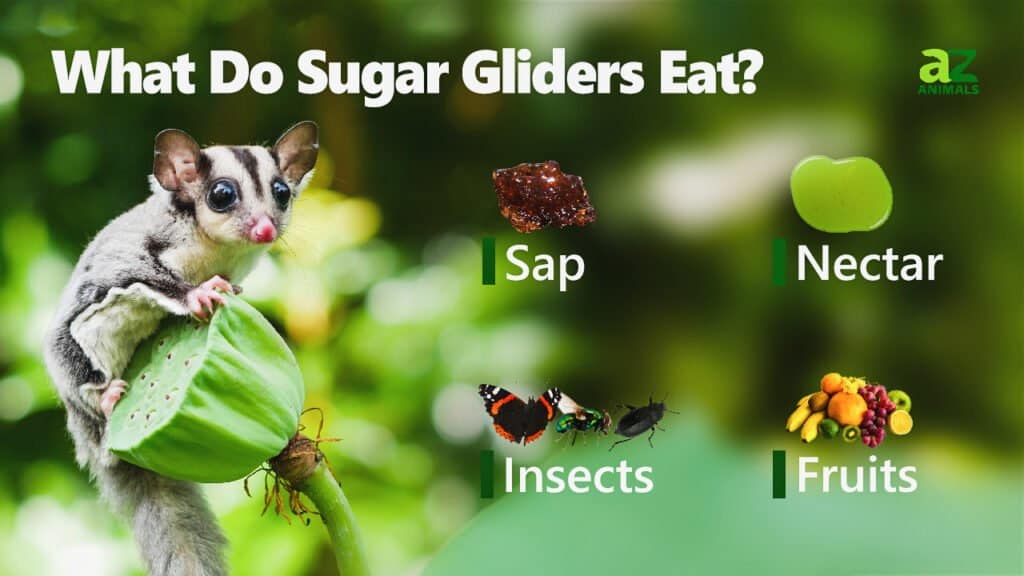
Sugar gliders soar through the forest canopy, dining on sap, gum, nectar, pollen, and insects. It’s not uncommon to see a hungry sugar glider intently searching tree cones for beetles and spiders. They are opportunistic feeders but not regular hunters of vertebrates.
Bush Baby vs Sugar Glider: Species
There are 20 known species of bush babies. However, experts believe there are many more just waiting to be discovered. One of the easiest ways to detect bush baby species is by listening to their distinct cries. That’s precisely how one of the newest bush babies, the Angolan dwarf galago (Galagoides kumbirensis), was just discovered.
At present, sugar glider taxonomy is disputed. Many sources still list Petaurus breviceps as one widespread species, while recent genetics split them into 3 species (Petaurus breviceps, Petaurus notatus, and the Petaurus Ariel).
Bush Baby vs Sugar Glider: Research Challenges
Bush babies and sugar gliders are hard to study because they’re nocturnal. Learning about them can also be tricky since they spend almost all their lives in treetops, rarely touching the ground.
Bush babies distribution also presents challenges. They tend to live in politically unstable regions. Alternatively, the sugar glider’s range and domestication make it easier for researchers to study them.
Bush Baby vs Sugar Glider: Human Pressures
Bush babies’ numbers are declining because of deforestation. Commercial logging is proliferating throughout Angola’s forests. Agriculture and mining demands are also devastating the bush baby’s natural habitat. For the species to thrive, they’ll need a way around this destruction.
Sugar gliders are also facing problems from human pressures involving land clearance. As more and more land is cleared away for agricultural use, they’re becoming desperate to find new homes. Bushfires are also taking away some of their natural habitats. Thankfully, despite the challenges, sugar gliders have stable populations in the wild.
Bush Baby vs Sugar Glider: Predators
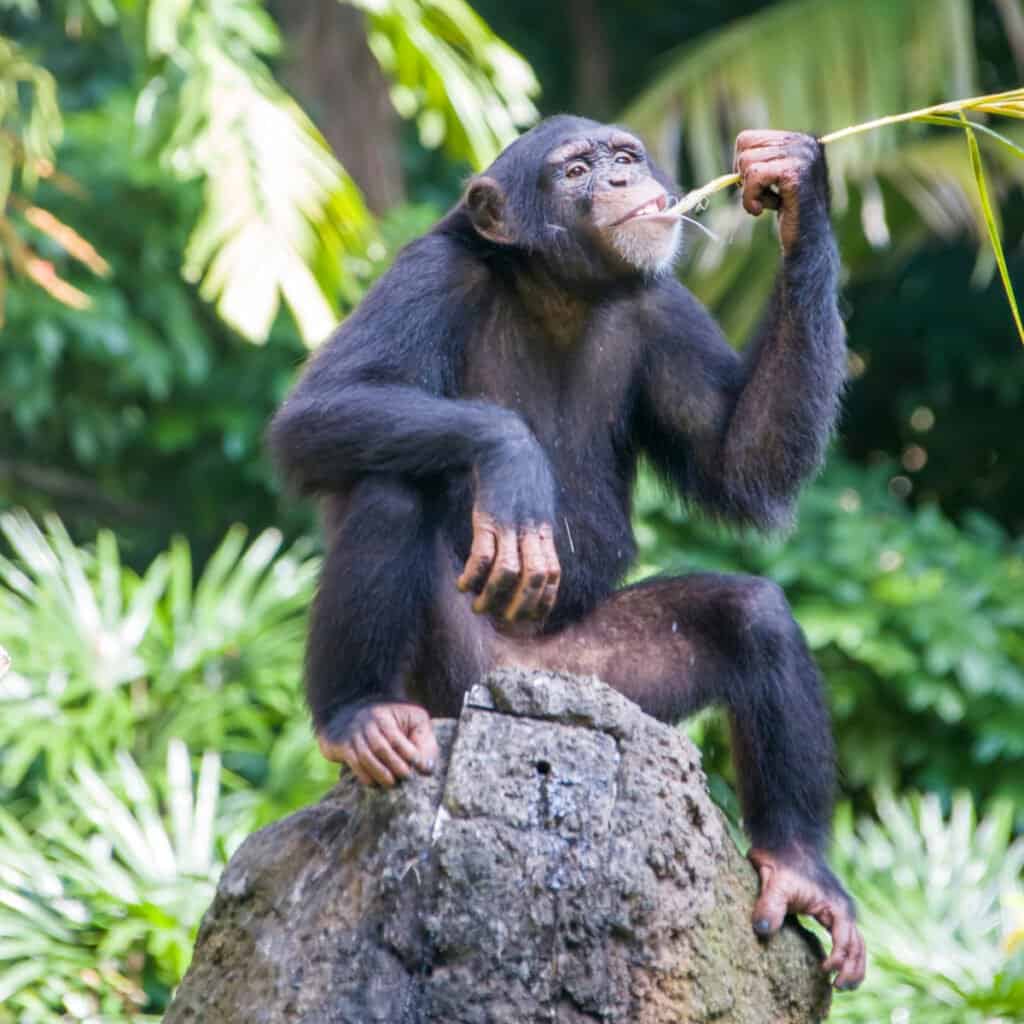
Chimpanzees will make spears to hunt for bush babies.
©Danny Ye/Shutterstock.com
Mongooses, jackals, snakes, and owls love dining on bush babies. Even other primates, like blue monkeys, prey on them.
Chimpanzees are particularly fond of bush babies, and they’re creative hunters. Chimpanzees can make spears to kill and retrieve bush babies from their burrows.
What predators do sugar gliders face? They have fewer natural threats, especially since many live as pets. However, both feral and domesticated cats threaten sugar gliders. Gliders must also watch out for raptors like owls and hawks in the wild.