
Quick Take
- Protected marine boundaries are drawn on maps, yet they can't physically stop drifting fishing devices from crossing into protected waters. See why boundaries fail →
- Even dFADs built from biodegradable materials still leave a permanent mark on the ocean, something that surprises most people when they learn the reason why. Explore the lasting pollution →
- When a dFAD strands in a marine sanctuary, identifying who owns it can be nearly impossible, and the loophole responsible for this is hiding in plain sight. Uncover the accountability gap →
- Researchers have identified one real-world program already proving a fix works, and yet it is not being used everywhere. See the Seychelles solution →
For commercial tuna fishing fleets, using drifting fishing aggregating devices (dFADs) is part of the daily routine. The problem is that these drifting devices cannot recognize or respect the boundaries of protected marine areas.
According to a new study, these dFADs impact more than half of the world’s protected waters. Here’s why that’s a bad thing and what researchers are doing to solve the issue.
What Is a dFAD?
A dFAD is a floating raft, sometimes made of bamboo and netting, used by fishermen to lure fish. The FADs work because tuna and other sea life like to congregate under floating objects. That makes it easier to find and catch fish, especially tuna.
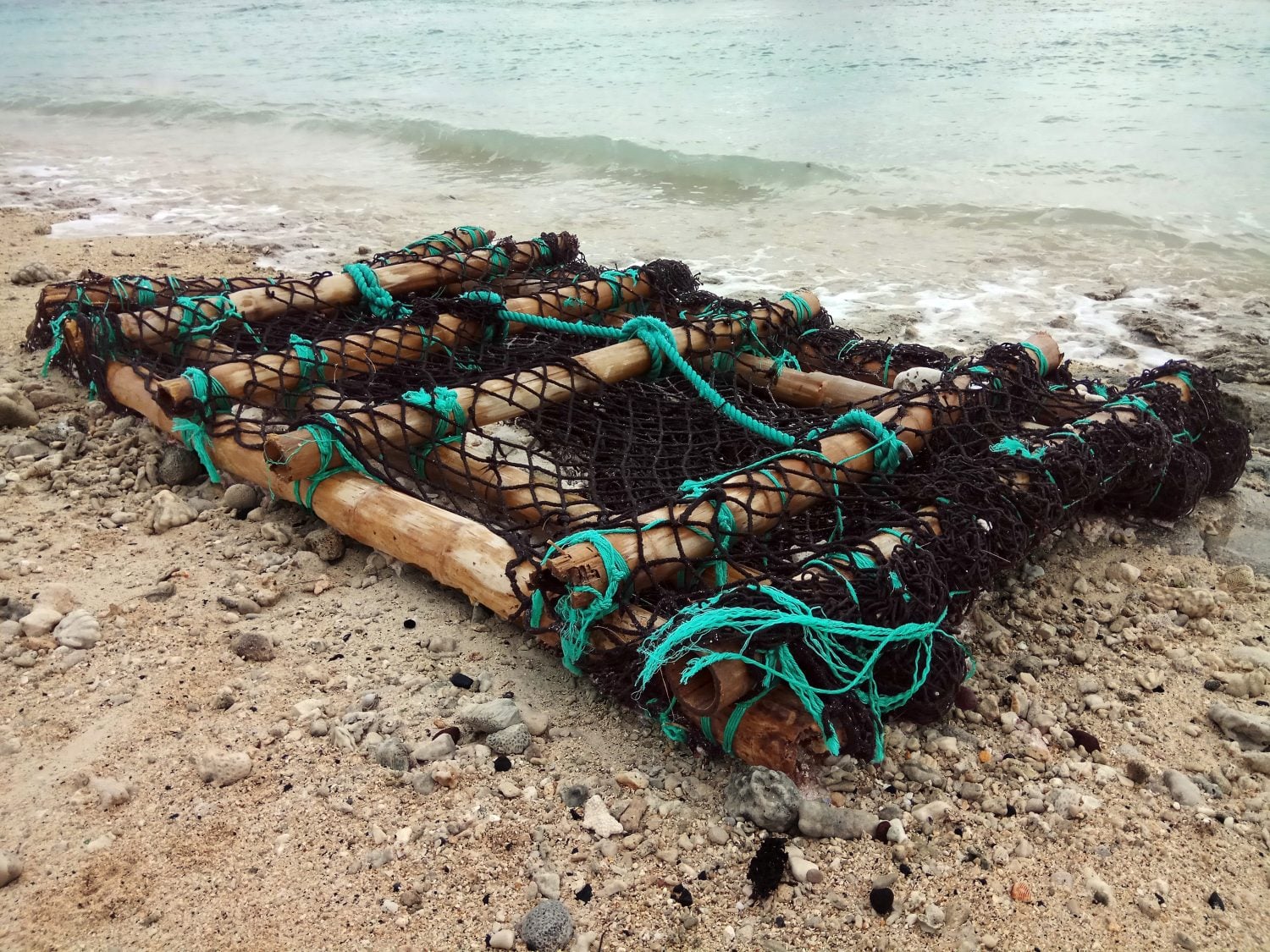
A handmade fishing aggregation device washed ashore in the Cook Islands.
©RaroLens2/Shutterstock.com
Commercial fishing fleets also use dFADs, but theirs are equipped with satellite-linked buoys and echo sounders. These devices allow commercial fishing companies to track the dFADs and estimate the number of fish in the area.
According to another study, an estimated 1.41 million dFADs were deployed worldwide from 2007 through 2021. These devices drifted across more than one-third of the world’s oceans.
Why Do dFADs Cause Issues?
The problem arises when these devices are lost or abandoned. Fishermen can lose their devices to bad weather. Commercial fishing companies often deactivate the buoys when the dFAD is no longer in an area with an abundance of tuna. Without the ability to track the dFADs, many are abandoned or lost and left to drift aimlessly.
The new study found that at least 6,324 dFADs ended up stranded across 174 protected marine areas. These areas included 161 Marine Protected Areas and 13 shark sanctuaries in 53 different maritime jurisdictions.
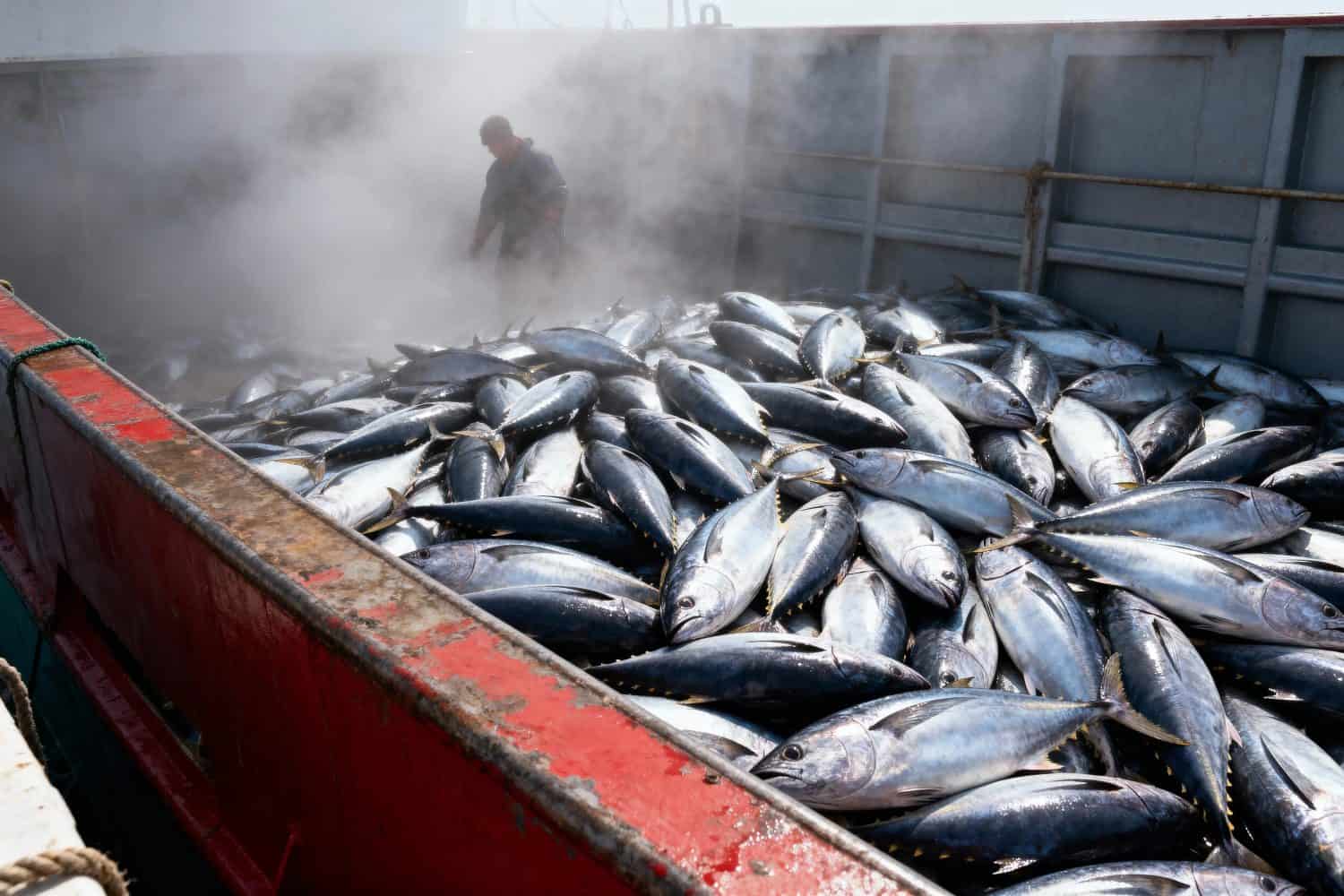
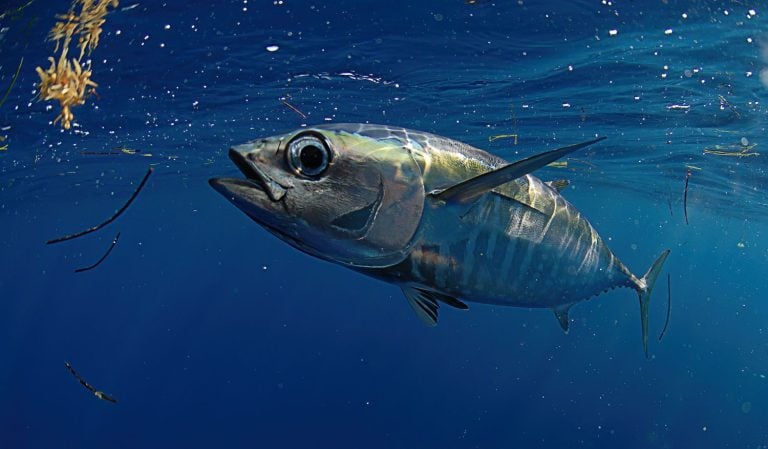
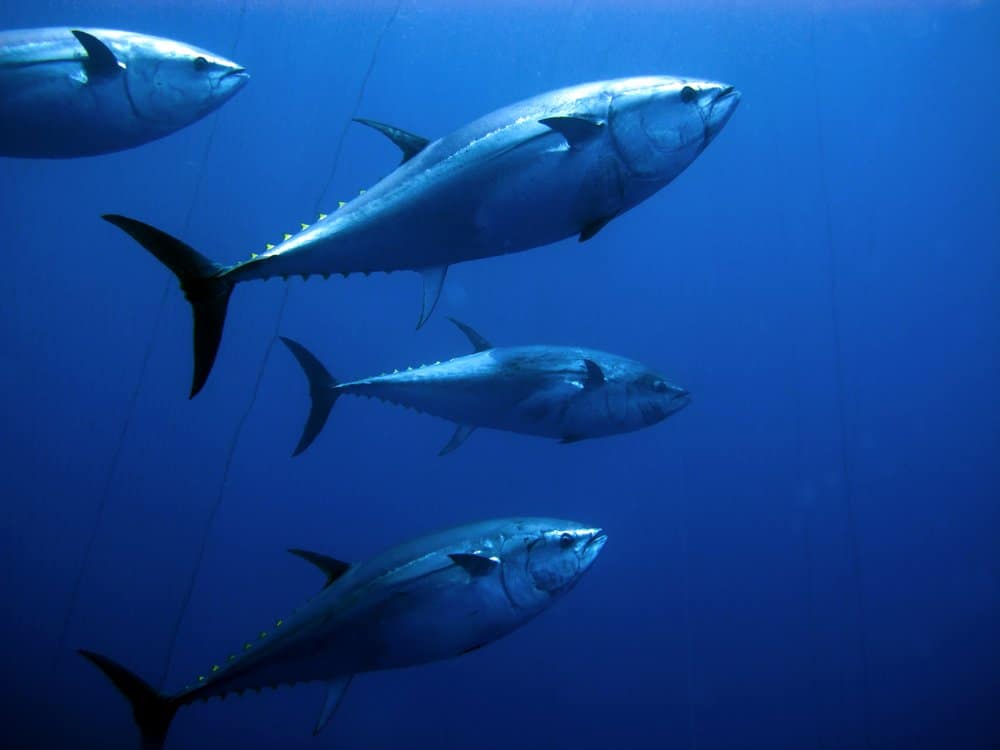
Commercial tuna fishing is a large contributor to dFADs in the world’s oceans.
©ZeiMomArt/Shutterstock.com
Certain regions, such as the western and central Pacific, western Indian Ocean, and the Caribbean Sea, experienced higher levels of dFAD activity. French Polynesia reported 1,539 strandings, followed by Seychelles with 1,404, and the Maldives with 746. About 30 percent of protected areas are located in small island developing states, which places the burden of clean-up and disposal on local authorities who often have limited resources.
“We were surprised to find that FADs appear to affect more than half of the world’s protected marine areas, and that impacts often occurred thousands of kilometers from the original fishing grounds,” study co-author Boris Worm, a marine ecologist at Dalhousie University in Canada, told Mongabay by email.
Why MPA Boundaries Have No Effect on dFADs
While manmade lines drawn on maps may deter fishing vessels from entering protected marine areas, those lines mean nothing to a dFAD. Those devices simply move with the wind and currents, snagging wildlife along the way and eventually washing ashore.
Often, the dFADs end up on remote beaches or caught on coral reefs, leaving it to marine park rangers to find the devices and remove them from the area. This relies entirely on luck or reported sightings. That means these abandoned devices can remain in an area for long periods, posing a prolonged threat to wildlife.
The Damage Discarded dFADs Can Do
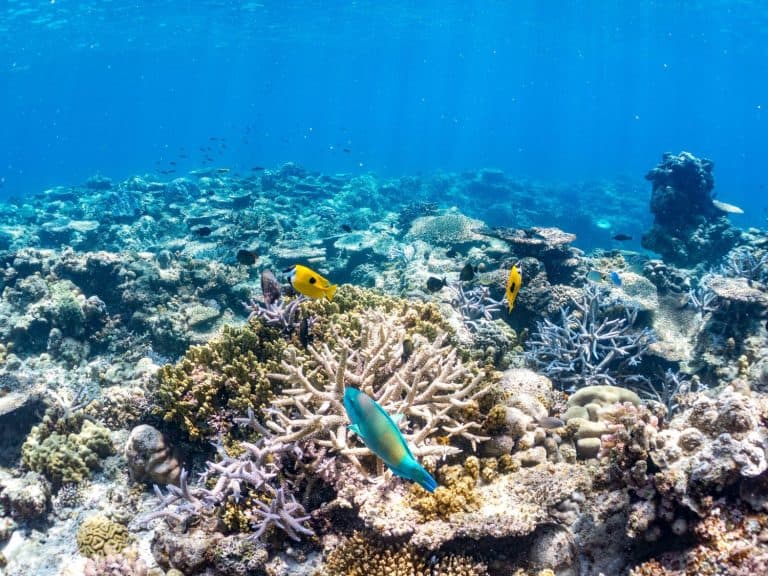
When a dFAD nears shore in tropical waters, shallow coral reefs are usually the first place these devices get caught. Once stuck, they can quickly damage the coral as waves and currents move the dFADs back and forth.
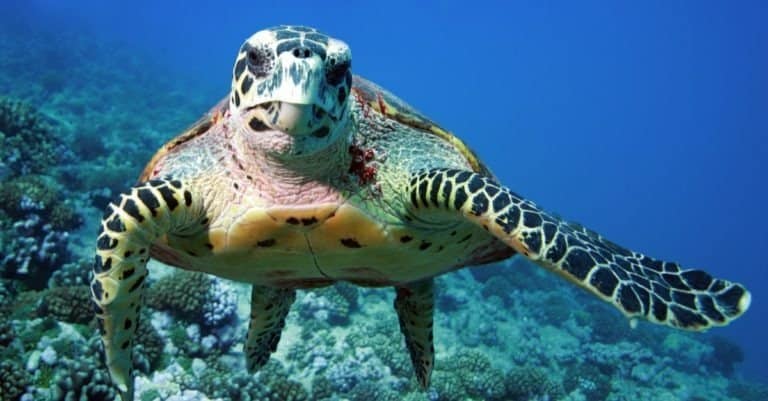
The devices can also entangle sea life, like turtles, sharks, rays, and other marine animals. Marine animals can become entangled in the dFADs’ netting, leading to injury or even drowning. With the 174 protected areas affected by dFAD strandings home to at least 490 at-risk species, dFADs are especially dangerous to critical populations.
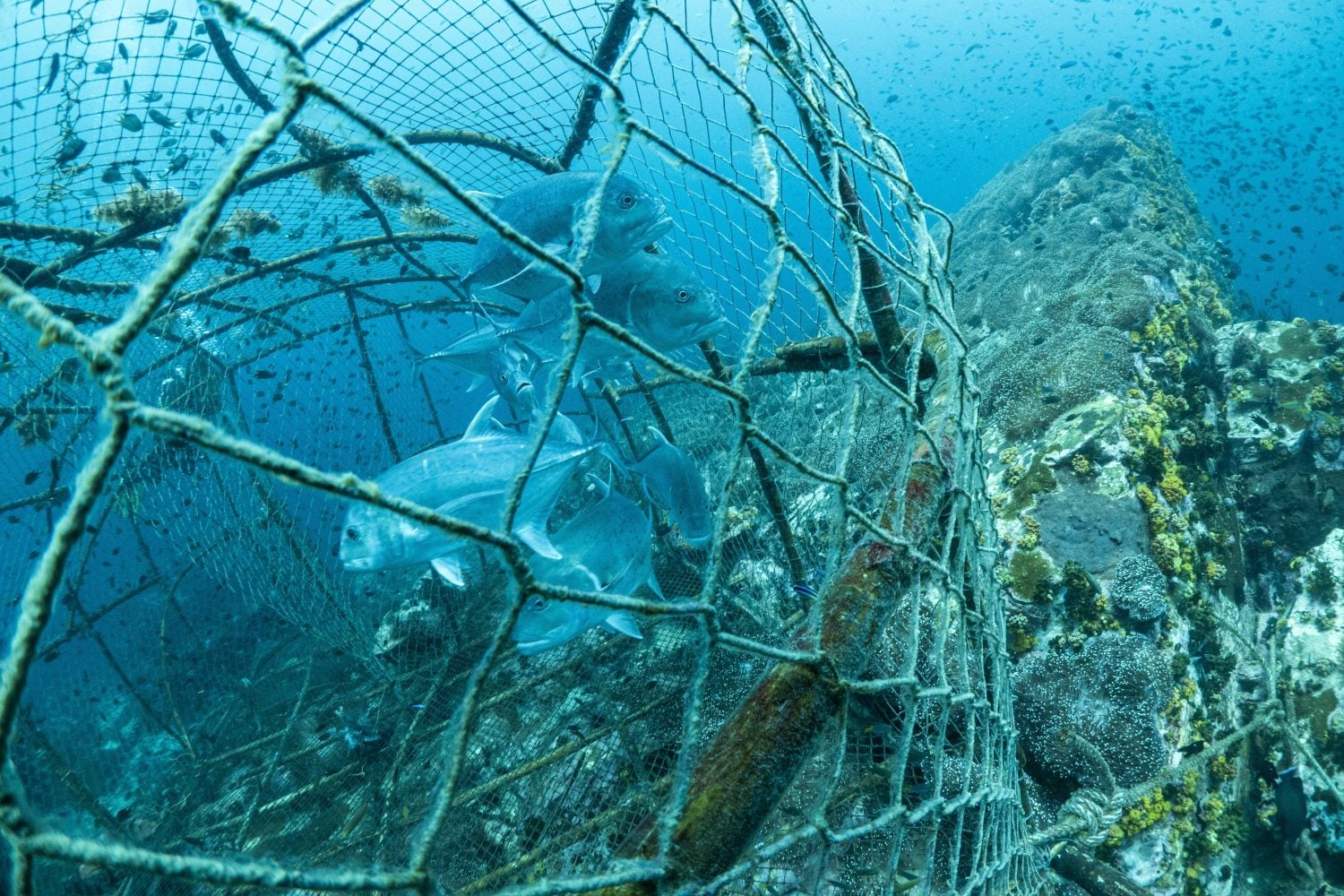
Discarded dFADs trap sea life and damage coral reefs.
©OctShutter/Shutterstock.com
Even when dFADs are constructed with biodegradable materials, like many commercial dFADs are, the tracking buoys themselves are made of plastic that doesn’t degrade over time. This leaves plastic pieces and electronics in the world’s oceans, on coral reefs, and along shorelines.
Who’s Responsible?
For homemade dFADs, it can be virtually impossible to determine who built them or where they actually came from. Driftwood and nets are abundant around the world. However, even dFADs deployed by commercial fishing operations are often difficult to attribute to a specific owner.
Few regulations require commercial operations to register or mark their dFADs. This makes it nearly impossible to trace an abandoned dFAD to its owner. Additionally, multiple commercial operators may use the same dFAD at sea, further complicating the assignment of responsibility.
What Can Be Done?
Researchers advocate for several initiatives to help reduce the number of dFADs being abandoned in the world’s oceans.
Open up tracking data. Currently, commercial operations keep the locations of their dFADs confidential for competitive reasons. However, if MPA managers and regulators had access to real-time buoy locations, it would help track direction and identify when one goes missing.
Set dFAD deployment limits and no-zones. Fewer devices in the water reduce the number of devices that wash ashore. Similarly, eliminating deployment in zones upstream of MPAs reduces the likelihood that a device will drift into protected areas.
Mark and register devices. This means the entity responsible for deployment is also responsible for the device until it is removed from the water.
Require lifetime tracking. If commercial operators cannot turn off tracking buoys, it is easier to find and retrieve dFADs.
Retrieval deposits. Force commercial entities to pay a refundable fee for each buoy they deploy. The deposit is refunded when the device is retrieved.
One real-world example is the Seychelles-based FAD Watch program. It uses buoy data to warn local MPA managers before a device strands, allowing for early retrieval. While it does not address every dFAD stranding—particularly those with deactivated buoys—the program demonstrates the benefits of improved access to real-time data.