Wisconsin’s natural landscapes and diverse wildlife, not to mention 15,000 lakes, make the Dairy State a popular summer destination for outdoor enthusiasts. Wisconsin has steep hills, forests, national parks, rivers, and much more. But when you’re out and about enjoying the great outdoors, it’s always best to keep an eye on the wildlife around you. According to the Wisconsin Department of Natural Resources, Wisconsin is home to 21 species of snakes. Out of those 21 species, 14 are considered rare (listed as endangered, threatened, or of particular concern). Most of the snakes you’ll find in Wisconsin are completely harmless to humans. However, two on the list are venomous, with medically significant levels of toxin that are enough to harm or even kill a person. Find out the two most dangerous snakes in Wisconsin.
1. Eastern Massasauga
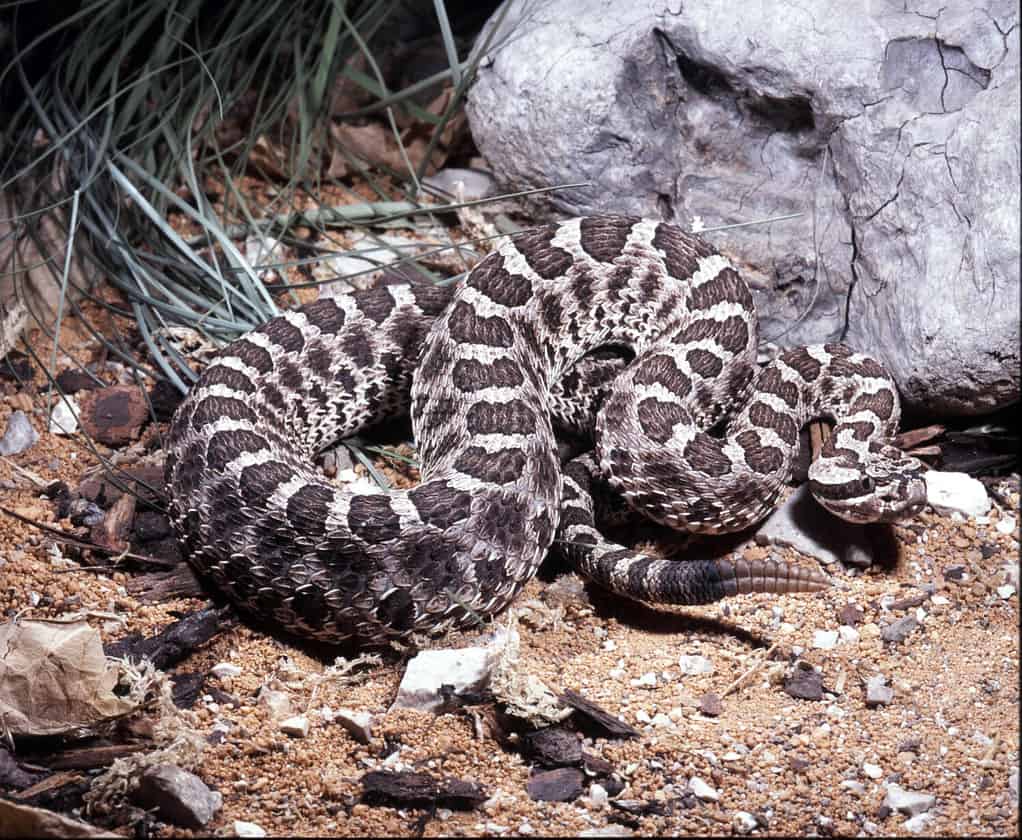
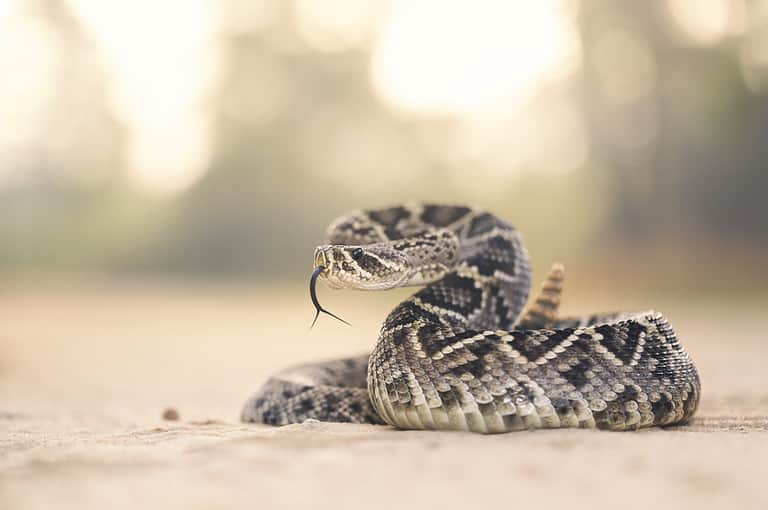
The Eastern Massasauga is active during the summer in Wisconsin.
©Vladislav T. Jirousek/Shutterstock.com
The Eastern Massasauga (Sistrurus catenatus) is one of Wisconsin’s two venomous snake species. However, this pit viper is not commonly found in Wisconsin. This small rattlesnake prefers swampy bottomlands and mainly lives in the western central part of the state. The Eastern Massasauga hibernates in winter, coming out of its hibernation in spring, usually around April. It then remains active until late fall. Massasaugas live near water and spend their winters hiding in abandoned crayfish or other small animal burrows.
The Massasauga is listed as endangered in Wisconsin and as threatened under the U.S. Endangered Species Act. They were once abundant in the state, but rattlesnakes were hunted and killed out of fear as cities grew in Wisconsin. Records show that thousands of Massasaugas were hunted and killed in Milwaukee in the late 1800s. In fact, the Wisconsin government used to offer a bounty on rattlesnakes that only ended in 1975. People were given $5 for each rattlesnake tail that they turned in. This overhunting led to the snake’s low population numbers.
Identifying a Massasauga
In addition to having a rattle on its tail, the Massasauga looks fairly similar to Wisconsin’s other resident rattler, the Timber Rattlesnake. However, Eastern Massasaugas are smaller than Timber Rattlesnakes. They reach about two feet in length. These snakes can be grayish with dark, patterned blotches along their bodies. Their bellies are dark and lack any pattern.
What Risk Do Massasaugas Pose to Humans?
You probably won’t see an Eastern Massasauga in Wisconsin, not only because they have such a small range, but also due to their elusive nature. And if a Massasauga sees you, it will probably flee rather than attack.
Their venom is highly toxic, but they release a small amount of it when they bite. While the bite would be painful and require immediate medical attention, it likely does not contain enough toxin to kill a human. The area around the bite will probably swell, and your ability to form blood clots may be impaired. It’s important to get medical help as soon as possible in case antivenom is required for treatment.
2. Timber Rattlesnake

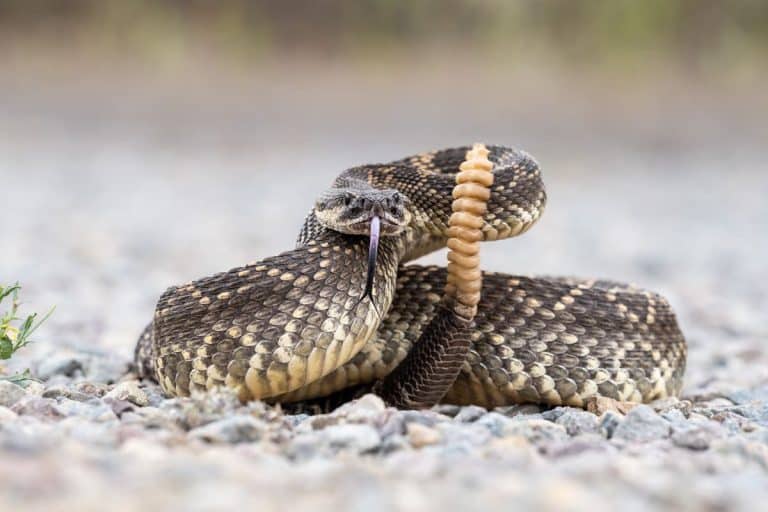
Timber rattlesnakes only bite when threatened.
©Mark_Kostich/Shutterstock.com
Wisconsin’s second venomous snake species, and the only other snake species dangerous to humans in the state, is the Timber rattlesnake (Crotalus horridus). Timber rattlesnakes can be found living in the rugged bluffs of western and southwestern Wisconsin. They are much more common than the Massasauga and can be found across much of the eastern half of the U.S.
Like Massasaugas, they are pit vipers and ambush predators. They eat a diet of rodents, lizards, other snakes, and other small animals. Though they are not endangered in Wisconsin, they are protected and listed as a species of “Special Concern.” According to the Wisconsin Department of Natural Resources, timber rattlensakes begin emerging from hibernation from April to June and stay active until mid-October.
How to Identify a Timber Rattlesnake?
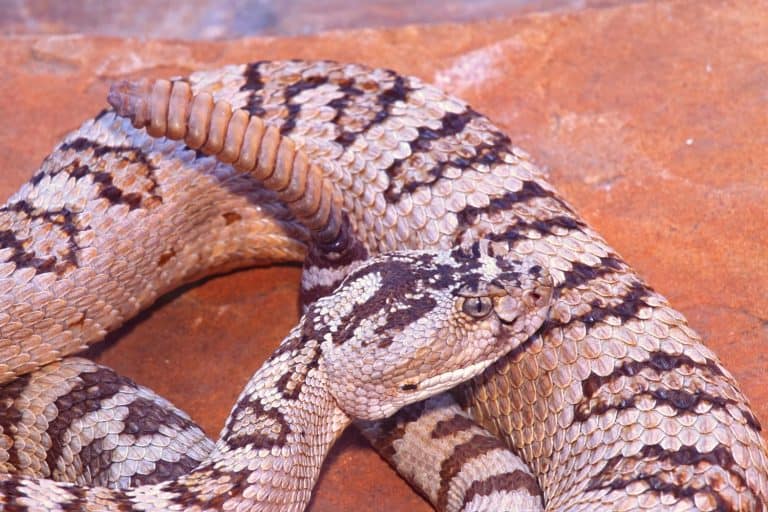
You can spot a timber rattlesnake by its triangular-shaped head and the white rattle on its black tail. They will shake their tail when threatened, and you may hear it before you see the snake. Timber rattlesnakes are larger than Massasaugas and can be as long as five feet. They vary in color and may have grey, brown, or dark backgrounds and zigzag patterned bands across their bodies.
What Risk Do Timber Rattlesnakes Pose to Humans?
Bites from timber rattlesnakes are rare because they are a nonaggressive snake that would rather flee than attack. However, if they are cornered, bothered, or accidentally stepped on, the snake may bite. According to the Minnesota Department of Natural Resources, only about half of timber rattlesnake bites actually involve venom. Most of the time, the snakes would rather save their venom for prey and will lunge or strike without releasing venom.
If you are bitten by a timber rattlesnake, you may experience severe pain and swelling. The toxin can prevent your blood from clotting. It’s important to get medical treatment right away so they can assess if you need a dose of antivenom. It is possible to have a fatal bite if not treated.
What Should You Do if You Encounter a Rattlesnake?

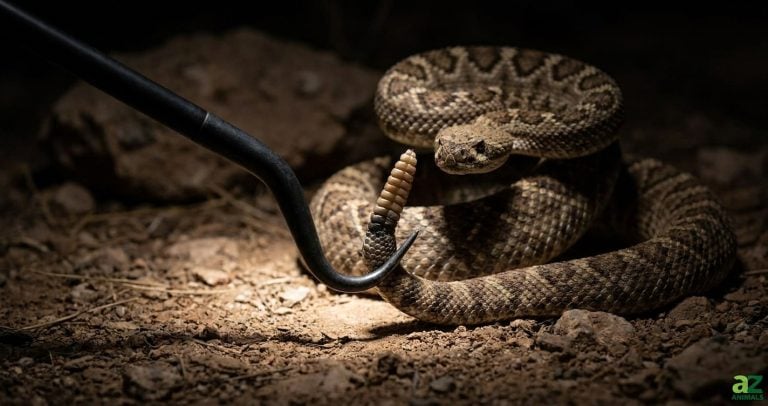
Pay attention to your surroundings when you are in areas that may be home to rattlesnakes.
©wernimages/Shutterstock.com
Both Massasaugas and timber rattlesnakes use camouflage as their defense. Both species are shy and will try to hide or escape before attacking. If you spot one or hear its rattle, slowly back away from the area, keeping a safe distance. Wildlife experts recommend wearing long pants and shoes instead of sandals when in rattlesnake territory. Stay on the trails and don’t reach your hands into openings or crevices where you can’t see.