
Quick Take
- Its warning signal is visible for only seconds, yet most people still don't recognize it in time. See the warning rings →
- A blue-ringed octopus bite is nearly impossible to detect while it's happening, and that is exactly what makes it so dangerous. Discover the painless bite →
- Its camouflage is so effective that most encounters happen by accident, and they do not occur in the water. Explore its camouflage tactics →
Signs on beaches all across the Australian coast warn visitors of venomous marine life. One of these is the blue-ringed octopus, which has taken many by surprise because of its unassuming appearance. While most octopus species are harmless, this one comes with a potent dose of venom and a neon warning sign.
But by the time you see it, it’s usually too late–the blue-ringed octopus doesn’t wait long before defending itself.
The Blue-Ringed Octopus Hides in Plain Sight
Similar to many cephalopods, the blue-ringed octopus is a master of camouflage. Thanks to millions of chromatophores along its skin, it can alter its hue at will. As these open and close, what we perceive as different colors are actually different pigments. When they move, its color changes, resembling anything from a sandy seafloor to a rocky reef. At times, the blue-ringed octopus can even camouflage against other marine life or the backdrop of the ocean itself.
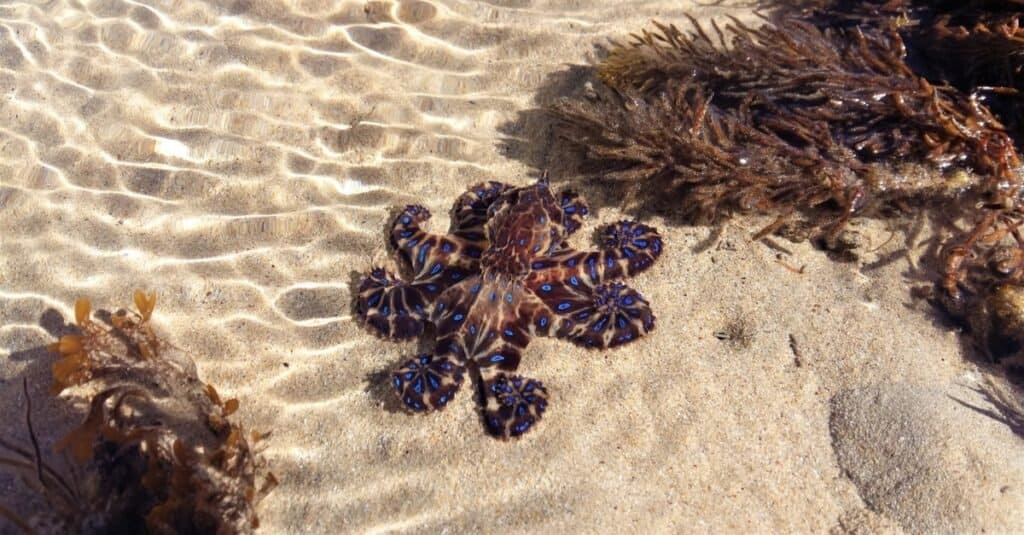
Given its small size and incredible camouflage, the blue-ringed octopus is easily missed.
©K.Pock Pics/Shutterstock.com
And while its camouflage isn’t typically an issue for humans, its environment can be. Blue-ringed octopuses are known for hanging out in coastal tide pools, lying in wait for prey such as crabs and other shellfish. Most people don’t even realize a blue-ringed octopus is there until they’ve accidentally grabbed it, trying to move what they think is a rock or shell. When this happens, they give one warning before striking: the neon blue rings that give this species its name.
The Venomous Bite of a Blue-Ringed Octopus
The blue-ringed octopus is only 5 to 8 inches when it reaches full maturity. This is small enough to hide in the tightest crevices, which is bad news for tide pool combers. While it doesn’t always bite as a first defense, the potent venom it injects is enough to make most think twice about lifting up that suspicious-looking rock on the beach.
But just before biting, this octopus flashes a final warning sign. When it feels threatened, the blue-ringed octopus flashes neon-blue rings, hundreds of which cover its body. As these light up, it’s a visual clue that the octopus is agitated and preparing to strike. Interestingly enough, many people report little to no pain when bitten by a blue-ringed octopus. Most don’t even see its beak, where venom is stored, and don’t know what has happened until they begin to feel the effects 10 to 20 minutes later.
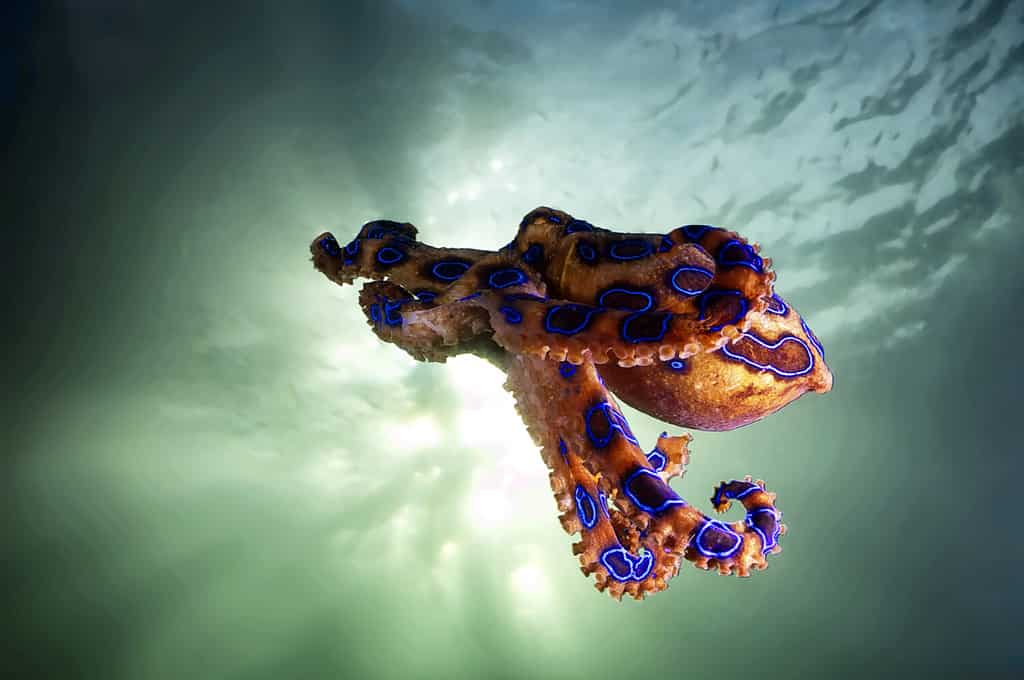
Its neon blue rings make misidentifying this octopus nearly impossible.
©YUSRAN ABDUL RAHMAN/Shutterstock.com
It starts with paresthesia, and as the numbness increases, the toxin targets the neurological system. This can lead to paralysis, which is typically the biggest concern with a blue-ringed octopus bite. Studies show that this toxin is almost identical to tetrodotoxin, the same potent neurotoxin found in pufferfish. If medical attention is administered immediately, the chances of the bite being fatal decrease significantly. But the best practice is to avoid the blue-ringed octopus–and its neon warning signs–altogether.