
Quick Take
- Polar bears are divided into 19 recognized subpopulations, each facing different environmental pressures within the Arctic ecosystem.
- Tracking 19 subpopulations introduces challenges in accurately estimating total polar bear numbers, as data quality and frequency vary between regions.
- Recent ice loss data from some regions, such as Svalbard, is associated with improved body condition in some polar bears, but this does not necessarily indicate increased reproductive success, and most studies still link sea ice loss to long-term risks for polar bear populations.
- The most recent published survey of the M’Clintock Channel polar bear population covers the period from 2001 to 2010, and more recent validated estimates are not yet available.
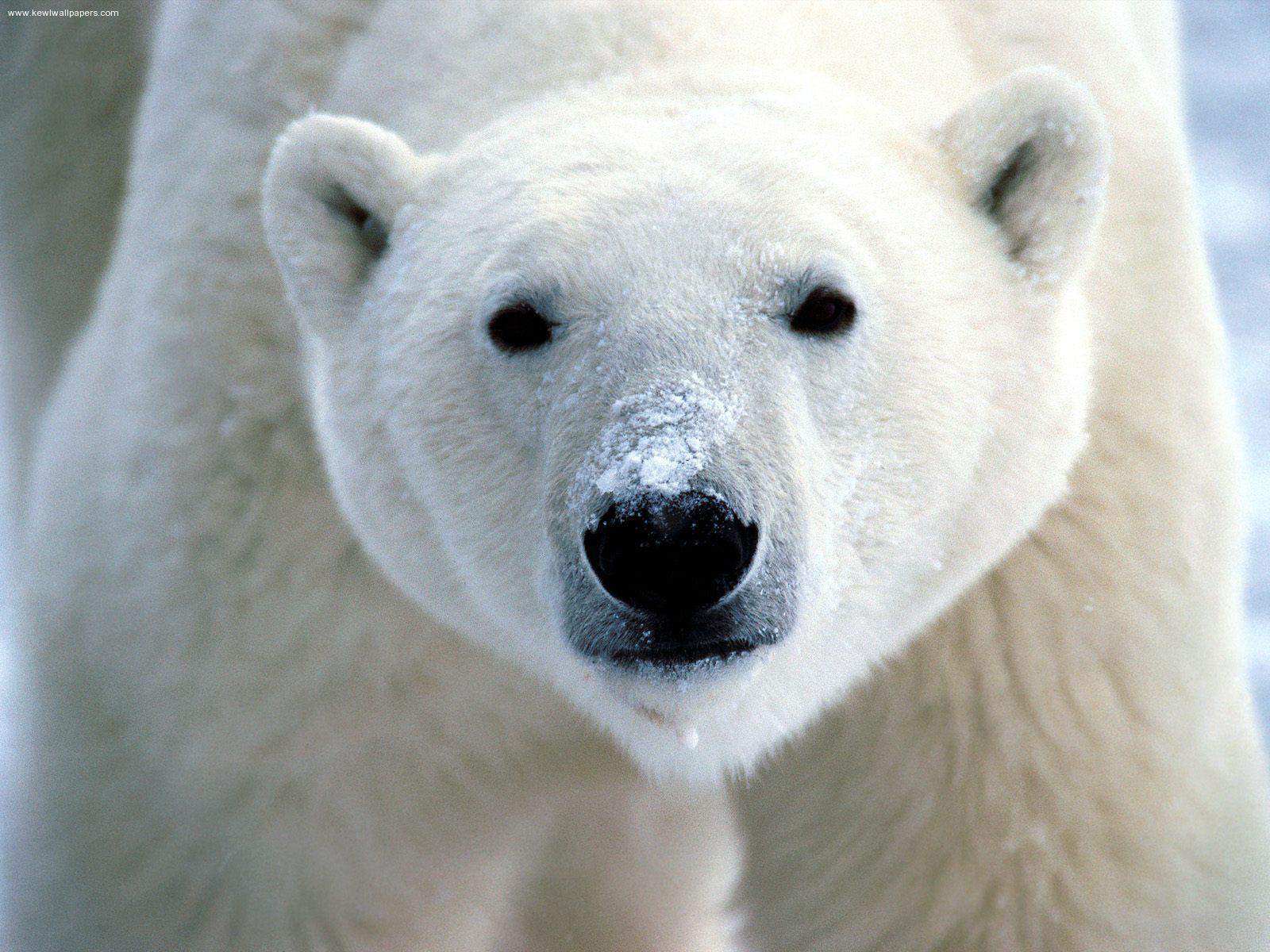
For years, images of thin polar bears stranded on shrinking ice floes shaped how many people understood climate change in the Arctic. Those photos seemed to confirm dire predictions, that as sea ice declined, polar bears would weaken and disappear. In one part of Norway’s Arctic, however, researchers are seeing a different pattern. Polar bears living around the Svalbard archipelago are showing signs of improved body condition, despite rapid ice loss in the region. This unexpected result has prompted scientists to look more closely at how climate change affects wildlife at a local level, rather than assuming one outcome applies everywhere.
Polar Bears and Sea Ice
Polar bears rely on sea ice as a platform for hunting seals, which provide the fat and energy they need to survive. When ice covers the ocean, bears wait near seal breathing holes and ambush prey as it surfaces. This strategy allows them to build fat reserves that support long fasting periods. And it’s a crucial strategy because bears cannot swim as fast as seals and would have difficulty catching them without this element of surprise.
As temperatures rise, Arctic sea ice now forms later in autumn and melts earlier in spring. Many scientists expected this shorter hunting season to lead directly to poorer health across all polar bear populations. In several regions, that expectation has proven accurate. Yet the situation in Svalbard shows that the link between ice loss and body condition can vary, depending on local circumstances.
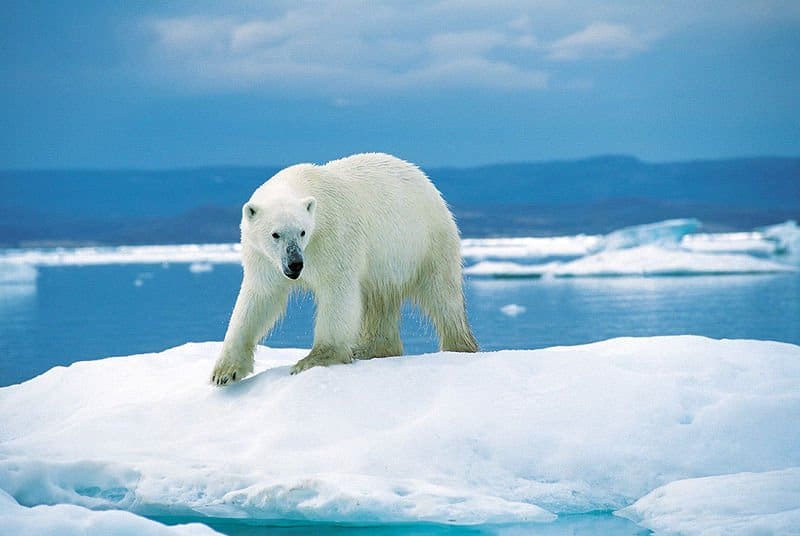
Polar bears use sea ice as a platform to hunt seals, building fat reserves needed to survive long periods without food.
©Ansgar Walk / Creative Commons – Original
Findings From the Svalbard Study
Researchers studying polar bears in Svalbard followed hundreds of individuals over nearly 25 years. Each spring, they captured bears, recorded body measurements, and compared those data with satellite records of sea ice conditions. From 1995 to 2019, the ice-free season in this region increased by roughly two months. Early in the study, particularly during the late 1990s, bears showed signs of poorer body condition. After about 2000, however, measurements revealed a steady improvement. Adult males and females became heavier for their size, even as ice loss accelerated. With more than a thousand measurements analyzed, the trend appeared consistent and long-lasting rather than the result of short-term variation.
Understanding Body Condition
Body condition describes how much fat and muscle an animal carries relative to its size and age. For polar bears, fat reserves are essential. They help regulate body temperature, fuel long swims, and support survival during periods with limited food. In the Svalbard study, scientists used a standardized body condition index to compare bears across decades. Results showed that after a lean period in the 1990s, adult bears improved steadily. Some females were heavier during years with less ice than during earlier periods with more ice. This finding suggests that sea ice extent alone does not fully explain polar bear health, at least in this region.
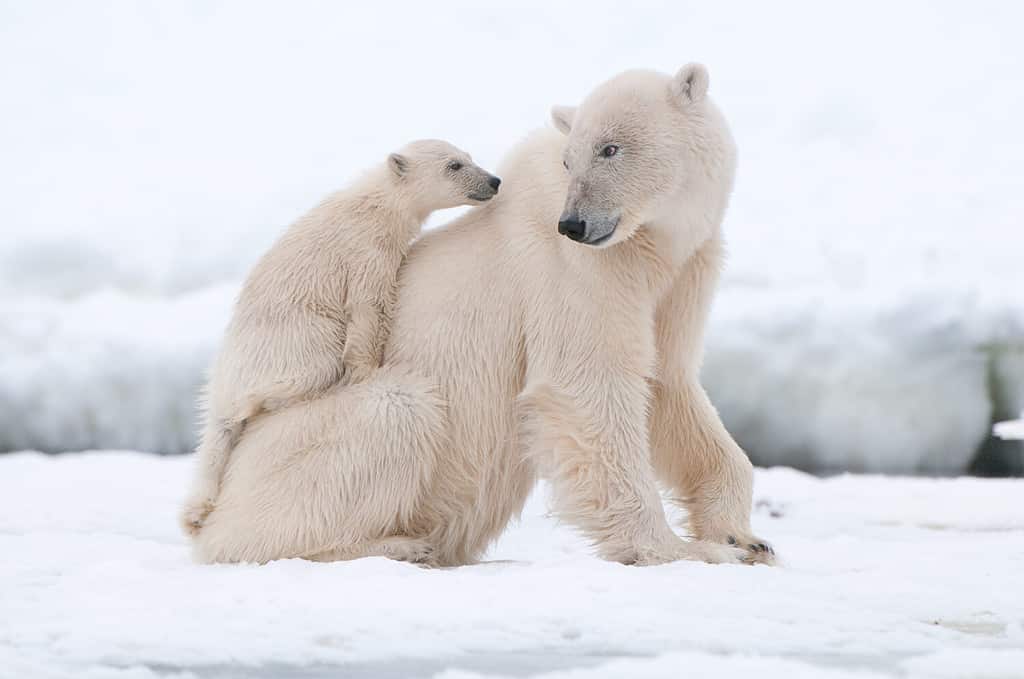
Fat reserves help polar bears stay warm and survive periods when food is limited, making body condition an important measure of health.
©Gecko1968/Shutterstock.com
Shifts in Diet and Food Sources
One explanation for the healthier bears lies in changes to available food. Ringed seals remain a key prey species, but recent research indicates their abundance in parts of the Barents Sea has declined by approximately 46% since 2002, likely due to reduced land-fast sea ice. When ice is present, bears can still gain weight quickly by hunting seals. During longer ice-free periods, Svalbard bears increasingly use land-based food sources. Observations include predation on reindeer, scavenging walrus carcasses, and feeding on bird eggs in coastal colonies. Walrus populations in the Svalbard-Franz Josef Land region have increased from historic lows due to legal protection, though they remain well below pre-hunting levels. Recent data do not confirm significant growth in seal populations. This flexible diet appears to offset reduced access to sea ice, at least for now.
Different Outcomes Across the Arctic
The experience of Svalbard polar bears does not reflect conditions everywhere. Polar bears are divided into 19 recognized subpopulations across the Arctic, each of which lives under different environmental pressures. In Western Hudson Bay, for example, sea ice breakup now occurs much earlier than it did decades ago. Studies there show declining bear numbers, lower cub survival, and poorer body condition. Bears in that region spend longer periods on land without access to seals, leading to extended fasting. These contrasts highlight that polar bears cannot be treated as a single, uniform group when assessing climate impacts.
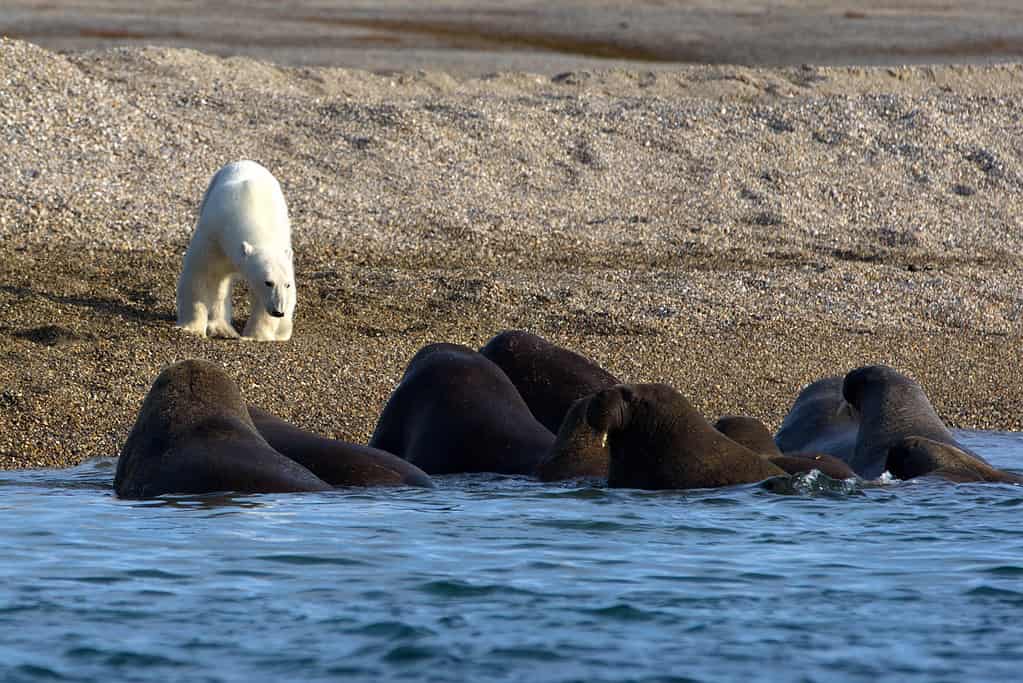
In some Arctic regions, earlier ice breakup leaves polar bears on land longer, limiting access to seals and food.
©Wirestock/iStock via Getty Images
The Importance of Local Conditions
Several factors may explain why Svalbard bears are faring better than those in some other regions. Norway enforces strong protections for polar bears, including bans on hunting and strict limits on human disturbance. The region also supports a range of alternative prey species on land and along the coast. Ocean currents and sea ice movement around Svalbard can create feeding opportunities that differ from those in more isolated areas. Local weather patterns also influence how often bears can reach productive hunting grounds. Together, these conditions shape how climate change affects the species in this specific setting.
Implications for Climate Change Communication
Polar bears have long served as a symbol of climate change impacts. The Svalbard findings complicate that message without eliminating legitimate concern. Some populations may find short-term ways to cope with changing conditions, while others decline quickly. Using a single image or example can oversimplify the science and overlook local variation. At the same time, the Svalbard case shows that conservation measures and ecosystem protections can make a measurable difference. These results suggest that while climate change poses serious risks, outcomes depend partly on how ecosystems are managed and protected.

This mother polar bear and her cubs highlight how changing ice affects families differently across the Arctic.
©Erinn Hermsen / Polar Bear International
Limits to the Current Trend
Scientists caution that improved body condition does not guarantee long-term survival. Continued loss of sea ice could eventually exceed the bears’ ability to adapt through diet changes alone. Land-based foods may not support the entire population indefinitely. Other challenges, such as reduced reproduction or lower cub survival, might emerge later than changes in adult body fat. On a global scale, many models still predict significant declines in polar bear numbers if greenhouse gas emissions remain high. The Svalbard findings represent a snapshot in time rather than a final outcome.
Seeing Polar Bears in Svalbard
Polar bears in Norway are most often seen in and around the Svalbard archipelago, which lies well north of mainland Norway. The highest chances of sightings occur during spring and early summer, when bears move along the coast and sea ice edges in search of seals. Remote areas such as Nordaustlandet and eastern Spitsbergen are known for regular bear activity. Because of safety concerns and legal restrictions, visitors typically observe bears from expedition ships rather than on foot.
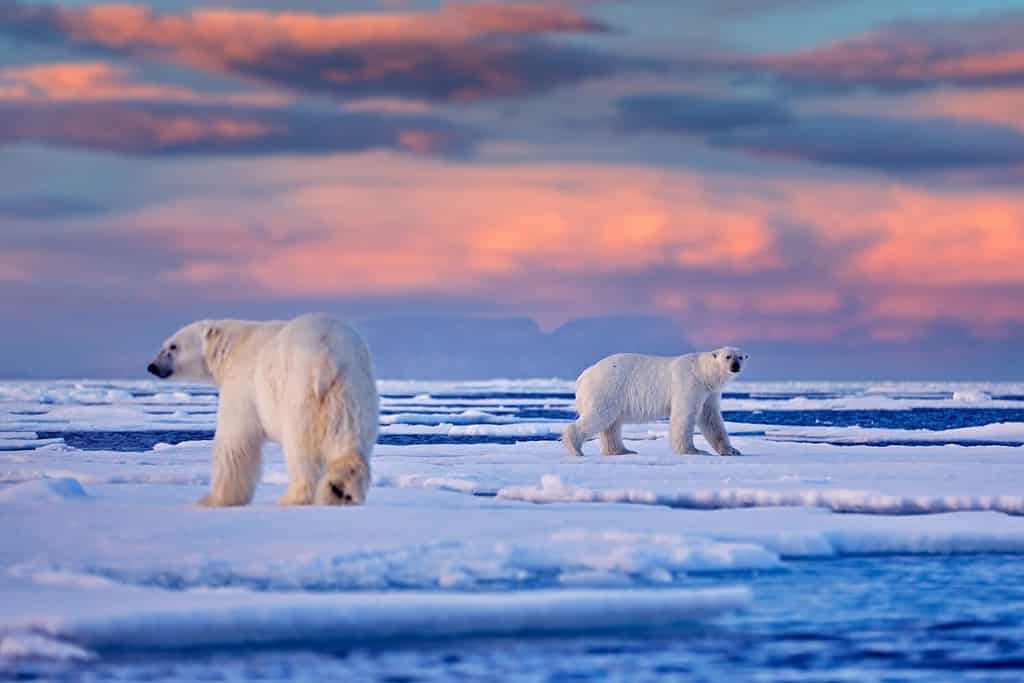
Polar bears in the Svalbard archipelago are often seen walking along sea ice edges in spring and early summer, usually observed safely from expedition ships.
©Ondrej Prosicky/Shutterstock.com
Responsible Wildlife Viewing in Norway
Norwegian law places strict limits on how close people may approach polar bears. Guided cruises and scientific expeditions operate under permits that require maintaining safe distances to avoid disturbing the animals. Viewing bears from boats or from a distance on land reduces stress on the animals and lowers risk to people. The best opportunities come through licensed operators who follow local regulations and seasonal guidelines. These rules help ensure that polar bears remain protected while allowing controlled observation of them in their natural habitat.
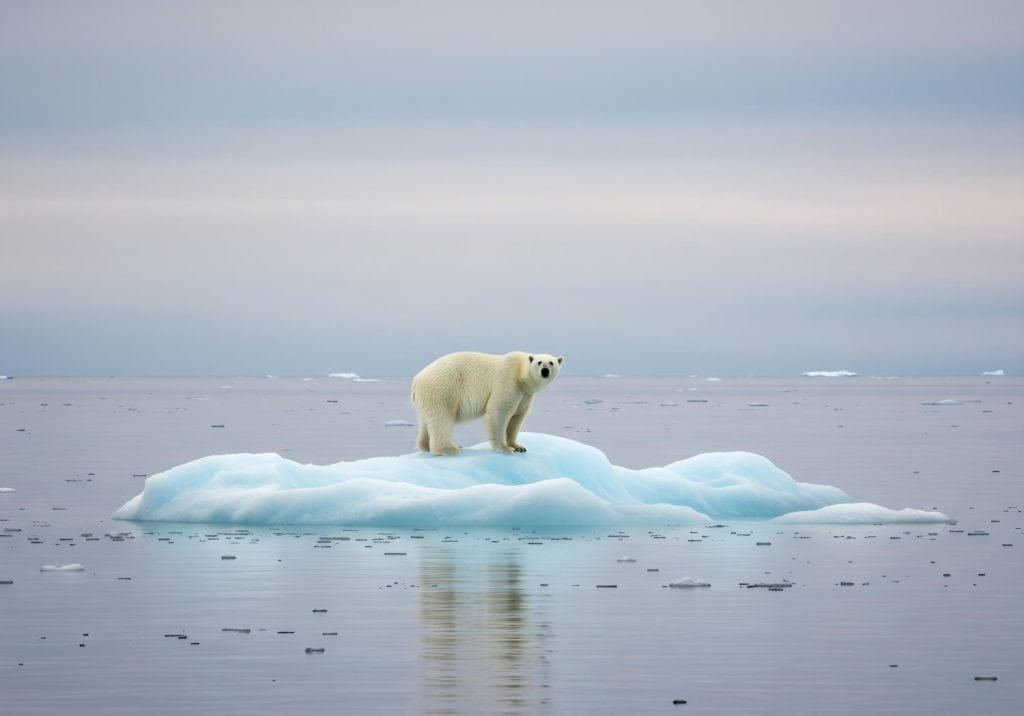
Strict wildlife rules in Norway encourage observing polar bears from a distance in their natural Arctic habitat.
©Andrewfel/Shutterstock.com
Local Stories Shape the Bigger Picture
The case of Svalbard’s polar bears shows that climate change effects unfold differently across regions. Some populations may adapt temporarily through diet changes and habitat flexibility, while others face rapid decline. Understanding these differences requires long-term, place-specific research rather than broad assumptions. The future of polar bears will depend on global climate trends as well as local conservation choices. Each population tells its own story, shaped by ice conditions, prey availability, and human actions.