
Quick Take
- One animal has figured out how to live like a plant, and it manages this through outright theft. See how theft works →
- This slug only eats one specific algae species, and what it actually extracts from that meal breaks the rules of animal biology. Discover the feeding process →
- Its bright green color signals something far stranger than camouflage. It is a live status indicator for an ongoing biological process inside the animal. Explore the green glow →
- Scientists still can't fully explain how stolen chloroplasts keep working inside a foreign animal's cells for months. Follow the ongoing research →
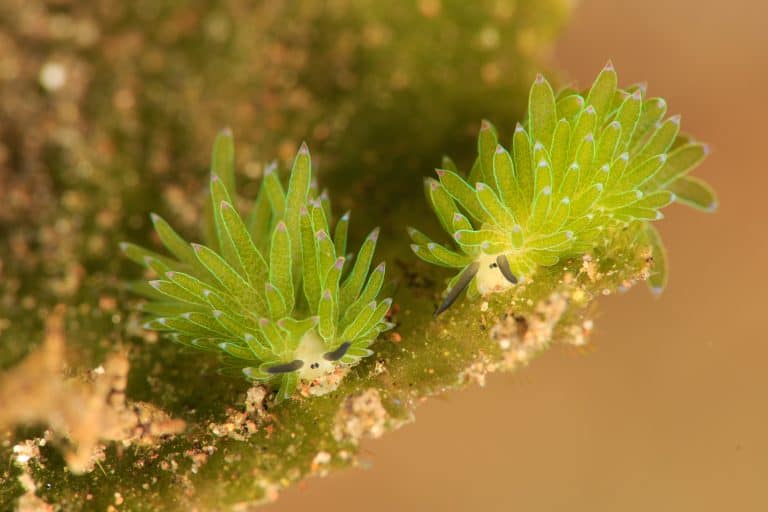
The unassuming eastern emerald elysia lives in shallow salt marshes, tidal pools, estuaries, and other brackish coastal waters, ranging as far north as Nova Scotia and as far south as the southern tip of Florida. If you spotted one, you might easily mistake it for a leaf resting on the seabed among the green algae.
But it’s not a plant at all. Instead, this remarkable marine sea slug is one of the few animals that can harness energy from the sun, much like a plant. The eastern emerald elysia steals chloroplasts from algae and keeps them alive inside its own tissues. The chloroplasts continue to produce nutrients through photosynthesis that feed the slug. This tiny 1- to 2-inch animal can survive for months without another meal, living off the nutrients produced during photosynthesis.
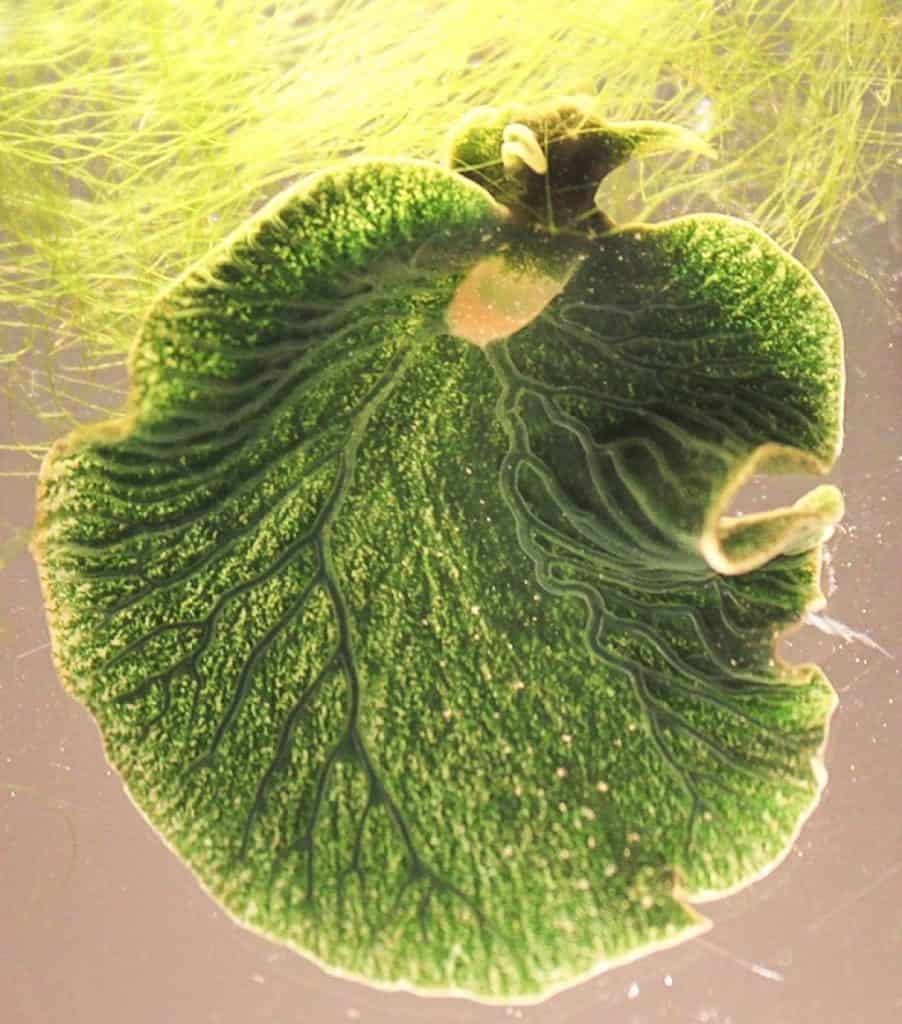
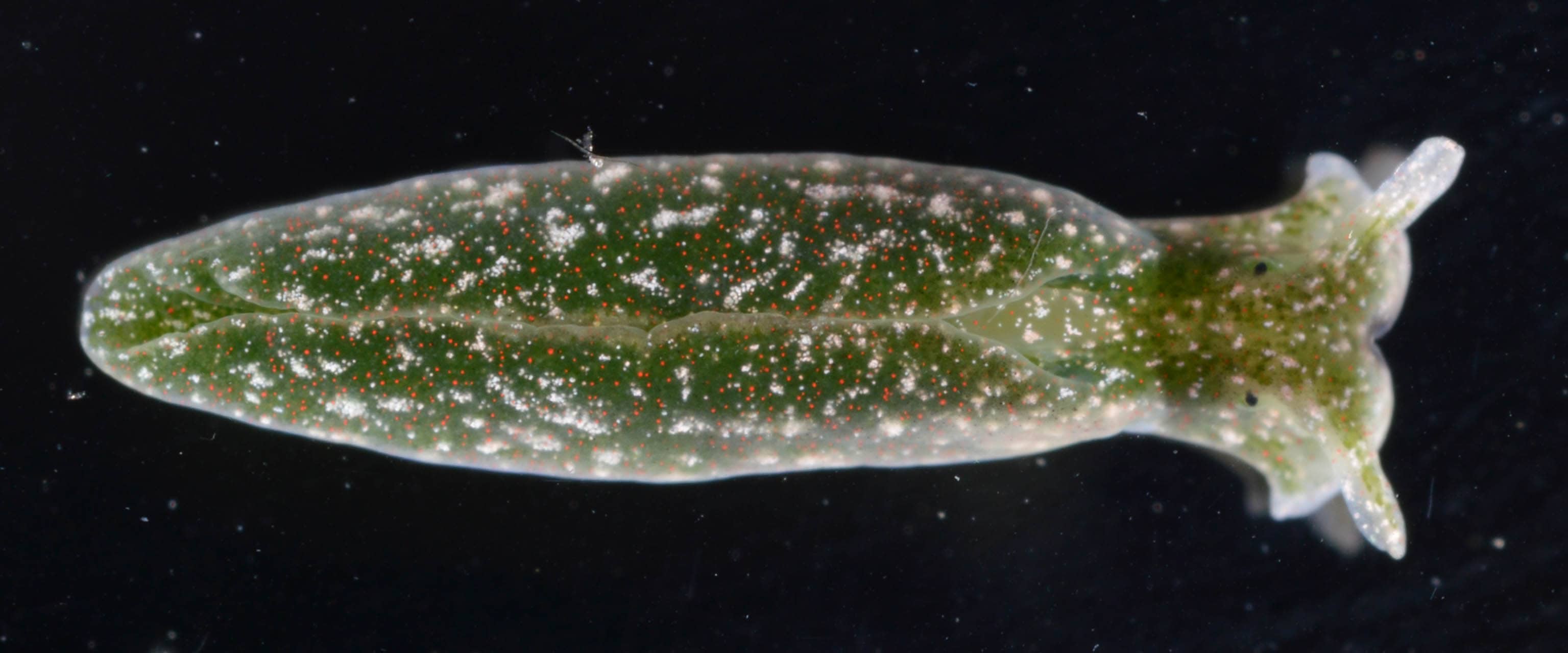
The eastern emerald elysia steals chloroplasts from algae.
©Karen N. Pelletreau et al., CC BY 4.0, via Wikimedia Commons – Original / License
How the Eastern Emerald Elysia Steals Chloroplasts From Algae
Sometimes known as the “solar-powered sea slug” or “living leaf,” the eastern emerald elysia (Elysia chlorotica) possesses an extraordinary ability that few other animals can replicate. Except for some flatworm species and a few other sea slugs in the clade Sacoglossa, no other animal on Earth is known to steal and use chloroplasts from algae.
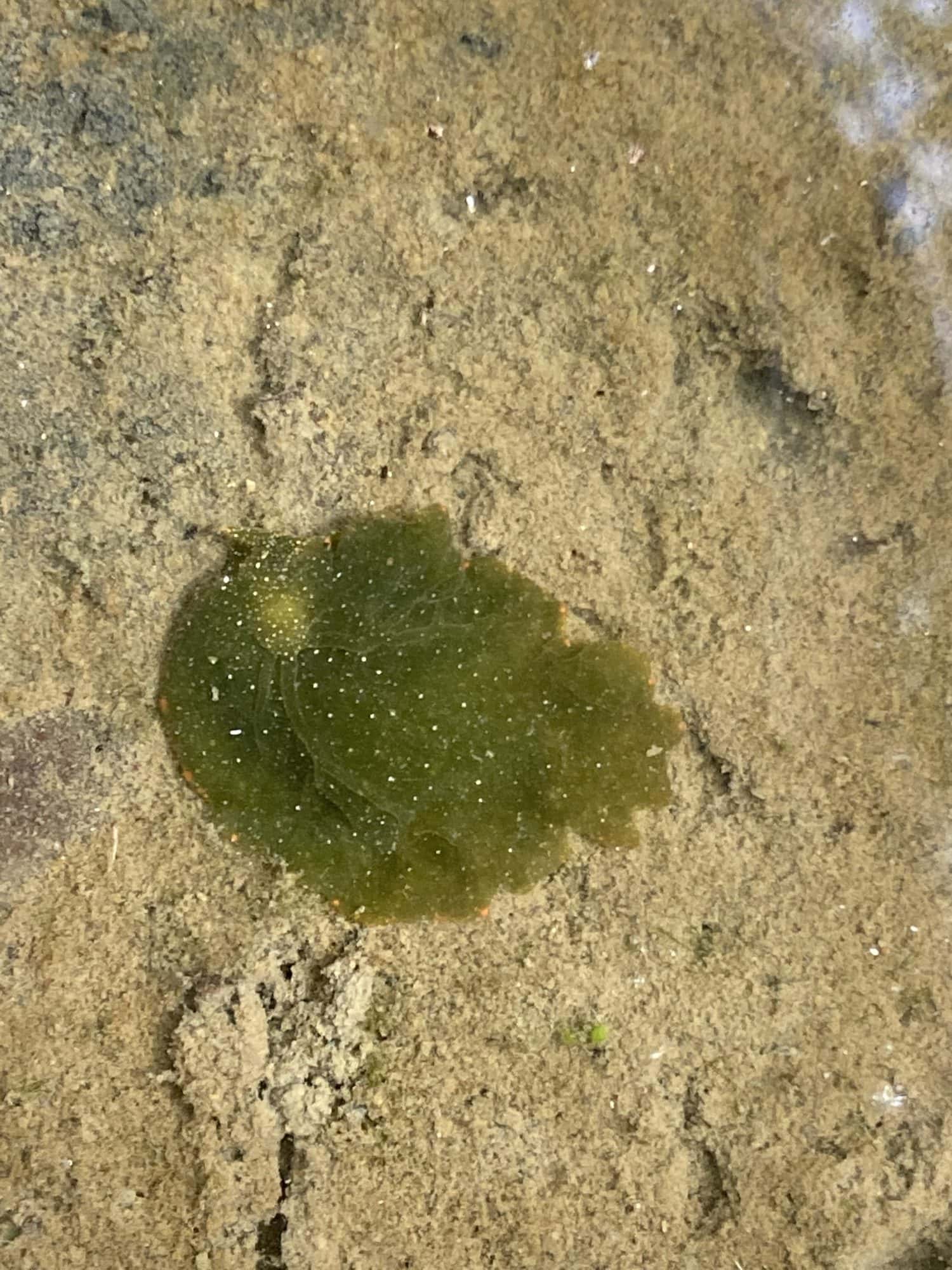
After eating green algae, the eastern emerald elysia turns bright green.
©Namenam15/Shutterstock.com
The process is known as kleptoplasty. The eastern emerald elysia is not born with chloroplasts; it must acquire them from its food. As a juvenile, the slug is brown with small red spots. It begins to feed exclusively on one species of yellow-green macroalga, Vaucheria litorea. The sea slug uses its specialized radula —a tongue-like feeding organ covered in rows of tiny teeth—to pierce the algae and suck out the cellular contents.
As the slug digests its food, most of the cellular material is broken down. However, it preserves the intact chloroplasts and incorporates them into the cells lining its digestive tract.
Stolen Chloroplasts Turn the Sea Slug Into a Solar-Powered Animal
Once the juvenile pierces the algae and absorbs the sap, its color transforms into a bright emerald green. The stolen chloroplasts, no longer functioning inside the algae, continue photosynthesizing within the slug’s cells, supplying it with sugar and nutrients for months without eating.
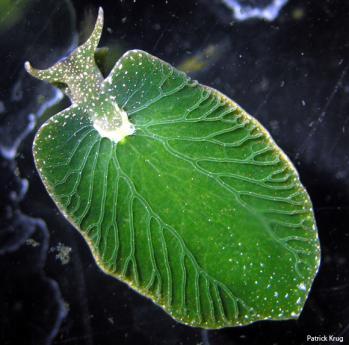
The eastern emerald elysia camouflages among green algae to avoid predators.
As long as the slug retains chloroplasts in its cells, it remains a vivid green. If the chloroplasts are depleted, the sea slug’s color fades to gray. Because the slug has no natural defenses, its green color helps it camouflage among the algae and avoid predators.
Scientists Are Still Unraveling the Mystery
Scientists continue to study the eastern emerald elysia to better understand how it keeps stolen chloroplasts alive and functioning for months inside its own cells. Recent research suggests that the slug actively maintains the chloroplasts after stealing them. This helps explain how the chloroplasts manage to survive for so long. Each new discovery gives us a better understanding of one of nature’s most remarkable survival strategies.